A homeowner in Middleborough called us last week, half convinced grubs had taken over his backyard overnight. Three weeks earlier his lawn was green. Now most of it was brown and he wanted someone out there to take a look.

Turned out it wasn’t grubs. It wasn’t much of anything other than three weeks of no rain and a lawn that had shut itself down into dormancy to cope. This happens a lot in August. People assume the worst, and sometimes the worst is exactly what’s happening, but a lot of the time the grass is just tired. Cool-season lawns can take a beating during hot summers in Southeastern Massachusetts, and there’s a real difference between turf that’s fighting a disease and turf that’s simply dormant. Get them confused, and you end up treating something that isn’t there. Or pouring water onto a lawn fungus that was already thriving on moisture.
Lawn Squad of Southeastern Massachusetts is here to tell you how we tell them apart…
Heat Stress, or What Everyone Calls “Burnout”
Grass turning brown doesn’t mean it’s dead. Fescue and other cool-season grasses handle heat by basically shutting down the parts you can see. Once you get a stretch of 80 and 90-degree temperatures without rain, the plant stops feeding its blades and redirects everything to the roots and crown. That’s the part that must survive. Everything above ground just goes tan and crunchy until conditions improve, and honestly, it’s a smart move on the plant’s part.

(Example of burned lawn)
A couple of things usually tip us off that this is what we’re looking at rather than something worse. The pattern is broad, not neat. You’ll see it start on south-facing slopes, along driveways and sidewalks, in compacted or thin soil, spreading outward from there without forming any rings or defined shapes. Timing matters too. Lawns that go brown right after two or three dry weeks with highs near 90 degrees are almost always doing exactly what they’re supposed to do. And the soil matters more than people realize. Down around New Bedford, Fall River, and out toward the Cape, the ground is sandier and drains fast, so those lawns tend to show stress before anything else does. In contrast to the heavier clay soil, you see further inland, which retains moisture longer.
There’s a rough test you can do yourself: Grab a few brown blades and pull. Living, dormant grass resists a little, and the crown near the soil stays pale green or whitish. If it comes away easily and looks slimy or dark down there, that’s a different problem. Water a dormant patch deeply for a week or so and watch what happens. Usually, it starts greening from the base up. Disease doesn’t do that.
When Something Else Is Actually Going On
Lawn disease and insect damage tend to look sharper. Smaller shapes, cleaner edges, and they will often show up while the rest of the yard still looks totally fine, which is the opposite of what heat stress does.
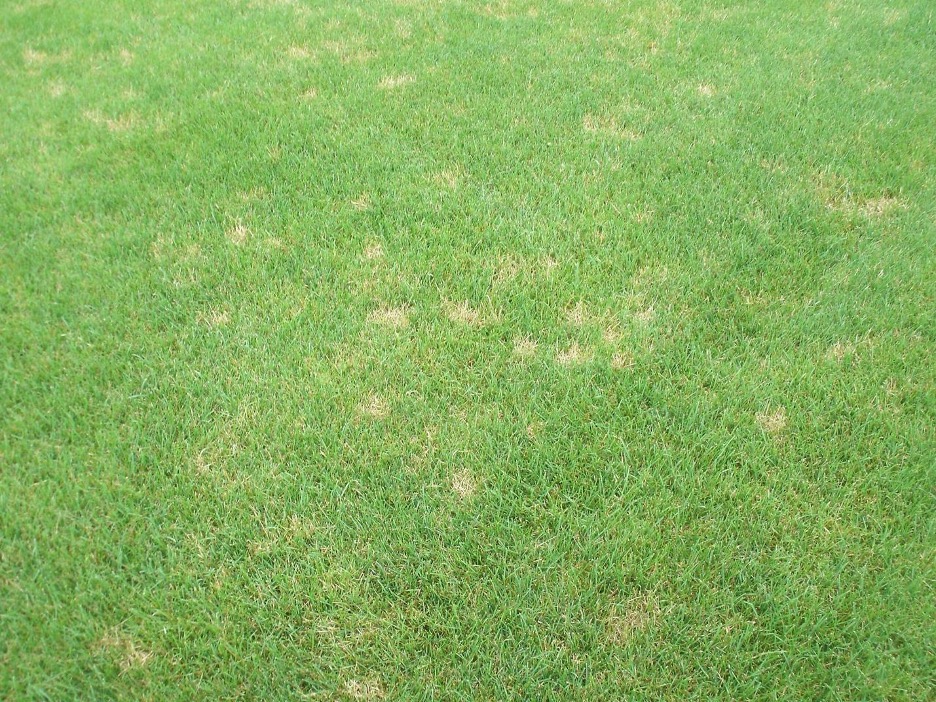
Dollar spot is probably the most common one we run into. Small tan patches about the size of, well, a silver dollar. Catch it early in the morning while there’s still dew, and you might see a thin white webbing across the grass. Usually shows up on lawns mowed too short or a little nitrogen-starved.
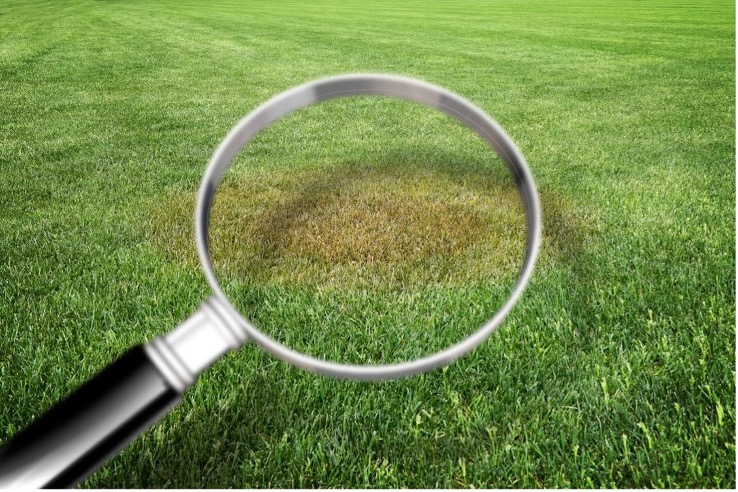
Brown patch is bigger, rounder, and sometimes has a darker ring on the edge that people call a smoke ring. It likes humidity, not drought, so it tends to hit during those sticky, still stretches in July rather than the dry ones.
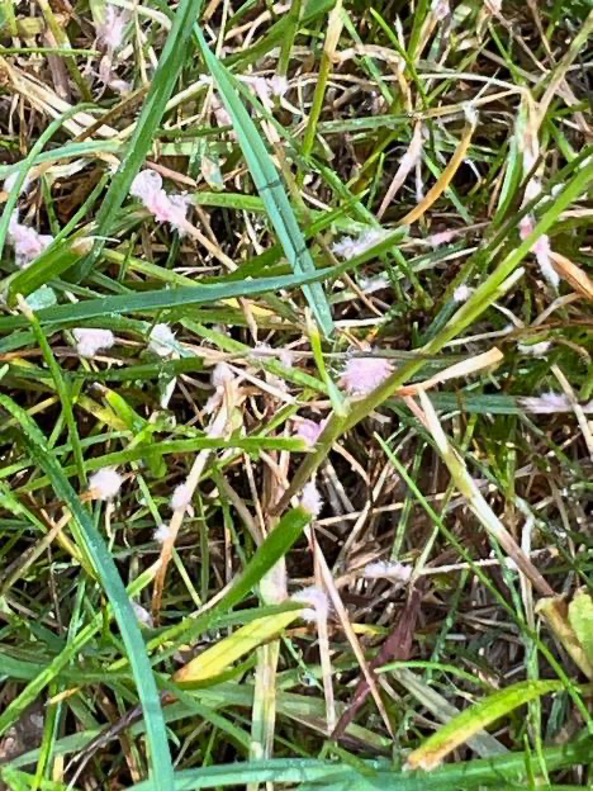
Red thread is easier to spot because it leaves a pinkish, almost thread-like film stuck right to the blades. Another nitrogen issue.
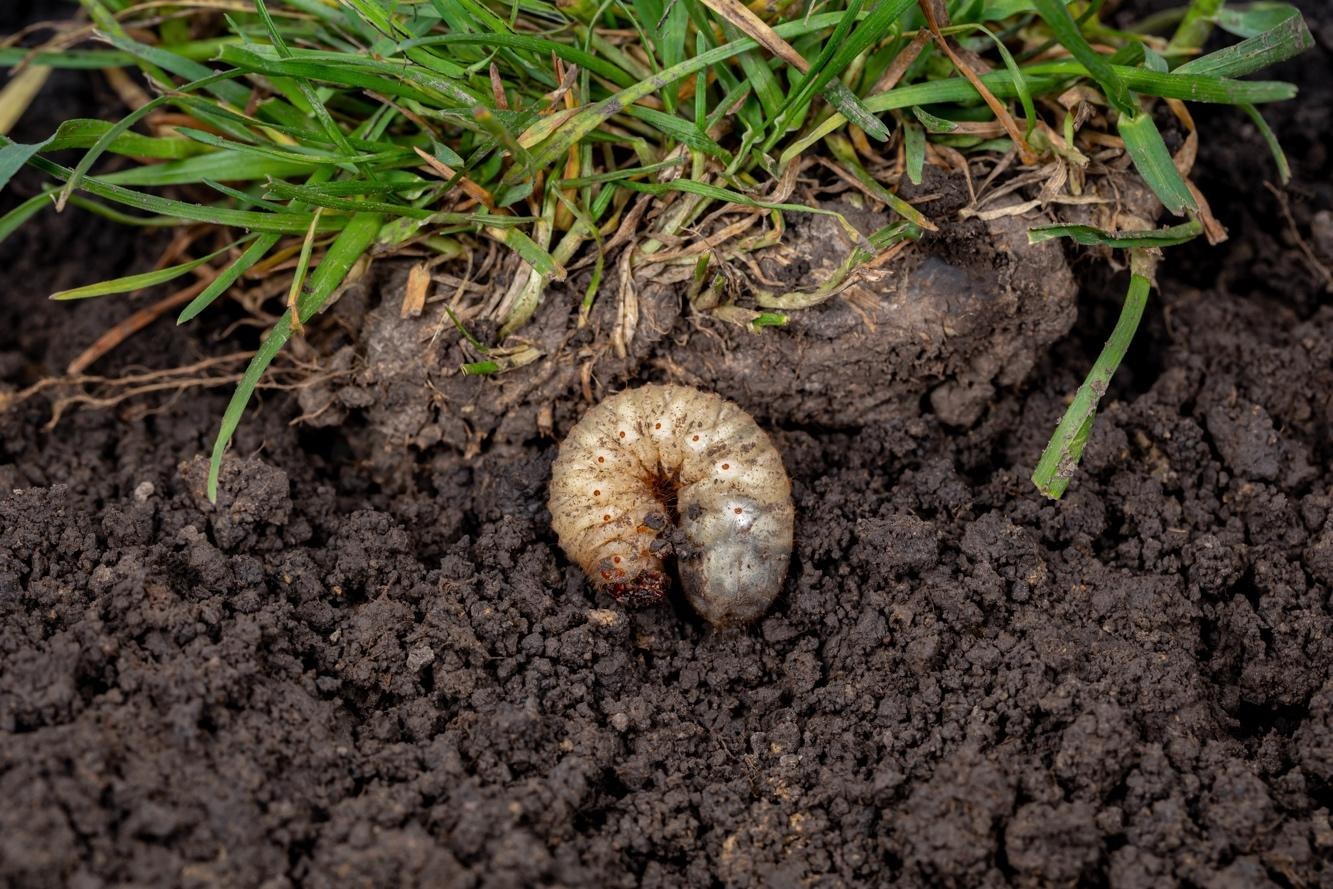
Grubs are their own category because you’ll notice something’s wrong with your feet before your eyes. The turf feels loose, spongy, like a rug that’s not tacked down. Roots underneath have been chewed through. Pull on a patch, and if it lifts easily in your hand, that’s grub damage, or at least worth checking with a shovel.
Chinch bugs and other surface insects tend to start near pavement, since that’s where the ground runs hottest. Driveways, walkways, that kind of thing. The damaged edges look ragged and irregular, nothing like the smoother spread you get with drought.
Bottom line: disease and pests carve out patches. Burnout just fades into the grass around it.
Why Bother Figuring Out Which One It Is
Because the fixes are opposite. Watering more does nothing for grubs. Fungicide does nothing for a thirsty lawn. Guess wrong and you often make things worse without realizing it — we’ve watched people flood a section that had brown patch disease going, which is basically feeding the fungus, or get frustrated that a dormant lawn “isn’t responding” to a treatment it never needed in the first place.
If you’re genuinely unsure, there’s an easy way to check without calling anyone. Pick a small section with a clear edge, water it deeply for several days, and leave the rest of the lawn alone. Green comeback in that spot while everything around it stays brown means drought. No change, or the damage keeps spreading no matter what you do, means it’s probably not drought and someone should take a closer look in person.
What Actually Helps Either Way
Water deep, not often. About an inch to an inch and a half a week, in fewer and longer sessions, pushes roots down instead of keeping them shallow near the surface. Raise the mower deck during the worst of summer since taller grass shades its own roots. And skip the fertilizer while a lawn is stressed from heat. Pushing new growth on a plant that’s trying to conserve energy usually backfires.

A lot of it comes down to what happened back in spring, honestly. Lawns that got aerated and fed consistently earlier in the year tend to shrug off a rough August. Lawns that went into summer already thin don’t have that cushion, so by the time it’s 90 degrees out they’re often dealing with heat stress and something else at the same time.
When to Just Call Someone
Patches with real shape to them, webbing, a threadlike look, turf that lifts too easily off the ground, damage that keeps spreading even after it cools off and rains. If you are experiencing any of this, it is worth having someone walk the yard before you guess further. We see these patterns constantly across Southeastern Mass, from the sandy soil near Wareham and out toward the Cape to the tighter ground up around Taunton and Easton. Usually, we can tell within a few minutes of being out there.
If it ends up being a drought, that’s the easy outcome. Most lawns bounce back once the weather breaks, and the basics are in place. If it’s something else, catching it now beats dealing with having to start over from scratch.
If you’re not sure what’s happening in your own yard, contact us today to get a free quote, and we’ll come take a look.