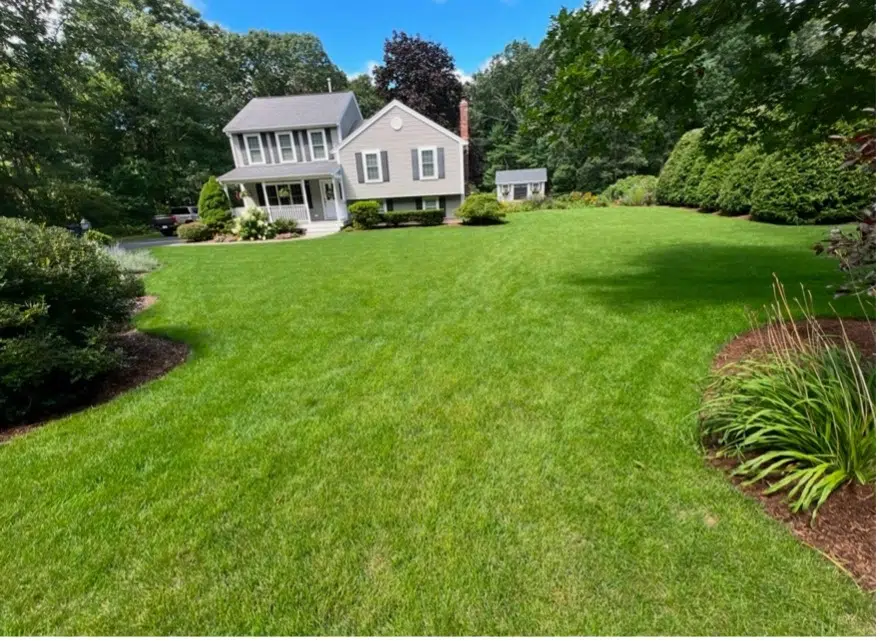
Short Answer: Mid September through mid October is the window in Knoxville, and it is the only reliable one you get all year for tall fescue. Fescue does not spread on its own, so a thin fescue lawn stays thin until somebody puts seed down, and missing this window means living with it until next fall. If you grow bermuda or zoysia instead, this is not your seeding season at all. Those grasses are heading toward dormancy and should be protected rather than renovated, which means finishing the last feeding well before frost and getting a fall pre-emergent down on a soil temperature trigger.
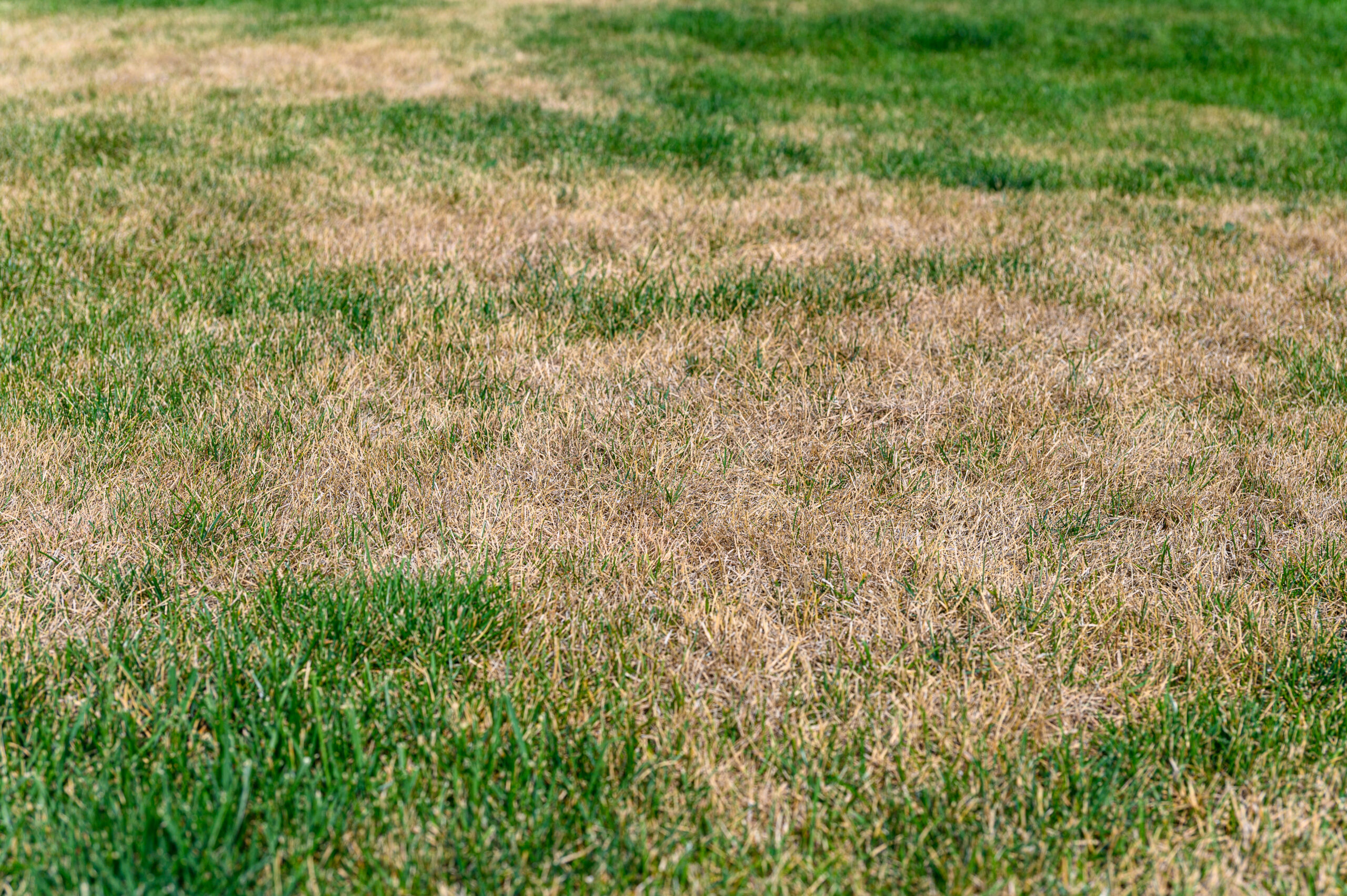
Knoxville sits in the transition zone, which is the band across the middle of the country where neither cool-season nor warm-season grasses are truly at home. It is the hardest place in America to grow a lawn, and September is where that difficulty concentrates.
The first thing to establish is which grass you actually have, because every recommendation below flips depending on the answer, and a surprising number of homeowners are not sure.
Which Grass Do You Have
Tall fescue is the most common lawn grass in the Knoxville area. It stays green through winter, has relatively wide blades, and grows in clumps rather than spreading. If your lawn is green in January, it is fescue.
Bermuda and zoysia are the warm-season options here. Both spread aggressively by runners, both go completely dormant and turn tan after the first hard frost, and both stay that way until spring. If your lawn goes brown in winter while the neighbor’s stays green, that is the difference.
Plenty of Knoxville properties have both, in patches, from years of different decisions and from bermuda creeping in from a neighbor. Sorting out which is where before you buy anything is worth an afternoon.
If You Have Fescue: This Is Your One Window
Tall fescue is a bunch grass. It does not spread by runners or rhizomes the way bermuda or bluegrass does. When a fescue plant dies, nothing grows into the gap.
That single fact governs everything. A fescue lawn thins a little every summer, and the only way it ever gets thicker is if somebody puts seed down. Skip a fall and the lawn is measurably thinner the following year, and skip several and you have a weed problem rather than a lawn.
The window in Knoxville runs from about mid September through mid October. Work backward from frost: a seedling needs roughly six to eight weeks of decent growing weather to establish enough root system to survive winter, and our first hard freeze typically lands in late October or early November.
Earlier in that window is better. Soil is still warm enough for fast germination, and the seedlings get more establishment time.
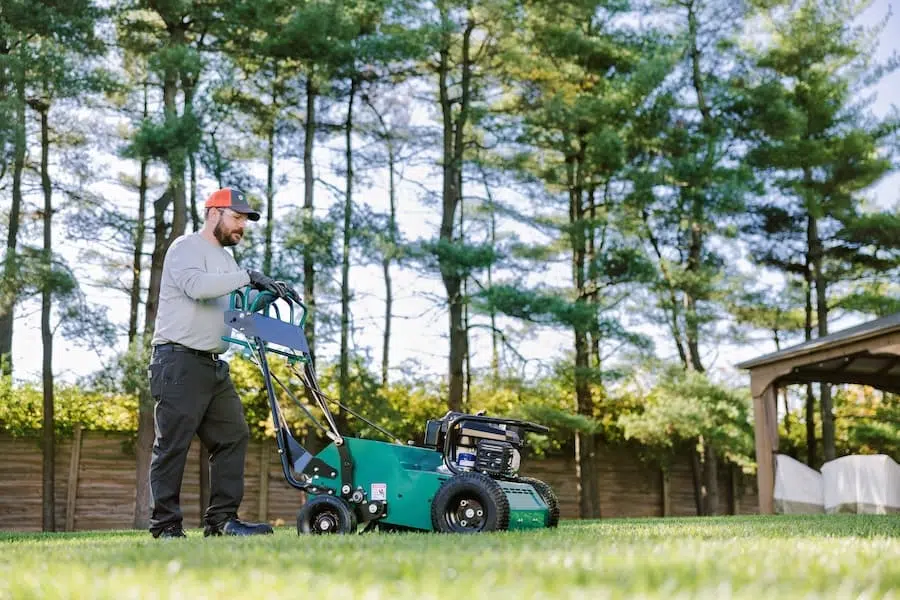
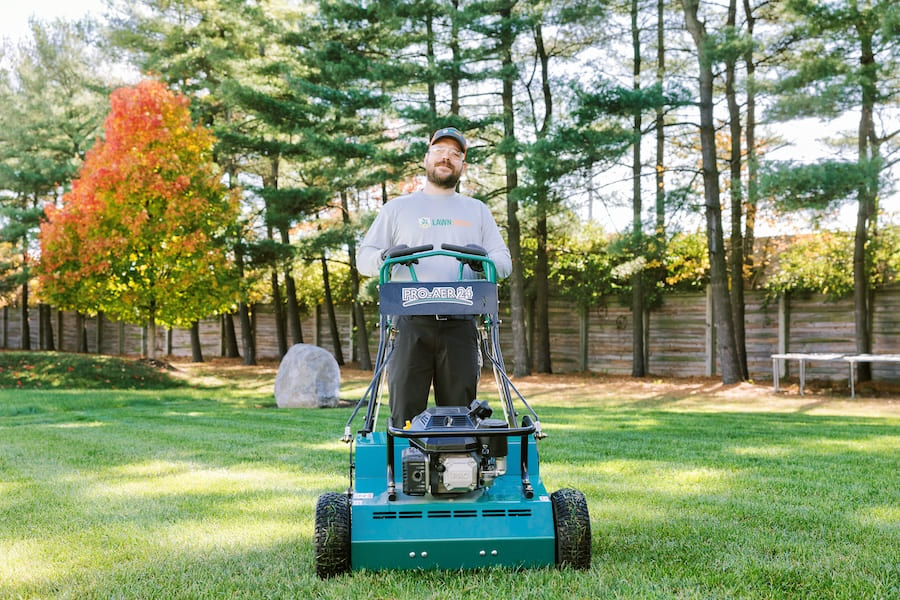
Aerate First
Much of East Tennessee sits on clay, and clay compacts. A compacted lawn roots shallowly, which is precisely why fescue lawns here struggle in July.
Core aeration relieves that, and for seeding it does something else just as valuable. Every hole is a pocket of exposed soil where seed can sit in contact with the ground rather than perched on thatch. Seed broadcast across an unaerated lawn largely germinates on dew and then dies.
Leave the plugs on the surface. They break down in a couple of weeks and work soil microbes into the thatch layer while they do.
Whether you need aeration is easy to test. Water the lawn, wait a day, then push a long screwdriver in with hand pressure. Six inches easily means you are fine. Stopping at two inches means you are compacted.
Seed Selection for the Transition Zone
Turf type tall fescue is what belongs here, and the variety matters more than people expect.
Modern turf type varieties have much finer blades than the old coarse pasture fescues, better disease resistance, and deeper rooting. Blends of several improved cultivars outperform any single variety, because they spread risk across different disease and drought tolerances.
Read the label rather than the front of the bag. Germination percentage, inert matter, and especially the weed seed and other crop lines are what separate a good bag from a cheap one. A bargain bag with measurable weed seed is not a bargain when you are paying to introduce weeds into a lawn you are trying to thicken.
Some blends include a small percentage of Kentucky bluegrass, which does spread and will slowly fill gaps. It germinates far more slowly than fescue, so expect the lawn to look uneven for several weeks.
The Three Weeks After Seeding
This is where most seedings fail, and the rule is the opposite of what you follow the rest of the year.
An established lawn wants deep infrequent watering. New seed wants short frequent cycles that keep the top inch of soil continuously moist. The seedling has no root system, everything it can reach is in that top inch, and a single hot dry afternoon during germination kills the entire seeding.
Practically that means light watering two or three times a day early on, tapering as October cools. Once seedlings are up, extend the interval and increase volume week by week so that by about four weeks you are back to normal.
Fescue typically germinates in seven to fourteen days at September soil temperatures. Stopping the water the week it emerges is the most common late failure we see.
If You Have Bermuda or Zoysia Instead
Everything above is the wrong advice for you, and following it would cost money.
Warm-season grasses are heading into dormancy. They are not seeded in fall, and overseeding fescue into a bermuda lawn as a permanent fix does not work, because the bermuda comes back in spring and outcompetes it.
What September is genuinely for on a bermuda or zoysia lawn here is two things. First, the last feeding of the season needs to be timed well before frost, generally around six weeks ahead, because nitrogen applied late pushes tender growth into the first cold event and causes real winter injury. Second, the fall pre-emergent application, which stops the winter annual weeds that make a dormant tan lawn look patchy and unkempt from December through March.
That pre-emergent timing runs on soil temperature falling through about seventy degrees rather than on a date, and it is one of the highest return applications in the transition zone.
The Bermuda Encroachment Problem
Worth naming, because it is common here and there is no comfortable answer.
Bermuda spreads by above ground stolons and below ground rhizomes and will invade an adjacent fescue lawn steadily. In summer it looks like patches of finer, aggressive grass growing faster than everything around it. In winter those same patches go tan while the fescue stays green, which is when most people finally notice.
There is no selective product that removes bermuda from fescue cleanly. The realistic options are managing it with cultural practices that favor fescue, spot killing the affected areas and reseeding, or eventually deciding which grass you would rather have and converting fully.
What does not work is ignoring it, because bermuda does not stop advancing on its own.
What Not to Do This Fall
- No broadleaf weed control within about four weeks either side of seeding. The label interval exists because ignoring it kills seedlings.
- No pre-emergent on areas you are seeding. It cannot tell grass seed from weed seed.
- Do not seed a lawn you cannot water consistently for three weeks.
- Do not mow the new grass until it reaches three to four inches, and sharpen the blade first so it cuts rather than pulling seedlings out.
- Do not let leaves blanket newly seeded areas. Seedlings smother in days and there is no established plant underneath to recover.
What to Do Next
Walk the lawn this week and write down the two or three things that actually bother you about it, then work backward from the window rather than forward from today. Almost every fall mistake we see in Knoxville comes from starting with the calendar instead of with the lawn.
If you would rather have someone look at it with you, Lawn Squad of Knoxville offers a free quote. Call 833-816-7508 or find us at lawnsquad.com. Every Lawn Squad location is independently owned and operated, and our VitaminLawn fertilization and weed control program is built around the grass, soil, and conditions here rather than a national average.
A first visit is a walk of the property, a look at the thin areas, a check of mowing height and irrigation, and a straight conversation about what is realistic in the weeks left this season. At 30 days you should see color and density improve. At 90 days the lawn should be visibly thicker, with the root growth that carries it through winter.