Short Answer: South Miami St. Augustine lawns face year-round growing conditions rather than the dormant-to-active transition of cooler climates. The real spring priorities for our area are chinch bug monitoring as temperatures warm, disease pressure management during humid conditions, proper fertility timing with slow-release products, water management balancing tropical rainfall and dry stretches, and ongoing weed control. The grass never fully sleeps here, so the management is continuous rather than seasonal. Spring is when scouting and prevention work pays off because problems caught early prevent the chronic summer issues that affect many South Florida lawns. Here is the practical guide for properties across South Miami, Coral Gables, Pinecrest, Palmetto Bay, and the surrounding area.
St. Augustine lawns across South Miami do not experience the dramatic transitions that lawns in cooler climates face. The grass grows year-round, with seasonal shifts in growth rate rather than dormant and active periods. This changes what spring care actually means here.
Across South Miami, Coral Gables, Pinecrest, Palmetto Bay, Kendall, and our broader service area, here is the practical guide to what actually matters in spring.
What Spring Means in South Florida
South Miami spring is more of a transition between slightly cooler winter growth and the full peak growth of summer. The grass is active throughout the year, but several patterns shift as temperatures warm:
Growth rate increases. Mowing frequency moves from every 10 to 14 days back to weekly.
Color deepens from winter olive-green to summer emerald.
Pest pressure increases. Chinch bugs become active as temperatures rise.
Disease pressure shifts. Cool-weather diseases give way to warm-weather problems.
Water demand increases as evaporation accelerates.
Chinch Bug Priority
Chinch bugs are the most damaging pest on South Florida St. Augustine. Spring is when populations begin building toward the summer peak.
Spring monitoring catches infestations before they cause significant damage. Walk the lawn looking for small irregular yellowing or thinning, particularly in sunny zones near sidewalks, driveways, and reflective surfaces.
The soap test confirms presence: mix 2 ounces of dish soap into a gallon of water, pour over a 1-foot square at the boundary between damaged and healthy turf. Within minutes, chinch bugs (small black or brown insects with X-shaped wings) come to the surface.
Counts of 25+ chinch bugs per square foot indicate active infestation needing treatment. Targeted insecticide treatments work when timed early. Untreated infestations can destroy large lawn areas within weeks during summer.
Disease Pressure in Spring
Several diseases affect St. Augustine in South Florida spring:
Take-all root rot. The most common chronic St. Augustine disease in our area. Cool wet conditions favor it. Visible as patchy yellowing that resists fertilization. The grass pulls up easily because roots are damaged.
Gray leaf spot. Becomes more active as temperatures rise. Visible as oblong gray lesions on individual blades.
Brown patch (large patch). Circular yellow to brown patches expanding outward. Cool wet conditions trigger spring outbreaks.
St. Augustine Decline (SAD). Viral disease with no cure. Visible as patchy yellowing that progressively worsens. Eventually requires replanting with resistant varieties.
Spring monitoring catches disease before it spreads. Fungicide may be needed for severe cases. Cultural practices (proper mowing, watering, fertility) reduce disease pressure.
Fertility Timing
South Florida St. Augustine fertility timing differs from cooler climates because the grass is always active:
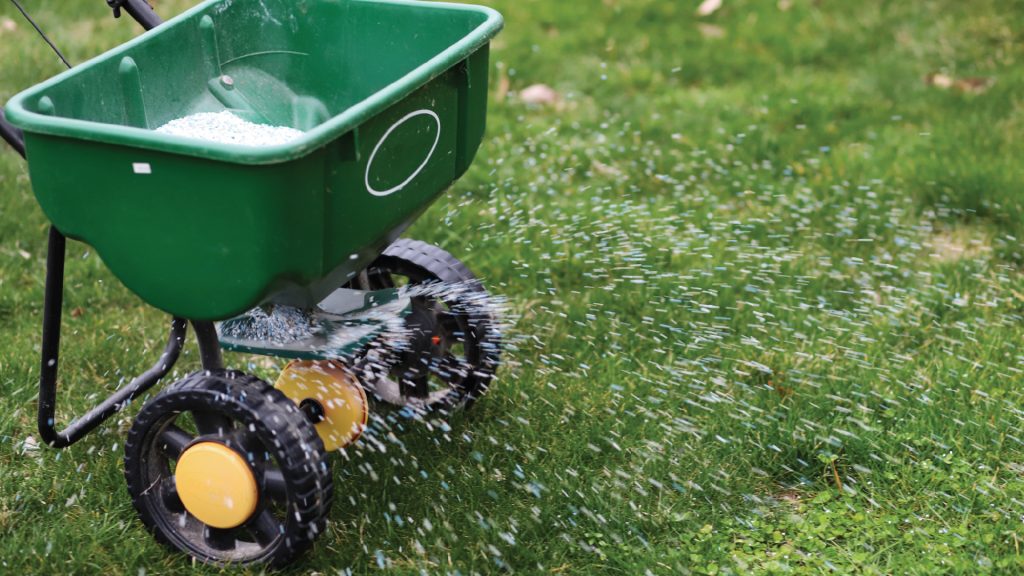
Spring (March through April): light to moderate fertility supporting transition from slow winter growth to full active growth. 0.75 to 1 pound of nitrogen per 1,000 square feet from slow-release source.
Summer (May through August): moderate fertility, but lighter rates than spring or fall. Hot humid conditions plus heavy nitrogen produces disease pressure.
Fall (September through November): heavier fertility to support recovery from summer stress and prepare for cooler weather.
Winter (December through February): minimal fertility. Grass is growing slowly and cannot use heavy nitrogen.
Florida law restricts phosphorus on established lawns. The middle number on fertilizer should be 0 unless soil test shows deficiency.
Watering Through Spring
South Florida watering needs to match the actual conditions:
Wet season vs dry season patterns are more important than calendar seasons. During rainy stretches, irrigation should be skipped. During dry stretches, regular watering matters.
Standard target: 1 to 1.5 inches per week total water including rainfall. Apply in 2 to 3 deep cycles in early morning.
Morning watering only (4 AM to 8 AM). Evening watering keeps grass wet overnight, driving fungal disease that thrives in our humid climate.
Smart controllers with rain sensors save significant water in our climate.
Pre-Emergent Considerations
Crabgrass and other annual grass weeds germinate earlier in South Florida than in cooler climates. Pre-emergent timing in our area: late January through February for spring germination, late summer for fall germination of Poa annua and other cool-season annual weeds.
By March, the spring pre-emergent should already be down. Properties that have not applied yet are likely already past the window for spring control.
Post-emergent treatments handle weeds that escaped pre-emergent.
Mowing Practices
St. Augustine mowing height in our area: 3.5 to 4 inches.
Mowing too short scalps the runners that connect plants. The lawn looks worse rather than better.
Sharp blades produce clean cuts. Dull blades tear St. Augustine blades, producing brown tips.
Year-round growing means year-round mowing. Equipment service every few months keeps the mower performing well across our long mowing season.
What Spring Care Sets Up
Spring care decisions affect summer outcomes significantly:
Chinch bug monitoring in spring prevents serious summer damage.
Disease management early prevents chronic summer problems.
Proper fertility timing supports steady growth without forcing soft growth.
Water management practices established in spring carry through summer.
The summer-friendly lawn starts in spring.
South Florida Specific Considerations
Several factors specific to our area affect lawn care:
Year-round growing season eliminates dormancy considerations.
Hurricane season impacts. Properties should consider preparedness in landscape planning.
Salt exposure on coastal properties. Affects grass selection and management.
Mature properties with significant tree canopy. Shade affects grass density and disease.
Variety differences. Floratam is the dominant St. Augustine variety. Newer varieties (Palmetto, ProVista, CitraBlue) offer specific advantages for some properties.
Common Mistakes
Treating South Florida lawns like seasonal lawns. Year-round management is needed.
Heavy summer fertilization. Hot humid conditions plus heavy nitrogen produces disease.
Evening watering. Drives fungal disease.
Ignoring chinch bug monitoring. Catches up to most lawns sooner or later.
Mowing too short. Damages St. Augustine that depends on taller cut for density.
Reactive disease treatment without identifying the actual disease.
When Renovation Makes Sense
For South Miami properties with severe SAD damage, chronic chinch bug history, or significant decline, renovation may make more sense than continued improvement. The renovation choice typically involves switching to a more disease-resistant or pest-resistant St. Augustine variety.
ProVista is SAD-resistant. CitraBlue and Palmetto have advantages for specific conditions. Floratam tolerates chinch bugs less well than newer varieties.
Renovation in South Florida works year-round but late spring through summer produces the strongest establishment.
Year-Round vs Seasonal Thinking
South Miami lawn care benefits from year-round thinking rather than the seasonal patterns common in cooler climates. The grass needs management every month of the year, not just during a defined growing season.
Monthly priorities shift: chinch bug pressure peaks in summer, disease pressure highest during humid stretches, fertility timing follows growth phases, water management balances wet and dry seasons. Properties that approach lawn care year-round typically have healthier lawns than properties that treat it seasonally.
Reading the Lawn Through Different Seasons
Walking the lawn weekly throughout the year produces information that catches problems early. Spring walks reveal winter damage and emerging chinch bug pressure. Summer walks catch disease and pest issues during peak vulnerability. Fall walks identify carryover problems heading into winter. Winter walks support slow-growth-season management decisions.
The cumulative effect of consistent observation across years produces better lawn outcomes than reactive responses to obvious problems.
Long-Term Lawn Health Goals
Properties on consistent year-round management programs typically see progressive improvement over multiple years. Soil chemistry corrects gradually. Lawn density builds. Disease and pest pressure drops as conditions improve. The cumulative benefit is meaningful but takes time.
Setting realistic multi-year expectations helps maintain consistency in the program. The lawn that looks great in year 3 of consistent management often does not look dramatically different in year 1.
What to Do Next
If you would rather have someone else handle the timing decisions, product selection, and application for your South Miami lawn, we are here for that.
Visit lawnsquad.com to find Lawn Squad of South Miami and request a free quote. Our VitaminLawn program is built specifically for the grass types, soils, and weather patterns in our service area. Most homeowners see noticeable improvement within the first two applications.