Should I Repair Seed or Fully Renovate My Northern Kentucky Lawn?
Short Answer: Judge it on two things: how much living grass is left, and whether that grass is the kind you want. If roughly half the lawn or more is still covered in decent turf, repair seeding into aerated ground will get you there over a season or two. If less than a third is covered, or if most of what is growing is coarse old pasture fescue, nimblewill, or weeds, a full renovation is usually the cheaper path, because overseeding a bad stand just adds good grass to bad competition. In Northern Kentucky either approach needs to be underway by the first days of September.
Somewhere around the middle of August, a lot of folks along the river stop looking at the yard and start staring at it. The front slope in Fort Thomas has gone patchy and hard. The back half of a lot in Union that got seeded by the builder four springs ago is now a checkerboard of coarse, wide bladed clumps with bare dirt between them. You can hear the mower deck change pitch when it crosses those clumps. The question that follows is always the same one: patch it or start over.
It is a genuinely uncomfortable decision, mostly because nobody wants to spend real money and then find out in October that they picked the wrong option. So let us take the guesswork out of it.
Start With Coverage, Not With Feelings
The number that decides this is the percentage of your lawn that currently holds living, desirable grass. Not green, and not covered. Desirable grass, meaning turf-type tall fescue or Kentucky bluegrass that you would be happy to have more of.
Above roughly fifty percent, repair seeding works. There is enough existing turf to hold soil, shade seedlings, and knit together once new plants fill the gaps. Below about a third, repair seeding is fighting uphill. There is too much open ground, too much weed seed sitting in that open ground, and not enough structure to protect what you plant. Between a third and a half is the judgment zone, and that is where the second question decides it.
The second question: what is the existing grass? This is where a lot of Northern Kentucky lawns get reclassified. Plenty of older properties in Erlanger, Independence, and Alexandria are carrying a stand of the coarse, clumping pasture type tall fescue that was sold and sown across this region for decades. It is tough, it survives anything, and it looks nothing like modern turf. Same with nimblewill, that fine, gray-green creeper that goes tan and dormant every autumn and confuses people every spring. If more than half of what is out there falls into that category, you can seed the finest fescue on the market into it every fall for the rest of your life and the lawn will still look like it does now.
Measuring It Without Guessing
Take a five minute walk with a tape measure or just your own stride. Pick four or five representative spots, including the worst one and one you actually like, and look straight down at a square yard of ground in each. Estimate how much of that square is living, desirable turf, then average what you found.
While you are down there, pull on the thin grass. If it lifts easily with brown roots, it is gone and that square counts as bare. If it holds and the base is firm, it counts as living even if the leaves look rough. Note where the coarse clumps are. If they cluster in the sunny front and the shady back is fine, you may be looking at two different projects on one property, which is a completely legitimate answer.
What Repair Seeding Actually Involves
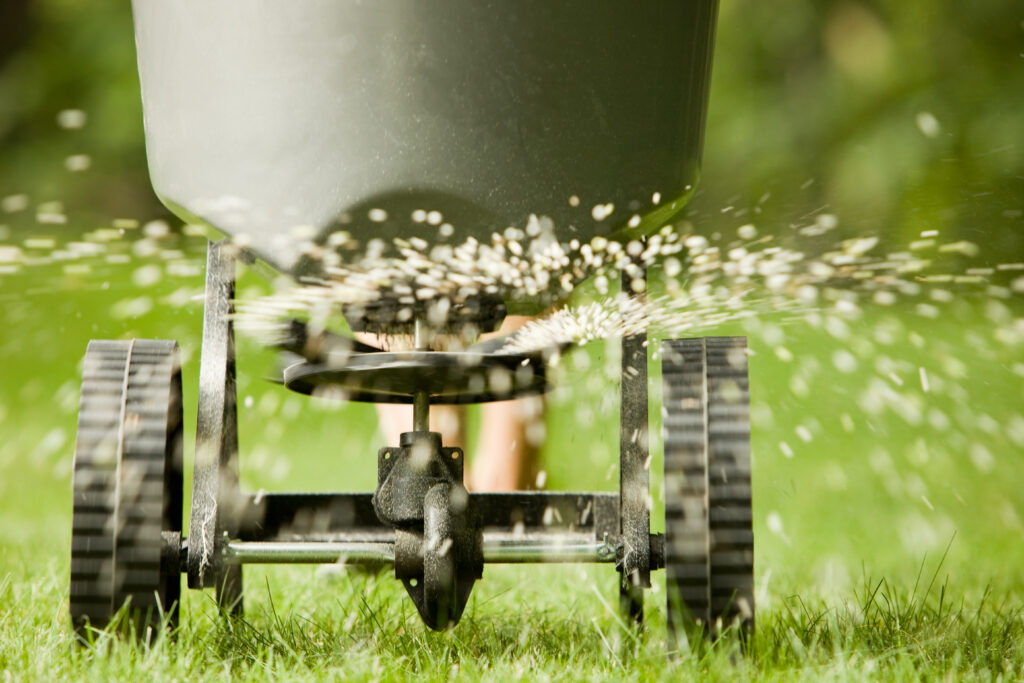
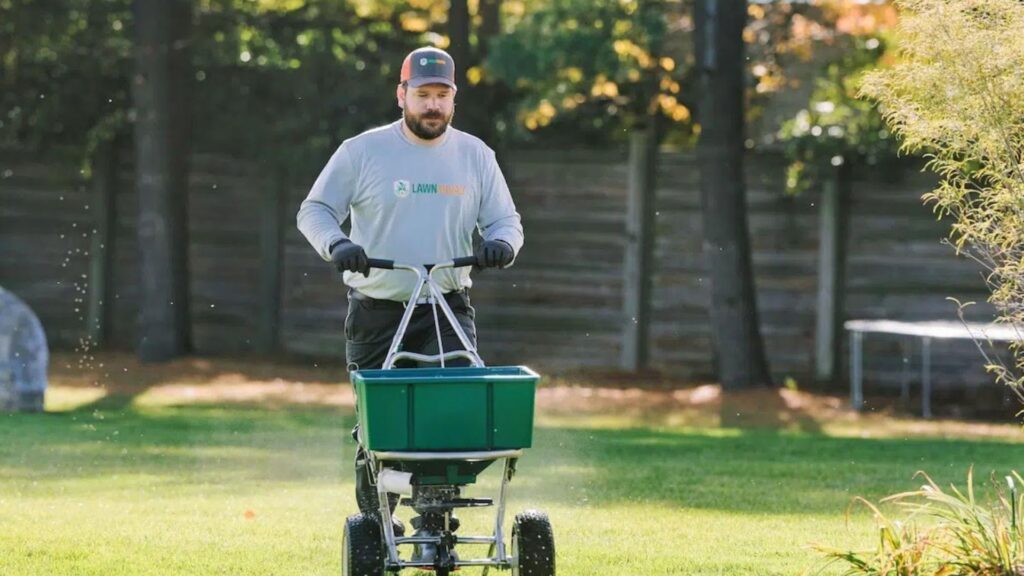
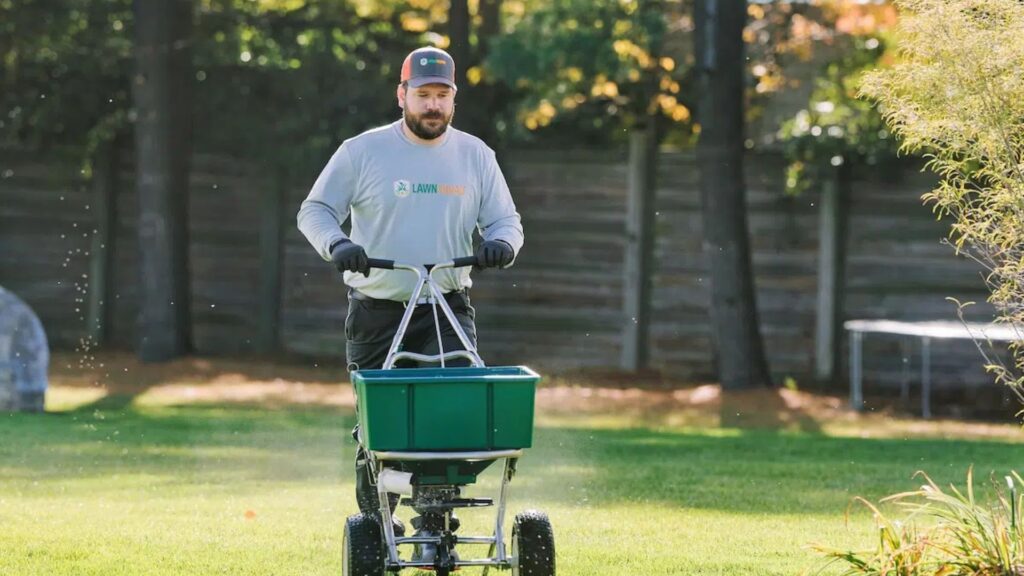
Repair seeding, or overseeding, means adding new grass into a lawn that stays alive throughout. Core aeration opens the ground first, because seed broadcast onto a hard, thatchy surface mostly feeds birds. On thinner areas a slice seeder cuts shallow furrows and drops seed directly into them, which is the most reliable seed placement available short of tearing everything up.
The lawn never goes ugly. You mow through it, you keep the surface damp for two to three weeks, and you get incremental improvement. That is the honest description: incremental. One good overseeding on a lawn that started at sixty percent coverage will typically look noticeably better by mid October and genuinely good by the following spring. A lawn that started at forty percent will need this done two or three years running before it is where you want it. That is not a failure of the service. That is how filling in works.
What a Full Renovation Involves
A renovation removes the existing stand and starts the lawn over from soil. The sequence runs like this. A non-selective herbicide goes down, usually in two applications spaced roughly two weeks apart to catch anything that survived or germinated after the first pass. Then the dead material gets scalped down and the debris removed, because seed cannot reach soil through a mat of dead pasture fescue. Then slice seeding, often in two directions, sometimes with compost or a soil amendment worked in first. Then three solid weeks of careful watering.
The part homeowners are not always prepared for is the middle. Your lawn will be brown and dead looking for two to three weeks in late summer, in full view of the neighbors. That stretch is unavoidable, and knowing it is coming makes it much easier to live with.
The timing is also less forgiving. Because the kill-off phase eats up two to three weeks before a single seed goes down, a Northern Kentucky renovation has to begin in the first half of August to put seed in the ground during the ideal window. Repair seeding can wait until later in the month.
The Cost Comparison, Said Plainly
A full renovation costs substantially more than an overseeding on the same property. There is more labor, more material, more visits, and a much bigger seed volume. Nobody should pretend otherwise.
The math that changes minds is the three year version. If your lawn is mostly undesirable grass, an annual overseed is a recurring expense that never resolves the underlying problem, and three or four rounds of it can add up to more than the renovation would have cost while leaving you with the same coarse clumps. If your lawn is simply thin but the grass in it is good, the reverse is true, and paying for a renovation is spending money to destroy turf you already own. The deciding factor is never how bad it looks. It is whether the existing stand is an asset or an obstacle.
How Northern Kentucky Ground Changes the Answer
Two local realities affect this decision more than most people expect. The first is slope. The river cities are built on hills, and a steep back yard in Bellevue or Fort Thomas that gets stripped bare in August is an erosion problem waiting for the first hard thunderstorm. On serious grades we will often recommend a heavy repair seeding with erosion control rather than a full kill, or renovating in sections so the ground is never entirely open.
The second is soil. Our soils are limestone and shale influenced, which means pH here frequently sits in a comfortable range rather than the acidic readings common elsewhere in the region. Homeowners routinely spread lime out of habit, and on a fair number of Boone and Kenton County lots that is money spent to push pH in a direction it did not need to go. Test before you amend. The more common limitations in the newer subdivisions around Burlington, Hebron, and Walton are compaction and thin topsoil over graded clay, which is a case for aeration and organic matter rather than lime.
What to Do Next
The fastest way to settle this is to have someone walk it with you. Call us at 859-222-7335 or request a free quote at lawnsquad.com. On that first visit we identify what is actually growing, estimate coverage together so you can see the number rather than take our word for it, check compaction and thatch, and look at grade and drainage. Then we give you a straight recommendation, including the version where you do not need a renovation at all. We tell homeowners to skip it fairly often.
Timing wise, our seeding window here runs from roughly the middle of August into the second week of September, and the last days of August are the sweet spot. Renovations get scheduled first because of the kill-off lead time. After seeding, tall fescue typically breaks ground in one to two weeks. By thirty days you should have visible green fuzz across the bare ground and a first mowing behind you. By ninety days, in November, a renovated lawn generally looks like a young but real lawn, thinner than it will be, and it thickens substantially through its first spring.
From there, our VitaminLawn program keeps the fertilization and weed control aimed at the tall fescue and bluegrass that perform here and at the soils under this particular corner of the state. We serve Alexandria, Bellevue, Burlington, California, Covington, Crittenden, Dry Ridge, Erlanger, Florence, Fort Mitchell, Fort Thomas, Hebron, Independence, Latonia, Melbourne, Morning View, Newport, Petersburg, Silver Grove, Union, Verona, and Walton. Each location is independently owned and operated, and our work carries a satisfaction guarantee.