Short Answer: If your Concord, Framingham, or Worcester County lawn is already showing heat stress in early July, shift the plan from looks to crown survival. Water deeply once or twice a week (one inch total) in the early morning, mow tall at 3.5 to 4 inches with a sharp blade, pause nitrogen fertilizer until late August, hold off on broadleaf herbicides above 85 degrees, and accept that Kentucky bluegrass dormancy is normal survival behavior. Watch for red thread, dollar spot, and grub feeding as the real problems that need active treatment. The lawn that survives July with intact crowns is the lawn that thrives in the short but powerful New England fall window.
The first 88-degree week of July rolls through Eastern Massachusetts, the I-495 corridor sits in a haze, and the lawns that looked picture-perfect at Memorial Day start to fade. The tan strip near the asphalt in Marlborough. The fading center in Sudbury. The crispy patch on the south-facing slope in Lexington that browns out earlier every year. Across Acton, Concord, Framingham, and into Worcester County, the cool-season turf that thrives in May and September is doing the hardest part of its annual job: surviving July.
This is the window when most July mistakes happen. The instinct is to push the lawn back to vibrant green: fertilizer, more water, a fresh mow, maybe a quick spot-spray of weed killer. Every one of those moves makes a heat-stressed New England lawn worse. The right play in July is to slow down, protect what is alive, and set the table for the September window that does the heaviest lifting in our climate.
Here is the playbook we walk customers through when the property is already stressed by the first hot week. The goal is not to make the lawn beautiful by Labor Day. The goal is to keep the crowns alive so the lawn responds in September.
Why New England Cool-Season Grass Struggles in July
The blends across most Central and Eastern Massachusetts lawns (Kentucky bluegrass, turf-type tall fescue, fine fescue, perennial ryegrass) share a comfort zone of roughly 60 to 75 degrees of soil temperature. That zone covers our April, May, late September, and October beautifully. It is exactly what these grasses evolved for.
By the first week of July across Worcester County and the MetroWest suburbs, soil temperatures regularly cross 75 degrees and stay there. On south-facing slopes in Bedford, along stone walls in Carlisle, and along asphalt driveways everywhere from Andover to Hopkinton, surface soil can hit 90 degrees by 2 p.m. At those temperatures, root growth slows or stops, photosynthesis efficiency drops, and the plant burns stored carbohydrates faster than it can replace them.
The Massachusetts soil profile adds its own challenge. Most of our service area sits on acidic glacial-till soils, often with shallow topsoil over rocky subsoil or ledge. Roots cannot push deep when they hit rock or compacted till, which means lawns that look lush in May may have shallower root systems than the eye suggests, and those shallow roots fail first under July stress.
Kentucky bluegrass evolved a survival mechanism for exactly this kind of stress: summer dormancy. When heat and drought cross a threshold, the plant pulls energy into the crowns at soil level, lets the leaf blades brown, and waits the heat out. A dormant bluegrass lawn looks dead but is not. Provided the crowns receive minimal water to stay viable, the lawn re-greens in late August or early September.
The Watering Plan That Works in Massachusetts July
Most July damage we see on Massachusetts lawns is caused or worsened by how the lawn is watered, not by whether it gets enough total water. The rule is deep, infrequent, and early in the morning.
Target one inch of water per week (one and a quarter during a heat wave), delivered in one or two cycles between 4 a.m. and 9 a.m. Morning watering lets the canopy dry as the sun rises, which keeps fungal disease pressure low. Evening or night watering leaves blades wet for 10 to 14 hours and is the single biggest driver of red thread and dollar spot pressure across Concord, Lincoln, and the Wayland area.
Daily shallow watering is the worst pattern. Ten minutes every morning trains roots to live in the top inch of soil. When the top inch dries out in afternoon sun, the grass wilts even though there is moisture sitting two inches deeper. The lawns watered shallowly are the first to brown in heat waves and the slowest to recover after rain.
To calibrate, set tuna cans across each zone and measure how long the system takes to deliver a half inch. Most Massachusetts irrigation systems hit that in 20 to 30 minutes per zone. Run twice a week for the deep cycle during normal weather; once a week during cooler stretches. If you have a private well and need to be mindful of draw, a single weekly deep soak is fine. Some browning is acceptable. A dead lawn is not.
Many Massachusetts towns have summer water restrictions, especially in years when reservoirs and the Quabbin watershed run low. Check your town’s current restrictions before setting an irrigation schedule. Most restrictions allow watering on alternate days during specific morning hours, which works fine for the deep-and-infrequent approach we recommend.
Mow Tall and Mow Sharp
Raise the deck before the next cut. Set bluegrass, fescue, and rye blends to 3.5 to 4 inches through July and August. Taller blades shade the soil, slow evaporation, push roots deeper, and crowd out the crabgrass still trying to push through bare or thin spots. Short grass in July is grass with shorter roots, less photosynthetic surface, and bare soil baking above the crowns.
Sharpen the mower blade. A dull blade tears rather than slices, leaving frayed tips that brown out and serve as entry points for disease. Most homeowners have not sharpened since spring. A $10 to $20 service at any Massachusetts hardware store fixes it.
Skip a cut if the lawn has not grown above your set height. Cool-season grass in heat-stalled growth barely extends for stretches. Mowing inactive turf in 90-degree weather stresses it for no benefit. Wait for visible new blade extension before making another pass.
Leave the clippings. Mulched clippings return moisture and nitrogen to the lawn and do not contribute to thatch on healthy cool-season turf. The only reason to bag is if the grass got away from you between cuts and the clippings would clump and smother the canopy.
What to Hold Off On in July
The skip list is as important as the do list. Each item below makes a stressed cool-season Massachusetts lawn worse.
- Nitrogen fertilizer. Pushing a heat-stressed lawn with nitrogen forces soft top growth at the expense of carbohydrate reserves and significantly increases disease pressure. Wait for late August or early September.
- Broadleaf herbicide above 85 degrees. 2,4-D, dicamba, and triclopyr can volatilize at high temperatures, drift onto ornamentals, and burn the lawn. Spot-treat early morning if you must, or wait for September.
- Core aeration. July is the worst possible month to core-aerate a cool-season lawn. The plugs dry out, the open holes stress the crowns, and the soil is too hot for any new root growth. September is the right window across our service area.
- Seeding. Soil is too hot for reliable bluegrass, fescue, or rye germination. New seed in July typically wastes both seed and the labor. The window opens again around Labor Day.
- Heavy dethatching or scarifying. Aggressive mechanical work takes more from stressed plants than it returns.
Telling Heat Dormancy from Real Damage
Some July browning is normal. Some of it is a problem. Two quick checks usually sort it.
Pull back a clump of brown grass and look at the crown where the blades meet the soil. Firm, white to pale-green crowns mean dormancy. The plant is alive and will recover. Crumbly, dry, papery crowns mean dead grass that needs to be replaced in the fall renovation.
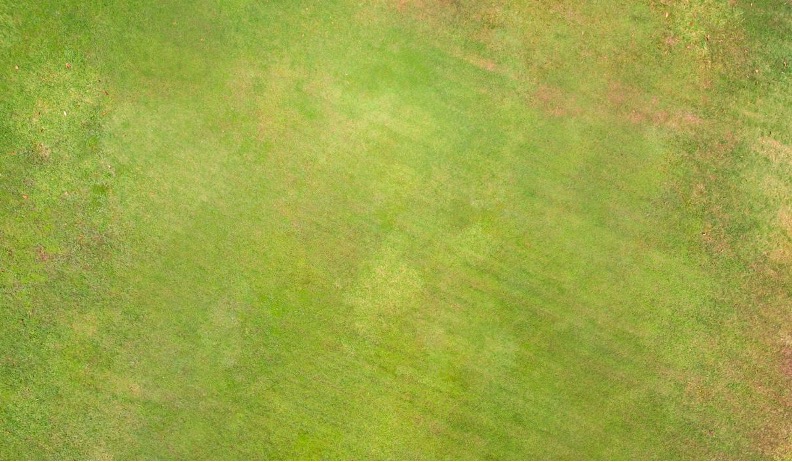
Look at the pattern. Heat dormancy shows up evenly across exposed sections, especially south and west-facing slopes. Disease damage shows up as discrete patches with sharp borders that expand fast across a humid week. Insect damage shows up as patches that pull up easily from the soil, like loose carpet, because roots have been chewed off. Sharp-edged, fast-changing patches are not heat. They need attention.
The Real Problems to Watch For
Three problems deserve active treatment in July across our Massachusetts service area.
Red thread fungal pressure runs through June into early July across the cool, dewy mornings common in Worcester and the MetroWest. Pink to red thread-like growth on blade tips, irregular patches 4 to 12 inches across, often with a pinkish cast in early morning. Red thread is mostly cosmetic on lawns with adequate nitrogen heading into summer. A light nitrogen correction usually clears it. Persistent or aggressive cases get a fungicide.
Dollar spot pushes through July on low-nitrogen lawns. Silver-dollar-sized bleached spots, sometimes coalescing into larger irregular thinning. Light nitrogen and morning-only watering usually settle it. Persistent cases get propiconazole or chlorothalonil.
Grub feeding shows up in late July on lawns that missed the June preventive window. Patches that lift like a loose rug, especially near rose bushes, lindens, or hosta beds where adult Japanese beetles have been active. Skunks or raccoons tearing up sections of turf is another signal. Curative grub products (trichlorfon) work if applied promptly. The window is short, and on Massachusetts lawns the cost of grub damage going untreated is high because the short fall window does not give the lawn much time to recover.
What to Do Next
If you would rather have someone walk the property, sort dormancy from disease from insect feeding, and build the right plan for the rest of summer and the fall renovation, that is what our July visits are designed to do.
Lawn Squad of Central and Eastern Massachusetts serves Worcester, Framingham, Marlborough, Concord, Lexington, Acton, Westford, Carlisle, Sudbury, Lincoln, Bedford, Chelmsford, Lowell, Andover, Natick, Wayland, Hopkinton, Shrewsbury, Salem, Peabody, and surrounding communities across Worcester County, the MetroWest, the Merrimack Valley, and the North Shore.
Call us at 617-468-4486 or request a free quote at lawnsquad.com. Our VitaminLawn program is built for the realities of acidic New England soils and the short cool-season fall window, with summer programming designed to protect crowns through July heat and set the lawn up for the September aeration and overseeding work that does the real recovery. July is not when we make Massachusetts lawns beautiful. It is when we keep them alive for the fall window that does.