Ridge, Valley, and Mountain: Timing a Late-Season Feeding Across the Chattanooga Area

Ridge, Valley, and Mountain: Timing a Late-Season Feeding Across the Chattanooga Area
Short Answer: The Chattanooga area’s terrain changes the timing of a late-season lawn feeding more than most homeowners expect. Lawns on Signal Mountain, Lookout Mountain, and other ridges cool off and freeze sooner than lawns on the valley floor, while low areas near creeks can trap cold air on clear nights. For tall fescue lawns, here is what we have found works best: feed in early November on the mountains and ridges, and from early to late November in the valley, while the grass is still green and the ground is not frozen. Sloped lawns need extra care to prevent runoff.
If you live in the Chattanooga area, you know how much the landscape shapes daily life. The Tennessee River winds through the valley, ridges like Missionary Ridge and White Oak Mountain cut across town, and Signal and Lookout Mountain rise more than a thousand feet above the city. A drive of twenty minutes can take you from a mild valley afternoon to a noticeably colder mountaintop.
That terrain also changes when your lawn should be fed in November. Most homeowners we talk to follow a single calendar date they read somewhere, but in Chattanooga, the right timing depends a lot on where your lawn sits.
Why Late-Season Feeding Matters for Fescue
Most cool-season lawns in the area are tall fescue. In November, fescue slows its top growth but keeps building roots and storing energy until the soil freezes. A feeding now gets stored in the crowns and roots rather than turned into leaf growth. That stored energy fuels an earlier, more even green-up in spring and helps thin fescue lawns fill in.
The key is applying it while the grass is still active and before the ground freezes. That window shifts with elevation.
The Mountains and Ridges
Lawns on Signal Mountain, Lookout Mountain, and the higher ridges sit well above the valley floor. Higher elevation means cooler temperatures, earlier frost, and soil that cools and freezes sooner. Mountain lawns also see more wind and, occasionally, snow or ice when the valley gets rain.
Here is what we have found works best. On the mountains and higher ridges, aim for the first part of November, once mowing has slowed but the grass is still green. Waiting until late November on the mountain often means working with cold or frozen soil, and a single early ice storm can close the window for the year.
The Valley Floor
Lawns in the valley, in places like East Brainerd, Hixson, Red Bank, Ooltewah, and downtown neighborhoods, generally stay milder longer. The valley floor and the moderating effect of the river can keep the late-season window open from early through late November in many years.
That does not mean waiting until the last minute. A cold snap can freeze the ground at any point, and a busy holiday season has a way of pushing yard work back.
Watch the Forecast, Not Just the Calendar
Chattanooga’s late fall weather swings quickly. A cold front can drop temperatures twenty degrees overnight, and a stretch of mild, sunny days can follow right behind. Keep an eye on the ten-day forecast in early November and plan the feeding for a calm, mild stretch with only light rain expected.
Cold Air Pockets
Here is a local quirk worth knowing. On clear, calm nights, cold air drains downhill and settles in low areas, creek bottoms, and hollows. A lawn in a low spot near a creek can see frost and colder soil than a lawn a hundred feet up the slope. If your property sits in a low area, treat it a little more like a mountain lawn and lean earlier.
Frost Versus Frozen Ground
A frost on the grass at dawn does not mean the ground is frozen. Frost forms on the blades when air near the surface dips below freezing, but the soil a few inches down is usually warmer. After the frost melts mid-morning, push a screwdriver into the lawn. If it goes in easily, the ground is workable.
Sloped Lawns and Runoff
Chattanooga’s hilly neighborhoods mean many lawns slope toward the street, a creek, or a neighbor’s yard. Rain runs off sloped lawns faster than flat ones, and anything sitting on the surface goes with it.
Here is what we have found works best on slopes. Apply on a calm day ahead of a light rain rather than a heavy storm. Avoid saturated or frozen ground. Use moderate rates, and walk across the slope rather than up and down it to keep the application even. Much of the area drains to the Tennessee River and its tributaries, so keeping fertilizer on the lawn matters.
Clay and Rocky Soils
Much of the area has heavy red clay, especially in the valley and on many ridge slopes, and some mountain lawns sit on thin, rocky soil over sandstone. Clay holds nutrients well but drains slowly and compacts easily. Thin, rocky soil dries out quickly and holds fewer nutrients.
On clay, apply when the soil is moist but not waterlogged. On thin mountain soils, moderate rates and good timing matter even more, since there is less soil to hold onto what you apply.
Warm-Season Grass Is Different
If part of your lawn is Bermuda or zoysia, the warm-season grasses that go dormant after the first hard frost, skip those areas. Dormant warm-season grass does not use late-season nitrogen. Mountain lawns are more likely to be fescue, while sunny valley lawns are more likely to include Bermuda.
What to Apply
For fescue, nitrogen is the main nutrient in a late-season feeding. A quicker-release source is often preferred this late, since the grass needs to take it up before the soil cools. Phosphorus is rarely needed on established lawns. A soil test through University of Tennessee Extension shows what your lawn actually needs.
Leaves Arrive at Different Times, Too
Leaf drop also follows elevation. Mountain trees often color and drop earlier than valley trees. Clear or mulch leaves before the late-season feeding so the fertilizer reaches the soil, which on the mountain may mean an earlier cleanup.
Spread It Evenly
Spreader settings on the bag are a starting point. Set the spreader at half the label rate, walk the lawn in one direction, then walk it again at a right angle, closing the spreader at the end of each pass before turning. Sweep any granules off driveways and sidewalks.
Shade on the Mountain
Many mountain and ridge properties sit under mature oaks, hickories, and pines. Fescue in heavy shade grows more slowly and uses less nitrogen than fescue in the sun, so shaded areas often need a lighter late-season feeding. Under very dense canopy, thinning the trees or using shade-tolerant groundcovers may do more than extra fertilizer.
Mowing Before Winter
Keep fescue at about three to three and a half inches until growth stops, then make a final cut slightly lower. Avoid scalping, especially on mountain lawns where cold, drying winds can damage exposed crowns.
What Good Timing Looks Like in Spring
Imagine this. It is early April. On the mountain, your fescue is greening up evenly because you got the late-season feeding down the first week of November, before the cold settled in. Down in the valley, a friend’s lawn fed in mid November looks just as good. Different dates, same result, because each lawn was fed when it could actually use it.
What to Do Next
If you are feeding your own fescue lawn, aim for the first part of November on the mountains, ridges, and low cold spots, and from early to late November on the valley floor, while the grass is green and the ground is unfrozen. Clear leaves first, use a moderate, nitrogen-focused product, walk across slopes rather than up and down, and skip dormant Bermuda and zoysia.
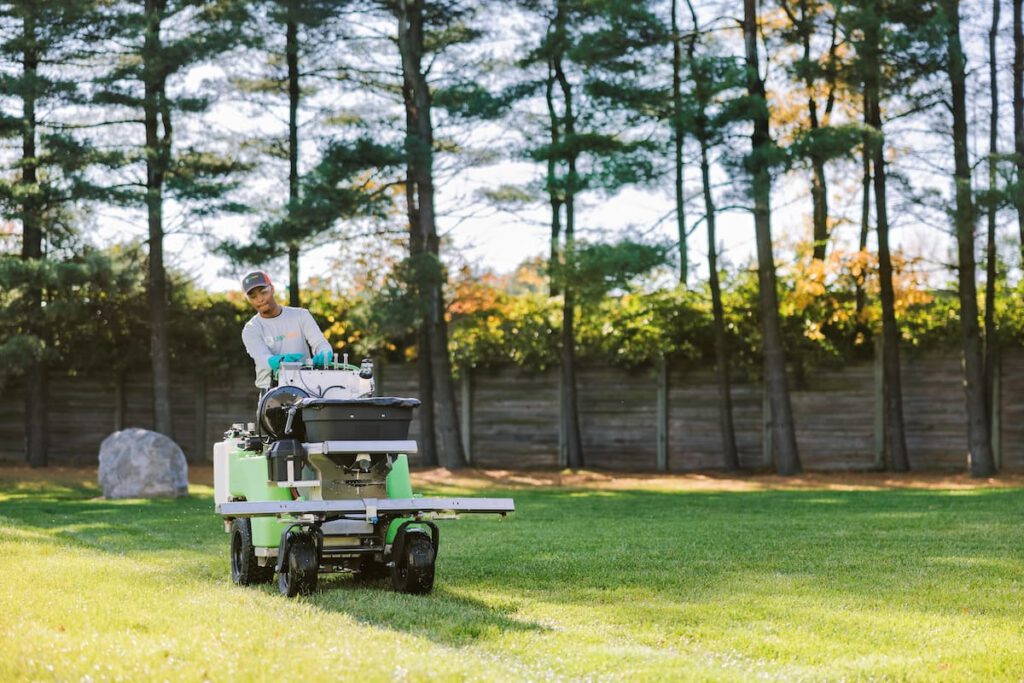
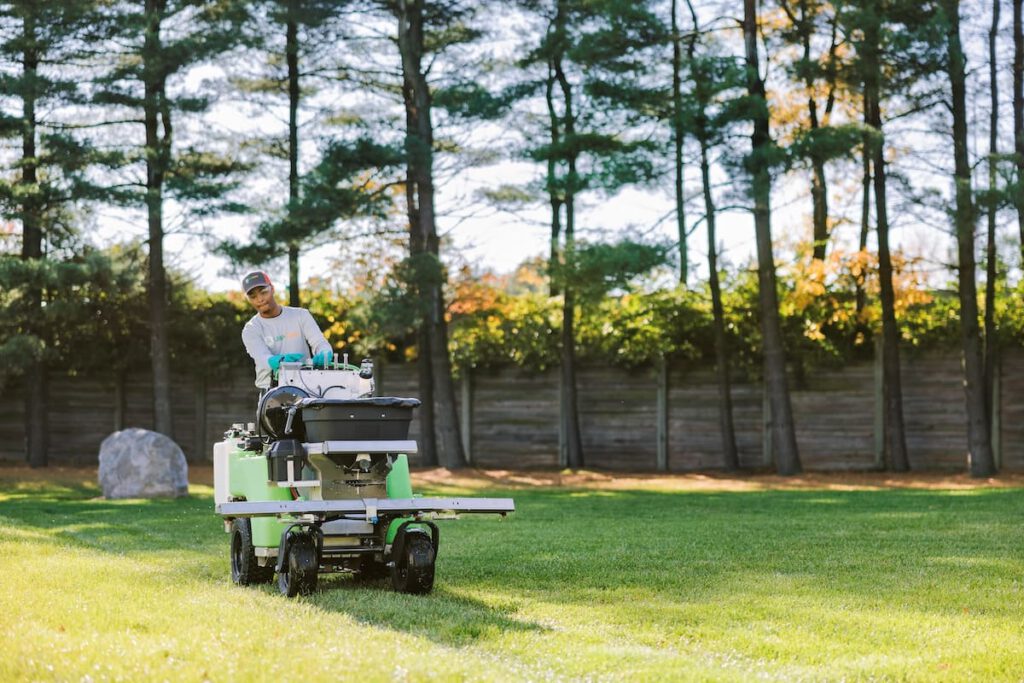
If you would rather have someone else handle the timing decisions, product selection, and application for your Chattanooga lawn, we are here for that. Lawn Squad of Chattanooga serves homeowners across the Chattanooga area. Visit lawnsquad.com to request a free quote. Our VitaminLawn program is built for the grass types, soils, and weather patterns we deal with here.
Here is what to expect. We will look at your grass, talk through how your lawn handled this year, and explain what we would apply before winter and why. If your lawn does not need a late-season application, we will tell you that honestly.