
Is a Fall Lawn Program Worth It in Huntsville? A Look at the Numbers
Short Answer: A single fertilization visit for a typical Huntsville lawn generally runs between $55 and $120, priced from measured turf square footage. Full season programs run five to seven visits and land between $350 and $700 annually for an average property, against roughly $200 to $350 if you buy product and apply it yourself. The gap is real but smaller than most people expect. What a program buys beyond product is correct timing for your specific grass type, which matters unusually here, plus calibrated equipment and regular eyes on the lawn. For small lawns and confident DIY homeowners, it often is not worth it.
Most articles about whether to hire a lawn care company are published by lawn care companies, which makes them worth reading with some suspicion. We would rather put the actual numbers in front of you and be honest about when the answer is no.
Here is what fall fertilization costs across Huntsville, what you are paying for beyond the bag, and the specific situations where we would tell you to handle it yourself.
Pricing Comes From Measured Turf
Fertilization is quoted per thousand square feet of actual grass, not by lot size and not by the hour. That matters here because properties vary a lot. A wooded lot up toward Monte Sano with mature canopy and natural areas may carry a third of the turf of a similar sized lot in a newer development west of town that is mostly open lawn.
This is the first thing we would question in any quote. A company naming a price without measuring is either padding to protect itself or planning to apply light, and neither serves you. Most homeowners we walk through the exercise find a smaller number than they guessed, because the house footprint, driveway, beds, and wooded areas subtract more than expected.
Once you have that figure, every quote becomes comparable. Without it, you are weighing one company’s estimate against another’s.
The Ranges
For a typical Huntsville lawn, a single fertilization application commonly falls between $55 and $120. Smaller lots closer in sit at the low end. Larger properties out toward Madison, Hampton Cove, and the more rural edges climb from there and are generally quoted per thousand square feet.
Full season programs here run five to seven visits and land between $350 and $700 annually for an average property. Per application that is meaningfully less than buying visits one at a time, which is how most companies structure it.
Doing it yourself, a quality bag covers roughly five thousand square feet and runs $25 to $45, so an average lawn needs one to two bags per application and about $30 to $50 in product. Across a season that is roughly $200 to $350, plus a spreader at $60 to $150 as a one time purchase, plus lime if a soil test calls for it, plus your time.
So the honest summary is that DIY saves something in the range of a couple hundred dollars a year on a typical property. Real money, and less of a multiple than most people assume.
What Varies Between Quotes
This is where headline comparisons mislead, and it is worth knowing before you assume the cheaper quote is the better deal.
Some programs include weed control, some include pre emergent for crabgrass, some include lime, some include disease treatment for brown patch on fescue in summer. A $350 program and a $700 program are frequently not the same service at two prices.
The questions that reveal it are specific. How many applications per year. Is weed control included or separate. Is lime included and is it based on a soil test. Does the schedule change depending on whether I have fescue or Bermuda. Ask those of everyone you call, including us.
That last question matters more here than in most markets, and a company that does not have a good answer is telling you something useful.
What You Are Actually Paying For
It is not the fertilizer. Commercial product is more consistent in granule size and blend uniformity than consumer product, but that difference alone would not justify the price.
The first real item is timing tied to your grass type. Huntsville sits in the transition zone, so fescue lawns want a late feeding into November and Bermuda and zoysia lawns need nitrogen stopped by early October. Getting that backwards is the most expensive mistake available in this market, and a program that handles it correctly is worth something.
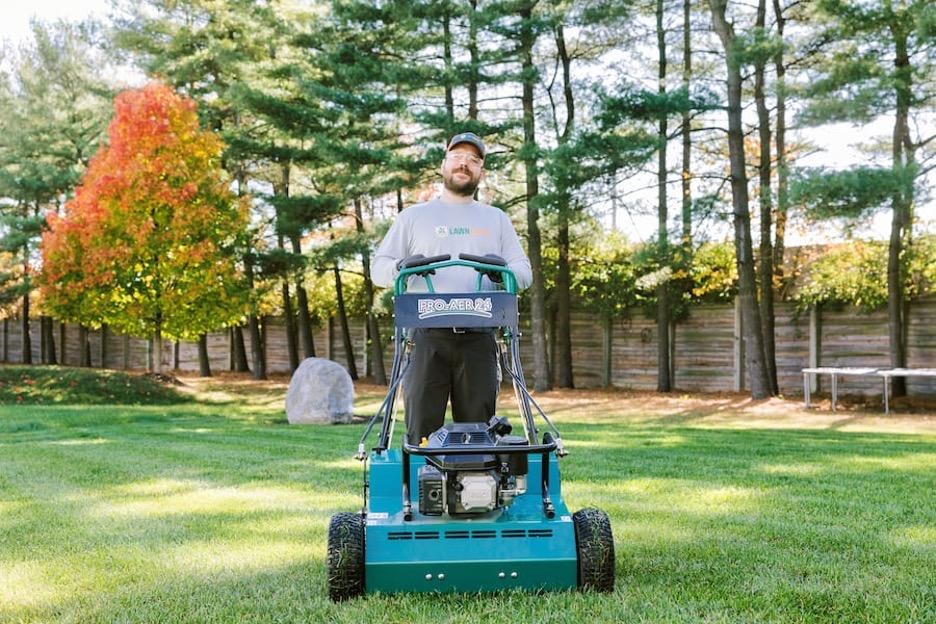
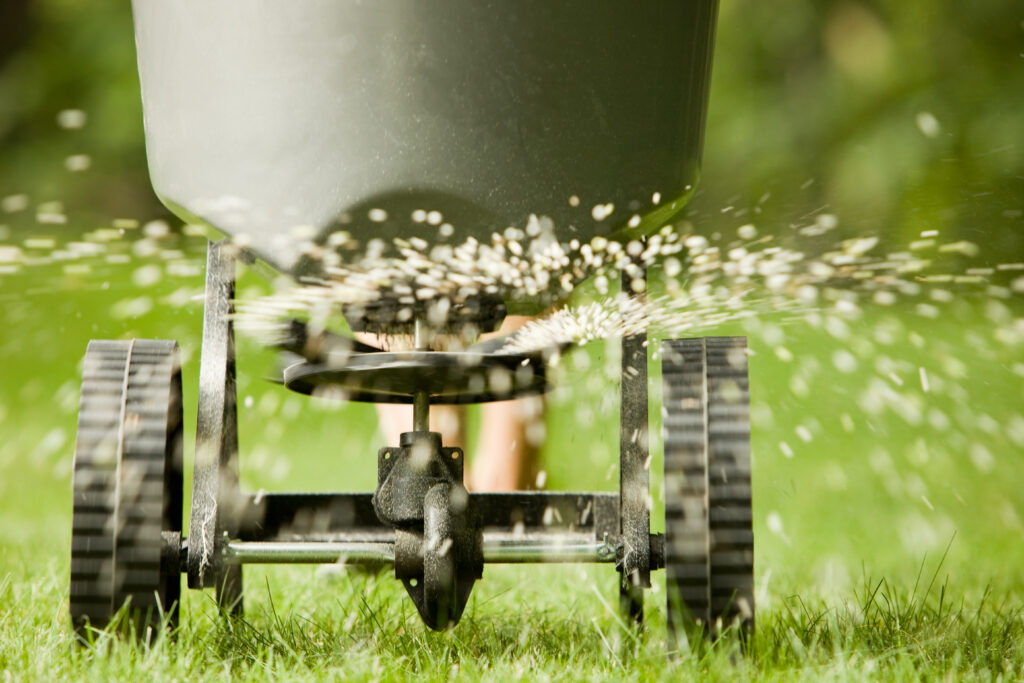
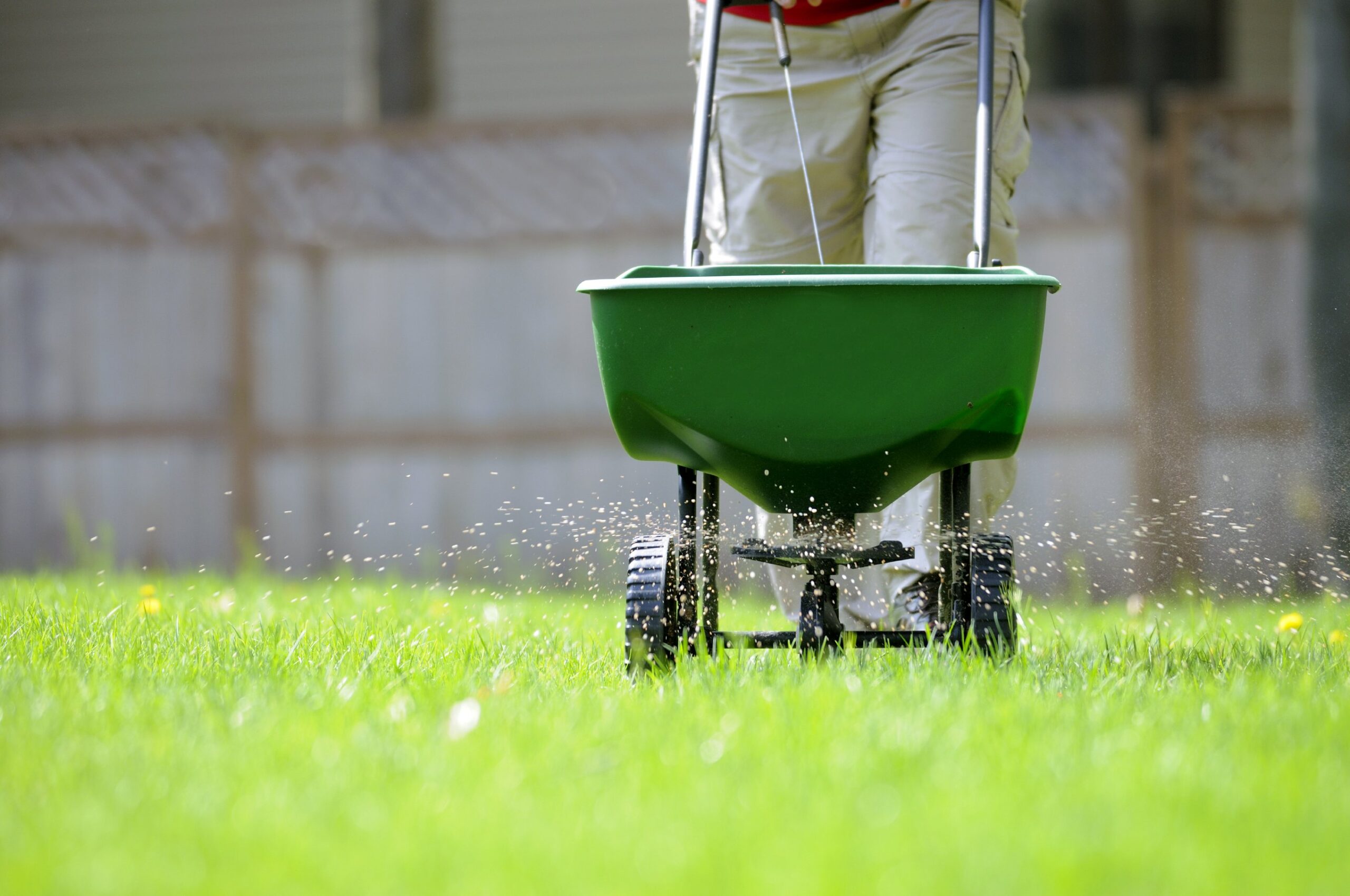
The second is calibrated equipment. Every spreader setting number means something different on every bag, because granule size and density vary. Applying twenty percent heavy wastes product and can burn turf. Applying twenty percent light produces a lawn that never quite responds, and most homeowners never verify.
The third is eyes on the lawn five to seven times a year. Brown patch hits fescue in our summer humidity and leaves gaps that do not self repair, since fescue grows in bunches rather than spreading. Large patch hits zoysia in cool fall conditions. Grub damage peaks in early fall and looks like drought. Catching any of them early is frequently worth more than the application it was noticed during.
Lime Is Often the Better Purchase
Worth raising in a pricing article because it changes what the money should go toward.
Soils across much of our area run acidic, and at low pH the nutrients you apply become chemically less available to roots. A portion of every bag goes unused. Lime raises pH over months, and on strongly acidic soil it frequently produces a larger visible improvement than another fertilizer application would.
If you are deciding between adding a sixth fertilizer visit and applying lime this fall, lime is usually the better value on acidic ground. It is also the one input we would not want a homeowner guessing at, since over liming creates the opposite problem and is harder to reverse.
A soil test costs a fraction of a single application and tells you whether this applies to your yard at all. In our area it frequently redirects the entire plan, which is a good return on ten or fifteen dollars.
When It Is Not Worth It
There are clear cases where hiring out does not make sense, and saying so costs us nothing.
If you enjoy yard work, own a decent spreader, will calibrate it once a season, and know which grass you have, you can get results very close to professional. Fertilization is among the most DIY friendly parts of lawn care, considerably more so than weed control or disease management.
Small lawns are another case. Under about three thousand square feet, the per visit minimum most companies charge makes the economics awkward, and a single bag covers a large share of your year.
And if the lawn is not a priority right now, that is a legitimate position rather than a failure. A fescue lawn that gets one well timed late fall feeding a year and nothing else will still be meaningfully better than one that gets nothing.
When It Usually Is Worth It
The situations where a program tends to pay for itself are fairly specific too.
Mixed lawns, where fescue and Bermuda are intermingled and need different treatment, are genuinely difficult to manage from a bag and a calendar. Larger properties, where the per visit efficiency improves and the labor of self applying gets real. Lawns with a recurring problem nobody has diagnosed, where the value is in figuring out what is actually wrong rather than in the product.
And homeowners who want it handled without thinking about it. That is a perfectly good reason and we would not pretend otherwise.
What to Do Next
Identify your grass first, since it changes both the schedule and what a sensible program looks like. Green last January means fescue. Tan means Bermuda or zoysia.
Measure your turf. Pace the perimeter of each grass area, multiply, and subtract beds, paving, structures, and wooded areas. That figure makes every quote comparable and tells you what a DIY season would actually cost.
Get a soil test before committing to anything. On acidic soil it frequently changes the priority order from more fertilizer toward lime, and it is the cheapest useful step in lawn care.
If you decide you would rather hand it off, we are here for that. Visit lawnsquad.com to find Lawn Squad of Huntsville and request a free quote on your property. Our VitaminLawn program is built around the transition zone grasses and soils we actually work with here, and we are happy to tell you honestly when your lawn does not need us.