
The short answer: Protecting your lawn from surface insects in Central and Eastern Massachusetts means knowing which insects are active, recognizing damage early before it spreads, and applying targeted treatments at the right time — because most surface-feeding insects cause their worst damage within a matter of days and are far easier to control when caught in their early stages.
Surface insects are among the most misdiagnosed lawn problems across the region. Brown patches, ragged grass blades, and thinning turf get blamed on drought, disease, or poor soil — and homeowners water, fertilize, and treat for fungus while the actual culprits keep feeding. By the time the correct diagnosis is made, significant damage has already occurred and recovery takes the rest of the growing season.
Central and Eastern Massachusetts lawns face consistent pressure from several key surface-feeding insects throughout the growing season. The homeowners who maintain the cleanest, healthiest lawns in the region are not the ones who react after half their lawn has browned out — they are the ones who monitor regularly, recognize the signs early, and act quickly when populations build to damaging levels.
Quick overview:
- Know your insects: Each pest has a distinct damage pattern, active season, and treatment approach
- Monitor regularly: Most surface insects are visible or detectable with simple tests — monthly checks through the growing season catch problems early
- Treat at the right time: Surface insect control is most effective when targeting young, actively feeding insects — timing is everything
- Healthy turf helps: Dense, well-maintained cool-season grass recovers faster and tolerates surface insect pressure better than thin, stressed turf
Keep reading to learn exactly which surface insects threaten Central and Eastern Massachusetts lawns — and how to stop them before they cause serious damage.
Why Surface Insect Pressure Is a Year-Round Concern in Central and Eastern Massachusetts
Massachusetts homeowners often think of insect problems as a mid-summer issue. In reality, surface-feeding lawn insects are active across a much broader window — from the first warm days of spring through late fall — and the most damaging populations often build quickly during periods when homeowners are not actively watching for them.
Unlike grub damage, which occurs underground and progresses slowly, surface insect damage can be alarmingly fast. A large population of armyworms can strip a lawn to bare soil in a matter of days. Sod webworm feeding that goes unnoticed for two weeks can produce patches that take an entire fall recovery season to fill in. Chinch bug populations that begin building in June can cause widespread turf death before August arrives.
Central and Eastern Massachusetts also presents specific conditions that favor certain surface insect populations. The region’s humid summers create ideal egg-laying and hatching conditions for several moth species whose larvae are among the most destructive surface-feeding insects in the region. Sandy soils — common in areas of Eastern Massachusetts including the South Shore, Cape Cod region, and the Merrimack Valley — warm quickly in spring, accelerating insect development and extending the active season on both ends.
Cool-season grasses — primarily tall fescue, Kentucky bluegrass, and perennial ryegrass — are the dominant turf types across the region. While these grasses are well-suited to Massachusetts conditions, they have a narrow window of vigorous growth in spring and fall and are under natural stress during summer heat. Surface insect feeding during summer stress compounds turf damage and slows recovery significantly compared to damage that occurs during the active growing season.
The Most Common Surface Insects in Central and Eastern Massachusetts Lawns
Sod Webworms
Sod webworms are the larvae of several species of lawn moths and are among the most widespread and damaging surface insects across Central and Eastern Massachusetts. The adult moths — small, buff-colored insects that fly in a distinctive zigzag pattern just above the lawn surface at dusk — are often the first visible sign that a problem is developing.
Adult moths do not feed on grass. They lay eggs in the lawn during evening flights from late June through August, and the eggs hatch into small caterpillars that feed on grass blades at night and in the early morning hours. During the day, sod webworm larvae shelter in silk-lined tunnels in the thatch layer, making them invisible until damage appears.
What the damage looks like: Sod webworm damage appears as irregular patches of closely cropped, brown grass — as if the turf has been scalped in random areas. The ragged, chewed appearance of grass blades near the edge of damaged areas distinguishes sod webworm damage from drought stress or disease, which produce smoother browning patterns. Damage often appears first in sunny, south-facing areas and near the edges of the lawn.
How to confirm sod webworm activity: Mix two tablespoons of liquid dish soap with two gallons of water and drench one to two square yards of turf at the edge of a damaged area. Sod webworm larvae will surface within five to ten minutes. Finding three or more larvae per square yard indicates a population large enough to cause significant damage.
When they are most active: Sod webworm damage in Central and Eastern Massachusetts is most common from July through early September, corresponding to the hatching of eggs laid during the adult flight period. A partial second generation can extend damage into early fall in warm years.
Treatment: Surface insecticide applications are highly effective against young sod webworm larvae. Treatments should be applied in the late afternoon or early evening when larvae are beginning to feed, and irrigation should be avoided for 24 hours after application to keep the product on the leaf surface where larvae contact it. Mowing before treatment maximizes larval exposure to the insecticide.
Armyworms
Fall armyworms are caterpillars — the larvae of a migratory moth species — that periodically cause significant damage to Massachusetts lawns, particularly during warm summers and early falls when moth populations migrate northward from southern states. Armyworm outbreaks are somewhat unpredictable but can be devastating when they occur, with large populations capable of completely stripping a lawn of green vegetation in two to three days.
What the damage looks like: Armyworm damage is dramatic and fast-moving. Irregular patches of completely defoliated, brown grass that expand visibly from day to day are the hallmark of a significant armyworm infestation. Unlike sod webworm damage — which builds gradually over weeks — armyworm damage can transform a green lawn into a brown one almost overnight during peak feeding.
Armyworms feed most aggressively at night and in the early morning. During the day they shelter at the soil surface under thatch. Flocks of birds feeding actively and persistently across your lawn are a reliable early indicator of armyworm activity — birds track the larvae efficiently and often detect infestations before visible damage is obvious.
How to confirm armyworm activity: The same soap flush test used for sod webworms confirms armyworm presence. Armyworm larvae are larger than sod webworm larvae — up to one and a half inches long at maturity — and are distinctly striped with pale and dark longitudinal bands.
When they are most active: Armyworm outbreaks in Central and Eastern Massachusetts typically occur from August through early October, though timing varies with annual migration patterns. Peak damage often coincides with the first flush of fall growth that makes lawns particularly attractive to feeding caterpillars.
Treatment: Speed is critical when armyworms are confirmed. A single generation completes its feeding cycle in two to three weeks, and populations can devastate large areas in that window. Surface insecticide applications targeting young larvae provide effective control. As with sod webworms, late afternoon or evening application and a post-treatment irrigation hold produces the best results.
Chinch Bugs
Chinch bugs are small but highly destructive surface insects that damage lawns by piercing grass stems and injecting a toxin that prevents water uptake. They are most damaging during hot, dry weather and are a more significant pest in Eastern Massachusetts — particularly in coastal communities and areas with sandy soils — than in cooler inland areas.
What the damage looks like: Chinch bug damage looks almost identical to drought stress at first — patches of yellowing, then brown, dead-looking grass that typically begins in hot, sunny areas near driveways, sidewalks, and lawn edges. The critical distinction is that drought-stressed grass recovers when you water it. Chinch bug damaged areas do not improve with irrigation, regardless of how much water is applied.
Damage spreads outward from initial hot spots as chinch bug populations move in search of fresh feeding sites. In severe infestations, entire sections of lawn can be killed before the cause is correctly identified.
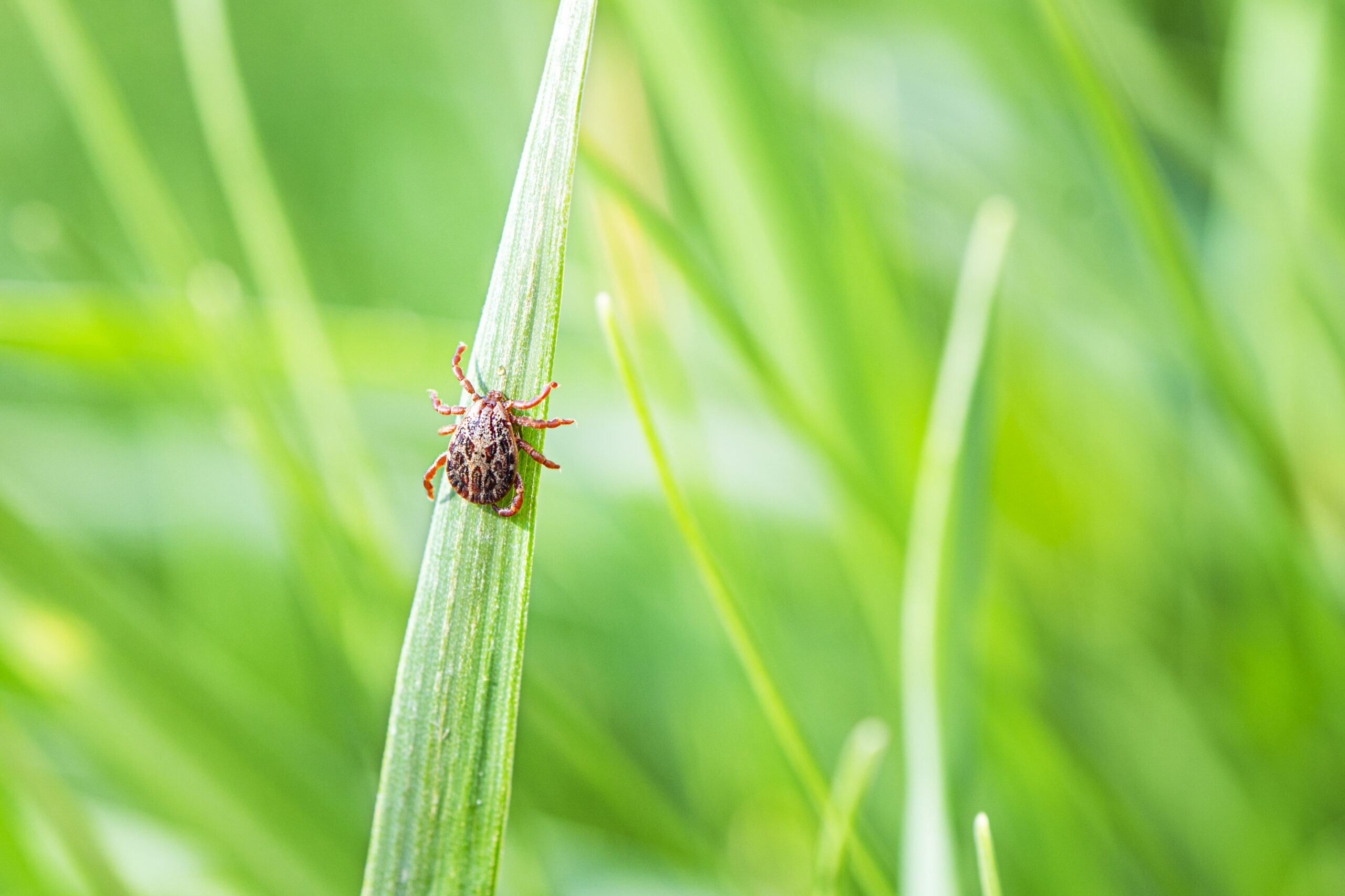
How to confirm chinch bug activity: Part the grass at the border between healthy and damaged turf and examine the soil surface and lower grass stems closely. Chinch bugs are small — adult insects are roughly one-fifth of an inch long — but visible to the naked eye. Look for black insects with white wing patches. You can also press a coffee can with both ends removed several inches into the soil at the damage margin, fill it with water, and watch for chinch bugs floating to the surface within a few minutes.
When they are most active: Chinch bugs begin building populations in May and June and cause the most damage from July through August in Massachusetts. They thrive in hot, dry conditions and in lawns with excessive thatch buildup. Lawns that are drought-stressed are significantly more susceptible to chinch bug damage than well-irrigated turf.
Treatment: Surface insecticide applications targeting areas of active infestation and the surrounding turf where population spread is occurring provide effective control. Thatch management through annual core aeration reduces the protected habitat that supports chinch bug populations and lowers long-term pressure.
Hairy Chinch Bugs
The hairy chinch bug is a close relative of the common chinch bug and is the more prevalent species in New England, particularly in lawns containing fine fescue and perennial ryegrass. It causes identical damage patterns and responds to the same treatments, but is slightly more cold-tolerant and maintains damaging populations further into fall than the common chinch bug.
Fine fescue lawns — common in shaded areas and lower-maintenance landscapes across Central and Eastern Massachusetts — are particularly susceptible to hairy chinch bug damage. Homeowners with fine fescue content in their lawn should monitor specifically for hairy chinch bug activity from June through September.
Cutworms
Cutworms are the larvae of several moth species and feed at or just below the soil surface, cutting grass stems at the crown. They are more common in newly seeded lawns and in areas adjacent to vegetable gardens where moth populations are high, but established turf lawns also experience cutworm damage, particularly in spring and early fall.
What the damage looks like: Cutworm damage produces small, irregular patches of dead or missing grass where stems have been cut cleanly at the surface. In newly seeded areas, cutworms can destroy large sections of young seedlings before they have a chance to establish. In established turf, damage is typically more scattered and less severe than sod webworm or armyworm infestations.
Treatment: The same soap flush test confirms cutworm presence. Surface insecticide applications provide effective control. Evening application is particularly important for cutworms, which feed most actively after dark.
Billbugs
Billbugs are weevils whose larvae feed on grass stems at the thatch-soil interface — making them a surface-adjacent pest that bridges the categories of surface and subsurface insects. Adult billbugs are visible on sidewalks and driveways in late spring as they move across hard surfaces in search of egg-laying sites. Larvae feed from late spring through summer, severing grass stems at the crown and causing patches of dead turf that pull up easily with no root system attached.
What the damage looks like: Billbug damage is frequently misidentified as drought stress or grub damage. The diagnostic clue is the condition of the stem base — billbug-damaged grass stems show a sawdust-like frass at the point of feeding when examined closely. Affected turf pulls up easily, but unlike grub damage, the roots are still attached — it is the stems that have been severed.
Billbug damage in Massachusetts is most common in perennial ryegrass and Kentucky bluegrass lawns and tends to appear as scattered, irregular patches in mid to late summer.
Treatment: Preventive insecticide treatments targeting adult billbugs as they move across the lawn in late spring — typically May through early June in Central and Eastern Massachusetts — are the most effective approach. Curative treatments targeting larvae are less reliable once damage has appeared.
How to Tell Surface Insect Damage Apart From Other Problems
One of the most important skills in lawn care is correctly identifying the cause of damage before reaching for a treatment. Surface insect damage, drought stress, fungal disease, and grub damage can all look similar on the surface.
Surface Insects vs. Drought Stress
- Drought stress causes uniform discoloration across the lawn, particularly in full sun. Surface insect damage creates irregular patches that spread in a pattern.
- Drought-stressed grass recovers within a day or two of irrigation. Insect-damaged areas do not improve with watering.
- Drought stress produces folded, blue-gray grass blades. Surface insect damage shows chewed, ragged, or severed blades.
- The soap flush test confirms or rules out surface insect activity in minutes.
Surface Insects vs. Fungal Disease
- Fungal disease patches often have circular shapes with distinct edges or a water-soaked appearance. Surface insect damage patches are more irregular.
- Look at individual grass blades: disease produces lesions, spots, or discoloration on the blade itself. Insect damage produces physical feeding damage — chewed tips, cut stems, or missing sections.
- Fungal disease typically worsens after rain or irrigation. Surface insect damage is not directly triggered by moisture events.
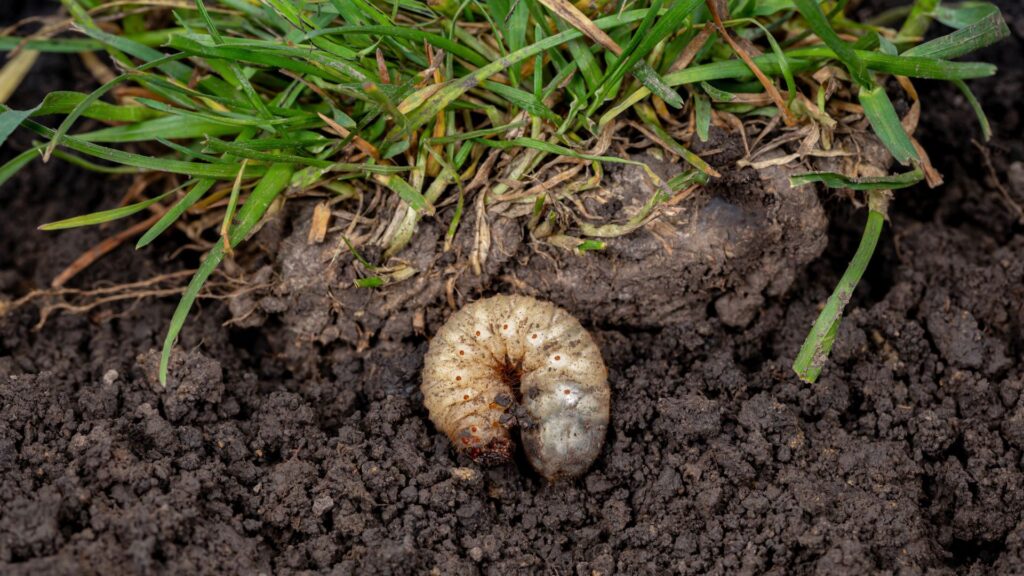
Surface Insects vs. Grub Damage
- Grub damage occurs underground — turf pulls up like a carpet with the root system destroyed. Surface insect damage leaves roots intact.
- Grub-damaged areas feel spongy underfoot due to root destruction. Surface insect damage areas feel normal underfoot initially.
- Look for physical evidence of larvae at the soil surface or in the thatch for surface insects. Grub damage requires digging into the soil to find larvae below the surface.
The Soap Flush Test: Your Most Important Diagnostic Tool
The soap flush test is simple, inexpensive, and one of the most reliable diagnostic tools available to Massachusetts homeowners for confirming surface insect activity. Keep the materials on hand throughout the growing season so you can test whenever you notice suspicious browning or thinning.
Materials: Two tablespoons of liquid dish soap, two gallons of water, a watering can.
Method: Mix soap and water in the watering can. Select a one to two square yard area at the edge of a suspected damage zone — where healthy turf meets damaged turf. Drench the area thoroughly and wait five to ten minutes.
What to look for: Surface-dwelling insects — sod webworms, armyworm larvae, cutworms, billbug adults — will surface within the test period. Count the number of insects per square yard to estimate population density.
Action thresholds: Three or more sod webworm or armyworm larvae per square yard indicates a population requiring treatment. Even smaller numbers in a lawn already showing damage warrant immediate action.
Preventive vs. Curative Surface Insect Control
Like most lawn pest problems, surface insect control works best when it gets ahead of damage rather than reacting to it.
Preventive Treatments
Preventive insecticide applications create a protective barrier in the turf that kills surface-feeding insects before populations build to damaging levels. For lawns with a history of sod webworm or chinch bug pressure, preventive applications in late June through early July — timed ahead of peak egg hatching — reduce damage significantly compared to reactive curative treatments applied after browning begins.
Curative Treatments
When damage is already visible and a soap flush test confirms active insect populations, curative applications stop ongoing feeding and prevent further spread. Most surface insecticides provide effective curative control when the target insects are young and actively feeding. As larvae mature, they become progressively less susceptible to treatment — another reason that early identification and quick action produce better results.
The Role of Healthy Turf
A dense, healthy lawn tolerates surface insect feeding better than thin, stressed turf and recovers more quickly after populations are controlled. Annual core aeration reduces thatch — the protected habitat that supports chinch bugs and sod webworms — and promotes the deep root growth that helps grass recover from surface feeding damage. Proper mowing height (3.5 to 4 inches for tall fescue; 2.5 to 3.5 inches for Kentucky bluegrass) maintains turf density that makes lawns more resilient to all forms of stress, including insect damage.
Your Central and Eastern Massachusetts Surface Insect Calendar
| Season | Primary Threats | Key Actions |
|---|---|---|
| Spring (Apr – May) | Billbug adults; overwintering chinch bugs becoming active | Monitor for billbug movement; preventive treatment for high-risk lawns |
| Early summer (Jun – Jul) | Chinch bugs building; first sod webworm moth flights | Soap flush test monthly; treat chinch bug hot spots; watch for moth flights |
| Peak summer (Jul – Aug) | Sod webworms; chinch bugs; early armyworms | Most critical monitoring period; treat sod webworms promptly after soap flush confirmation |
| Late summer / fall (Aug – Oct) | Armyworms; second sod webworm generation; billbug larvae | Act immediately on armyworm confirmation; monitor for second webworm flush |
| Fall (Oct – Nov) | Populations declining; assess damage | Overseed damaged areas; aerate to reduce thatch and compaction |
Common Surface Insect Control Mistakes Massachusetts Homeowners Make
Watering Damaged Areas Without Investigating the Cause
Brown patches that do not respond to irrigation are a red flag for surface insect activity. Increasing watering when chinch bugs are the actual culprit delays correct diagnosis and does nothing to stop the infestation.
Missing the Sod Webworm Treatment Window
Sod webworm larvae are most vulnerable — and most effectively treated — when they are young and small. Waiting until large patches of brown turf are visible often means larvae have matured past the stage where surface treatments are most effective. Monthly soap flush tests through July and August catch populations before visible damage appears.
Treating Only the Damaged Area
Surface insects spread outward from active feeding zones. Treating only the visibly damaged patch leaves the surrounding population — where insects are actively moving — untreated. Applications should extend well beyond visible damage margins into adjacent healthy-looking turf.
Watering Immediately After Application
Most surface insecticide treatments need to remain on the leaf surface for a period of time to be effective. Irrigating within 24 hours of treatment washes the product into the soil before surface-feeding larvae contact it. Wait at least 24 hours after application before watering.
Assuming Recovery Will Be Automatic
Surface insect damage does not heal itself — dead turf does not regrow. Once insect populations are controlled, damaged areas need to be overseeded in fall to restore density. Skipping overseeding leaves thin, bare areas that become weed magnets the following spring.
Professional vs. DIY Surface Insect Control
DIY surface insect control is practical for attentive homeowners willing to perform monthly soap flush tests through the growing season, correctly identify the pest involved, and apply the right product at the right time. Effective surface insecticides are available at local home improvement stores, and the soap flush test requires no special equipment.
Best for: Homeowners who enjoy hands-on lawn care, monitor their lawn closely through the summer, and can act quickly when insect activity is confirmed.
Professional surface insect control provides expert identification, commercial-grade products, and treatment timing calibrated to local insect development cycles in Central and Eastern Massachusetts — ensuring that the narrow windows for most effective treatment are never missed, even when homeowners are traveling or managing other priorities during peak summer months.
Best for: Lawns with recurring surface insect problems, homeowners who have struggled to stay ahead of sod webworm or chinch bug damage in past seasons, and anyone who wants reliable protection without the burden of monthly monitoring and rapid response requirements.
The Bottom Line
Surface insect control in Central and Eastern Massachusetts is a seasonal discipline that rewards attentiveness and quick action. The insects that cause the most damage — sod webworms, armyworms, and chinch bugs — are all highly treatable when caught early and highly damaging when allowed to build unchecked through the summer.
Key principles to carry with you:
- The soap flush test is your most valuable diagnostic tool — use it monthly from June through September
- Surface insect damage does not improve with irrigation — correct diagnosis before adding water
- Treat beyond the visible damage margin — insect populations extend into adjacent turf that looks healthy
- Armyworms move fast — immediate action when confirmed prevents catastrophic damage
- Overseed all surface insect-damaged areas in fall — dead turf does not recover on its own
- Annual core aeration reduces thatch and creates a less hospitable environment for chinch bugs and sod webworms over time
The homeowners with the best-looking lawns in Central and Eastern Massachusetts are the ones who catch surface insect problems in June and July — not the ones who discover them in August when half the lawn is already brown.
Let Lawn Squad Protect Your Massachusetts Lawn From Surface Insects
Every lawn in Central and Eastern Massachusetts faces its own combination of insect pressure based on its grass type, soil, location, and history. Cookie-cutter treatment schedules applied without regard for actual insect activity frequently miss the specific pests damaging your turf at the specific time they are most vulnerable to control.
Lawn Squad technicians monitor for surface insect activity during every visit, identify problems early, and apply targeted treatments timed to local insect development cycles — so your lawn gets the right treatment at the right time, every time.
Lawn Squad lawn surface insect control services include:
- Seasonal monitoring for sod webworms, armyworms, chinch bugs, billbugs, and cutworms
- Preventive and curative insecticide applications timed to Central and Eastern Massachusetts insect activity windows
- Soap flush testing and population assessment during service visits
- Integrated programs combining surface insect control with fertilization, weed control, grub control, and aeration
- Unlimited service calls when insect activity appears between scheduled visits
Do not wait until brown patches are spreading across your lawn to take surface insect pressure seriously.
Contact Lawn Squad today at 978-267-3440 or visit https://lawnsquad.com/contact-us/ to get your free quote and keep your Central and Eastern Massachusetts lawn protected all season long.