How Do I Seed My Frederick County Lawn: Soil Prep, Seed Choice, and the Late-August Window?
Short Answer: Three things decide whether a Frederick County seeding succeeds: preparation, seed, and timing. Prep the ground with core aeration so seed reaches soil instead of sitting on our Piedmont clay, and clear the thin areas of debris. Choose a blend built mostly on turf-type tall fescue, the grass best suited to our transition-zone climate, with bluegrass and a little ryegrass, matched to your sun and shade. And put it down in the late-August window, when soil is still warm enough for quick germination and nights have cooled. Water lightly and often for the first two weeks. Miss any one of the three and the results suffer.
By late August a Frederick County lawn shows the wear of the season. The sunny stretches went to straw in the July heat, the clay shed the storms instead of soaking them up, and the thin areas along the walk and under the trees opened up further. The good news is that late summer into early fall is the best time of the entire year to fix it, and doing it well comes down to getting three things right rather than to luck.
Homeowners who do everything with genuine effort still end up with patchy results, and almost always it traces back to one of those three being skipped or done in the wrong order. Here is how the preparation, the seed, and the timing fit together.
Why Late August Is the Window
Frederick sits in the transition zone, the band of the country where summers are hot enough to punish cool-season grasses and winters cold enough to bother warm-season ones. The lawns here are overwhelmingly cool-season, dominated by turf-type tall fescue, and those grasses establish best from seed when two conditions overlap: soil still holding summer warmth, which drives fast germination, and air that has cooled enough to stop stressing young seedlings.
In our area those conditions line up from roughly the last week of August into mid-September. The trigger is soil temperature rather than the calendar, so a warm early September does not extend things the way it feels like it should. Seed down in that window gets warm soil for quick germination and then a couple of months of favorable weather to root before winter. Seed that waits until October is racing the cold with too little runway, and lawns established too late come back thin and shallow-rooted, the first to struggle the next summer. That is why the window is worth hitting rather than drifting past.
It is also why spring seeding, which feels intuitive, disappoints here. Spring-seeded fescue gets a few good weeks and then a transition-zone summer it is not ready for, while fall-seeded fescue roots through the entire cool season before it ever faces heat.
Soil Prep: The Part People Skip
Preparation is where most seedings are won or lost, and it is the step homeowners most often shortcut. The soil across much of Frederick County is Piedmont clay, dense and slow-draining, and in places it is rocky or shaly with a shallow workable layer. Seed broadcast onto hard, compacted clay mostly sits on the surface, dries out, and washes off with the first storm.
Core aeration is the fix, and it is not optional prep on our ground. It pulls thousands of plugs out of the clay, relieves the compaction that made the lawn shed water all summer, and leaves open holes that are the best seedbed you can create. Beyond aeration, clear leaves and dead debris off the areas you will seed so the seed can reach soil, and if you have not tested your soil recently, do it now: knowing your pH lets you correct it and pick the right starter fertilizer rather than guessing, and our clay chemistry drifts over the years.
On the rockier, shalier lots common in parts of the county, it helps to know about that shallow workable layer before you seed, since it limits how deeply roots can go and makes the moisture management and organic matter that aeration supports even more important.
Seed Choice: Tall Fescue Is the Backbone Here
In the transition zone, the workhorse grass is turf-type tall fescue, and it should be the base of nearly any Frederick County blend. It roots deeply, which is exactly what gets a lawn through our hot, dry Augusts, and the modern turf types are fine-bladed and dark green, nothing like the coarse pasture fescue of decades past. Kentucky bluegrass makes a good supporting player because it spreads by rhizomes and knits small damage closed, and a modest share of perennial ryegrass germinates fast and holds the seedbed while the slower species establish.
Match the blend to your light. Sunny lawns do best on that fescue-based mix; heavily shaded areas under mature trees do better with fine fescues, which tolerate low light far better than bluegrass. And buy by the tag on the back, not the picture on the front: look for named varieties rather than a generic species name, a weed-seed figure near zero, and no annual ryegrass, which looks lovely this fall and is gone by next July. A bargain bag is cheap because of what is in it, and you pay for it twice, once at the register and again in the weeds that came along for free.
Overseed or Full Renovation?
One decision shapes the whole job: are you overseeding a thin lawn or renovating a mostly dead one? If more than roughly half of an area failed the tug test, spot-seeding into it just leaves a patchy result competing against the surviving weeds, and a full renovation of that area, clearing it and starting the seedbed fresh, produces a far better stand. If the lawn is mostly alive and simply thin, overseeding into aeration holes is the right, lighter touch. Matching the effort to the actual damage keeps you from underdoing a ruined area or overworking a healthy one.
Why Aeration and Seed Belong in the Same Visit
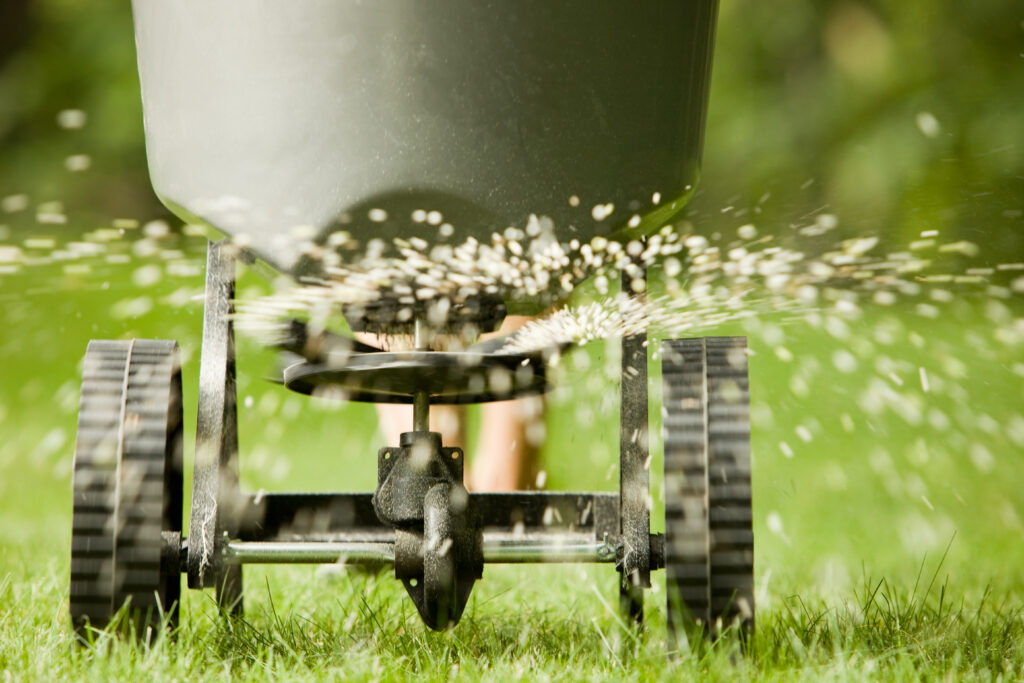
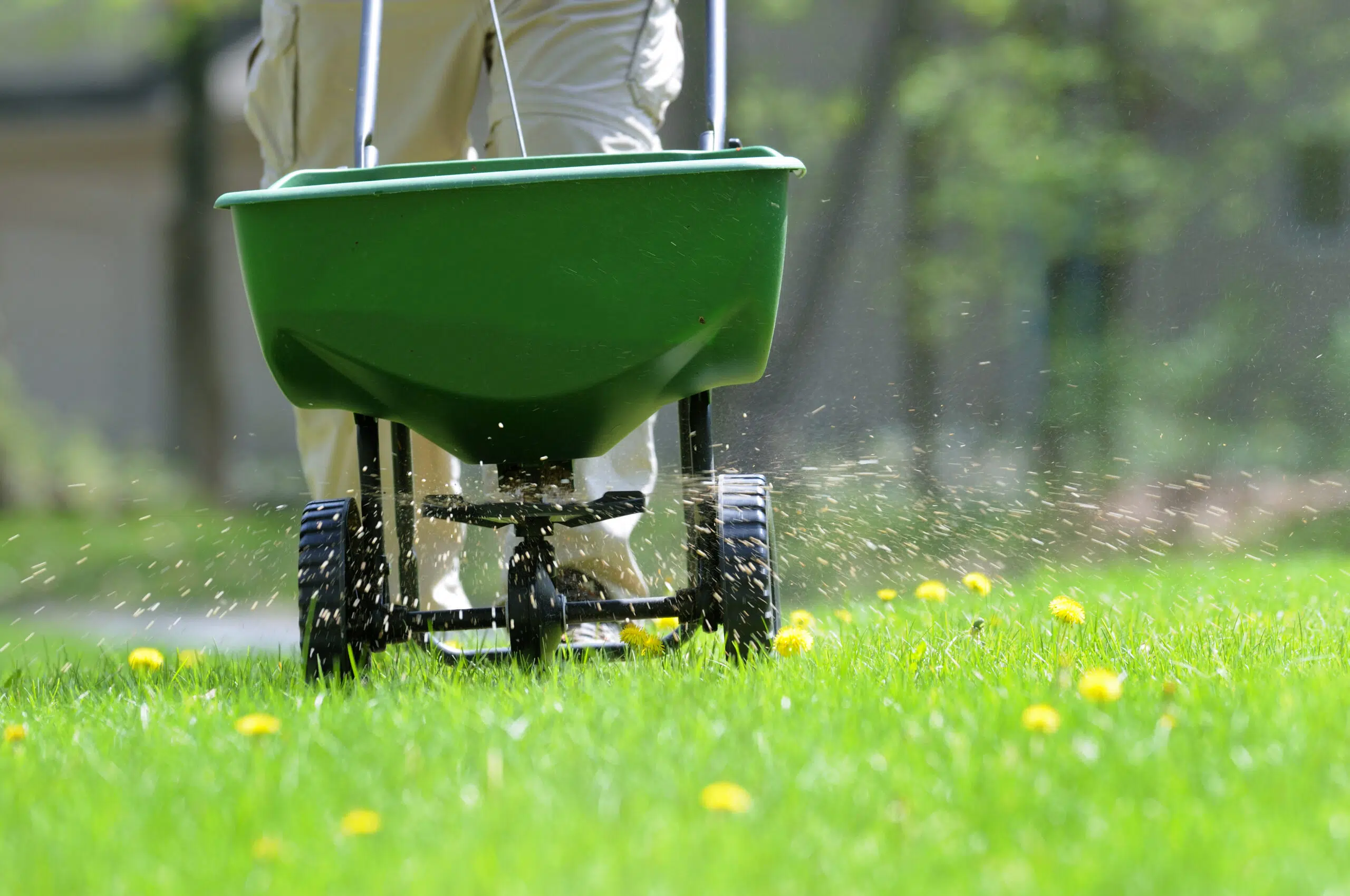
The reason preparation and seeding are best done together is mechanical. Seed does not germinate reliably lying on top of thatch or hard clay. It germinates when it makes firm contact with soil that stays damp, and an open aeration hole is a small, shaded, moisture-holding pocket, exactly the conditions a seed needs. Overseeding immediately after aeration drops the seed into those pockets, dramatically improving establishment over broadcasting it onto an untouched surface. That is why the sequence is aeration first, then seed, ideally the same afternoon, and why concentrating the seed on the thin and bare areas rather than spreading it evenly makes the most of it.
Watering Is the Opposite of Summer Watering
Once seed is down, the rules flip. Established turf wants deep, infrequent soaking. Germinating seed wants the top half inch of soil constantly moist, which means short, light cycles two or three times a day for the first couple of weeks. Letting that surface dry out at midday kills the seedlings that had just started, and it is the single most common reason a well-prepped, well-chosen seeding still underperforms. Once the new grass is up and mowed once, begin easing off the frequency and lengthening each session until you are back to deep watering by mid-autumn.
What to Do Next
Walk the property this week and mark what is genuinely thin rather than merely dormant, arrange a soil test, and get aeration and overseeding scheduled into the late-August window rather than after it. Call us at 180-666-8133 or request a free quote at lawnsquad.com. We serve Frederick, SERVICE_AREA_PLACEHOLDER, and the surrounding communities.
A first visit is a walk of the property with you. We check compaction and thatch, look at how much living turf is actually left in the thin areas, assess sun and shade, pull a soil sample where it makes sense, and recommend seed by area rather than by bag. Expect ryegrass to germinate in about a week, tall fescue and bluegrass to follow, a patchy but improving lawn at thirty days, and a dense stand heading into winter, with the real payoff visible next spring when the seeded areas green up thick alongside everything else.
Longer term, the lawns that shrug off a Frederick County summer are the ones with deep roots and balanced soil nutrition going in, which is the whole idea behind our VitaminLawn program. It builds fertilization and weed control around the grass types, the Piedmont clay, and our transition-zone seasons rather than a national schedule. Every location is independently owned and operated, quotes are free, and the work is backed by a satisfaction guarantee.