The short answer: Preventing lawn diseases in Midwest weather requires understanding that most fungal problems develop when specific temperature and moisture conditions combine. Proper watering practices, correct mowing height, adequate air circulation, and timely fungicide applications when needed form the foundation of disease prevention.
Homeowners across Chicago’s North Shore deal with lawn diseases every year because our climate creates perfect conditions for fungal growth. The combination of humid summers, temperature swings, and frequent rain events in communities like Glenview, Wilmette, and Highland Park means disease pressure is simply part of lawn ownership.
Quick overview:
- Spring diseases: Snow mold, leaf spot, red thread thrive in cool, wet conditions
- Summer diseases: Brown patch, dollar spot, pythium blight peak during hot, humid weather
- Fall diseases: Rust, powdery mildew appear as temperatures cool and humidity remains
- Year round prevention: Proper cultural practices reduce disease risk in every season
Understanding which diseases threaten your lawn and when they’re most likely to appear is the first step toward prevention.
The Complete Disease Prevention Approach: Our ELITE Program
At Lawn Squad of Chicago’s North Shore, disease control is built into our ELITE program because we know Midwest weather makes fungal problems inevitable without proactive treatment.
Our ELITE program includes disease control applications in Rounds 3 and 4, timed to protect lawns during the peak disease pressure months of late May through July. These preventative treatments create a protective barrier before conditions become favorable for fungal growth.
We also offer a standalone Fungicide Program with three rounds of preventative treatment for homeowners who want maximum disease protection. For lawns already showing disease symptoms, our Fungicide Curative treatment addresses active infections.
Whether you work with a professional or manage your own lawn, understanding how Midwest weather patterns trigger disease outbreaks helps you take action before problems become severe.
Why Midwest Weather Creates Perfect Disease Conditions
The Midwest climate is essentially a disease incubator for cool season lawns. Understanding why helps you anticipate problems before they appear.
Temperature fluctuations. Chicago’s North Shore experiences dramatic temperature swings, sometimes 30 degrees or more within a single week. These fluctuations stress grass plants, weakening their natural disease resistance. A lawn that was healthy on Monday can be vulnerable to infection by Friday if temperatures spike or plummet.
Humidity patterns. Lake Michigan influences humidity levels across Lake and Cook counties. Morning fog, humid nights, and extended dew periods keep grass blades wet for hours. Most fungal diseases require 10 to 14 hours of continuous leaf wetness to infect grass plants. Our climate regularly provides those conditions.
Rainfall distribution. Midwest summers alternate between drought stress and heavy rain events. Both extremes promote disease. Drought weakens grass and makes it susceptible to infection. Heavy rain creates saturated soil and extended leaf wetness that fungi need to spread.
Seasonal transitions. The transitions from winter to spring and summer to fall create specific disease windows. Snow mold develops under winter snow cover and reveals itself in spring. Fall brings rust and powdery mildew as temperatures cool while humidity remains high.
Here’s the reality that many homeowners don’t understand: You cannot completely prevent lawn disease in the Midwest through cultural practices alone. Our climate virtually guarantees that conditions favorable to disease will occur multiple times each season. The goal is to minimize risk through good practices and intervene with fungicides when conditions become severe.
Spring Disease Guide for North Shore Lawns
Spring brings specific disease challenges as lawns emerge from winter dormancy. Recognizing these early season problems allows quick intervention.
Snow Mold (Pink and Gray)
Snow mold develops under snow cover during winter and becomes visible as snow melts in early spring. You’ll see circular patches of matted, dead looking grass ranging from a few inches to several feet in diameter.
Pink snow mold (Fusarium patch) appears as salmon pink to reddish brown patches. It can kill grass crowns and requires reseeding.
Gray snow mold (Typhula blight) shows gray or silver patches with tiny black dots (fungal structures). It typically damages only grass blades, and affected areas usually recover.
Prevention strategies:
- Avoid heavy nitrogen fertilization in late fall which promotes succulent growth susceptible to snow mold
- Continue mowing until grass stops growing to prevent long blades from matting under snow
- Rake and remove leaves before snow cover
- Break up large snow piles in late winter to speed melting and reduce extended snow cover
Recovery: Rake affected areas gently to improve air circulation and promote drying. Most gray snow mold damage recovers without intervention. Pink snow mold may require overseeding in fall.
Leaf Spot and Melting Out
Leaf spot (Bipolaris/Drechslera) begins in cool, wet spring weather and can progress to a more severe condition called melting out as temperatures warm.
Early symptoms appear as small purple to brown spots on grass blades. As the disease progresses, spots enlarge and develop tan centers with dark borders. In severe cases, the fungus moves into the crown and roots, causing irregular dead patches (melting out).
Prevention strategies:
- Avoid excessive nitrogen fertilization in spring which promotes susceptible new growth
- Mow at proper height (3 to 3.5 inches for most North Shore lawns)
- Water deeply but infrequently to allow grass blades to dry between irrigations
- Improve air circulation in shaded areas where prolonged leaf wetness occurs
Why this matters for the North Shore: Our cool, wet springs in communities like Northbrook, Lake Forest, and Deerfield create ideal conditions for leaf spot development. Lawns with Kentucky bluegrass are particularly susceptible.
Red Thread
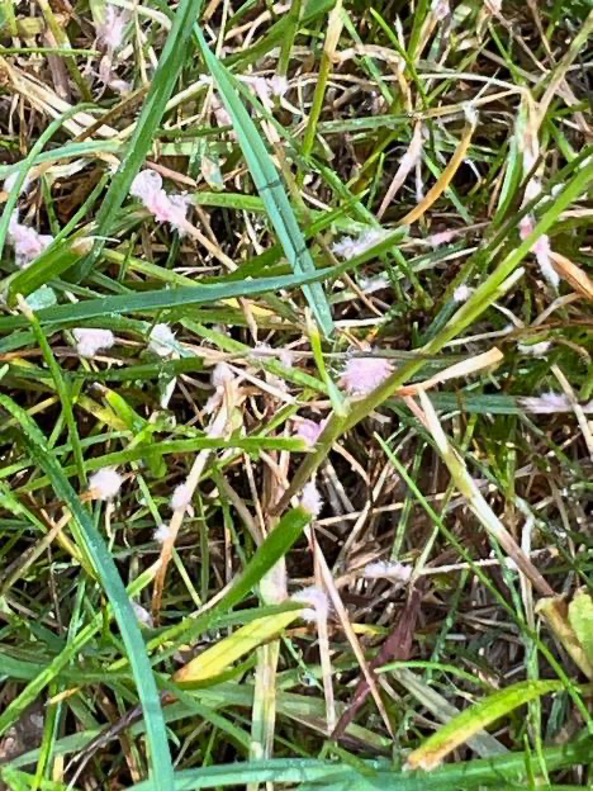
Red thread appears in spring and fall when temperatures are between 60 and 75 degrees with high humidity. You’ll notice irregular patches of tan grass with distinctive pink to red thread like strands on grass blades.
Red thread rarely kills grass but creates an unsightly appearance. It often indicates nitrogen deficiency.
Prevention strategies:
- Maintain adequate nitrogen fertility throughout the growing season
- Avoid drought stress which weakens grass and increases susceptibility
- Improve drainage in areas that stay wet
Critical warning: Red thread often appears on lawns that received inadequate fertilization the previous fall. Proper winterizer application helps prevent spring red thread outbreaks.
Lawn Squad’s comprehensive fertilization programs maintain consistent nitrogen levels that reduce red thread occurrence.
Summer Disease Guide for Chicago Area Lawns
Summer brings the most damaging lawn diseases in the Midwest. Hot, humid conditions combined with stressed grass create severe disease pressure throughout Lake, Cook, and DuPage counties.
Brown Patch
Brown patch (Rhizoctonia solani) is the most common summer lawn disease on the North Shore. It appears when nighttime temperatures stay above 68 degrees and humidity is high.
Symptoms include circular patches ranging from a few inches to several feet in diameter. Patches have a distinctive smoke ring appearance in early morning when dew is present. The outer edge of the patch appears darker and water soaked while the center may begin recovering.
Prevention strategies:
- Avoid evening irrigation that keeps grass wet overnight
- Water in early morning so grass dries before nightfall
- Reduce nitrogen fertilization during hot, humid weather
- Improve air circulation by pruning surrounding shrubs and trees
- Mow at proper height and never remove more than one third of the blade
Why timing matters: Brown patch can damage a lawn overnight when conditions are right. A preventative fungicide application before extended hot, humid periods provides protection. Waiting until symptoms appear means accepting damage that’s already occurred.
Lawn Squad’s ELITE program includes disease control in Rounds 3 and 4 specifically to protect against summer disease outbreaks including brown patch.
Dollar Spot
Dollar spot appears as small, silver dollar sized bleached spots scattered across the lawn. Individual spots may merge into larger irregular areas. Close inspection reveals grass blades with tan bands and reddish brown borders.
Dollar spot thrives when temperatures are between 60 and 85 degrees with high humidity. It often appears on drought stressed lawns or lawns with low nitrogen fertility.
Prevention strategies:
- Maintain adequate nitrogen fertility to keep grass growing vigorously
- Water deeply and infrequently rather than light, frequent irrigation
- Remove dew in the morning by mowing or dragging a hose across the lawn
- Avoid drought stress by watering during extended dry periods
Pythium Blight
Pythium blight is the most destructive summer lawn disease. It develops extremely rapidly when daytime temperatures exceed 85 degrees and nighttime temperatures stay above 68 degrees with high humidity.
Symptoms begin as small, water soaked patches that appear greasy or oily. Patches quickly enlarge and can merge, killing large lawn areas within 24 to 48 hours. In early morning, a cottony white fungal growth may be visible on affected grass.
Prevention strategies:
- Avoid excessive nitrogen fertilization during hot weather
- Never water in late afternoon or evening during hot, humid conditions
- Ensure good drainage to prevent water pooling
- Avoid mowing wet grass which spreads the fungus
Critical warning: Pythium blight spreads incredibly fast and can destroy a lawn in just a few days. Once active pythium is visible, fungicide application is urgent. This is not a disease to watch and wait.
Summer Patch
Summer patch affects Kentucky bluegrass during hot weather and appears as circular patches that turn yellow, then brown. Patches often have a frog eye pattern with dead grass surrounding a tuft of surviving grass in the center.
The fungus that causes summer patch actually infects roots in spring when soil temperatures reach 65 degrees, but symptoms don’t appear until summer heat stresses the damaged root system.
Prevention strategies:
- Maintain proper mowing height (higher during heat stress)
- Avoid compaction through aeration
- Water deeply to encourage deep root growth
- Avoid excessive nitrogen in late spring
Fall Disease Guide for North Shore Properties
Fall brings relief from summer disease pressure but introduces its own challenges as temperatures cool and humidity remains.
Rust
Rust appears in late summer and fall as orange to reddish brown powder on grass blades. Walking through a rust infected lawn leaves orange residue on shoes and mower wheels.
Rust develops when grass growth slows due to drought, low nitrogen, or shaded conditions. The disease weakens grass but rarely causes permanent damage.
Prevention strategies:
- Maintain adequate nitrogen fertility to keep grass actively growing
- Water during dry periods to prevent drought stress
- Improve air circulation and light penetration in shaded areas
- Mow regularly to remove infected blade tissue
Powdery Mildew
Powdery mildew appears as a white to gray powdery coating on grass blades, most commonly in shaded areas. It develops when temperatures are between 60 and 72 degrees with high humidity and poor air circulation.
Prevention strategies:
- Improve air circulation through selective pruning of trees and shrubs
- Reduce shade by removing lower tree limbs
- Avoid excessive nitrogen fertilization in shaded areas
- Plant shade tolerant grass varieties in problem areas
Powdery mildew is most common in heavily shaded areas of North Shore properties where mature trees limit air movement and light penetration.
How to Identify the Difference Between Disease and Other Problems
Lawn problems aren’t always disease. Insect damage, drought stress, and other issues can look similar to fungal infections. Correct identification is essential for effective treatment.
Step by step diagnosis:
- Examine individual grass blades. Disease typically causes spots, lesions, or discoloration on blades themselves. Pull up affected grass and look closely at blade surfaces.
- Check the pattern. Most fungal diseases create circular or irregular patches. Insect damage often appears in irregular shapes that don’t follow a pattern. Drought stress affects exposed areas first.
- Consider recent weather. Think about temperature, rainfall, and humidity over the past week or two. Most diseases need specific conditions to develop.
- Check the roots. Pull up a section of affected grass. If it lifts easily like loose carpet, you likely have grub damage, not disease. If roots are intact but grass is discolored, disease is more likely.
- Look for insects. Part the grass and examine the soil surface and thatch layer. Visible insects or their damage (chewed blades, webbing) indicate pest problems rather than disease.
When in doubt, contact Lawn Squad for a professional assessment. Misdiagnosing the problem leads to ineffective treatment and wasted time and money.
Common Disease Prevention Mistakes North Shore Homeowners Make
After serving communities from Evanston to Waukegan since 2001, we’ve seen these disease related mistakes repeatedly.
Mistake #1: Evening Irrigation
Watering in the evening keeps grass wet all night, creating the extended leaf wetness that fungal diseases require. This single practice causes more disease problems than any other factor.
Mistake #2: Ignoring Early Symptoms
Small disease patches are much easier to control than large outbreaks. Homeowners who notice a small patch but take a wait and see approach often watch it spread across the entire lawn.
Mistake #3: Applying Fungicide After Damage Is Done
Most fungicides are preventative, not curative. They protect healthy grass from infection but can’t bring back grass that’s already dead. By the time a disease is widespread, the damage is permanent even if fungicide stops further spread.
Mistake #4: Mowing Wet Grass
Mowing wet lawns spreads fungal spores from infected areas to healthy grass. The mower wheels and blades become contaminated and carry disease across the entire property.
Mistake #5: Excessive Nitrogen During Hot Weather
Heavy fertilization during hot, humid periods promotes succulent new growth that’s highly susceptible to disease. This is exactly the wrong time to push aggressive growth.
Preventative Fungicide vs. Curative Treatment: Which Do You Need?
Preventative fungicide protects healthy grass before disease develops. It creates a protective barrier that prevents fungal spores from infecting grass tissue.
Best for: Properties with a history of disease problems, high value lawns where appearance matters, and periods when weather conditions favor disease development.
Curative fungicide attempts to stop active disease and prevent further spread. It can halt an outbreak but cannot reverse damage that’s already occurred.
Best for: Active disease outbreaks that need immediate intervention to prevent total lawn loss.
The practical reality: Preventative treatment is almost always more effective and more economical than waiting for disease and treating curatively. Once you see widespread disease symptoms, significant damage has already occurred.
Lawn Squad’s ELITE program includes preventative disease control in Rounds 3 and 4, protecting your lawn during peak disease season before problems develop.
Your Seasonal Disease Prevention Calendar at a Glance
Spring Disease Prevention (March through May)
| Disease Risk | Conditions | Prevention Priority |
|---|---|---|
| Snow mold visible | After snow melt | Rake affected areas, assess damage |
| Leaf spot developing | Cool, wet weather | Proper mowing, avoid overwatering |
| Red thread appearing | 60 to 75 degrees, humid | Maintain nitrogen fertility |
Summer Disease Prevention (June through August)
| Disease Risk | Conditions | Prevention Priority |
|---|---|---|
| Brown patch | Nights above 68 degrees | Morning watering only, preventative fungicide |
| Dollar spot | 60 to 85 degrees, drought stress | Maintain fertility and hydration |
| Pythium blight | Hot, humid, wet | Critical: Immediate action required |
Fall Disease Prevention (September through November)
| Disease Risk | Conditions | Prevention Priority |
|---|---|---|
| Rust developing | Slow growth, low nitrogen | Maintain fertility, mow regularly |
| Powdery mildew | Shaded areas, cool temps | Improve air circulation |
| Snow mold prevention | Before first snow | Proper winterizer, continue mowing |
The Bottom Line
Lawn disease prevention in Midwest weather comes down to understanding that our climate creates unavoidable disease pressure. You cannot eliminate risk entirely, but you can dramatically reduce problems through proper practices and timely intervention.
Key principles to remember:
- Most lawn diseases require extended leaf wetness to develop, so water in early morning only
- Avoid excessive nitrogen during hot, humid weather when disease pressure peaks
- Preventative fungicide applications are more effective than treating active outbreaks
- Quick action on early symptoms prevents small problems from becoming lawn wide disasters
- Different diseases peak at different times, so season appropriate awareness matters
- Proper mowing height and frequency reduce stress that makes grass vulnerable
Homeowners who follow these principles experience fewer disease outbreaks and faster recovery when problems do occur.
Let Lawn Squad Handle It For You
Disease management requires understanding the specific conditions on your property combined with awareness of current and forecast weather patterns. Getting the timing right on preventative treatments is the difference between protection and wasted product.
At Lawn Squad of Chicago’s North Shore, we monitor conditions across Lake, Cook, and DuPage counties and time our treatments accordingly.
ELITE Program disease protection includes:
- Disease control applications in Rounds 3 and 4 during peak disease season
- Surface insect control that reduces stress factors contributing to disease susceptibility
- Proper fertility management that maintains grass health without promoting disease
- Professional assessment of any developing problems
- Unlimited service calls to address disease concerns quickly
Additional disease services available:
- Fungicide Program (3 rounds of preventative treatment) for maximum protection
- Fungicide Curative treatment for active disease outbreaks
If you’re tired of watching disease damage your lawn every summer, or if you’ve struggled to identify and treat lawn problems effectively, we can help you break the cycle.
Contact Lawn Squad of Chicago’s North Shore today at 847-310-7312 or email MAtilano@LawnSquad.com to discuss disease prevention options for your property and get ahead of this season’s disease pressure.