Short Answer: The single biggest mistake Westchester homeowners make with grub control is treating every spring without checking whether grubs are actually present. Preventive grub control products only work in a specific window (roughly mid-June through mid-July) and only matter on properties with real grub pressure. Curative products work on visible damage but only on certain grub species and only at certain life stages. The right plan starts with whether your property has a history: skunk and raccoon digging in late summer or fall is the clearest signal. No history plus no damage usually means no treatment is needed. History or active damage means treatment timed to grub biology, not the calendar. Here is the practical guide for properties across Scarsdale, White Plains, Yonkers, and the surrounding Westchester area.
Grub control is one of the most over-applied treatments on Westchester lawns. The product itself works fine. The problem is that most properties get treated every year regardless of whether grubs are present, and many properties that actually have grubs get treated at the wrong time of year. Both mistakes cost money and produce no benefit.
Across Scarsdale, White Plains, Yonkers, Mount Vernon, New Rochelle, and our broader Westchester County service area, here is the practical guide.
What Grubs Actually Are
The white grubs that damage Westchester lawns are the larval stage of several beetle species. Japanese beetle, European chafer, Oriental beetle, and Asiatic garden beetle are the most common across our area. The adults are the shiny brown or green beetles that show up on roses and other ornamentals in midsummer. The grubs are the C-shaped white larvae living in the soil, feeding on grass roots.
The damage happens because the grubs eat roots. A lawn with a heavy grub population loses root mass, then loses the ability to take up water and nutrients, then shows up as brown patches that pull up like loose carpet because there are no roots holding the grass to the soil.
The Annual Life Cycle
Understanding when grubs are vulnerable explains why timing matters so much:
Late June through July: adult beetles emerge from the soil, mate, and lay eggs in lawn surfaces.
Late July through August: eggs hatch into small first-stage grubs. The grubs are tiny and very susceptible to control products.
September through October: grubs grow rapidly through second and third stages. Damage becomes visible. Skunks and raccoons start digging for grubs.
November through April: grubs move deep in the soil for winter and feed only when soil is warm enough.
May through June: grubs return near the surface, pupate, and emerge as adult beetles.
The vulnerable window for preventive treatment is when small grubs are first hatching in late July through August. The vulnerable window for curative treatment is when grubs are actively feeding near the surface in September through October.
Preventive vs Curative Products
Two different categories of grub control products work in two different ways:
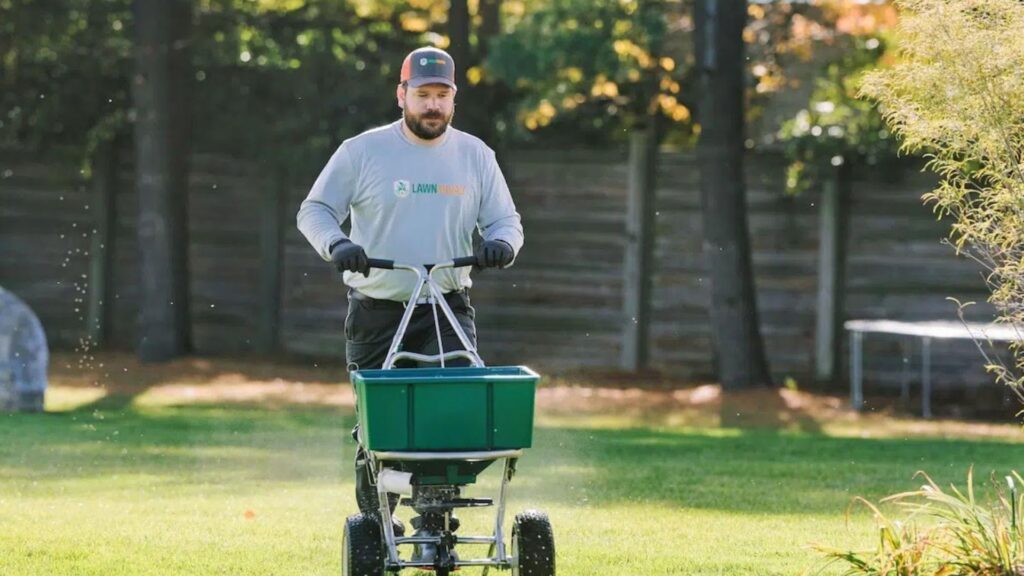
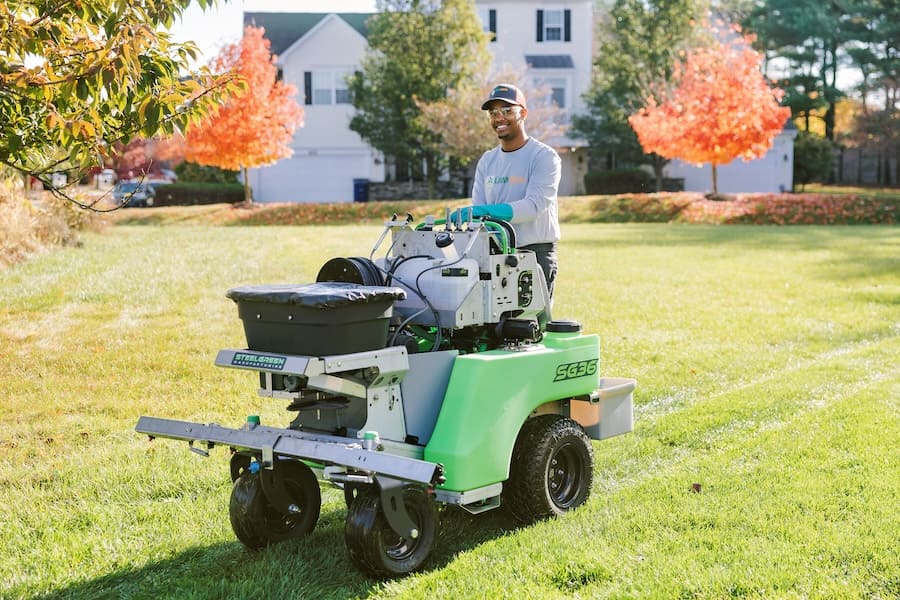
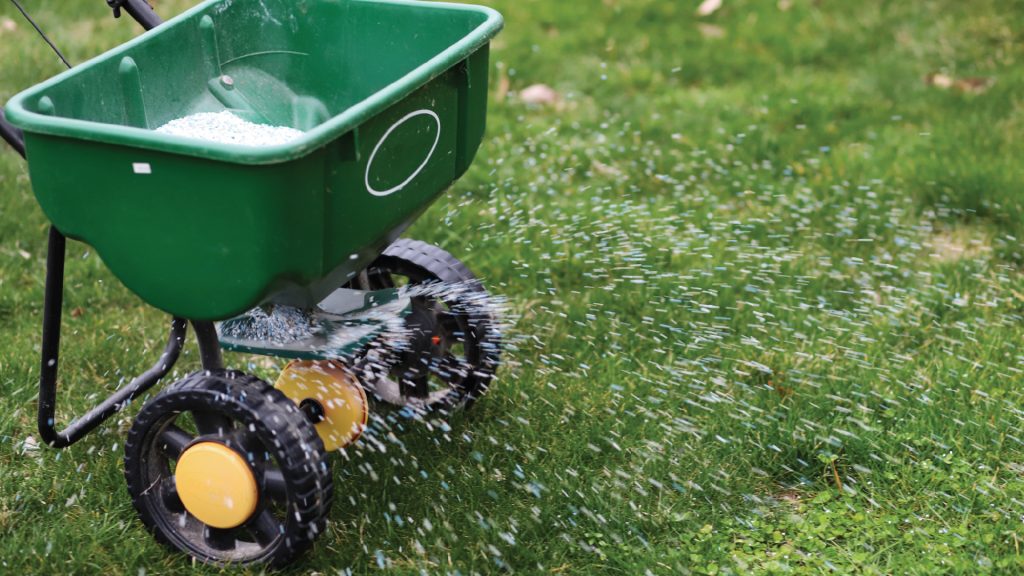
Preventive products (chlorantraniliprole, imidacloprid, thiamethoxam) are applied in early summer and form a residue in the soil that kills hatching grubs through summer. They work well when applied in the right window (mid-June through mid-July for Westchester). They do not work on existing grubs.
Curative products (trichlorfon, carbaryl) are applied in September or early October when damage is visible. They work on actively feeding grubs near the surface. They do not provide ongoing protection.
Confusion between these two product categories produces most of the treatment failures we see. Preventive products applied in October fail because there is no grub hatch to interrupt. Curative products applied in July fail because the grubs they target are not in the soil yet.
The Threshold Question
Not every grub population justifies treatment. Lawn industry research consistently finds a damage threshold around 8 to 10 grubs per square foot for most common species on healthy turf. Below that threshold, the lawn can tolerate the feeding without visible damage. Above that threshold, damage becomes likely.
The sampling method: cut a square foot section of sod 2 inches deep in a suspect area, peel it back, and count grubs in the soil and underside of the sod. Several samples across the lawn produce a more reliable estimate than a single check.
Most Westchester lawns with no history of damage do not exceed the threshold. Treating these lawns produces no visible benefit.
The History Signal
The best predictor of whether your lawn needs grub control is whether it has had grub damage before. Properties with a history of damage are likely to have it again because adult beetles return to lay eggs near where they emerged. Properties with no history typically continue to have no history.
Signs of damage history include skunk and raccoon digging in late summer or fall, brown patches that pulled up easily, and visible adult beetle activity in midsummer.
If your property has none of these signals, the case for preventive treatment is weak. If it has had damage before, preventive treatment makes sense.
Westchester Pressure Patterns
Several factors affect grub pressure in our area:
Mature properties with established gardens tend toward higher beetle pressure than newer construction. The beetles use ornamental plants as adult food sources.
Properties near woods or large mulched bed areas may see more pressure than open lawn properties.
Wooded neighborhoods with significant deer populations also tend to support higher skunk and raccoon populations, which means more dramatic late-summer damage from animal digging.
Irrigated lawns hold more moisture than non-irrigated lawns, providing better conditions for beetle egg-laying. Egg survival in dry soils is lower than in moist soils.
Mowing height affects pressure modestly. Slightly higher mowing (3 to 4 inches for cool-season grass) reduces beetle egg-laying compared to very short mowing.
How Skunks and Raccoons Read the Lawn
Animal digging is often the first visible signal that a lawn has grub problems. Skunks dig small cone-shaped pits scratching for individual grubs. Raccoons roll back sections of sod looking for clusters. Both species can do significant damage in their own right beyond what the grubs would cause.
The presence of animal digging confirms grubs are present. It also signals enough population to be worth the animals’ effort, which usually correlates with the damage threshold.
Properties with chronic skunk and raccoon damage are the strongest candidates for ongoing preventive treatment. Properties with no animal digging history can usually skip treatment until evidence emerges.
Damage Recovery After Grub Problems
Severe grub damage in fall produces large areas with no functional root system. Recovery depends on the timing of identification:
Damage caught early enough that some root remains can recover with curative treatment and good cultural care. The grass that survives fills in over 4 to 8 weeks of growing conditions.
Damage with complete root loss requires reseeding or sodding. Killed sections will not regrow because the crowns are dead.
Westchester fall is the right time for renovation work on grub-damaged areas. Cool weather, reliable moisture, and the long fall growing season produce strong establishment for seed or sod.
When to Skip Treatment
The case for skipping grub control:
No history of damage on the property.
No skunk or raccoon digging in recent fall seasons.
Lawn density and color are normal in late summer.
Sample counts below threshold (under 8 grubs per square foot).
Limited beetle pressure in the surrounding area.
Properties matching this description benefit very little from preventive grub control. The money is better spent on other components of lawn care.
When to Treat Annually
The case for annual preventive treatment:
Multi-year history of damage.
Chronic skunk or raccoon activity each fall.
Beetle pressure visible in midsummer.
Sample counts above threshold.
Premium properties where any damage is unacceptable.
For these properties, the cost of treatment is much less than the cost of reactive repair.
Coordinating Treatment with Other Lawn Care
Grub treatment timing affects other lawn care decisions:
Preventive grub treatment in early July sits between spring fertility windows and late-summer applications. Most preventive products are compatible with concurrent fertilization.
Watering after application activates most products and moves chemistry into the root zone. Irrigation timing matters. A half-inch of water within 24 to 48 hours of application is the standard.
Curative treatment in September should not coincide with seeding. Some products affect seed germination.
Core aeration timing can disrupt preventive barriers. Plan aeration before or well after grub application.
Pollinator and Wildlife Considerations
Westchester homeowners increasingly factor wildlife considerations into product selection. Some neonicotinoid preventives have been associated with concerns about pollinator effects. Newer chemistry (chlorantraniliprole) has favorable pollinator profiles and is the choice for properties with active gardens or where pollinator concerns matter.
Reading product labels and asking about active ingredients matters more than relying on general “grub control” claims.
Common Mistakes
Treating every year without checking for grub presence. Wastes money on properties without pressure.
Applying preventive products in fall. Wrong window; no benefit.
Applying curative products in spring or summer. Wrong window for damage prevention.
Skipping samples. The threshold approach saves money on properties without significant pressure.
Combining wrong products. Pre-emergent in fall may conflict with curative grub application timing in some areas.
Ignoring animal digging. The clearest signal of grub presence is wildlife behavior. Pay attention to it.
Treating damage as a fertility problem. Grub damage looks like drought or fertility issues to the untrained eye. Pulling up suspect areas reveals the actual cause within seconds.
What a Realistic Plan Looks Like
For a Westchester property with grub history, here is what a workable plan looks like:
June: monitor for adult beetle activity on ornamentals.
Mid-June to mid-July: preventive grub treatment if history justifies it. Water in within 48 hours.
August: monitor lawn for early damage signs.
September: walk the lawn weekly for animal digging or pulling-up areas. Sample if suspicious. Curative treatment if grubs are present at threshold.
October: reseed or sod areas confirmed damaged.
For a Westchester property with no history, the plan is simpler: skip preventive treatment, monitor annually for damage signals, and treat reactively only if evidence emerges.
The Multi-Year View
Grub pressure varies year to year based on weather, surrounding landscape changes, and population cycles. A property with low pressure for several years may suddenly show damage as beetle populations shift. A property with chronic pressure may see periods of relief.
Annual monitoring catches changes faster than calendar-based assumption. Properties that pay attention typically treat less often and more effectively than properties on autopilot programs.
What to Do Next
If you would rather have someone else handle the timing decisions, product selection, and application for your Westchester County lawn, we are here for that.
Visit lawnsquad.com to find Lawn Squad of Westchester and request a free quote. Our VitaminLawn program is built specifically for the grass types, soils, and weather patterns in our service area. Most homeowners see noticeable improvement within the first two applications.