
Short Answer: Neither granular nor liquid is universally “better.” Each has specific advantages. Granular fertilizers excel at slow-release feeding over weeks, are easier for homeowners to apply evenly, and are ideal for core nutrition. Liquid treatments provide faster nutrient uptake, allow for precise spot-treatment of weeds, and can be combined with multiple products in a single application. Most professional lawn care companies use a combination of both, choosing the right delivery method for each specific treatment. Here is how each method works and when it makes sense.
If you have ever shopped for lawn care products, you have noticed that fertilizers and weed control products come in both granular (dry, pelletized) and liquid (spray) formulations. And if you have ever asked which is better, you have probably gotten conflicting answers.
The truth is that the “granular vs. liquid” debate is less about one being better and more about each being better suited to specific applications. Understanding the strengths of each method helps you make smarter decisions about your lawn care program.
Granular Fertilizer: Slow and Steady
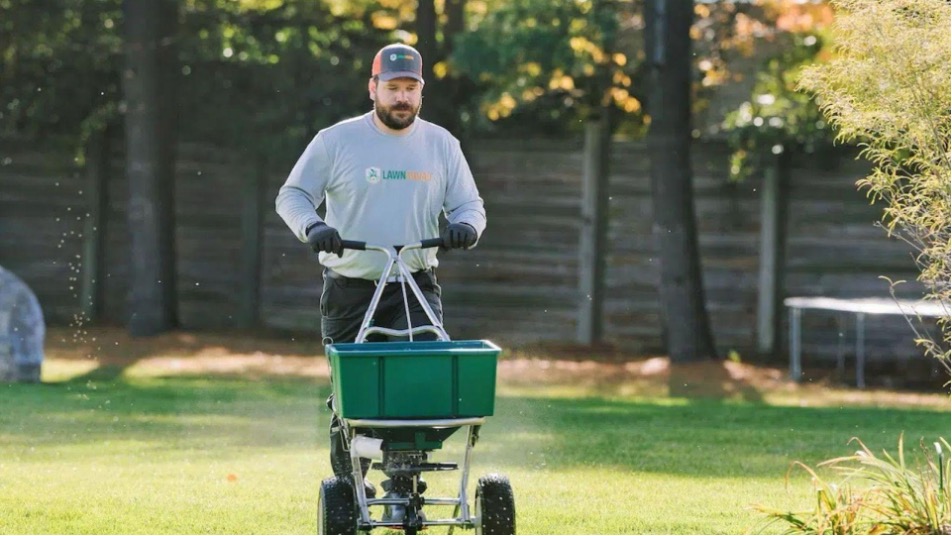
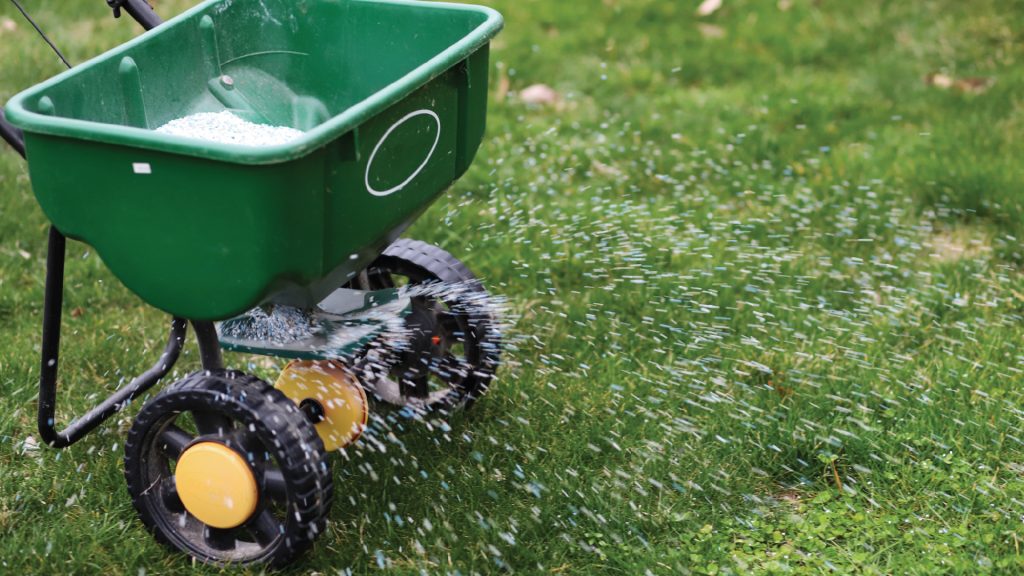
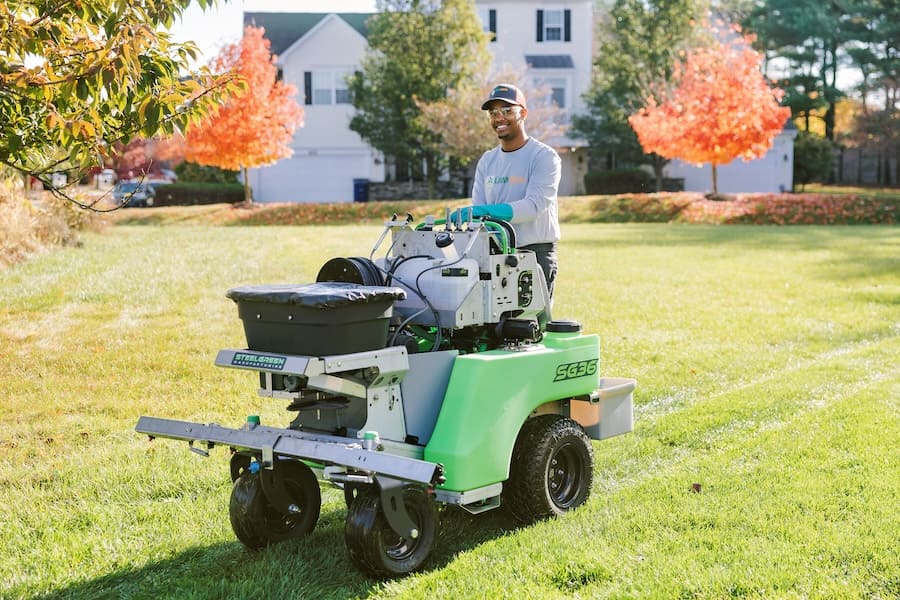
Granular fertilizer is the workhorse of most lawn care programs. The pellets are spread across the lawn using a broadcast or drop spreader and release nutrients gradually as they break down in contact with moisture. Modern slow-release granular fertilizers can feed the lawn for 6 to 12 weeks from a single application.
The primary advantage of granular fertilizer is its slow-release capability. Instead of delivering a massive dose of nutrients all at once, slow-release granules provide a steady, measured feed that matches the grass’s ability to absorb and use the nutrition. This produces more consistent growth, reduces the risk of fertilizer burn, and requires fewer applications per season.
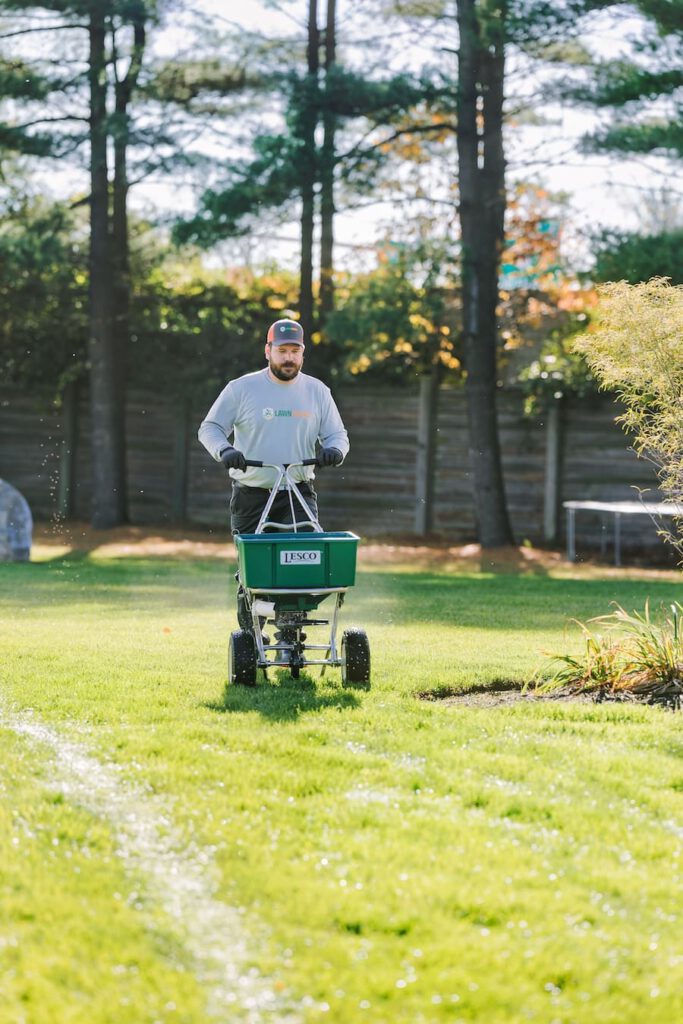
Granular products are also easier for homeowners to apply evenly using a calibrated spreader. The visual feedback of seeing the granules on the lawn helps you confirm coverage, and adjusting the spreader settings gives you control over the application rate.
The main limitations of granular are that it requires moisture to activate (rain or irrigation within a few days of application) and it is not well-suited to spot-treating individual weeds.
Liquid Treatments: Fast and Precise
Liquid treatments are mixed with water and applied through a spray system. They can be sprayed across the entire lawn (blanket application) or targeted to specific areas or individual weeds (spot treatment).
The primary advantage of liquid is speed of uptake. Liquid nutrients are absorbed through the leaf blades almost immediately, producing visible results within days rather than weeks. This makes liquid ideal for quick green-up, correcting visible nutrient deficiencies, and providing a fast response when the lawn needs it.
Liquid is also the preferred method for post-emergent weed control. Spraying herbicide directly onto weed foliage ensures the product reaches the target plant, and the surfactants in liquid formulations help the product stick to waxy leaf surfaces for better absorption. Spot-spraying individual weeds with liquid is more efficient and uses less product than a blanket granular application.
The main limitations of liquid are that nutrient release is immediate (no slow-release capability without special formulations), it requires more skill and equipment to apply evenly, and wind can cause drift during application.
Why Professionals Use Both
Most professional lawn care companies, including Lawn Squad, use a combination of granular and liquid applications throughout the season. The choice of delivery method is matched to the specific goal of each treatment.
Granular is typically used for the core fertilization applications where slow-release feeding is the priority. It is also the standard delivery method for pre-emergent herbicides, which need to create a uniform barrier across the soil surface.
Liquid is used for post-emergent weed control (targeting broadleaf weeds that are actively growing), quick-response treatments when the lawn needs an immediate nutritional boost, and applications that combine multiple products (like fertilizer, weed control, and insect control in a single visit).
This combined approach gives your lawn the best of both worlds: the steady, sustained nutrition of granular and the targeted precision of liquid.
What This Means for Your Lawn Care Program
If you are managing your lawn yourself, understanding when to use each type helps you get better results. Use granular for your primary fertilizer applications and pre-emergent. Use liquid for spot-treating weeds and providing quick nutrient corrections.
If you are evaluating professional lawn care companies, ask about their application methods. A company that uses only one method for everything is likely not optimizing for the best results. The best programs match the delivery method to the treatment goal.
What to Do Next
If you want a lawn care program that uses the right products and the right delivery methods at the right time, Lawn Squad’s VitaminLawn program is designed to do exactly that. Our trained technicians select the optimal application method for each treatment based on your lawn’s specific needs.
Request a free quote at lawnsquad.com or contact your local Lawn Squad branch. We are happy to explain our approach and show you what a customized program looks like for your property.