Short Answer: The first mow of the season on a Dayton area lawn should wait until grass is actively growing rather than barely waking up. Visible cues include uniform green color, blade length increasing week over week, and the grass actually needing the cut. For most Dayton cool-season lawns, that lands in late April. Set the deck at 3.5 to 4 inches for tall fescue and fescue blends, 3 to 3.5 inches for Kentucky bluegrass lawns. Sharp blades are non-negotiable. Mulch rather than bag. Avoid wet grass. Vary the pattern. The first mow sets up the canopy structure for the entire season. Here is the practical guide for properties across Dayton, Centerville, Kettering, Beavercreek, and the surrounding area.
Looking at your Dayton lawn in early April, the impulse may be to fire up the mower. Most Dayton cool-season lawns are not ready for their first cut until late April. Mowing too early wastes effort and can damage grass still waking from dormancy.
The first mow matters more than most homeowners realize. Across Dayton, Centerville, Kettering, Beavercreek, Huber Heights, and our broader service area, here is the practical guide.
When the Lawn Is Actually Ready
The first mow should wait until clear signs of active growth:
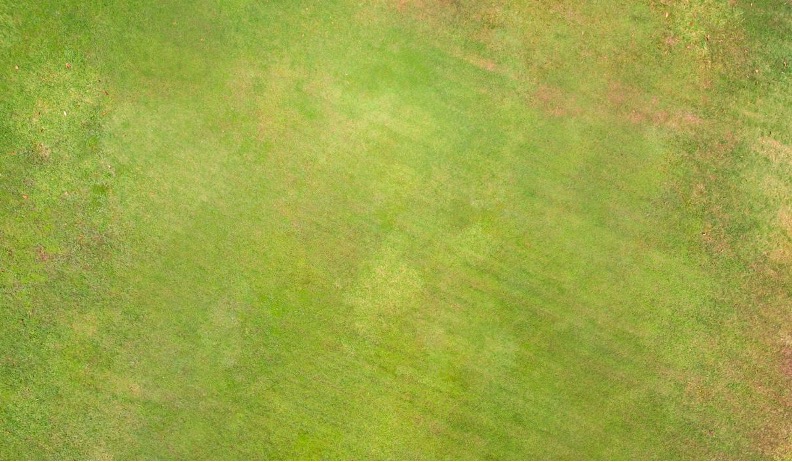
Uniform green color across the canopy.
Visible new blade growth week over week.
The grass actually needs the cut. Lawns at target height with no recent growth do not need mowing.
For most Dayton properties, these conditions arrive in late April. Coastal proximity is not a factor here, but variable transition zone weather can push first-mow timing earlier or later in any given year.
The Right Cutting Height
For most Dayton cool-season lawns:
Tall fescue and fescue blends: 3.5 to 4 inches.
Kentucky bluegrass dominant lawns: 3 to 3.5 inches.
Mixed lawns: 3.5 inches works for both.
Below 3 inches, most cool-season lawns scalp and weaken. Above 4.5 inches, lawns become shaggy and develop thatch issues.
Why Factory Settings Are Wrong
Most homeowner mowers come from the factory set at 2.5 to 3 inches. That setting is wrong for cool-season grass in our climate. Adjust the deck height before the first mow.
Verify actual height by measuring from ground to blade with the mower on a flat hard surface. Some mowers have height markings that are off by half an inch.
Check each wheel. Inconsistent wheel adjustment produces uneven cuts.
Sharp Blades
Sharp blades cut grass cleanly. Dull blades tear it. Visible difference: silver-gray cast after dull-blade mowing, even green appearance after sharp-blade mowing.
Sharpen or replace blades before the first mow. The blade has been sitting since fall; oxidation may have dulled the edge.
Cost: $10 to $20 per blade for sharpening, $20 to $50 for replacement.
The One-Third Rule
Never remove more than one-third of the blade height in a single mowing. For lawns at 4-inch target, mow before grass reaches 6 inches.
The first mow often violates this rule. April growth brings the lawn from 4 to 5+ inches before the first cut. If active growth has been happening 2+ weeks, the lawn can usually handle a cut to target height. If barely active, that shock cut stresses the grass.
If the lawn has grown taller than the one-third rule allows for one cut, do two cuts spaced 4 to 5 days apart.
Dry Grass Only
Mow dry grass, not wet. Wet grass produces ragged cuts, clumping clippings, soil rutting, and deck buildup.
For Dayton spring, waiting for an afternoon after a dry morning is usually enough.
Mulch, Not Bag
Mulching clippings is the right default for cool-season lawns. Clippings return nutrients and do not contribute to thatch at normal mowing frequencies when the one-third rule is followed.
Bagging makes sense for catching up after overgrowth, removing diseased tissue, or heavy seed heads. Day to day, mulch.
Vary the Pattern
Mowing the same direction every time produces uneven density and compacted wheel paths. Vary direction week to week.
What the First Mow Sets Up
Properties that get the first mow right typically see better summer performance:
Denser canopy that shades out weeds.
Deeper root system for drought tolerance.
Lower disease pressure from clean cuts.
Less mowing frequency through the season.
Dayton Conditions Worth Knowing
Several factors specific to our area affect mowing:
Transition zone climate. Spring weather is variable. Some years bring earlier active growth; some delay it.
Heavy clay soils common in many neighborhoods affect drainage and recovery from compaction.
Mature properties with significant tree canopy in established neighborhoods. Shade affects timing and grass selection.
Mixed grass types are common. Tall fescue, Kentucky bluegrass, and sometimes perennial ryegrass on the same lawn.
Common Dayton Mistakes
Mowing in mid-April when the lawn is not yet actively growing.
Cutting at 2.5 to 3 inches because that is the factory setting.
Mowing wet grass after spring rain.
Skipping blade sharpening.
Bagging routinely when mulching works better.
Same-direction mowing every week.
Single-cut to target height when the lawn has grown tall.
Equipment Considerations
Quality rotary mowers with sharp blades work fine for cool-season grasses at recommended heights.
Riding mowers work for larger Dayton area lots but tend to compact soil more than walk-behind units.
Robotic mowers work increasingly well when set to correct cut height. Daily small cuts produce dense fine-textured turf.
Reel mowers are unnecessary for residential cool-season lawns at our recommended heights.
How First-Mow Decisions Affect the Year
Wrong height mowing weakens lawns gradually over years. Right height mowing builds density, supports deep roots, reduces weed pressure, and produces lawns that handle summer stress with less input.
Properties that maintain proper mowing through the season produce visibly different lawns than properties that mow short or with dull blades. The cumulative effect compounds over multiple seasons.
What Else Goes With First-Mow Timing
The first mow sequences with other spring tasks. Equipment service before the first mow. Pre-emergent applied a few weeks before the first mow (at soil temperature trigger). First fertilization after the first mow when active growth is established. Light raking on winter damage handled before the first mow.
Properties that coordinate these tasks produce better results than properties that approach each separately. The first mow is the visible mid-point of spring cleanup activities.
First Mow Across Property Conditions
Different parts of the same lawn often reach first-mow readiness at different times. Open sunny areas may need mowing 1 to 2 weeks before shaded areas. Southern-facing slopes wake up before northern slopes. The reasonable approach for most properties is to start mowing when 60 to 70 percent of the lawn is actively growing, rather than waiting for the slowest areas.
First-mow timing also varies by property type. Newer construction lawns with disturbed soil may wake unevenly. Established lawns on consistent care wake more uniformly.
How Mowing Practices Affect Other Spring Decisions
The first mow influences several other spring decisions. The first mowing produces clippings that should be mulched and left on the lawn, returning nutrients that affect fertility decisions. Cut grass produces a clearer view of damage areas that may need recovery work. The mower’s pattern across the lawn reveals drainage issues, compaction, and other property characteristics worth noting.
Properties that approach the first mow as just a cutting task miss the diagnostic value. A slow careful first mow with attention to what the lawn looks like under the mower wheels produces information that feeds the rest of the season’s plan.
Recovery if the First Mow Went Wrong
If the first mow happened too early or too short and the lawn now looks rough, recovery is possible. Avoid mowing again until visible new growth is establishing. Light fertility once growth is underway supports recovery without forcing soft growth.
Most lawns recover within 4 to 6 weeks even from a rough first mow. The longer-term issue is that the canopy will be slightly thinner all season than it would have been with correct timing. Next year, wait for the right signals before that first cut.
What to Do Next
If you would rather have someone else handle the timing decisions, product selection, and application for your Dayton lawn, we are here for that.
Visit lawnsquad.com to find Lawn Squad of Dayton and request a free quote. Our VitaminLawn program is built specifically for the grass types, soils, and weather patterns in our service area. Most homeowners see noticeable improvement within the first two applications.