

Feeding Your Frederick Lawn Without Feeding the Runoff: Late-Season Fertilizer and the Chesapeake Bay
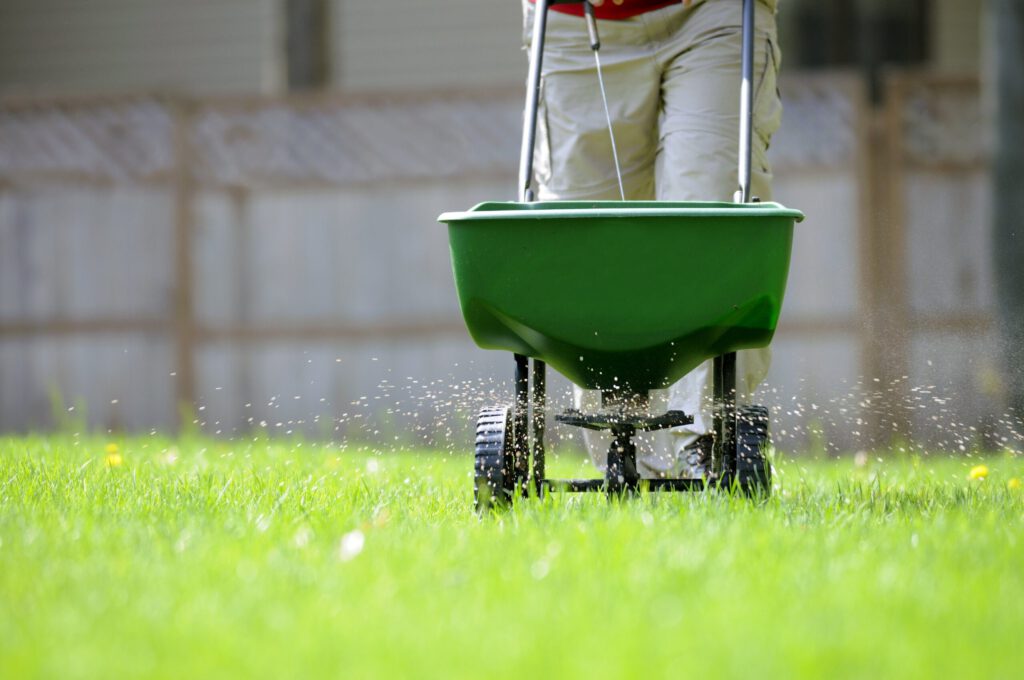
Feeding Your Frederick Lawn Without Feeding the Runoff: Late-Season Fertilizer and the Chesapeake Bay
Short Answer: A well-timed late-season feeding helps a Frederick lawn, and a thick, healthy lawn is one of the best ways to slow stormwater runoff. The key is putting fertilizer where and when the grass can use it. Apply in early November, before Maryland’s November 15 homeowner deadline, while the grass is green and the ground is not frozen. Clear leaves first, keep fertilizer 10 to 15 feet from streams and ponds, avoid applying before heavy rain, and sweep granules off driveways and sidewalks. Done that way, the nutrients feed the roots instead of the Monocacy.
If you are reading this, you probably care about two things at once. You want a healthy lawn, and you do not want what you put on it ending up in a creek. That is a common feeling in Frederick County, where so many neighborhoods sit near the Monocacy River, Carroll Creek, Linganore Creek, and the smaller streams that feed them.
Most homeowners we talk to are surprised to learn that those two goals work together. A thick, healthy lawn is one of the best tools there is for keeping soil and nutrients in place. The trick is feeding it in a way that helps the grass and not the runoff.
Why Frederick Lawns Connect to the Bay
Nearly everything that washes off a lawn in Frederick County eventually reaches the Chesapeake Bay. Rain that runs off the yard flows into the street, into storm drains, and into local creeks. From there it moves to the Monocacy, then the Potomac, and finally the Bay.
Nitrogen and phosphorus are the nutrients that help grass grow, and they are also the nutrients that fuel algae blooms in the Bay when too much reaches the water. That is why Maryland has a Lawn Fertilizer Law, and why the details of how and when you feed the lawn matter.
A Healthy Lawn Is Part of the Solution
Here is the part that often gets lost in the conversation. A dense, well-rooted lawn absorbs rainfall and slows it down. Thin lawns with bare patches let rain run across the surface, carrying soil and whatever is on it into the street.
Tall fescue, the most common lawn grass in Frederick County, can develop a deep root system that holds soil in place and helps water soak in. A well-timed late-season feeding helps fescue build those roots and thicken heading into spring. So the goal is not to avoid feeding the lawn. It is to feed it in a way that the grass uses nearly everything you apply.
Timing: The Single Biggest Factor
Fertilizer that goes down when the grass is actively taking up nutrients is used by the plant. Fertilizer that goes down on frozen, saturated, or dormant turf is far more likely to wash away.
For Frederick lawns, the late-season feeding works best in early November, once mowing has slowed but the grass is still green. That timing lines up with when cool-season grass stores the most nitrogen in its roots and crowns. Maryland’s law reinforces this by setting November 15 as the last day homeowners may fertilize until March 1. Certified professionals may apply a limited amount of nitrogen through December 1.
Watch the Forecast
Even inside the window, the day you choose matters. A light rain or gentle watering after application moves fertilizer down into the root zone. A heavy storm right after application can push it off the lawn before it soaks in, especially on slopes and compacted soils.
Here is what we have found works best. Look for a dry, calm day with light rain expected in the following day or two, not a downpour. Wind scatters granules onto hard surfaces and into beds, so calm days help keep the product on the grass.
Keep a Buffer From Water
Maryland’s Lawn Fertilizer Law requires keeping fertilizer away from streams and other waterways, with a setback of 10 to 15 feet depending on the spreader used. If your property backs up to a creek, pond, or drainage swale, that buffer is important.
Many homeowners near water let the strip along the bank grow a little taller or plant it with native grasses and shrubs. That buffer strip slows runoff and filters it before it reaches the water, and it does not need fertilizer at all.
Sweep It Up
Granules that land on driveways, sidewalks, patios, and the street do nothing for the lawn. The next rain carries them directly into storm drains. A quick sweep or pass with a blower to move them back onto the grass is one of the simplest and most effective steps you can take.
It also helps to use a spreader with an edge guard along hard surfaces, which limits how far granules are thrown.
Leaves and Runoff
By November, many Frederick lawns are covered in leaves from oaks, maples, and tulip poplars. Leaves themselves contain nutrients, and when they are blown or raked into the street, they break down in the gutter and wash into storm drains.
Mulching light leaf cover into the lawn with the mower returns those nutrients to the soil where the grass can use them. Heavier layers can be composted or used in beds. Clearing leaves before the late-season feeding also makes sure the fertilizer reaches the soil rather than sitting on top of a leaf layer.
Phosphorus: Usually Not Needed
Phosphorus is one of the nutrients most closely tied to water quality problems. Lawn fertilizers sold in Maryland generally no longer contain it, with exceptions for specially labeled starter fertilizers used when establishing new grass and certain organic products.
For established lawns, that is rarely a concern, since many soils in the county already have enough phosphorus. A soil test is the best way to know for sure.
Right Product, Right Rate
Applying more fertilizer than the lawn can use is wasteful and increases the chance of runoff. Maryland’s law requires everyone to follow University of Maryland fertilizer recommendations, which limit how much nitrogen can go down in a single application and across the year.
Modest, well-timed feedings work better than one heavy dose. Calibrating your spreader and applying in two crossing passes at half rate also helps put down an even amount across the lawn, rather than heavy stripes in some places and gaps in others.
Winter: No Fertilizer as De-Icer
One more Maryland rule worth knowing: fertilizer may not be used to de-ice walkways or other hard surfaces in winter. It can be tempting to toss leftover granules on an icy step, but the next melt carries those nutrients straight to the storm drain.
What a Bay-Friendly Lawn Looks Like Next Spring
Imagine your yard next April. The lawn is thick and evenly green, with deep roots that soak up spring rain instead of shedding it. The buffer along the creek at the back of the property is growing in. The street in front of your house is free of leaves and granules. Your lawn looks great, and very little of what you put on it ended up anywhere but the root zone.
What to Do Next
If you are feeding your own lawn, apply in early November before the November 15 homeowner deadline, choose a calm day with only light rain in the forecast, keep fertilizer 10 to 15 feet from any water, mulch or clear leaves first, and sweep every granule off hard surfaces. Skip phosphorus unless a soil test calls for it, and never use fertilizer as a winter de-icer.
If you would rather have someone else handle the timing decisions, product selection, and application for your Frederick lawn, we are here for that. Lawn Squad of Frederick serves homeowners across Frederick County. Visit lawnsquad.com to request a free quote. Our VitaminLawn program is built for the grass types, soils, and weather patterns we deal with here, and for the rules Maryland sets on when and how lawns can be fed.
Here is what to expect. We will look at your grass, talk through how your lawn handled this year, and explain what we would apply before the season closes and why. If your lawn does not need a late-season application, we will tell you that honestly.

