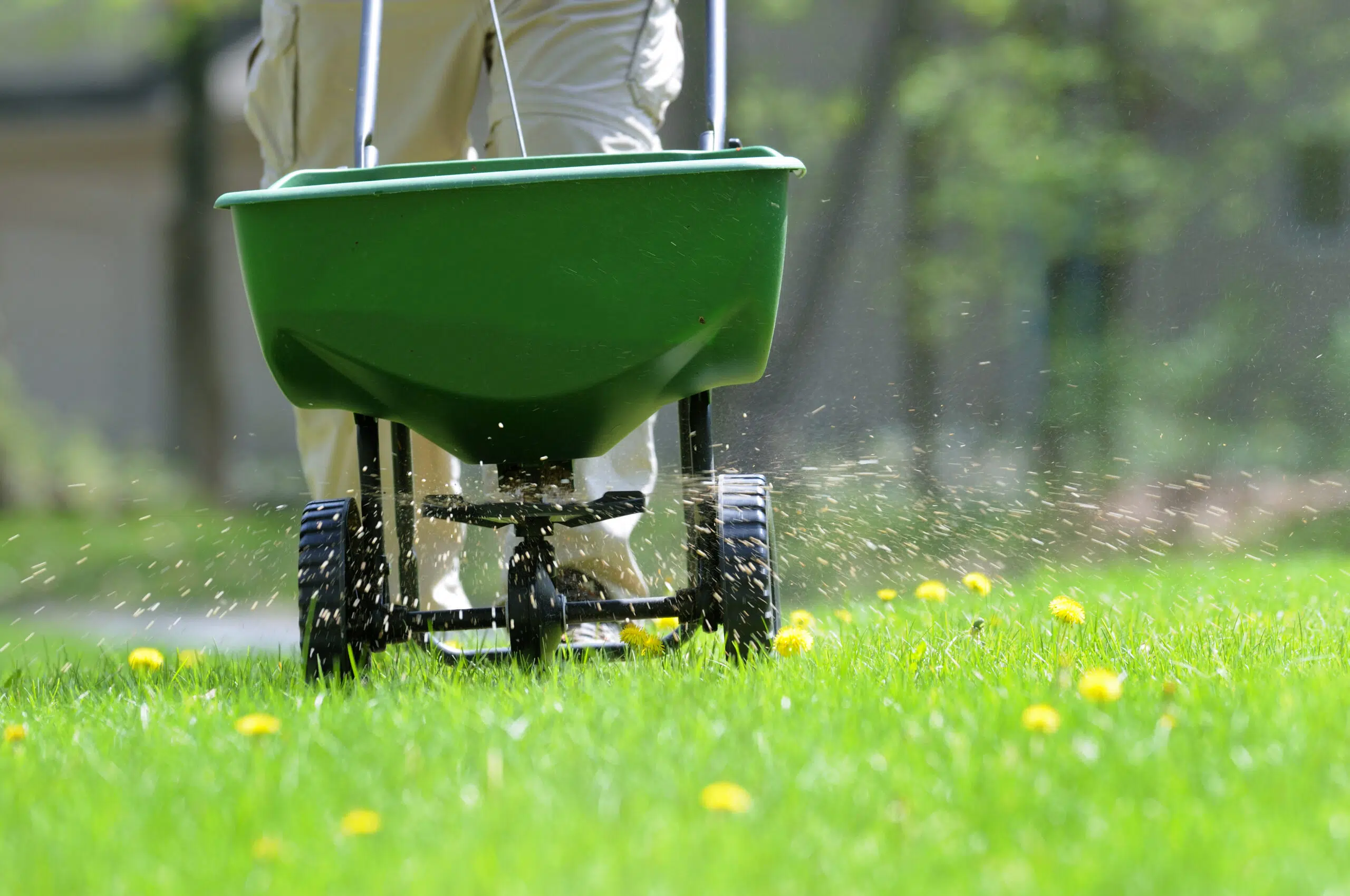
Short Answer: Fall pre-emergent should go down when soil temperatures at two inches have fallen to roughly seventy degrees and are trending down, not on a fixed calendar date. That trigger is what winter annual weeds like annual bluegrass, henbit, chickweed, and deadnettle respond to when they germinate. Applied at the right moment it prevents nearly all of them for the price of one application. Applied two weeks late it prevents almost none, because a pre-emergent stops seeds from establishing and does nothing to a weed that has already come up. This is the single most timing dependent product in lawn care.

If we could get homeowners to do exactly one thing differently, it would be this application, at the right moment. Fall pre-emergent is the highest return work in the entire lawn care year, and the margin between success and wasted money is about two weeks.
The reason it gets missed is that nothing is wrong yet. In September the lawn looks fine, there are no winter weeds to see, and spending money to prevent an invisible problem feels optional. Then in February the lawn is full of henbit and chickweed and everyone wonders where it came from.
What You Are Actually Preventing
Winter annual weeds run on the opposite schedule from the ones people are used to fighting.
They germinate in fall as soil cools, grow quietly through winter while the lawn is dormant or slow, then explode into visible growth and set seed in early spring before you have thought about lawn care at all. By the time they are obvious, they have already finished most of their life cycle and are producing the seed bank for next year.
The usual cast is annual bluegrass, which is the light green clumping grass that ruins the look of a dormant lawn, plus henbit and purple deadnettle with their square stems and small purple flowers, common chickweed forming dense low mats, and various speedwells and bittercress. Annual bluegrass is the one most people find hardest to live with, partly because it is a grass, which makes it far harder to remove selectively after the fact.
Why the Calendar Fails
Every region has a rough date that usually works, and usually is doing a lot of work in that sentence.
Weed seeds do not read calendars. They respond to soil temperature, and soil temperature in any given year can run two or three weeks ahead of or behind the average. A warm September pushes germination later. An early cool spell pulls it forward. Applying on the same date every year means you are correct in some years and wrong in others, without knowing which.
The trigger to watch is soil temperature at about two inches, falling through the low seventies and heading down. Application should happen before the sustained drop through seventy, because the barrier needs to be in place and watered in before germination begins rather than during it.
Soil temperature is easy to check. An inexpensive probe thermometer works, and many regional extension services publish current soil temperature maps that are accurate enough for this decision. Reading a number is more reliable than reading a calendar.
How Pre-Emergent Works, and What That Implies
Pre-emergent does not kill seeds and it does not sterilize soil. It creates a chemical barrier in the top layer that interferes with cell division in germinating seedlings, so the seed sprouts and then fails before it reaches the surface.
Two consequences follow directly from that mechanism, and both matter.
First, it has no effect on a weed that has already emerged. If annual bluegrass is up and visible, pre-emergent will not touch it. That is a post-emergent problem and a harder, more expensive one.
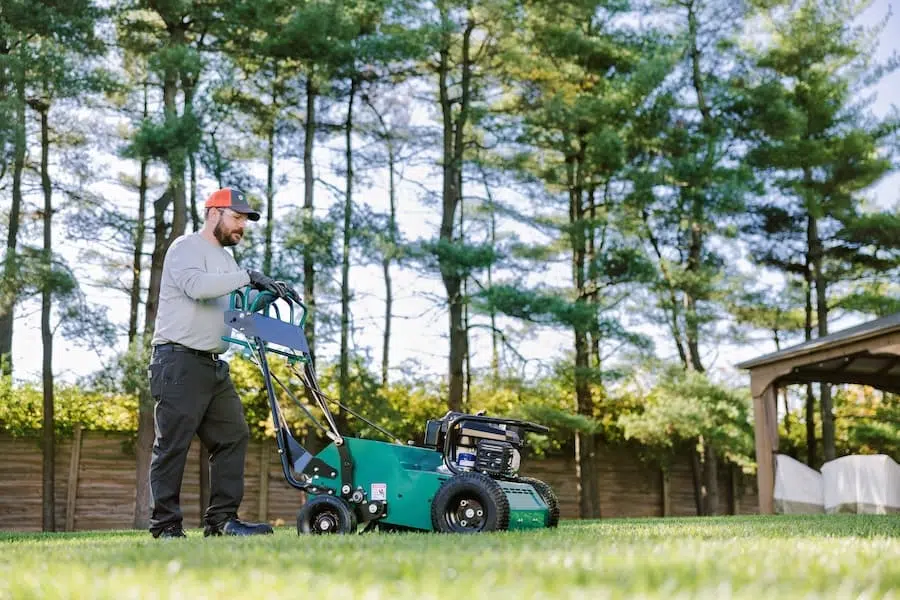
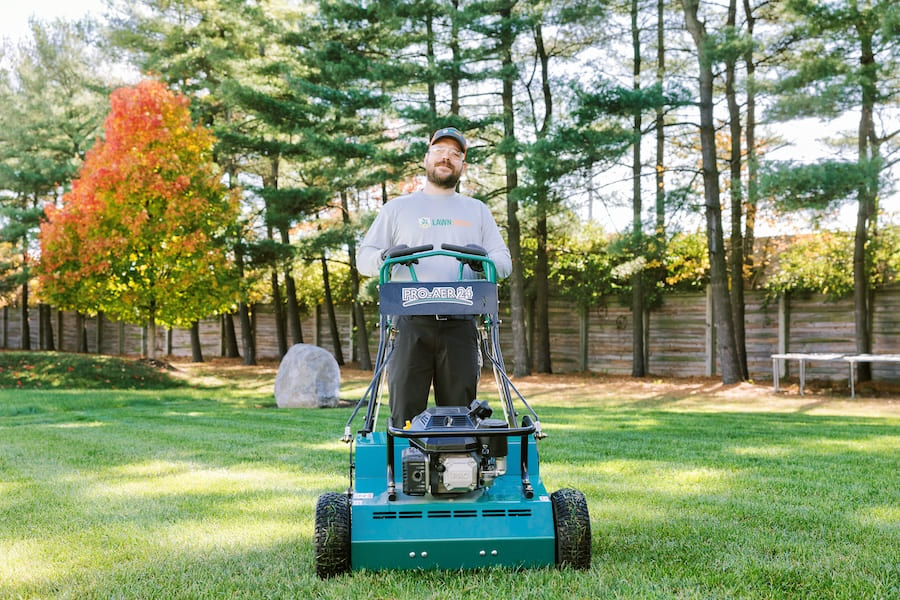
Second, the barrier has to stay intact. Anything that physically disturbs the treated layer breaks it, which means core aeration after application punches holes straight through your barrier. Aerate first, then apply. Doing it the other way undoes what you paid for.
It also has to be watered in. Most products need roughly a half inch of water within a few days of application to move into the soil layer where they work. Sitting dry on the surface, the product degrades in sunlight and does very little.
The Overseeding Conflict
This is the genuine complication, and it catches people every year.
Pre-emergent does not distinguish between weed seed and grass seed. Both are seeds trying to germinate. Applying pre-emergent and overseeding in the same window means one of the two will fail, and it is usually the grass.
If you are overseeding a cool-season lawn this fall, you generally skip fall pre-emergent on that area and accept a heavier winter weed load, then handle it post-emergent later. Alternatively you seed early enough that the new grass is well established and you apply later, which is a narrow and often unrealistic window.
There are products labeled for use with new seedings at specific intervals, and those labels are worth reading carefully rather than assuming. The general rule stands: in any given season, on any given area, you are usually choosing between seeding and pre-emergent rather than doing both.
Warm-season lawns rarely face this conflict, since they are not being seeded in fall, which is one reason fall pre-emergent is close to universal advice in the warm-season zone and conditional advice in the cool-season zone.
Coverage Is the Other Half
A barrier with gaps is a barrier with weeds, and this is where do it yourself applications most often disappoint.
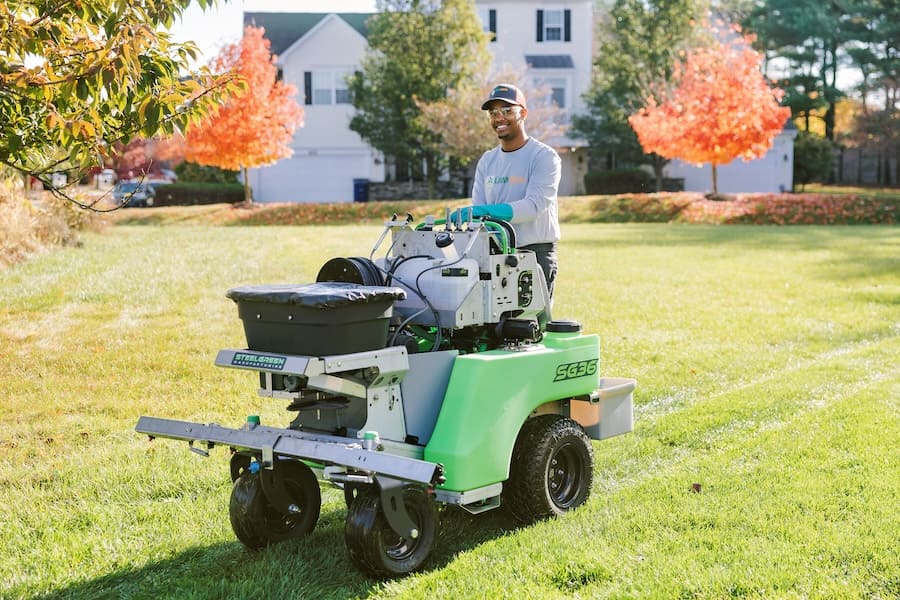
Pre-emergent has to be applied evenly across the entire area. A spreader that is not calibrated, a walking pace that varies, or a pattern that leaves untreated strips between passes produces exactly the striped weed pattern you see in some lawns the following spring. Splitting the rate and applying in two perpendicular passes evens out a great deal of that error.
Edges matter more than the middle. Weed pressure is highest along driveways, sidewalks, and bed lines, where soil warms and cools fastest and where seed accumulates. Those are the areas most often shorted.
What It Does Not Do
Being clear about limits prevents disappointment.
- It does nothing to perennial weeds like dandelion or clover that regrow from existing roots rather than from seed.
- It does nothing to weeds already growing at the time of application.
- It does not last indefinitely. Products break down over weeks to months, which is why a spring application is a separate decision rather than a renewal.
- It will not compensate for a thin lawn. Dense turf is the most effective weed prevention there is, and pre-emergent works best as support for good turf rather than as a substitute for it.
How This Differs From the Spring Application
People often assume fall and spring pre-emergent are the same job done twice, and they target completely different plants.
The spring application is aimed at summer annuals, above all crabgrass, which germinate as soil warms through the mid fifties in spring. The fall application is aimed at winter annuals, which germinate as soil cools through the low seventies. Different weeds, different trigger, different direction of travel.
That means skipping one does not get covered by doing the other. A lawn that receives only spring pre-emergent will still fill with henbit and annual bluegrass over winter, and a lawn that receives only the fall application will still get crabgrass in July.
It also means the products are not necessarily interchangeable, since active ingredients differ in which species they control and how long they persist. Reading the label for the specific weeds you are trying to stop is more useful than buying whatever is marked pre-emergent.
If budget forces a choice between the two, the honest answer depends on which problem actually bothers you. In warm-season lawns that go dormant and tan, winter weeds are highly visible against the dormant turf and the fall application usually wins. In cool-season lawns that stay green, crabgrass in summer is often the more noticeable failure.
What to Do Next
Find out what your soil temperature is actually doing rather than assuming. A probe thermometer costs very little and takes the guesswork out of the single most timing sensitive decision in your lawn care year.
Then decide the seeding question before you buy anything, because on any given area this fall you are realistically choosing one or the other. Making that call deliberately is much better than discovering the conflict afterward.
If you would rather have someone track the window for you, find your local Lawn Squad at lawnsquad.com or call 833-816-7508 for a free quote. Every Lawn Squad location is independently owned and operated, and each one builds its VitaminLawn fertilization and weed control program around the grass type, soil, and climate where you actually live, not around a national average.
Here is what to expect from us. We time this application to soil temperature in your area rather than to a date on our schedule, we sequence it around aeration and seeding rather than against them, and we will tell you plainly when skipping it this year is the right call for your lawn.