
Fall Feeding for Floratam St. Augustine in the Palm Beaches: Iron, Potassium, and Slow-Release Nitrogen

Fall Feeding for Floratam St. Augustine in the Palm Beaches: Iron, Potassium, and Slow-Release Nitrogen
Short Answer: Lawns in the Palm Beaches keep growing through fall and winter, so a November feeding supports the dry season ahead rather than preparing for dormancy. For Floratam St. Augustine, the most common lawn grass here, the right fall feeding is moderate, built around slow-release nitrogen that holds up on sandy soil, with potassium for stress tolerance if a soil test calls for it and iron for color. Phosphorus is rarely needed. Keep fertilizer off pavement and away from canals and lakes, water it in lightly, and check your city’s ordinance before you apply.
If you are reading this, you may be getting the lawn ready for the busy season. Snowbirds are coming back, holidays are approaching, and the summer rains have finally eased. It is natural to want the St. Augustine looking its best.
The good news is that fall is a great time to feed a lawn in the Palm Beaches. Unlike North Florida or Texas, lawns here keep growing through the cooler months. The key is feeding them in a way that fits our sandy soils, our local rules, and the dry season ahead.
Why Fall Feeding Works Here
In the Palm Beaches, St. Augustine, zoysia, and Bahia grow year-round. They slow down a bit when temperatures drop during cold fronts, but they rarely go fully dormant. That means a fall feeding is not about getting the lawn ready for winter dormancy. It is about supporting healthy growth through the dry season, helping the lawn recover from summer stress, and building density that crowds out weeds.
Local Rules First
Palm Beach County and many of its cities have fertilizer ordinances, and some municipalities restrict fertilizer during the summer rainy season, so it is worth checking the current rules for your city. Florida also has statewide rules for lawn fertilizer labels, including limits on phosphorus. Following the label and local rules protects water quality in the Lake Worth Lagoon, the Loxahatchee River, and the canals that run through much of the county.
Floratam St. Augustine Basics
Floratam is the most widely planted St. Augustine variety in South Florida. It handles heat and full sun well and has good resistance to some pests, though it is still susceptible to chinch bugs. It does not tolerate heavy shade as well as some other varieties and prefers to be mowed tall.
Nitrogen: Moderate and Slow-Release
Nitrogen drives growth and color. For a fall feeding in the Palm Beaches, a moderate rate works better than a heavy one. Heavy nitrogen pushes soft, lush growth that is more attractive to chinch bugs and more vulnerable to disease.
Slow-release nitrogen is especially valuable here. Much of the coastal part of the county sits on sandy soil that drains quickly and holds few nutrients. Quick-release nitrogen can move down through sand with heavy rain or irrigation, past the roots and toward groundwater. Slow-release nitrogen feeds gradually and keeps more of it in the root zone. Many local ordinances also require a minimum share of slow-release nitrogen.
Potassium for Stress Tolerance
Potassium helps grass regulate water, strengthens cell walls, and improves tolerance to stress, including drought and cold snaps. Sandy soils can be low in potassium, and potassium can leach through sand over time. A fall feeding that includes potassium can help St. Augustine handle the dry season. A soil test tells you whether your lawn needs it.
Iron for Color
Iron deepens the green color of St. Augustine without pushing extra growth. That makes it one of the best tools for keeping a lawn attractive through the holidays and season without raising disease or pest pressure. Iron is especially helpful on alkaline soils and in areas where the lawn tends to yellow.
Phosphorus: Usually Not Needed
Many South Florida soils already contain adequate phosphorus, and phosphorus runoff is a major concern for water quality. For most established lawns, a fertilizer with zero, or very little, as the middle number is the right choice unless a soil test shows a need.
Sandy Soil Versus Muck Soil
The eastern part of the county, near the coast, is mostly sandy. Farther west, toward Wellington, Loxahatchee, and areas near the Everglades Agricultural Area, some properties sit on organic muck soils or mixed fill. Those soils hold water and nutrients differently. A soil test helps tailor the feeding to what is actually under your lawn, including pH and potassium levels.
Watering It In
The dry season means less rain. A light irrigation after application helps move fertilizer into the soil. Avoid heavy watering, which can push nutrients through sandy soil. Follow your local watering day restrictions.
Keep It Off Pavement and Away From Water
Granules that land on driveways, sidewalks, and streets wash into storm drains with the next rain, and many of those drains lead to canals, lakes, and the Intracoastal. Sweep stray granules back onto the lawn, and keep fertilizer well away from the edges of ponds, canals, and seawalls.
Mowing Height
Floratam St. Augustine does best at around three and a half to four inches. Taller grass shades the soil, holds moisture better through the dry season, and resists weeds and chinch bugs. Avoid scalping before season.
Feeding Other Grasses
Zoysia, popular in newer and higher-end landscapes, generally needs less nitrogen than St. Augustine and is more prone to disease when overfed. Bahia, common on larger lots and lower-maintenance areas, needs relatively little fertilizer and often benefits more from iron than nitrogen.
Spread It Evenly
Set the spreader at half the label rate and make two passes at right angles for even coverage. Uneven application shows up as stripes, and heavy strips of nitrogen are where chinch bugs and disease often start.
Chinch Bugs and Fertilizer
Floratam is susceptible to southern chinch bugs, and lush, heavily fertilized St. Augustine tends to attract them. That is one more reason to keep fall nitrogen moderate. Watch the hottest, sunniest areas near driveways and sidewalks for yellowing that spreads, since that is where chinch bug damage usually starts.
Seasonal Residents
If you split your time between the Palm Beaches and somewhere else, plan fall feeding and irrigation adjustments before you arrive or leave, so the lawn is not overwatered or underfed while you are away.
Plan the Dry Season
For many Palm Beach lawns, the main feeding window runs from fall through spring, especially in cities with summer rainy-season restrictions. Planning a few moderate feedings across that window, rather than one heavy application, works best.
Common Mistakes
A few patterns come up every fall. Applying a heavy dose to make the lawn look perfect for season, which often invites chinch bugs. Using a fertilizer with phosphorus without a soil test. Spreading on windy days near the water. And skipping iron on lawns that yellow every winter.
What a Well-Fed Season Looks Like
Imagine your lawn in January, with the house full of visitors. The Floratam is thick and deep green from edge to edge, without the yellow cast it had last winter. There are no chinch bug patches by the driveway, and nothing you applied ended up in the canal behind the house.
What to Do Next
For a St. Augustine lawn this fall, apply a moderate feeding built around slow-release nitrogen, with potassium if a soil test calls for it and iron for color. Skip phosphorus unless the soil test shows a need, check your city’s fertilizer ordinance, keep granules off pavement and away from water, water it in lightly, and keep mowing at three and a half to four inches.
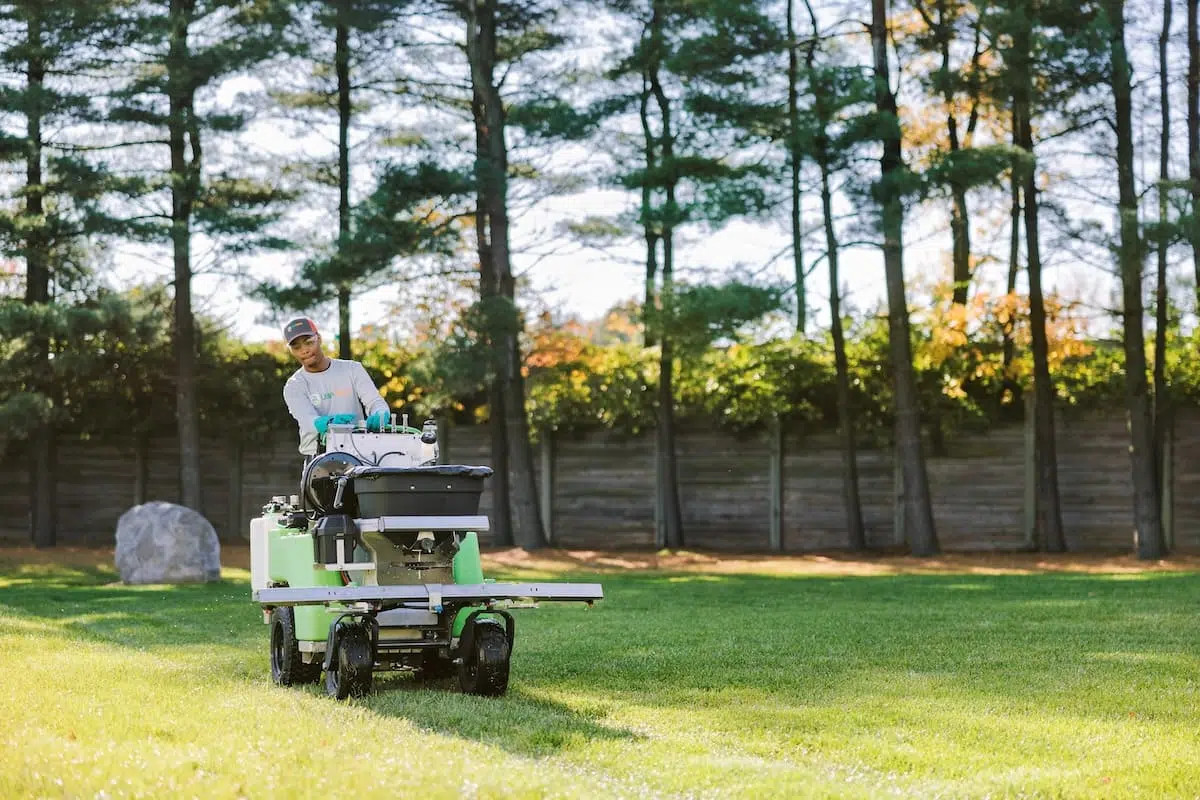
If you would rather have someone else handle the timing decisions, product selection, and application for your Palm Beach lawn, we are here for that. Lawn Squad of The Palm Beaches serves homeowners across the Palm Beaches. Visit lawnsquad.com to request a free quote. Our VitaminLawn program is built for the grass types, soils, and weather patterns we deal with here.
Here is what to expect. We will look at your grass, talk through how your lawn handled this year, and explain what we would apply before winter and why. If your lawn does not need a late-season application, we will tell you that honestly.