Short Answer: Chinch bugs feed by sucking juice from St. Augustine blades and inject toxin that kills the grass directly, producing irregular brown patches that spread outward from the hottest sunniest part of the yard. Sod webworms chew leaf blades from above and leave a notched, ragged-looking grass that thins gradually rather than browning out completely. The two pests look like different problems but are often confused. Treatment timing and products differ for each. Chinch bugs are most active May through September; sod webworms typically appear in late summer. Here is how to tell them apart on Jacksonville area lawns and what to do about each.
If your Jacksonville or St. Augustine lawn is showing damage and you suspect insects, the two most likely culprits are chinch bugs and sod webworms. Both attack the St. Augustine grass that dominates Northeast Florida lawns. Both can cause significant damage if untreated. They are different pests with different signatures, and treating the wrong one wastes product while the actual problem spreads.
Across our service area covering Jacksonville, St. Augustine, Ponte Vedra, Orange Park, and surrounding communities, here is how to tell them apart.
How to Identify Chinch Bugs
Chinch bugs are small (about 1/8 inch long), with adults having black bodies and white wings folded over the back forming a distinctive X pattern. Nymphs are bright reddish-orange with a white band across the body before they mature.
Damage signature:
Irregular brown patches that start in the hottest, sunniest part of the yard (often along driveways, sidewalks, or south-facing exposures) and spread outward.
Yellow halo at the active edge as bugs work outward into healthy grass.
Grass blades stay attached and intact for a while after death, looking dry rather than chewed.
Damage that does not respond to watering. The grass is being killed by toxin injection, not drought.
Activity peak: May through September in Northeast Florida. Hot dry conditions accelerate populations dramatically.
Confirmation: part the grass blades at the active edge of a brown patch and look closely. Adult chinch bugs scurry across the soil surface when disturbed. If you have any doubt, the float test (pushing a coffee can with bottom removed into the soil and filling with water) brings any chinch bugs floating to the surface within minutes.
How to Identify Sod Webworms
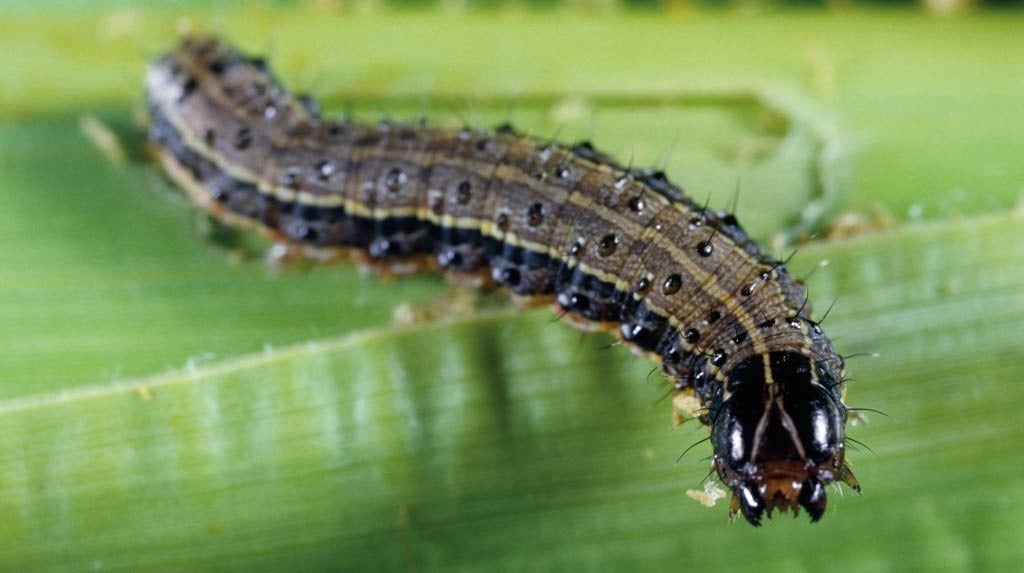
Sod webworms are the larval stage of certain moths. The larvae are 1 inch long when mature, with a brown head and yellowish-gray body that has dark spots. They live in silken tubes near the soil surface and emerge to feed at night.
Damage signature:
Notched, ragged-looking grass blades from chewing rather than dead/dry blades.
Thin, irregular areas with grass that looks shaggy or uneven.
Grass that browns gradually rather than dying outright in patches.
Bird activity (especially mockingbirds and grackles) feeding aggressively on the lawn during early morning or late afternoon.
Increased moth activity at dusk, often visible flying low over the lawn.
Activity peak: late summer to early fall in Northeast Florida, typically August through October.
Confirmation: examine grass blades closely for chewed edges. Look for silken tubes near the soil. Apply soapy water to a small area; sod webworms come to the surface within 5 to 10 minutes if present.
Where Damage Shows Up
Chinch bug damage favors:
Hottest, sunniest areas of the lawn.
Areas next to concrete or asphalt that radiate heat.
Drought-stressed lawns where grass is already weakened.
St. Augustine in particular (chinch bugs prefer this species).
Sod webworm damage favors:
Lawns receiving regular irrigation. Webworms like consistent moisture.
Areas of the lawn that have been growing well rather than stressed areas.
Various warm-season grasses including St. Augustine, Bermuda, and Zoysia.
Treatment Differences
Chinch bug treatment uses targeted insecticides applied to the active edge of damage and surrounding lawn. Single applications often produce control if applied at the right time. Repeat applications may be needed during heavy population years.
Active ingredients that work: bifenthrin, cyhalothrin, deltamethrin, or other pyrethroid insecticides. Apply early morning or evening when bees are less active.
Sod webworm treatment uses different products and timing. Bacillus thuringiensis (Bt) is a biological option that targets caterpillars specifically. Spinosad is another effective option. Apply in evening when webworms are most active. Watering in is important for soil-applied products.
Mistaking one for the other and applying the wrong product wastes time and money while the actual pest continues damaging the lawn.
Recovery After Treatment
Chinch bug damage often recovers without reseeding if treated early. The St. Augustine stolons are usually still alive even when the visible blades are dead. The lawn fills back in once the bugs are gone, typically within 4 to 8 weeks.
Sod webworm damage usually recovers faster because the chewing damage is to leaves rather than to crowns. Affected areas typically green back up within 2 to 4 weeks of treatment.
For severely damaged areas of either pest, plugging or sodding accelerates visual recovery.
Prevention Strategies
For chinch bugs:
Maintain proper mowing height (3.5 to 4 inches for St. Augustine).
Avoid drought stress through proper watering.
Reduce excessive thatch through aeration.
Preventative spring application on properties with chinch bug history.
For sod webworms:
Monitor moth activity at dusk in late summer.
Apply Bt or spinosad preventatively in late August on properties with webworm history.
Encourage natural predators (parasitic wasps, ground beetles).
Avoid excessive nitrogen which produces lush growth that webworms favor.
What If You Have Both
Some properties have both pests in different parts of the yard or in succession through the year. Chinch bugs typically appear first in early summer; sod webworms follow later in the season.
Treatment can address both, but the products and timing differ. Working through the active pest first, then watching for the next, is more effective than blanket-treating both at once.
Other Possibilities to Consider
If neither chinch bugs nor sod webworms confirm, other Northeast Florida lawn pests include:
Mole crickets (visible tunnels and uplifted soil).
Tropical sod webworm (a related species with similar damage to standard sod webworm).
Grub worms (white C-shaped larvae below the soil surface).
Armyworms (feeding patterns similar to sod webworms but more aggressive).
Each has its own treatment. Identification matters.
What to Do Next
If you suspect insect damage on your Jacksonville or St. Augustine area lawn and want help identifying which pest you have plus the right treatment, we walk Northeast Florida properties regularly to confirm pest identification and apply targeted treatments. If you would rather have someone else handle the timing decisions, product selection, and application for your Jacksonville and St. Augustine lawn, we are here for that.
Visit lawnsquad.com to find Lawn Squad of Jacksonville-St. Augustine and request a free quote. Our VitaminLawn program is built specifically for the grass types, soils, and weather patterns in our service area. Most homeowners see noticeable improvement within the first two applications.