
Short Answer: Fall armyworms are the most destructive caterpillar pest of Central Georgia Bermuda, Zoysia, and Centipede lawns, and they can take a yard from green to brown stubble in under 72 hours when populations peak. They typically arrive in our service area from mid-July through October, riding storm fronts up from the Gulf. Scout weekly for clipped or translucent leaf tips, brown patches expanding from the lawn edge, and concentrated bird activity. Confirm with a soap flush (two tablespoons of dish soap in a gallon of water poured over a square yard) and treat with bifenthrin or chlorantraniliprole at the first sign of caterpillars over a quarter inch long.
Of every pest we deal with in Central Georgia, fall armyworms are the one that worries us most. Brown patch is slow. Chinch bugs work over weeks. Sod webworms damage in patches. Fall armyworms can chew through a beautiful Bonaire Bermuda lawn or a Macon Zoysia front yard in a single hot weekend, and we have walked plenty of those yards Monday morning over the years. The first call from the homeowner is always the same. “It was fine on Friday. How did this happen?”
The good news is that armyworms leave clear signs once you know what to look for, and they are easy to control if you treat early. The bad news is the window between “first sign of trouble” and “the whole lawn is brown stubble” can be as short as 48 hours during a heavy outbreak. The lawns we save are the ones where the homeowner caught it during a weekly scouting walk before the damage spread.
Here is how we teach Central Georgia homeowners to scout for armyworms through July, August, and September, and exactly what to do the moment you suspect them.
Why Central Georgia Is in the Armyworm Migration Path
Fall armyworms cannot survive Central Georgia winters. They overwinter in south Florida and along the Gulf Coast and migrate north each spring and summer. By mid-July most years, the population has reached our service area. By August and into early October, pressure peaks. Strong storm systems running up the Gulf-to-Georgia corridor carry the moths north faster than they can fly on their own, which is why armyworm outbreaks often follow on the heels of a tropical system or a string of strong frontal storms.
Central Georgia is on the path. We have seen severe outbreaks reported across our service area in recent years, with 2021 being the worst in living memory. Macon, Warner Robins, Perry, Milledgeville, Dublin, all hit. The yards we lost in worst-case scenarios were the well-fed, well-irrigated Bermuda and Zoysia lawns that armyworms prefer. A lush green lawn is more attractive to egg-laying moths than a stressed, weedy one, which feels unfair to homeowners doing the right things, but it is the biology we are dealing with.
What Armyworm Damage Looks Like at Each Stage
The very first sign is subtle. Walk the lawn at low sun angle (early morning or late afternoon) and look at the upper canopy. Healthy Bermuda or Zoysia has clean, uniform leaf tips. Lawns with small armyworms have ragged, shredded leaf tips and a translucent, papery look across patches where the caterpillars have grazed the upper tissue. From across the yard the affected area can look slightly off-color, almost like a poorly mowed strip.
Within two to four days that subtle thinning turns into visible brown patches, often starting at the lawn edge nearest a hay field, pasture, woods, or any taller grass where the moths laid eggs. The patches grow daily as the caterpillars mature. A mature armyworm caterpillar in its last days before pupating eats more than the total of every day before it combined. This is why the damage curve accelerates so suddenly. Forty caterpillars in a square yard can defoliate a lawn faster than the homeowner finishes the morning coffee.
The third sign is birds. Mockingbirds, brown thrashers, robins, grackles, and especially cattle egrets will flock to an armyworm outbreak. If you see five or six birds intently working one patch of lawn in late July or August, walk over and look closely. They are doing your scouting for you.
The Weekly Scouting Routine That Catches Them Early
From the first week of July through the first frost, we recommend a 90-second walk every weekend. Cover the perimeter of the lawn first since edges are where damage typically appears first. Look for:
- Leaf tips that look ragged or translucent rather than clean.
- A brown patch at the edge of the lawn that was not there a week ago.
- Bird activity concentrated on one area of the yard.
- Small dark green frass (caterpillar droppings) on leaf blades, especially visible after dew.
If anything looks suspicious, do a soap flush. Mix two tablespoons of liquid dish soap with one gallon of water and pour it slowly over a one-square-yard area of the suspect turf. Wait three to five minutes. Caterpillars that are present, including armyworms, sod webworms, and cutworms, get irritated and crawl up to the surface. Identify them and you have your answer.
How to Identify a Fall Armyworm
Fall armyworm caterpillars have a few unmistakable features once you know them. Mature larvae are about one and a half inches long with three pale yellow stripes running the length of the body. The head is dark with a pale, inverted Y-shaped mark between the eyes. Body color varies from light green to almost black depending on age and what they have been eating, but the inverted Y on the head is the consistent give-away.
Sod webworms are smaller, gray-green, often build silken tubes in the thatch, and are found on dewy mornings. Cutworms are fatter and curl into a tight C when disturbed. The treatment for all three is similar, but knowing which one helps with prevention planning for the rest of the season.
Treatment Selection and Application
Confirmed armyworms get treated the same day. There is no wait-and-see option. The products that work best in our region are bifenthrin (Talstar, Bifen, several consumer brands), chlorantraniliprole (Acelepryn at professional rates, with consumer equivalents available), and spinosad (Conserve, several organic-friendly brands).
Bifenthrin gives fast knockdown for an active infestation in 24 to 48 hours. Chlorantraniliprole has longer residual and works as both curative and preventive, useful when armyworm pressure is confirmed in the neighborhood. Spinosad is gentler on beneficial insects and a good choice for homeowners who want a lower-impact option.
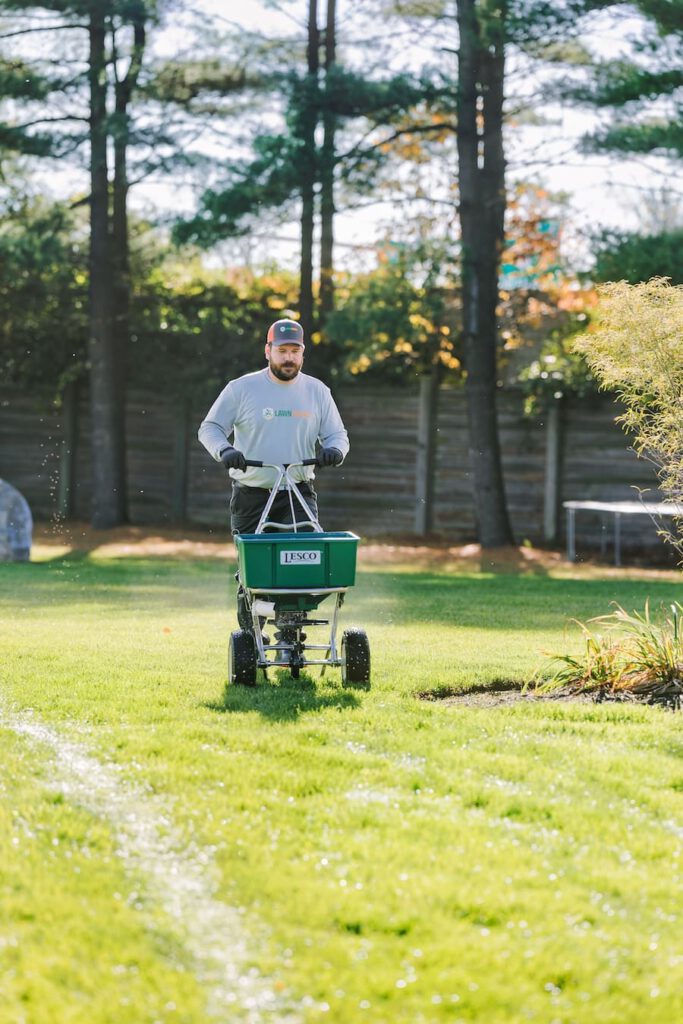
Application matters as much as product choice. Use higher water volume than a routine application so the spray gets down into the canopy and thatch where the caterpillars feed. Spray in late afternoon or early evening when caterpillars are coming up to feed. Skip mowing for 24 hours after the application so the product stays on the leaf blades. A second application five to seven days later is sometimes needed if eggs were already laid before treatment.
Centipede-Specific Considerations
Centipede is common across older Central Georgia neighborhoods, especially in Macon, Milledgeville, and Sandersville. Centipede recovers from armyworm damage more slowly than Bermuda or Zoysia because it grows slower in general. The treatment is the same, but expect recovery to take three to four weeks rather than two. Avoid the temptation to push recovery with a heavy nitrogen feeding. Centipede is sensitive to nitrogen and can be set back further by over-fertilization on top of armyworm damage. A light supplemental feeding (a quarter pound of nitrogen per thousand square feet) and patience work better than a heavy push.
Recovery Expectations
Bermuda and Zoysia have remarkable recovery abilities in July and August. Armyworms eat leaf tissue but typically leave the crowns and stolons intact, so a defoliated lawn rebounds quickly once the caterpillars are dead and growth resumes. Expect green-up within seven to ten days post-treatment on Bermuda, ten to fourteen on Zoysia. Centipede may take a bit longer.
Support recovery with deep watering (one inch per week), a light nitrogen feeding on Bermuda and Zoysia, and patience on Centipede. By early September a July outbreak that was caught and treated promptly will usually look like it never happened.
What to Do Next
If you spot ragged leaf tips, an expanding brown patch starting at the edge of the lawn, or a flock of birds working one section of turf, run a soap flush today. If you find caterpillars, treat today. The cost of a quick response is one product application. The cost of a wait-and-see week is sometimes a full sod replacement on a third of the yard.
Lawn Squad of Central Georgia serves Allentown, Bolingbroke, Bonaire, Byron, Cadwell, Centerville, Chauncey, Chester, Clinchfield, Cochran, Danville, Dexter, Dry Branch, Dublin, Dudley, East Dublin, Eastman, Fort Valley, Gordon, Gray, Haddock, Hardwick, Harrison, Hawkinsville, Hillsboro, Irwinton, Jeffersonville, Kathleen, Macon, McIntyre, Milledgeville, Montrose, Oconee, Perry, Rentz, Sandersville, Smarr, Tennille, Toomsboro, Warner Robins, Warthen, and Wrightsville.
Call us at 478-901-2620 or request a free quote at lawnsquad.com. Our VitaminLawn program includes scheduled summer insect monitoring and treatment options that catch armyworms, chinch bugs, and sod webworms before they get away from you, with the timing built into the plan rather than added as an emergency call.