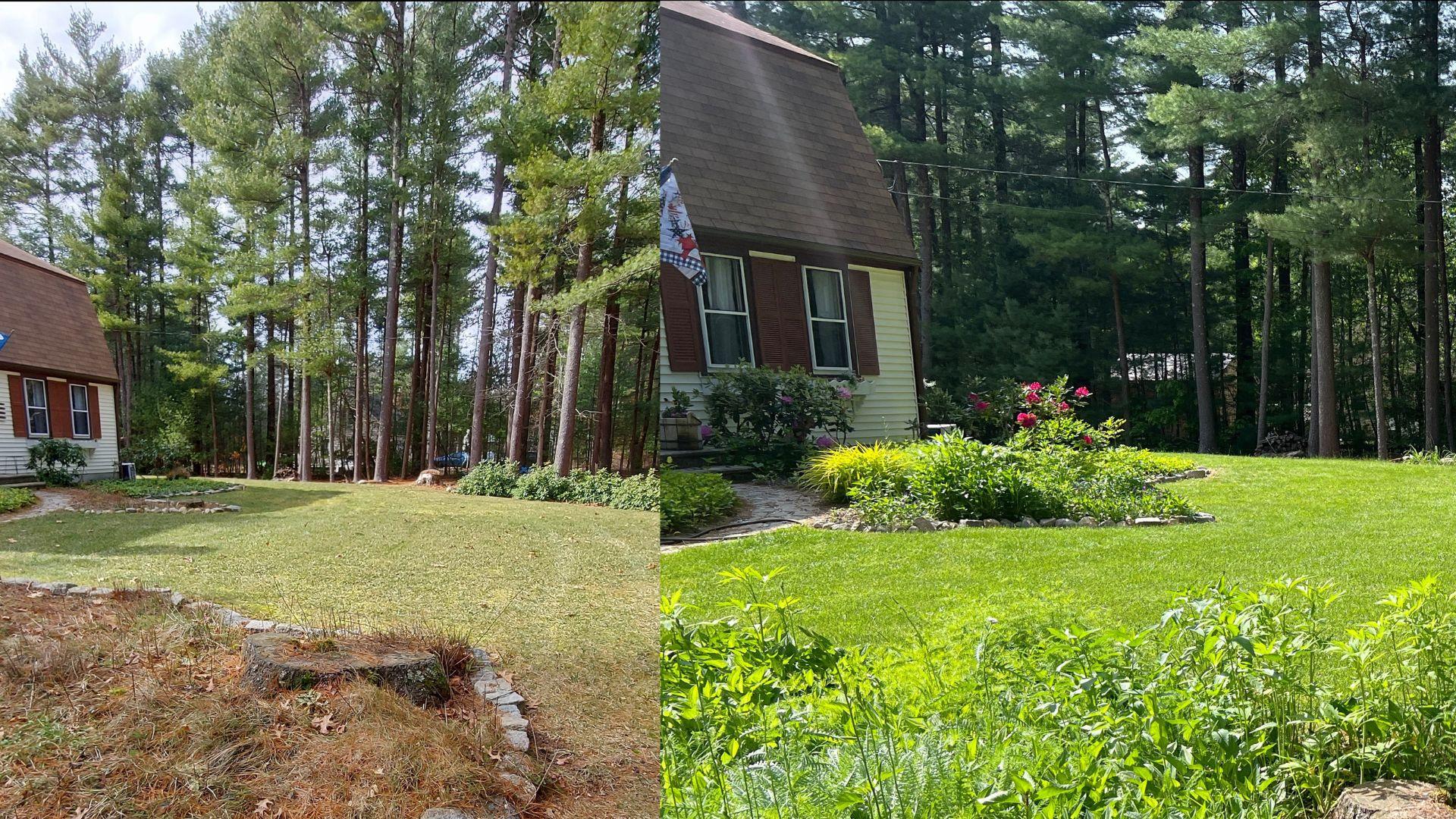
Short Answer: The five most expensive spring lawn care mistakes we see across Cherry Hill and South Jersey are: mistiming the pre-emergent window, applying too much spring nitrogen on cool-season grass, scalping the lawn in the first mow, ignoring our variable sandy-loam soil needs, and pretending last year’s grub damage will heal on its own. Each costs roughly $300 to $1,500 in recovery work later. Below is how to spot each and what to do instead.
If you own a home anywhere from Cherry Hill to Moorestown to Voorhees, you already know our lawns can be finicky. We have cool-season grasses trying to thrive in a climate with brutal summer humidity, variable soils that swing from sandy to clay-loam in the same town, and a narrow spring window that closes fast. Small mistakes in April turn into big problems by July.
Here are the five we see every year.
Mistake 1: Waiting Too Long on Pre-Emergent
Crabgrass in South Jersey germinates when soil temperatures hit 55 degrees, usually between April 10 and April 25 in our area. Homeowners who wait until “the weather feels warm” often miss the window by 10 days. By the time crabgrass is visible, pre-emergent does nothing and you are stuck with post-emergent products that cost more and are harsher on the lawn.
The fix: do not trust the calendar. Watch soil temperature (Rutgers Cooperative Extension publishes data) or use forsythia bloom drop as a backup indicator. When forsythia blooms are fading, you are right at the edge.
Cost of missing this window: roughly $400 to $800 in summer recovery instead of $80 to $150 for a timely pre-emergent application on a typical half-acre lot.
Mistake 2: Heavy Spring Nitrogen on Cool-Season Lawns
The instinct is to feed the lawn when you see it greening up. For cool-season grasses (tall fescue, Kentucky bluegrass, perennial ryegrass), heavy spring nitrogen is actually counterproductive.
Why: cool-season grasses build root reserves in fall, not spring. Heavy spring nitrogen pushes top growth that the root system cannot support, and by the time July humidity arrives, those top-heavy plants are the first to fail from brown patch or red thread.
The fix: use a light, slow-release fertilizer in spring. Save the real feeding for September and October. Fall fertility is the foundation of a healthy South Jersey lawn.
Mistake 3: Scalping the Lawn in the First Mow
We see this all the time: homeowner pulls out the mower in April, sets it to “summer height” (around 2 inches), and scalps the cool-season grass while it is still fragile from winter. The damage shows up as thinning and weed pressure within 4 to 6 weeks.
Target heights for South Jersey cool-season lawns:
- Tall fescue: 3.5 to 4 inches
- Kentucky bluegrass: 3 to 3.5 inches
- Perennial ryegrass: 2.5 to 3 inches
- Mixed blend (most common): 3.5 inches
The fix: set the mower to the taller end of the range in spring, and never remove more than one-third of the blade at a time.
Mistake 4: Treating Every South Jersey Lawn the Same
South Jersey soils vary a lot. In Haddonfield and Cherry Hill, you often find sandy to sandy-loam soils that drain fast and leach nutrients quickly. In Moorestown and Mount Laurel, soils are often heavier loam. In Voorhees and parts of Marlton, you find clay-loam on some newer developments.
Each of those needs a different fertilization schedule. Sandy soils need more frequent, lighter applications because nutrients wash through. Loamier soils can handle slower-release products at higher rates.
The fix: pull a soil test through Rutgers Cooperative Extension (around $20). It tells you your pH, phosphorus, potassium, and organic matter. Armed with that, your fertilizer choices stop being guesswork.
Mistake 5: Pretending Last Year’s Grub Damage Will Heal Itself
South Jersey has reliable annual grub pressure. If you saw brown patches last fall where the grass pulled up like a loose rug, or if skunks or raccoons were digging in the lawn at night, you had grubs. Those spots will not rebuild themselves.
The math: preventive grub control in June costs about $70 to $110 on a half-acre lawn. Renovating a grub-damaged lawn in fall costs $1,500 to $4,000 depending on size and extent.
The fix: preventive grub control is the single best insurance policy in South Jersey lawn care. Do not wait until damage shows up.
The Pattern Across All Five
Every one of these mistakes has the same root cause: doing the intuitive thing (feed more, cut shorter, wait until you see a problem) when the right move is to do the unintuitive thing at a specific time. Lawn care in our area is a timing and calibration game, and that is what a professional program solves.
What to Do Next
If you want a team that tracks soil temperature, adjusts for your specific soil type, and times applications correctly, we are here for that.
Lawn Squad of Cherry Hill serves Audubon, Barrington, Bellmawr, Beverly, Camden, Cherry Hill, Collingswood, Gibbsboro, Gloucester City, Haddon Heights, Haddonfield, Lawnside, Magnolia, Maple Shade, Marlton, Merchantville, Moorestown, Morristown, Mount Ephraim, Mount Laurel, Oaklyn, Palmyra, Pennsauken, Riverside, Riverton, Voorhees, West Berlin, and Willingboro.
Call us at 856-301-2447 or request a free quote at lawnsquad.com. Our VitaminLawn program is built around South Jersey’s cool-season grasses and variable soils.