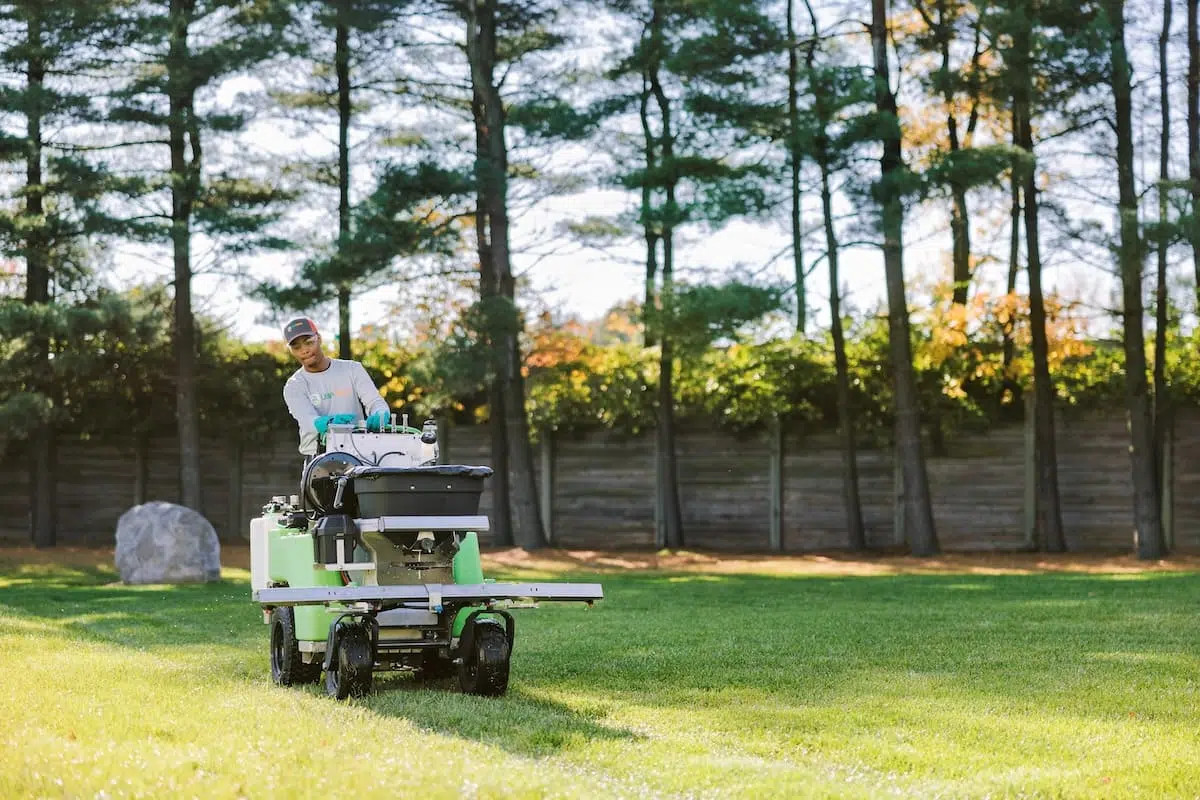
Red Clay, Falls Lake, and Fall Fertilization: Feeding North Raleigh Lawns Responsibly

Red Clay, Falls Lake, and Fall Fertilization: Feeding North Raleigh Lawns Responsibly
Short Answer: North Raleigh lawns grow on red Piedmont clay, and much of the area drains toward Falls Lake, a drinking water reservoir sensitive to excess nutrients. Clay holds nutrients well but drains slowly and sheds water when compacted or saturated, which raises runoff risk. To feed a fescue lawn responsibly in November, apply a moderate rate when the soil is moist but not soggy, ahead of light rain rather than storms, after leaves are cleared, and sweep granules off pavement. A soil test guides lime and nutrient needs, so you only apply what the lawn will use.
If you have lived in North Raleigh for any length of time, you know the soil. Dig a few inches into almost any yard and you hit dense, sticky red clay that clings to shovels and shoes after a rain and bakes hard in a dry August. That is Piedmont clay, and it underlies most lawns from Wake Forest to Brier Creek.
Most homeowners we talk to want a thick lawn and clean water, and they are not always sure how to have both. The good news is that those two goals work together. A dense, healthy lawn is one of the best tools there is for slowing runoff, as long as it is fed in a way the grass can actually use.
Where the Red Clay Comes From
The red color comes from iron oxides in soils that formed over millions of years from weathered rock in the Piedmont. These soils are typically heavy in clay, often acidic, and low in organic matter. In many newer neighborhoods, the topsoil was stripped during construction, leaving lawns growing on compacted subsoil with only a thin layer of better soil on top.
What Clay Does Well
Clay particles hold onto many nutrients, which means fertilizer that gets into a clay soil tends to stay in the root zone rather than washing straight through. Clay also holds water well once roots are established.
What Clay Makes Harder
The same tiny particles pack together tightly. Compacted clay leaves little room for air and water to move, and grass roots struggle to grow down through it. Clay also drains slowly. After a heavy rain, water can sit on the surface or run off rather than soaking in.
That is the biggest risk for any fertilizer application. Product sitting on top of saturated or compacted clay can wash off with the next downpour, especially on sloped lawns.
Why Falls Lake Matters
Falls Lake is the main drinking water supply for Raleigh and several surrounding communities. Much of North Raleigh drains toward it through creeks, storm drains, and streams. Falls Lake has been the focus of long-term efforts to reduce nitrogen and phosphorus coming from the surrounding watershed, since excess nutrients feed algae and affect water quality.
Every lawn in the watershed plays a small part. Fertilizer that stays on the lawn helps the grass. Fertilizer that washes off ends up in the lake.
Timing: The Biggest Factor
For tall fescue, the most common lawn grass in North Raleigh, a November feeding is one of the most valuable applications of the year. NC State’s fescue recommendations place the main feedings in fall, including a late-season application in November. Fescue takes up nitrogen in November and stores it in its crowns and roots, which leads to earlier, more even spring green-up.
Here is what we have found works best on red clay. Apply in November, once mowing has slowed but the grass is still green. Choose a day when the soil is moist but not waterlogged, with only light rain in the forecast. If the lawn has standing water or squishes underfoot, wait a few days.
Skip Dormant Warm-Season Grass
Bermuda and zoysia go dormant after the first hard frost and do not use late-season nitrogen. Fertilizer applied to dormant warm-season grass in November is far more likely to wash off or feed winter weeds. Skip those areas.
Right Rate, Right Product
Applying more fertilizer than the lawn can use is wasteful and increases runoff. Moderate, well-timed rates work better than one heavy dose. NC State’s guidelines limit how much nitrogen should go down in a single application, and following the product label keeps you in range.
Soil Testing Pays Off
North Carolina offers soil testing through the NC Department of Agriculture and Consumer Services, and it is one of the best investments you can make in a lawn. The results show pH and nutrient levels and include recommendations for lime and fertilizer.
Many Piedmont clay soils are acidic. When pH is too low, grass cannot use the nutrients already in the soil efficiently, and fertilizer becomes less effective. Lime, applied based on a soil test, can make a real difference. Fall and winter are good times to apply lime, since it takes months to work.
Soil tests often show that phosphorus is already adequate, which means there is no need to apply more.
Keep It Off the Pavement
Granules that land on driveways, sidewalks, and streets wash straight into storm drains. Use a spreader with an edge guard along hard surfaces, and sweep or blow any stray granules back onto the lawn before you finish.
Buffers Along Creeks
If your property backs up to a creek or drainage channel, leave a strip along the bank unfertilized. Letting that strip grow taller or planting it with native shrubs and grasses slows runoff and filters it before it reaches the water.
Leaves and Runoff
Leaves blown or raked into the street break down in the gutter and wash into storm drains, releasing nutrients just like fertilizer. Mulching leaves into the lawn or composting them keeps those nutrients on your property. Clear leaves before the November feeding so the fertilizer reaches the soil.
Aeration and Organic Matter
Core aeration in early fall, often paired with overseeding, is one of the best long-term improvements for red clay lawns. It opens the soil so water and nutrients can soak in. Topdressing with compost after aeration gradually adds organic matter, which improves how clay drains and holds water. Over a few seasons, a lawn on improved clay sheds less water and uses fertilizer more efficiently.
Slopes Need Extra Care
Many North Raleigh neighborhoods are built on rolling terrain, with lawns sloping toward the street or a creek. On slopes, walk across the hill rather than up and down it to keep the rate even, and consider a slightly lower rate on the steepest sections where water runs off fastest.
Do Not Use Fertilizer as Ice Melt
On the rare icy mornings Raleigh gets in winter, it can be tempting to toss leftover granules on the steps or driveway. Fertilizer is not an effective de-icer, and it washes straight into storm drains when the ice melts. Keep leftover fertilizer sealed and dry until the next application.
What a Responsible Feeding Looks Like
Imagine your yard next spring. The fescue is thick and evenly green, with deeper roots that soak up rain instead of shedding it. The street in front of your house is free of leaves and granules. The strip along the back creek is growing in. Your lawn looks great, and very little of what you put on it ended up anywhere but the root zone.
What to Do Next
For a fescue lawn on red clay, apply a moderate, nitrogen-focused feeding in November on a day when the soil is moist but not soggy, with only light rain expected. Clear leaves first, skip dormant Bermuda and zoysia, sweep granules off pavement, and leave a buffer along any creek. Get a soil test through NCDA&CS before adding lime or phosphorus.
If you would rather have someone else handle the timing decisions, product selection, and application for your North Raleigh lawn, we are here for that. Lawn Squad of North Raleigh serves homeowners across North Raleigh. Visit lawnsquad.com to request a free quote. Our VitaminLawn program is built for the grass types, soils, and weather patterns we deal with here.
Here is what to expect. We will look at your grass, talk through how your lawn handled this year, and explain what we would apply before winter and why. If your lawn does not need a late-season application, we will tell you that honestly.