
Massachusetts’ December 1 Fertilizer Rule: Timing a Late-Season Feeding in Central and Eastern Massachusetts

Massachusetts’ December 1 Fertilizer Rule: Timing a Late-Season Feeding in Central and Eastern Massachusetts
Short Answer: In Massachusetts, November is the last month of the year to fertilize a lawn. State plant nutrient regulations prohibit lawn fertilizer between December 1 and March 1, as well as on frozen or snow-covered ground. For the bluegrass, fescue, and ryegrass lawns across Central and Eastern Massachusetts, that makes early to mid November the key window for a late-season feeding. Use a product without phosphorus unless a soil test or new lawn calls for it, stay 20 feet from waterways when broadcasting, and finish before the ground freezes.
If you are reading this in early November, you may have heard that Massachusetts has rules about when you can fertilize and wondered whether you are already too late. You are probably not. The state’s cutoff is December 1, and for most lawns from Worcester County to the inner suburbs, the coming weeks are exactly when a late-season feeding does the most good.
That said, the deadline is firm, and New England weather has a way of making it arrive sooner than expected. An early nor’easter or a hard freeze can close the window before the calendar does. Here is what the rules say and how to plan around them.
What the Regulations Say
In 2012, the Massachusetts Legislature passed An Act Relative to the Regulation of Plant Nutrients, and the Massachusetts Department of Agricultural Resources developed regulations under 330 CMR 31.00 to carry it out. The rules apply to lawns and other non-agricultural turf.
Massachusetts plant nutrient regulations prohibit applying fertilizer to lawns between December 1 and March 1, and on frozen or snow-covered ground. The regulations also require following University of Massachusetts Amherst Extension guidelines when applying plant nutrients to lawns.
Why the Rules Exist
Central and Eastern Massachusetts are full of water: the Charles, Concord, Sudbury, Assabet, Nashua, and Blackstone rivers, along with countless ponds, wetlands, and reservoirs, including the Wachusett, which supplies drinking water to Greater Boston. Nitrogen and phosphorus that wash off lawns can feed algae and degrade water quality. Fertilizer applied to frozen or dormant ground in winter is especially likely to wash away rather than be used by the grass.
Why November Is Still the Best Time
Here is the good news. For the cool-season lawns that cover the region, November is one of the most valuable feeding windows of the year.
Kentucky bluegrass, perennial ryegrass, tall fescue, and the fine fescues common in shaded yards all slow their top growth this month. But their roots keep working as long as the soil stays above freezing. A late-season feeding gets stored in the roots and crowns rather than turned into leaf growth, and that stored energy fuels an earlier, more even green-up next spring.
How to Plan Around December 1
Here is what we have found works best. Treat December 1 as the hard stop, not the target. Aim to have the late-season feeding down in early to mid November, once mowing has slowed but the grass is still green.
In Central Massachusetts and at higher elevations west of Route 495, the ground often freezes sooner than closer to the coast. Lawns in those areas benefit from leaning toward the earlier end of the window.
Phosphorus: Only When Needed
Under Massachusetts rules, phosphorus-containing fertilizer may only be applied to lawns when a soil test indicates it is needed or when a lawn is being established, patched, or renovated. Retailers who sell phosphorus fertilizer are required to display it separately from phosphorus-free products.
For an established lawn getting a late-season feeding, that means choosing a product with a zero, or close to it, as the middle number on the bag.
The Water Setback
Many properties in the region border a pond, stream, or wetland. Massachusetts rules prohibit applying fertilizer within 20 feet of waterways when using a broadcast spreader, or within 10 feet when using a drop spreader, a rotary spreader with a deflector, or a targeted spray. Additional restrictions apply near public water supply wells and within 100 feet of surface waters used for public drinking water.
Marking the buffer before you start makes it easy to follow. Many homeowners let that strip grow a little taller or plant it with native shrubs, which slows runoff and needs no fertilizer.
Keep It Off Pavement and Frozen Ground
Fertilizer that lands on driveways, sidewalks, and streets washes straight into storm drains with the next rain. Sweep or blow stray granules back onto the lawn before you finish.
And remember that the frozen-ground rule can close the window before December 1. If the soil is frozen, wait for a thaw, or save the feeding for spring.
Watch the Weather
Even inside the window, the day you choose matters. A light rain or gentle watering after application moves fertilizer into the soil. A heavy downpour on a sloped lawn can wash it into the street. Frost on the grass in the morning is not the same as frozen ground. If a screwdriver pushes easily into the soil mid-morning, the ground is workable.
Leaves First
By November, many lawns in the region are buried under maple, oak, and birch leaves, and oaks often hold on into late November. Fertilizer spread over a leaf layer never reaches the soil. Mulch light leaf cover with the mower or clear heavier layers before applying.
Calibrate and Spread Evenly
Following the rules also means applying the right amount. The regulations tie application rates to UMass guidelines, and an uncalibrated spreader can easily put down far more or far less than the label rate. Here is what we have found works best. Set the spreader at half the label rate, walk the lawn in one direction, then walk it again at a right angle, closing the spreader at the end of each pass before turning. That keeps the rate even and avoids the dark and pale stripes that show up in spring after uneven spreading.
What if You Miss the Window?
If December 1 arrives, or the ground freezes, before the late-season feeding goes down, the right move is to wait until spring. Fertilizer can resume March 1, though in much of the region the lawn will not be ready to use it until April. The grass will still green up. It may just be slower and less even than it would have been.
Ask Your Lawn Care Company How They Handle It
If you hire someone, it is fair to ask how they time late-season applications around December 1 and how they handle phosphorus and water setbacks. Professional applicators in Massachusetts are also required to keep records of their nutrient applications. Any company working in the state should be able to answer these questions clearly.
What a Well-Timed November Looks Like in Spring
Imagine this. It is mid April. Your neighbors are just starting to think about the first spring feeding. Your lawn is already turning green, evenly and early, because it went into winter well fed. You beat the deadline, and the lawn is showing it.
What to Do Next
If you are feeding your own lawn, plan to finish in early to mid November, earlier in Central Massachusetts and at higher elevations. Clear leaves first, choose a product without phosphorus unless a soil test or new seeding calls for it, stay 20 feet from water when broadcasting, avoid frozen ground and heavy rain, and sweep every granule off pavement. If December 1 arrives first, wait for spring.
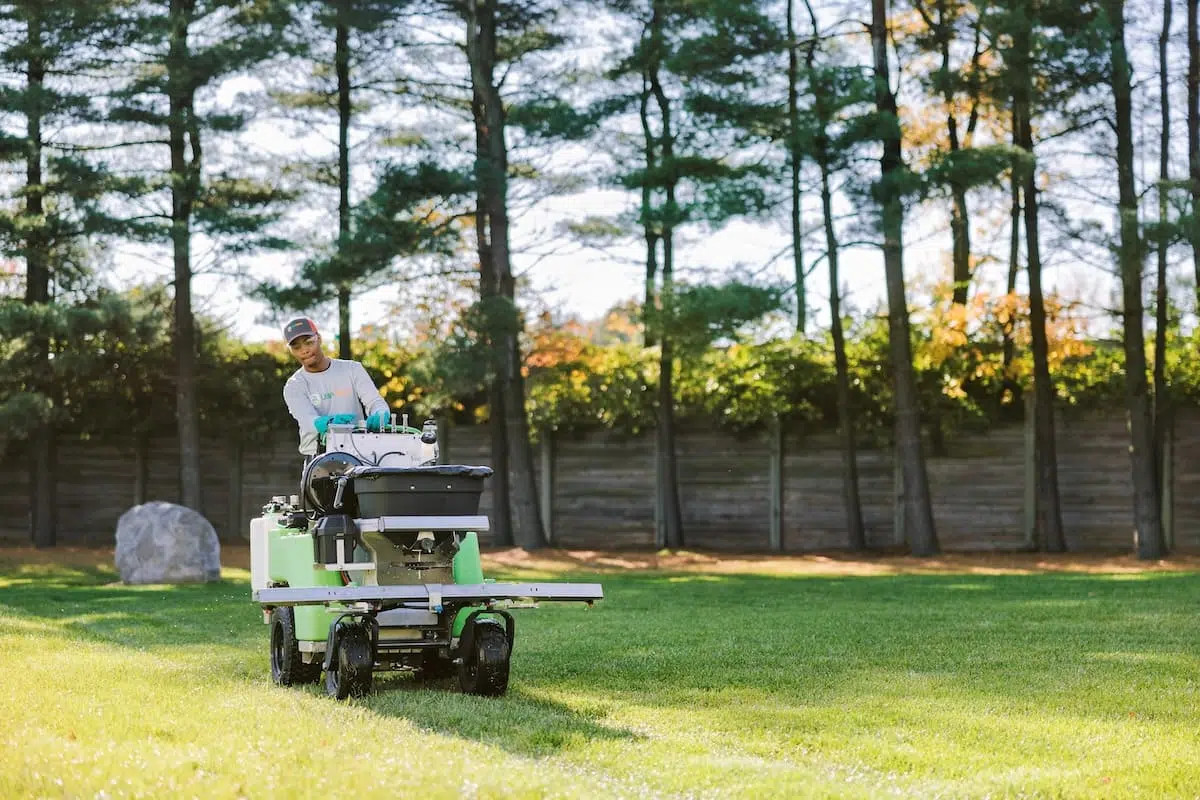
If you would rather have someone else handle the timing decisions, product selection, and application for your Central and Eastern Massachusetts lawn, we are here for that. Lawn Squad of Central and Eastern Massachusetts serves homeowners across Central and Eastern Massachusetts. Visit lawnsquad.com to request a free quote. Our VitaminLawn program is built for the grass types, soils, and weather patterns we deal with here, and for the rules Massachusetts sets on when and how lawns can be fed.
Here is what to expect. We will look at your grass, talk through how your lawn handled this year, and explain what we would apply before winter and why. If your lawn does not need a late-season application, we will tell you that honestly.