
Granular or Liquid Fall Fertilizer for Central Georgia Lawns?
Short Answer: Neither is better across the board, and a company insisting otherwise is usually describing the equipment it owns. On Central Georgia’s sandy soils, slow release nitrogen matters more than which form carries it, because sand holds nutrients poorly and a fast dose largely leaches past the root zone. Granular delivers slow release more effectively and carries more nutrient per pass. Liquid spreads more evenly and works better for iron and other corrections. Your grass type matters far more than either choice, particularly if you have centipede, which wants very little nitrogen in any form.
If two companies have quoted your lawn and one told you granular is the only serious option while the other said liquid is more advanced, you have hit one of the more frustrating parts of shopping for lawn care. Both claims are marketing rather than agronomy, and both usually describe whatever is parked in the driveway.
These are two delivery methods with different strengths, and the right one depends on what a given application needs to accomplish. Here is how each behaves, and how our sandy Central Georgia soils change the comparison.
What Each One Is
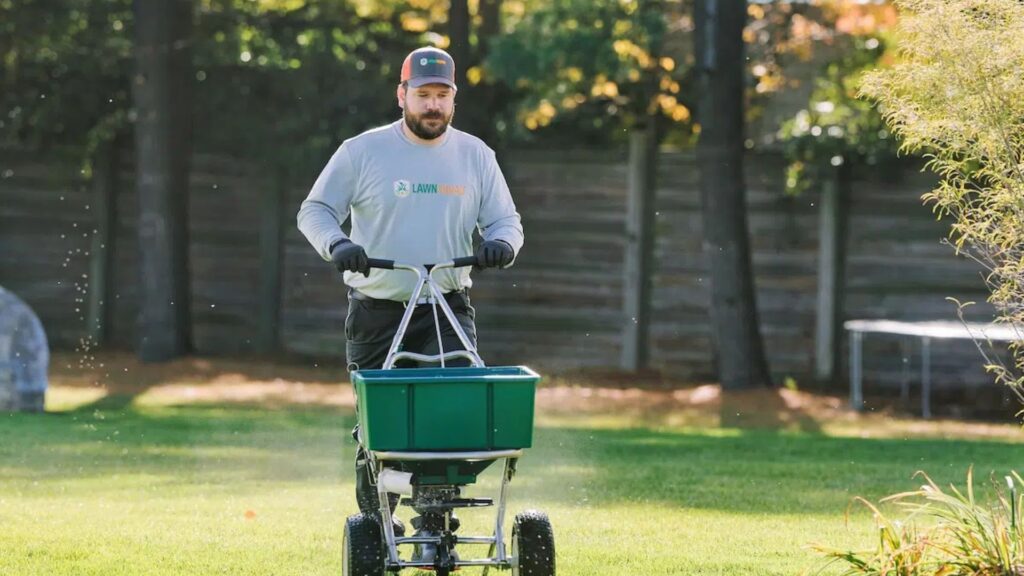
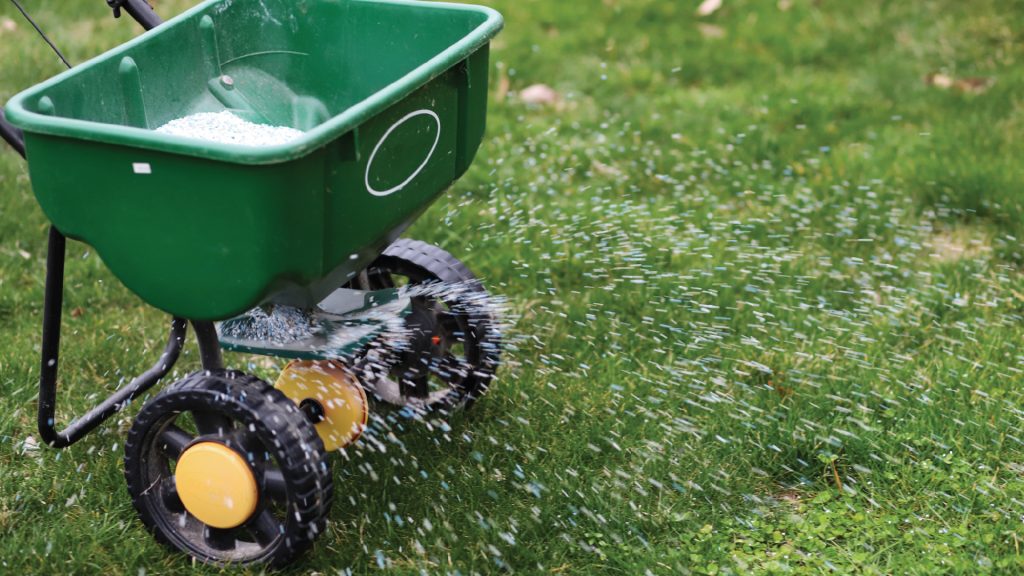
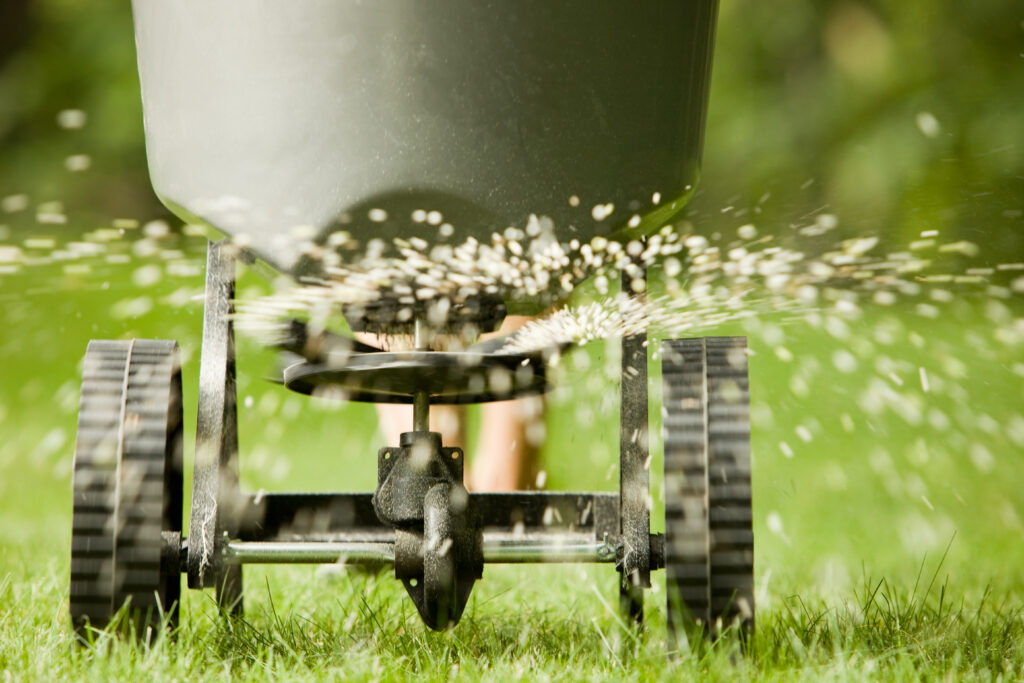
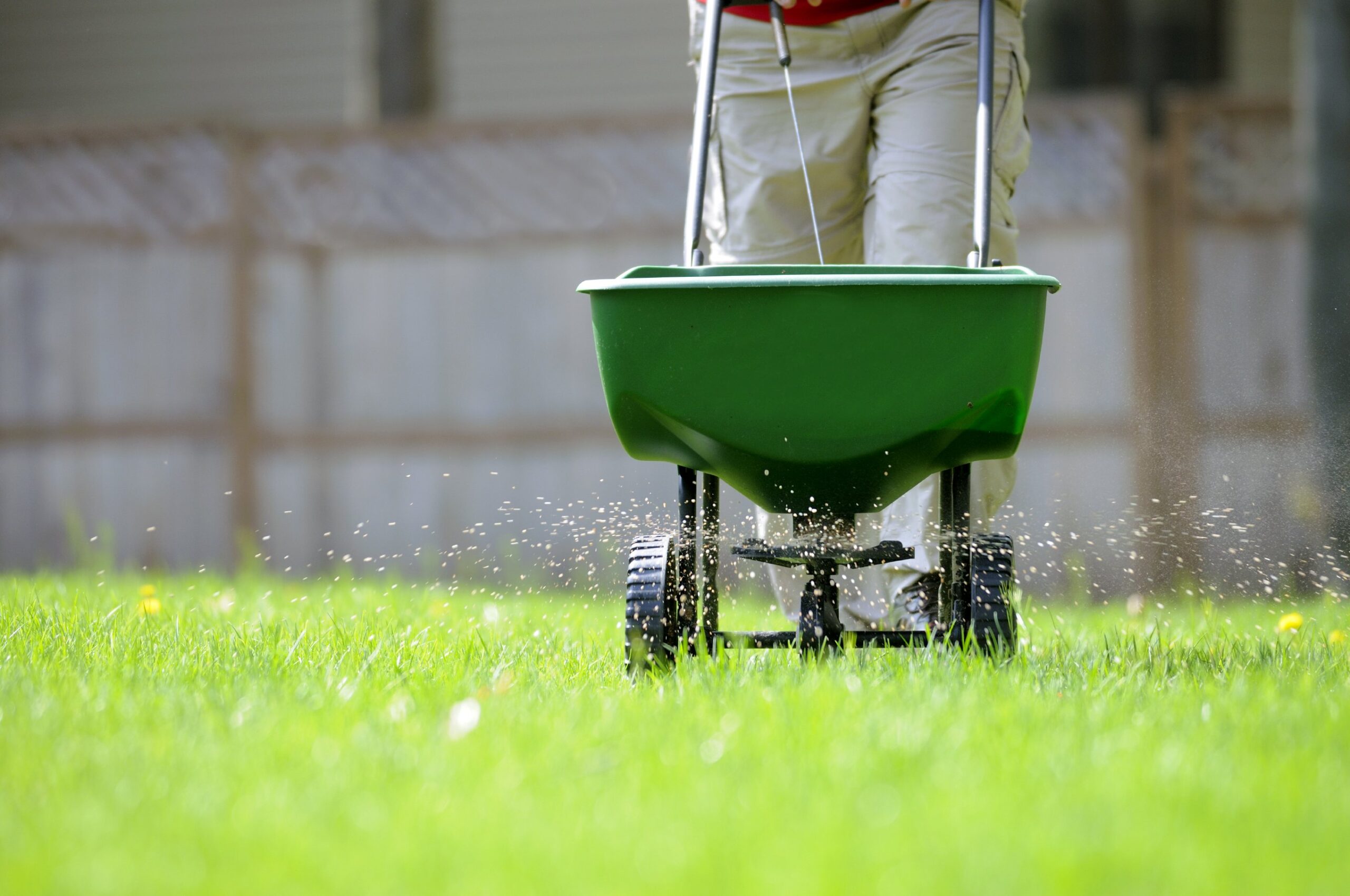
Granular fertilizer is dry prills spread with a broadcast spreader. They sit on the soil surface until water dissolves them, which is why granular applications need to be watered in or timed ahead of rain. Nutrients then move into the root zone with that water.
Liquid fertilizer is nutrients dissolved in water and sprayed across the turf. Part is absorbed directly through the leaf blade, called foliar uptake, and the rest reaches soil and is taken up by roots. That second pathway is the main practical difference between them.
Both deliver the same nutrients. Nitrogen is nitrogen whether it arrives as a prill or a droplet. What differs is how much goes down per pass, how quickly the plant receives it, and how long it keeps working.
Why Our Soil Makes Slow Release the Real Question
Central Georgia sits along the fall line, where the Piedmont clay to the north gives way to the sandy coastal plain. A great many lawns here sit on sandy loam, sometimes over clay at depth, and that sand changes the calculation more than the granular versus liquid choice does.
Soil holds nutrients through a property called cation exchange capacity, essentially its ability to grip nutrient ions where roots can reach them. Clay and organic matter have high capacity. Sand has very little. So nitrogen applied here dissolves, moves downward with rain and irrigation, and a share passes below the root zone before the grass takes it up.
The practical consequence is that fast release nitrogen performs poorly on our soils. It dissolves immediately, delivers far more than the plant can use at once, produces a surge of growth, and the remainder leaches. Two or three weeks later the color fades and it looks like the product failed.
Slow release forms, including coated urea and methylene urea, dissolve gradually over six to eight weeks. Less is dissolved at any given moment, so far less leaches and considerably more reaches the plant. On sandy soil that is not a premium feature, it is the difference between a product that works and one that mostly does not.
Where Granular Has the Edge
Slow release delivery is the main one, and it follows directly from the point above. Granular products can be coated or chemically formulated to release gradually in ways that are difficult to replicate in a liquid, where most nitrogen sources are immediately available.
Granular also carries more total nutrient per pass, which makes it efficient for base feedings and means fewer visits to supply the same annual amount. On a larger property that matters to the bill.
And it is far more practical for a homeowner applying it themselves. A spreader is inexpensive and simple to operate, while spraying liquid accurately across a lawn requires equipment and technique most people do not have. That is the main reason granular dominates the do it yourself side.
Where Liquid Has the Edge
Coverage uniformity comes first. A spray pattern is more even than spread prills, which means no striping and no hot spots where a handful of granules landed together. On a lawn you are judging by appearance, that evenness shows within a couple of weeks of an application.
The more useful advantage here is corrective work, particularly iron. Where soil pH has been pushed up, often by years of habitual liming, iron becomes chemically unavailable and the lawn goes pale. Iron applied to soil in those conditions largely locks up the same way. Iron sprayed on the leaf is absorbed directly and bypasses the soil entirely, producing a response in days.
That matters especially on centipede, which is common across our area and goes chlorotic readily when pH climbs. For that situation liquid is not a preference, it is the appropriate tool.
Liquid also suits spoon feeding, where lighter doses go down more often on a stressed lawn that a full granular rate would push too hard. On sandy soil that approach has a second benefit, since smaller amounts applied more frequently give leaching less to work with than one large dose does.
What Strong Programs Actually Do
Across the properties we manage, the best results come from using both rather than picking a side. Granular carries the base feedings with slow release nitrogen working over weeks. Liquid handles iron, micronutrients, and anything needing to act quickly.
The fall sequence illustrates it. On Bermuda and zoysia, the last nitrogen should land four to six weeks ahead of our mid November frost, so by roughly the start of October, and granular with slow release suits that well. After the nitrogen window closes, a liquid iron or micronutrient application can still go down without the disease and cold damage risk that nitrogen carries.
If a company offers only one method, ask why. It is not disqualifying, and plenty of good work is done with granular alone. It does mean the equipment may be steering the recommendation rather than your lawn.
The Question That Matters More
If we could redirect one thing here, it would be toward grass type, because Central Georgia has an unusual mix and the differences are large.
Centipede is common and wants roughly one to two pounds of nitrogen per thousand square feet for an entire year. Bermuda in full sun wants several times that. Zoysia sits between. St. Augustine turns up on some properties. Applying a Bermuda rate to a centipede lawn causes centipede decline, and it does so whether the nitrogen arrived as a prill or a droplet.
So a company quoting you a program without asking what grass you have is telling you something more important than its opinion on granular versus liquid.
Rate and timing are the other factors that outweigh method. An uncalibrated spreader running twenty percent heavy causes more trouble than any delivery difference could offset.
Watering It In Is Part of Either Choice
Worth its own mention because it decides whether an application works at all. Granular fertilizer does nothing sitting dry on the surface. It has to dissolve before roots can take up anything, so it needs water within a day or so, either from irrigation or from rain you timed it against.
On our sandy soils there is a balance to strike. Enough water to dissolve the product and move it into the root zone, but not so much that you flush it straight past. A heavy soaking right after a granular application on sand pushes nitrogen below where roots can reach it, which wastes the application as surely as not watering at all would.
Roughly a quarter to a half inch is generally enough to dissolve and settle a granular application without overshooting. Liquid applications need the opposite consideration, since foliar uptake requires the product to stay on the leaf for a few hours, so watering immediately after a liquid application washes off part of what you paid for.
What to Do Next
Identify your grass first. Centipede is light apple green with slow creeping stems lying along the soil. Bermuda is fine bladed and dense and demands full sun. Zoysia is stiffer and intermediate. That identification changes your rate more than anything else in this article.
Turn over whatever bag is in your garage and find the nitrogen breakdown on the back. If none of it is slow release, that alone likely explains the surge and fade you have experienced on sandy soil, and switching products will do more than raising the rate.
If you apply granular yourself, time it ahead of rain or plan to water it in, and calibrate the spreader once a season by running a measured area with a known weight and comparing against the target. Fifteen minutes a year closes most of the gap between DIY and professional results.
If you would rather have someone match the method, product, and rate to your grass and soil, we are here for that. Visit lawnsquad.com to find Lawn Squad of Central Georgia and request a free quote. Our VitaminLawn program is built around the sandy soils and mixed grass types we actually work with here.