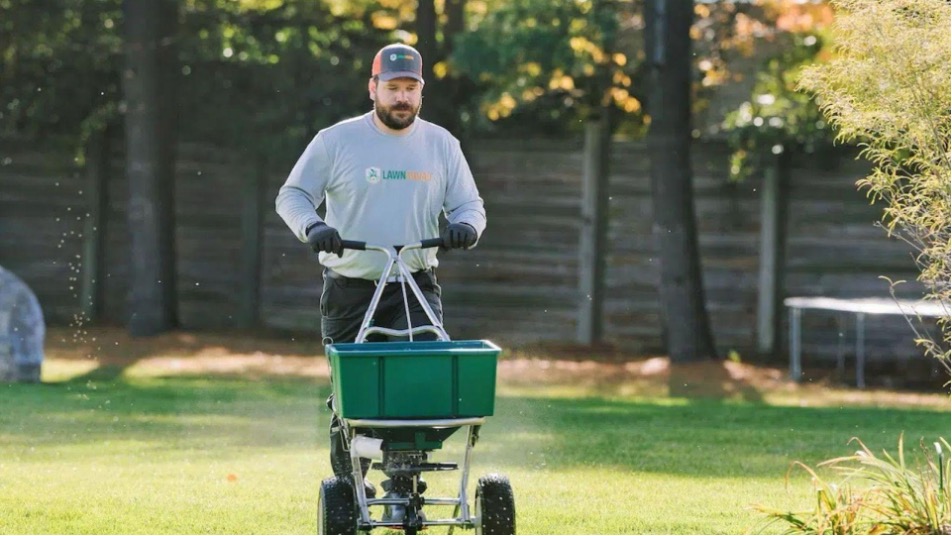

Why New Construction Lawns in North Atlanta Fall Apart at Year Three
Short Answer: If your lawn was flawless the year you moved in and has declined every summer since, the cause is almost certainly under the grass rather than in it. Construction equipment compacts Georgia red clay severely, especially when worked wet, and builders typically lay only a few inches of topsoil and sod over that layer. The sod performs on its own root mass for a year or two, then roots hit the compacted layer and stop. A lawn rooted three inches deep has no drought tolerance and can only reach a fraction of what you apply. Aeration is the fix and it works across years.
There is a story we hear constantly across the newer neighborhoods north of the perimeter, and it is always roughly the same. The lawn was beautiful at closing. It held up fine the first summer. The second summer it browned earlier than it should have. By the third year there are thin patches that never fill in, and the homeowner has been increasing their fertilizer every season trying to reverse it.
Nothing in that sequence is a failure of effort. It is a predictable consequence of how these lots were built, and the good news is that it is improvable once you understand what you are actually fighting.
What Happened Before You Moved In
The construction sequence on a typical subdivision lot is consistent enough to describe. Native topsoil gets stripped and either stockpiled or hauled off. Heavy equipment then works the exposed clay subsoil for months during grading, foundation, framing, and utilities.
Georgia red clay compacts severely under that weight, and worse when it is wet. Our climate makes wet working conditions common, and clay compressed in the plastic state suffers lasting structural damage rather than temporary compression.
When the house is finished, a thin layer of topsoil goes down, frequently only two to four inches, and sod goes over that. It looks finished and it photographs well. Underneath, there is a layer that behaves closer to pavement than to soil.
Why It Takes Two Years to Show
This is the part that makes the problem hard to connect to its cause, since the damage happened long before the symptoms.
Sod arrives with its own established root mass in the soil it was grown in. For the first season, the lawn largely lives on that, plus the few inches of new topsoil which holds enough moisture to get by. Everything looks fine.
Then roots try to go deeper, the way roots do, and they meet the compacted layer. Bermuda in good soil can root well past a foot, and that depth is much of how it survives a Georgia August. Confined to three inches, it cannot.
So the second and third summers are when it shows, because that is when the lawn first has to survive real heat on a root system that stopped growing downward. Homeowners read that as the lawn needing more food, and the timing of the decline makes fertilizer feel like the obvious answer.
What Compaction Actually Costs
Three things go wrong and they compound each other.
Drought tolerance disappears first. A lawn with three inches of root depth has a very small water reservoir and no buffer, so it browns during the first dry stretch in July and recovers slowly. The same lawn with ten inches of roots would ride out that stretch without you noticing.
Second, a share of every fertilizer application never reaches roots. Nutrients need water moving down into soil to carry them to the root zone, and on a compacted surface water runs across rather than soaking in. On our sloped North Atlanta lots that means product heading toward the street and the storm drain rather than into the lawn.
Third, the lawn becomes progressively less responsive, which produces the escalation pattern. The program that worked in year one produces less in year three, so the homeowner increases the rate, and most of the increase runs off too.
The Two Minute Diagnosis
You do not need anyone to confirm this. Take a six inch screwdriver and push it straight down into the lawn in several places, a day or two after rain when the soil is moist but not saturated. Timing matters, because dry clay resists regardless and soaked clay accepts almost anything.
If it slides in to the handle with light hand pressure, compaction is not your limiting factor. If you have to lean on it with body weight, or it stops at two or three inches, that resistance is exactly what grass roots are running into. Roots are considerably weaker than your arm.
The confirming check is to cut a small wedge four inches deep with a spade and look at the profile. Healthy soil shows white roots running down through it. A compacted lot typically shows a dense mat of roots in the top inch or two, then an abrupt stop where the soil turns dense and orange red and comes out in a solid block rather than crumbling.
Test in a few different places, including a traffic lane, a spot near the driveway, and an out of the way corner. Most lots are not uniformly compacted, and the variation itself is informative. The areas where equipment staged during construction are often the worst, and those are frequently near where the driveway and walkways ended up.
What Actually Helps
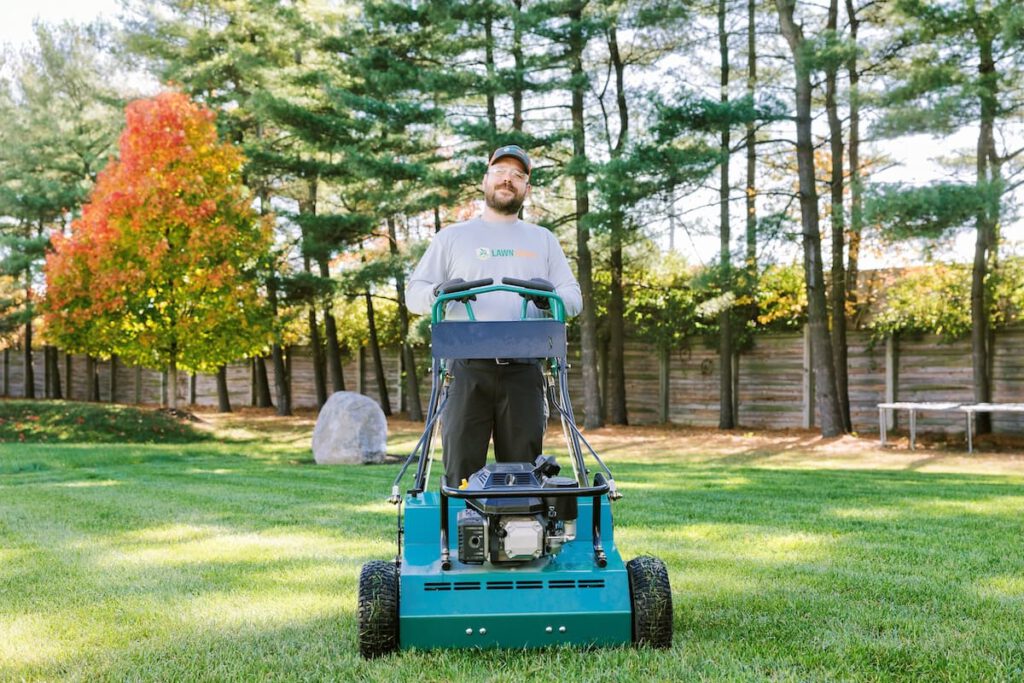
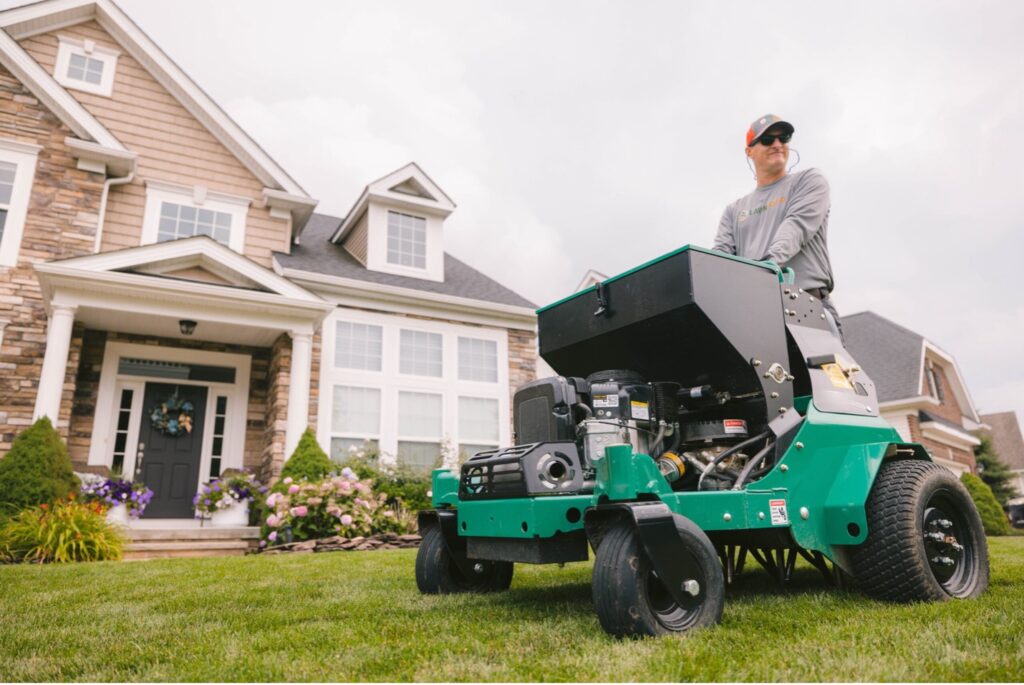
Core aeration is the practical response, and it means pulling plugs of soil out rather than poking holes. Those plugs leave open channels that air, water, and nutrients move down through, and roots grow into them. The plugs break down on the surface over a couple of weeks and return soil microbes to the thatch layer.
Spike aeration is the thing to avoid. Spikes do not remove anything, they push soil sideways, which compresses the walls of each hole further. On clay that can leave you slightly worse off than before.
The honest framing is that this is maintenance rather than a repair with an end date. Clay closes back up within a season, and annual aeration on Georgia red clay is a recurring item. Homeowners who aerate once, see modest improvement, and conclude it did not work are usually quitting right before the compounding starts. The second and third years show considerably more than the first.
Building organic matter alongside it is what produces lasting change. Topdressing with a thin layer of quality compost, returning clippings with a mulching mower rather than bagging them, and aerating to help that material work down all contribute across seasons. On builder grade lots with only a few inches of imported topsoil, this is genuinely how you build the profile the lawn should have had to begin with.
Timing It on Warm Season Grass
One practical note, since it is October. Aeration is best done when the grass is actively growing and can recover quickly, which on Bermuda and zoysia means late spring through summer rather than now.
Aerating a warm season lawn as it heads into dormancy leaves open holes and stressed turf with limited ability to repair before winter. So if the screwdriver test tells you what you suspected, the right plan is to note it and schedule aeration for next season rather than to act this month.
If part of your lawn is fescue, which is common under the canopy on these lots, that portion is in its best season for aeration right now. Treating the two areas on different calendars is correct rather than inconsistent.
What to Do Next
Run the screwdriver test this week in several spots. It takes five minutes and tells you more about your specific property than any article can.
If it fights you, stop increasing your fertilizer rate. That is the response that feels productive and delivers the least, because the limiting factor is delivery rather than supply. Hold a moderate program and put the difference toward aeration next season.
Get a soil test while you are at it, since acidic red clay is common across the metro and low pH compounds the problem by making what does reach the roots less available. Lime and aeration work well together, because open channels help lime move down rather than sitting at the surface.
If you would rather have someone assess the soil and sequence aeration, lime, and feeding properly, we are here for that. Visit lawnsquad.com to find Lawn Squad of North Atlanta and request a free evaluation. Our VitaminLawn program is built around the red clay and new construction lots we actually work with here.