
What Does Fall Lawn Fertilization Cost in North Dallas and Prosper?
Short Answer: A single fall fertilization visit for a typical North Dallas or Prosper lawn generally runs between $60 and $130, priced from measured turf square footage rather than lot size. Full season programs commonly run six to eight visits and land between $400 and $850 annually for an average property. Newer construction lots frequently need aeration and iron on top of that, since compacted blackland clay and high pH both limit how much of a feeding the grass can use. Doing it yourself costs roughly $30 to $55 per application in product.
Price is the question most homeowners want answered first and the one most lawn care websites bury behind a form. We would rather put the numbers on the page. If they are outside your budget you have lost a few minutes, and if they work, you arrive already knowing we are in the right range.
Here is how fall fertilization is priced across North Dallas and Prosper, what pushes one quote above another, and where we see money spent that does not improve a lawn.
Priced From Measured Turf
Fertilization is quoted per thousand square feet of actual grass, not by lot size and not by the hour. That matters here because the housing stock varies so much. A newer home in Prosper on a modest lot with a large footprint and a pool may carry a third of the turf of an older Plano property with a big open backyard.
This is the first thing we would question in any quote. A company naming a price without measuring is either padding to protect itself or planning to apply light, and neither serves you. Most homeowners we walk through this are surprised, usually because the house footprint, driveway, and beds subtract more than expected.
With your real figure, every quote becomes comparable on the same terms. Without it, you are weighing one company’s guess against another’s.
The Ranges We See Here
For a typical lawn in our area, a single fertilization application commonly falls between $60 and $130. Smaller lots in the newer high density developments sit toward the low end. Larger properties on half acre and up, and homes out toward Celina and the more rural edges, climb from there and are usually quoted per thousand square feet.
Full season programs here generally run six to eight visits and land between $400 and $850 annually for an average property. Our growing season is long, and Bermuda in full North Texas sun is a heavy feeder during it, so the visit count runs higher than a northern program would.
The honest caveat is that bundling varies enormously. Some programs include weed control, some include pre emergent, some include grub control, some include iron as standard and others bill it separately. A $400 program and an $850 program are frequently not the same service at two prices.
New Construction Changes the Math
This is specific to our market given how much of the area has been built in the last fifteen years, and it is the most common reason a quote comes in higher than a homeowner expected.
When these subdivisions go up, heavy equipment compacts the blackland clay for months, and then a thin layer of topsoil and sod goes over the top. The lawn looks perfect on closing day. Two or three years later it starts thinning, and the cause is that roots hit a compacted layer a few inches down and stop.
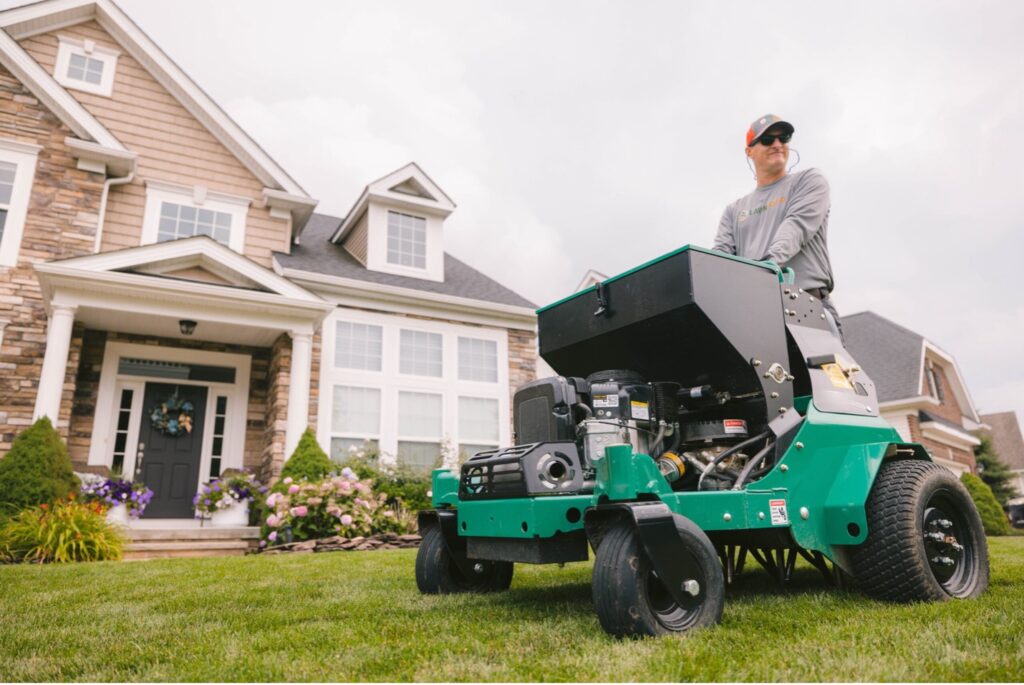
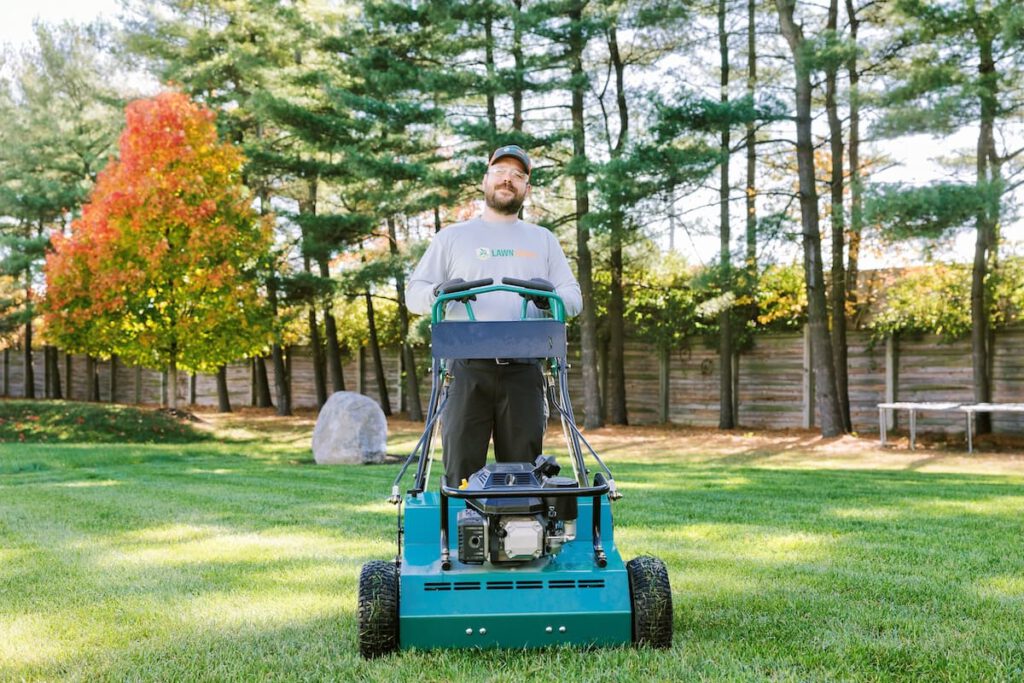
A lawn in that condition cannot use a full fertilizer application, because a share of it never reaches roots and water runs across the surface rather than soaking in. Feeding harder does not fix it. Core aeration does, over several years rather than one, and on our clay it is worth doing annually.
So on a newer lot, a realistic budget usually includes aeration alongside fertilization. That reads as an upsell if nobody explains it, and it is genuinely the difference between a program that works and one that spins.
Iron Is Often a Separate Line
Worth flagging because it surprises people comparing quotes here. Blackland clay is calcareous and runs alkaline, commonly in the high sevens and sometimes above eight.
At that pH, iron converts into forms grass roots cannot absorb. It is physically present in the soil and chemically unavailable, which is why so many well fed lawns across North Dallas still look pale yellow. Correcting it requires iron applied to the leaf, where it is absorbed directly and bypasses the soil chemistry.
That works well and it recurs, because the soil has not changed. On lawns here, iron applications are a routine seasonal item rather than a one time fix. When you compare programs, ask specifically whether iron is included and how often, because a cheaper program without it will very likely produce a yellow lawn and you will end up buying the treatment separately anyway.
What You Are Paying For Beyond Product
Fertilizer is a modest share of the cost. The rest is calibrated equipment, labor, routing, licensing, and the judgment to apply the right material at the right moment.
In our market that includes scheduling around municipal watering restrictions, which vary between cities across the metroplex and tighten during drought. A granular application that does not get watered in within a day or so is largely wasted, so timing the visit against your allowed day is part of the work rather than an afterthought.
A good visit should also put eyes on the lawn. Large patch appears on St. Augustine from October into December. Take all root rot presents as a nutrient problem. Grub damage peaks in early fall and looks like drought. Catching any of them early is frequently worth more than the application itself, so ask whether corrective treatment is included or billed separately.
The Do It Yourself Numbers
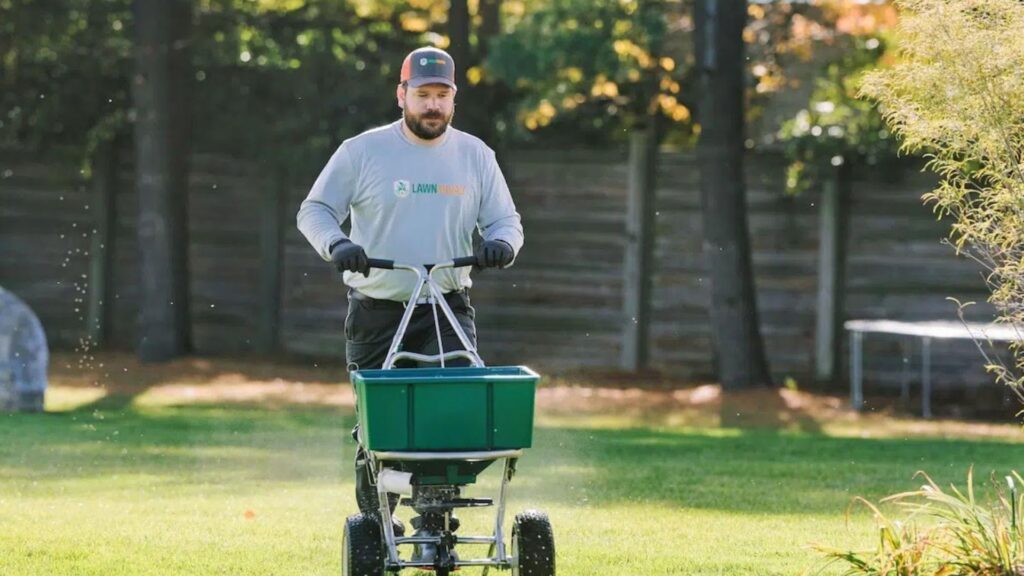
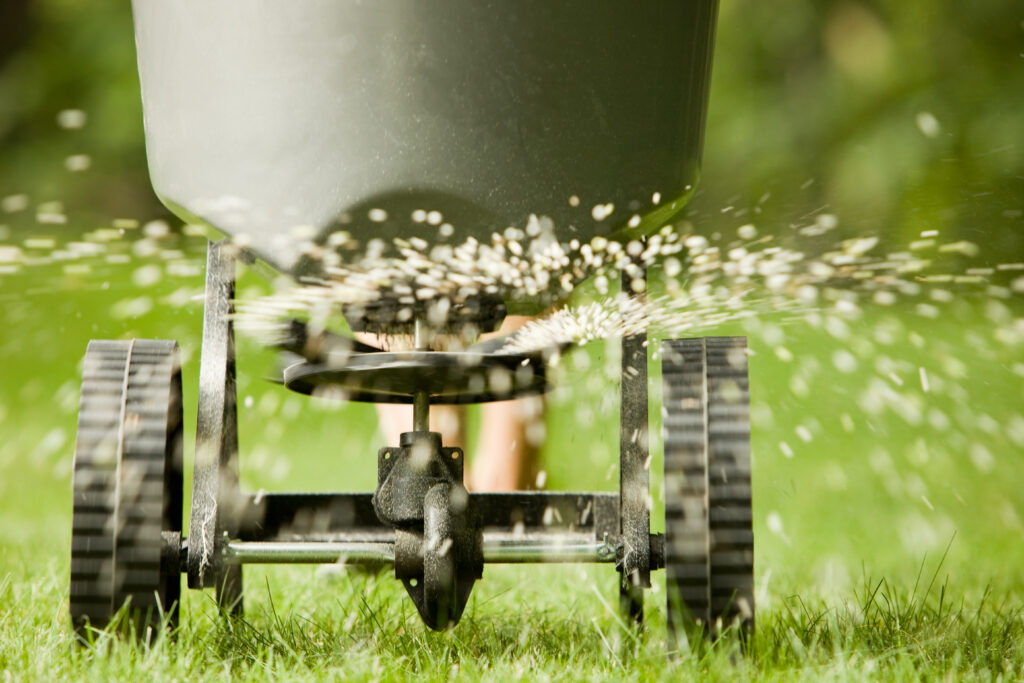
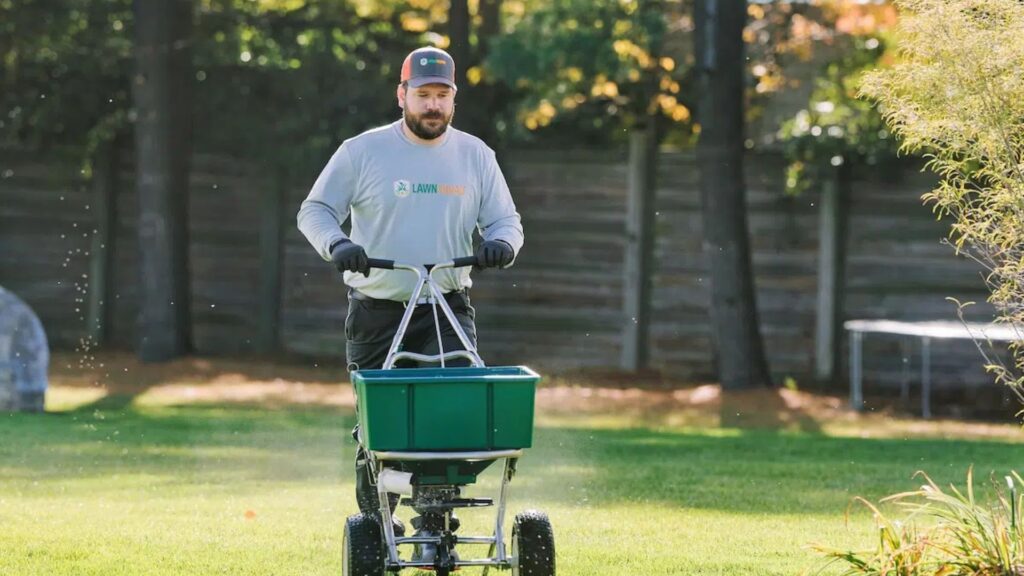
Fertilization is among the more approachable parts of lawn care to handle yourself. A quality bag covers roughly five thousand square feet and runs about $25 to $45. For an average lawn here that is one to two bags per application, so roughly $30 to $55 in product.
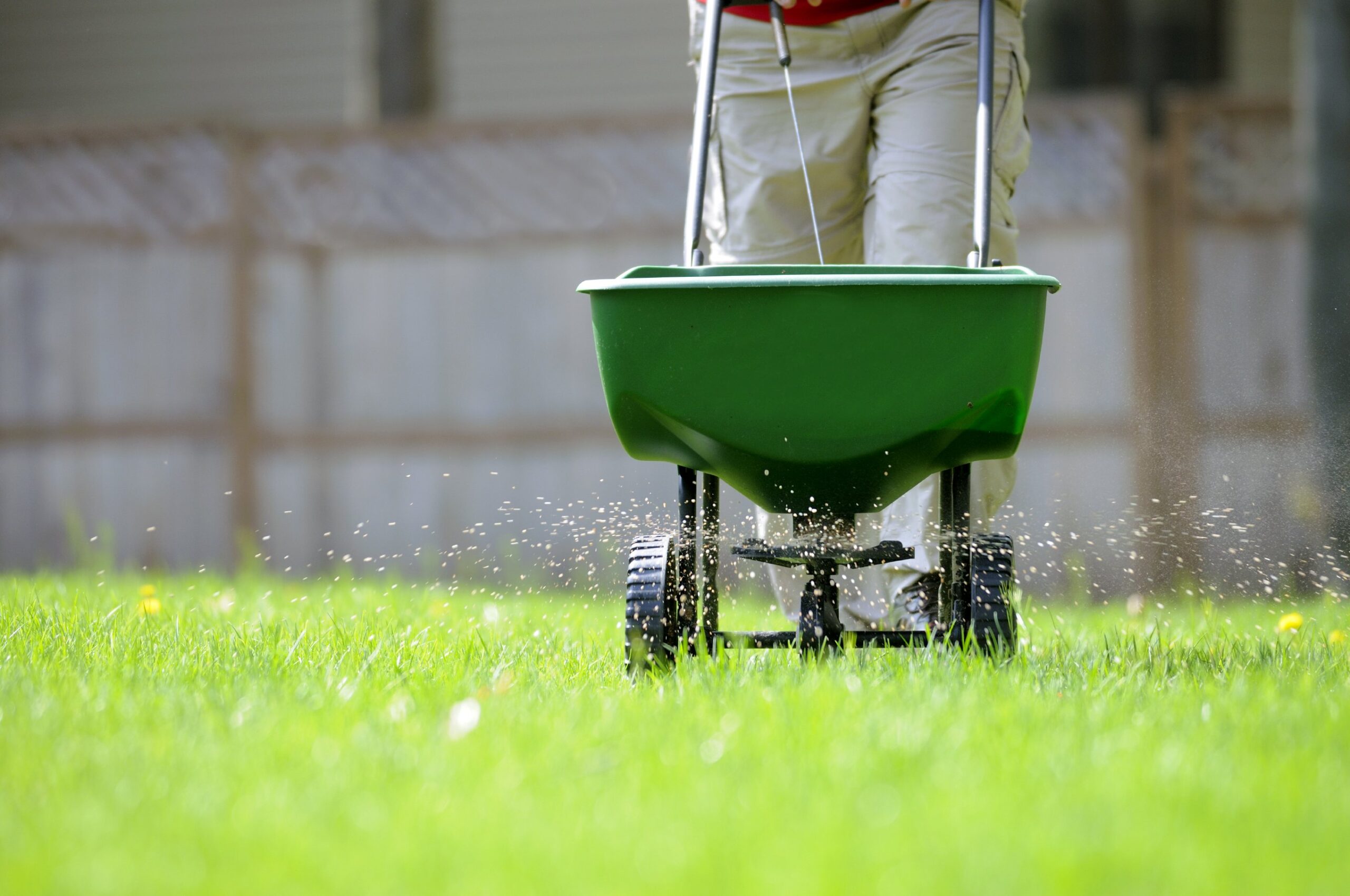
Add a broadcast spreader, a one time purchase of $60 for a basic model or $150 and up for one that holds calibration. Add a separate chelated iron product, which is a genuine additional line item given our soil pH. Add roughly forty five minutes per application plus a trip to buy product, across six to eight applications.
The dollar gap is real but narrower than most people assume. Where the DIY route slips is calibration, since every spreader setting number means something different on every bag. Applying twenty percent heavy in October is how homeowners accidentally create the disease problem they were trying to avoid.
Where the Money Gets Wasted
The most expensive mistake here is buying a high nitrogen winterizer in November because that is what the shelf tag and most national advice recommend. On warm season grass heading toward frost, that produces cold damaged tissue and feeds disease, so you pay for the product and again for the spring repair.
Second is buying nitrogen to fix a yellow lawn that is actually short on available iron. On alkaline blackland clay the lawn stays yellow, often gets paler as new growth dilutes the limited iron, and the homeowner buys another bag. A soil test costing a fraction of one application would have redirected the plan.
Third is feeding a compacted lawn harder instead of aerating it. If roots are confined to three inches, the limiting factor is delivery rather than supply, and additional product mostly runs off across the surface.
What to Do Next
Measure your turf before you call anyone. Pace the perimeter of each grass area, multiply length by width, and subtract beds, paving, and structures. That figure makes every quote comparable.
Push a screwdriver into moist soil in several places. If you have to lean on it, compaction is limiting your results and aeration belongs in the budget alongside fertilization rather than instead of it.
Get a soil test. On alkaline blackland clay the pH number tells you whether the pale color you have been fighting is a nitrogen question or an iron question, and it costs a fraction of one application.
If you would rather have someone assess the soil, the compaction, and the schedule together, we are here for that. Visit lawnsquad.com to find Lawn Squad of North Dallas-Prosper and request a free quote on your property. Our VitaminLawn program is built around the blackland clay, new construction lots, and warm season grasses we actually work with here.