Feed Your Own Lawn or Hire It Out? An Honest Look for Birmingham
Short Answer: Doing it yourself is very achievable here and the cost gap is smaller than most people assume. Product for an average Birmingham lawn runs roughly $30 to $50 per application against $55 to $120 for a professional visit, working out to somewhere around $200 to $350 a year against $350 to $700 for a program. What usually decides the result is not price. It is spreader calibration, knowing whether you have Bermuda or fescue since they need opposite fall schedules, and testing soil pH on our acidic clay rather than guessing at lime.
Most comparisons of do it yourself lawn care against hiring a company are written by companies who want the work, and they skip the part where handling it yourself is entirely sensible. We would rather show you the real numbers and let you decide. Homeowners who hire us after seeing honest math tend to be better customers than ones who were talked into it.
Here is the comparison the way we would explain it to a neighbor in Hoover or Vestavia. What each route costs, where DIY breaks down in Birmingham conditions specifically, and when we would tell you to just do it yourself.
The Cost Math
Start with your actual turf area, because everything follows from it. A typical Birmingham lot carries somewhere between four and ten thousand square feet of grass after subtracting the house, driveway, beds, and any wooded areas. On our sloped and wooded lots that last category takes out more than people expect, and most homeowners overestimate substantially.
A quality bag covers roughly five thousand square feet and runs about $25 to $45. For an average lawn that is one to two bags per application, so roughly $30 to $50 in product. A professional visit for the same lawn generally runs $55 to $120.
Then add fixed costs. A broadcast spreader is $60 for a basic model or $150 and up for one that holds calibration reliably. Add lime if a soil test calls for it, which is heavy, bulky, and awkward to haul in the quantities acidic clay actually needs. Add roughly forty five minutes per application plus a trip to buy product.
Across the five to seven applications a full season calls for, DIY typically lands somewhere around $200 to $350 against $350 to $700 for a program. Real savings, and a smaller multiple than most people assume once the spreader and the Saturdays are counted.
Where the Gap Narrows
A few things close the distance more than homeowners anticipate. Partial bags are the most common. Leftover product sits in a garage through an Alabama summer, absorbs humidity, clumps, and either spreads unevenly or gets thrown out.
The spreader purchase is a genuine first year cost, and a cheap one that drifts out of calibration is worse than none, since it produces striped or burned turf you then have to repair.
Program pricing is also usually bundled. A fertilization only comparison is not equivalent if the program you are weighing includes weed control, pre emergent, lime, or disease treatment. If you would buy those separately anyway, add them to the DIY column before comparing.
Where DIY Results Usually Slip
In our experience the difference in outcomes almost never comes from the product in the bag. It comes from three execution details, and all three are fixable without hiring anyone.
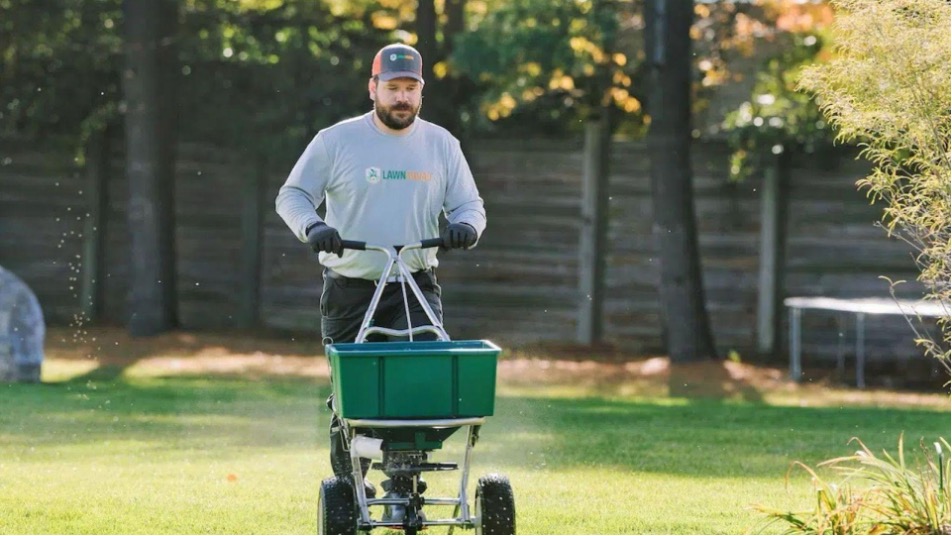
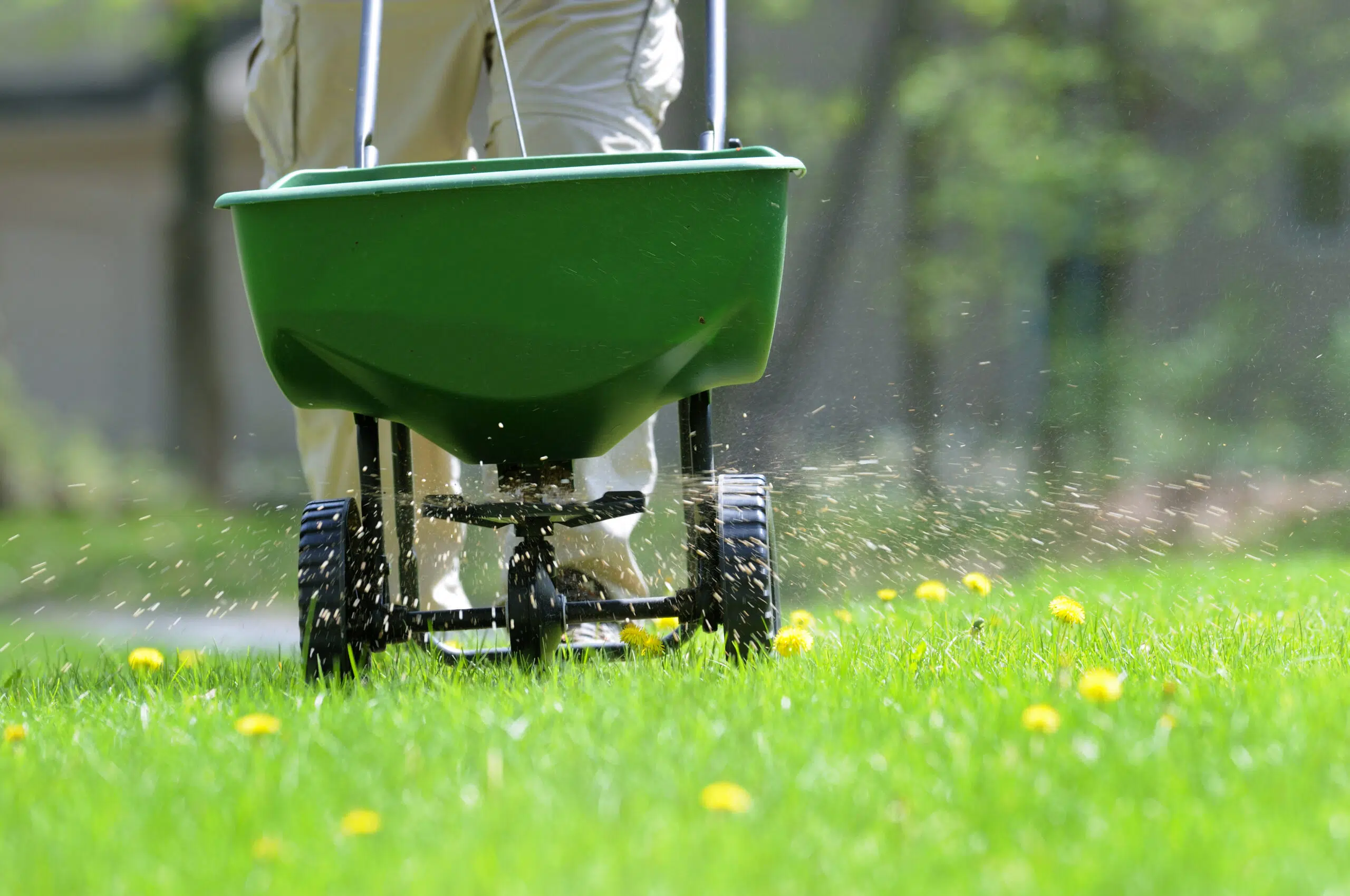
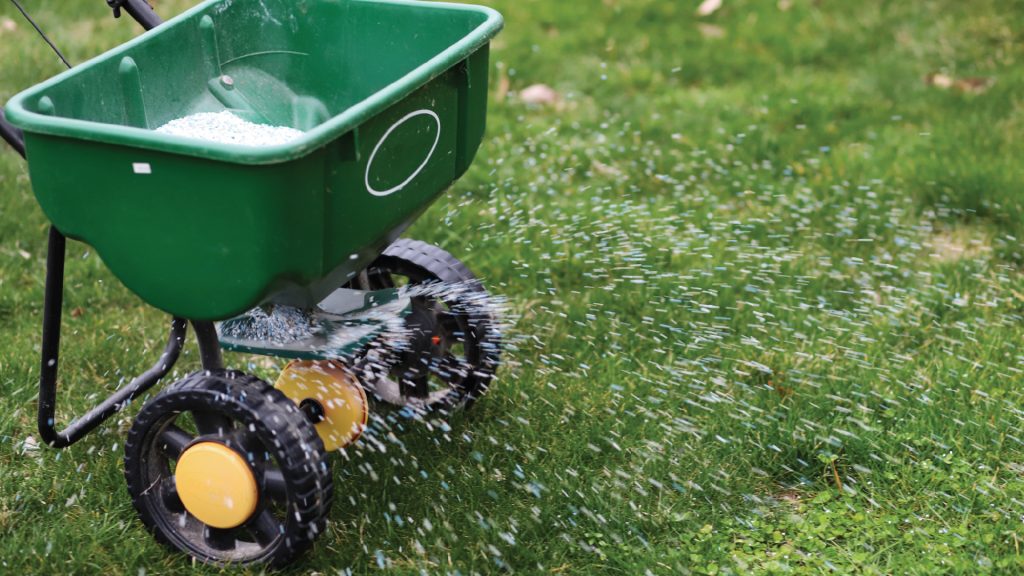
Calibration is the largest. Every spreader setting number means something different on every bag, because granule size and density vary by product. The chart printed on the bag is a starting point tuned to a few common spreaders, not a guarantee. Applying twenty percent heavy wastes money and can burn turf. Applying twenty percent light produces a lawn that never quite responds and leaves you blaming the product. Most homeowners never verify.
Pattern is second. Striping appears when passes do not overlap correctly, showing up two weeks later as dark green bands with pale ones between. The fix is a steady walking pace and overlapping the edge of your spread pattern rather than the edge of your wheel track. On Birmingham’s sloped lots, holding that pace uphill takes more attention than on flat ground.
Third is timing on the fall application, and here the cost is highest. On Bermuda and zoysia, the last nitrogen needs to land four to six weeks ahead of our first frost in early to mid November, so by roughly the start of October. A homeowner applying on the last Saturday of October because that is when there was time may miss it entirely.
The Grass Type Trap
This is the factor that does real damage when it goes wrong, and Birmingham is exactly the kind of market where it happens.
We have both warm season and cool season lawns here. Bermuda and zoysia dominate open sunny lots. Tall fescue is common in the shadier established neighborhoods across the ridges. Fescue wants a late feeding into November, which is the highest value application of its year. Bermuda and zoysia want nitrogen stopped weeks before frost, because late nitrogen produces cold damaged tissue and feeds large patch.
A homeowner reading national fall lawn advice, which is overwhelmingly written for cool season grass, and applying a November winterizer to a zoysia lawn is making an expensive mistake. You pay for the product and then pay again in spring repair. This is the single most common DIY error we see here.
The test is one question. If your lawn stayed green last January, it is fescue and the late feeding applies. If it turned tan, it is warm season and nitrogen should already be behind you.
The Lime Question Is Yours Too
Specific to our soil and worth naming. Birmingham area soils generally run acidic, and at low pH the nutrients you apply become chemically less available to roots. A portion of every bag goes unused regardless of how carefully you spread it.
Lime corrects that, and on strongly acidic soil it frequently produces more visible improvement than another fertilizer application would. The catch is that you cannot guess the rate. It depends on how far below target your pH sits and on soil buffering capacity, and clay takes considerably more lime to move than lighter soil does.
Over liming creates the opposite problem and is harder to reverse than under liming. So if you are handling your own program, a soil test is not optional here. It costs a fraction of one application and it is the difference between lime helping and lime hurting.
What Hiring Out Actually Buys
It is not the fertilizer. Commercial product is more consistent in granule size and blend uniformity, but that alone would not justify the price.
What you are buying is calibrated equipment, applications timed to conditions and to your specific grass rather than to your weekends, and a set of eyes on the lawn five to seven times a year. Across the properties we manage here, that last item frequently matters most. Large patch appearing on zoysia in November is far easier to stop than to repair, and grub damage in early fall presents convincingly as drought stress.
You are also buying consistency. The applications that get skipped in a DIY year are usually the ones in the least pleasant weather, and those are often the ones that mattered.
When We Would Tell You to Do It Yourself
There are clear cases, and saying so costs us nothing. If you enjoy yard work, own a decent spreader, will calibrate it once a season, and know which grass you have, you can get results very close to professional. Fertilization is among the most DIY friendly parts of lawn care.
Small lawns are another. Under about three thousand square feet, the per visit minimum most companies charge makes the economics awkward, and a single bag covers much of your year.
Heavily wooded lots are a third, and they are common here. If most of your property is canopy and natural area with a modest patch of turf, a full program is more than the situation calls for.
And if the lawn is not your priority right now, that is legitimate. A lawn getting three or four well timed applications a year will still be meaningfully better than one getting none.
What to Do Next
Identify your grass first, since it is the error with the highest cost. Green last January means fescue. Tan means Bermuda or zoysia.
Measure your actual turf area. Pace the perimeter of each grass section, multiply, and subtract beds, hardscape, and wooded areas. Every cost estimate depends on that figure being right.
Get a soil test before buying lime, and calibrate your spreader before the first pass by running a measured area with a known weight and comparing against the target rate. Those two steps together close most of the gap between DIY and professional results.
If you would rather hand off the timing, product selection, and soil decisions, we are here for that. Visit lawnsquad.com to find Lawn Squad of Birmingham and request a free quote on your property. Our VitaminLawn program is built around the acidic clay and mixed grass types we work with here, and we are happy to tell you honestly when your lawn does not need us.