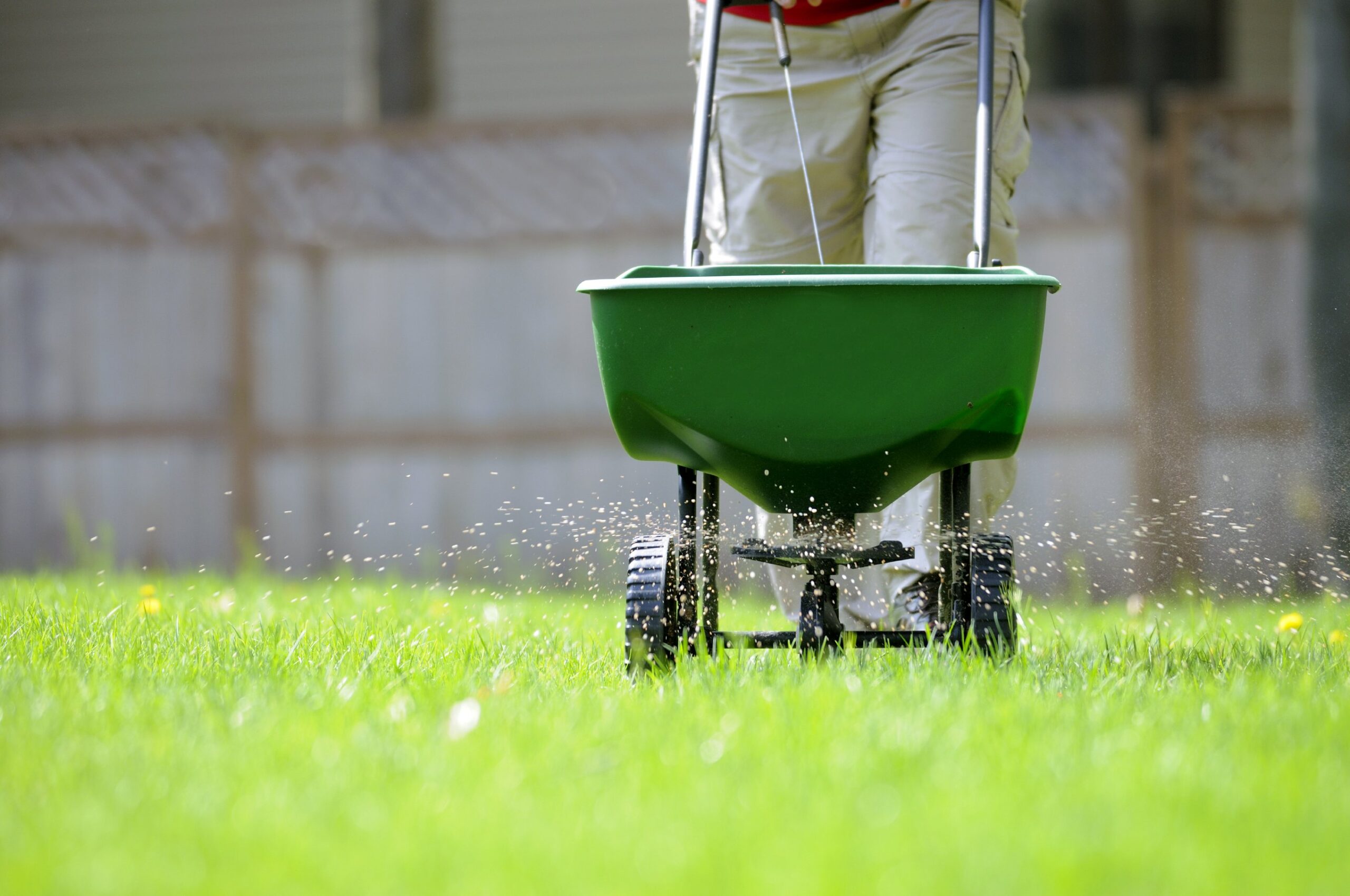
Why National Fall Lawn Advice Backfires in Huntsville
Short Answer: Huntsville sits in the transition zone, where cool season and warm season lawns share the same streets. Almost all national fall lawn content is written for cool season grass, so applying it here helps a tall fescue lawn and damages a Bermuda or zoysia one. If your lawn stays green in January, a late fall nitrogen feeding in November is the best thing you can do for it. If it turns tan, nitrogen should have stopped weeks ago, because late applications produce cold damaged tissue and feed disease. The winter color test settles it in one question.
Every September, a wave of fall lawn care content appears online. Winterize your lawn. Apply a heavy late feeding. Fall is the most important season for your grass. All of that is well researched, genuinely useful, and written for Kentucky bluegrass and fescue lawns in Ohio and Pennsylvania.
Huntsville is a more complicated place to apply it. We sit in the transition zone, the band across the country where neither cool season nor warm season grass is clearly at home and both are common. That means the same article can be excellent advice for one house on your street and genuinely harmful for the one next door. Here is how to figure out which you are.
Why Huntsville Is Split
The transition zone exists because our summers are too hot for cool season grasses to be comfortable and our winters are too cold for warm season grasses to be comfortable. Neither category has an easy time, so both get planted, and the choice usually came down to whoever built the house and how much sun the lot gets.
Tall fescue is common across Huntsville, particularly in shadier established neighborhoods and up around the mountains. Bermuda dominates open sunny lots and newer developments. Zoysia turns up regularly, and quite a few lawns are an unintentional mix where Bermuda has crept into a fescue yard from a sunny driveway edge.
These are not variations on a theme. They are plants with opposite annual rhythms, and October is the month where that difference matters most.
The One Question That Sorts It
Think back to last January and picture your lawn. Was it green, or was it tan?
If it was green, you have a cool season lawn, almost certainly tall fescue. Fescue grows in clumps rather than spreading, with relatively wide flat blades carrying a prominent midrib down the center and a slightly rough edge you can feel between your fingers.
If it was tan, you have warm season grass. Bermuda is fine bladed and dense and spreads aggressively by runners above and below ground. Zoysia is fine to medium bladed, also spreading, but noticeably stiffer to the touch and slower growing. Both go fully dormant and lose color from roughly December through March here.
That single recollection is more reliable than any other identification method, and it determines everything that follows.
If Your Lawn Was Green: Feed It, and Feed It Again
For fescue, the national advice is basically right and you should follow it. Fall is the most valuable feeding season of the year, worth more than anything you do in spring.
The reason is what the plant is doing. In spring, fescue puts most of its energy into leaf blades. In fall, soil stays warm while air cools, and the plant reads that as a signal to build roots and store carbohydrates in the crown. Nitrogen applied now becomes root mass and stored food rather than growth you have to mow.
A complete fall program is two applications. One in September or early October for recovery from summer, which matters here because our summers are hard on fescue and most lawns arrive at fall thinner than they were in May. Then a late one, typically late October into November, once top growth has largely stopped but the grass is still green and the ground has not frozen.
That second application is the one homeowners skip, because nothing visible happens when you make it. The payoff is in April, when the lawn greens up early and dense on reserves it stored months earlier.
If Your Lawn Was Tan: Stop Now
For Bermuda and zoysia, that same advice causes the damage it claims to prevent, and this is where the national content does real harm.
Warm season grass is currently moving carbohydrates out of leaf tissue into stolons, rhizomes, and roots for winter storage. Nitrogen interrupts that, pulling the plant back toward top growth exactly when it should be banking reserves. The tissue produced is thin walled and high in water content, with no time to harden off before our first frost in late October or early November. The first hard freeze burns it.
There is a disease cost too. On zoysia, large patch is a Rhizoctonia fungus that becomes active as soil temperatures fall through the sixties with cool nights and heavy dew, and excess nitrogen produces exactly the soft growth it moves through easily. On Bermuda, spring dead spot is associated with excess late season nitrogen and reduced cold hardiness, and you will not see it until the following spring when circular areas fail to green up.
The guideline is four to six weeks ahead of first frost, which around Huntsville puts the last nitrogen application in late September or early October. If you already fed this month, you are finished for the year.
What the Warm Season Lawn Can Still Use
Stopping nitrogen is not the same as doing nothing. Potassium is genuinely useful now and carries none of the same risk, supporting cell wall strength and root development, which translates to better cold tolerance through dormancy.
That matters at our latitude more than it would further south. North Alabama is near the northern edge of comfortable Bermuda and zoysia territory, and winter injury is a real possibility in a hard year, particularly on thin areas, poorly drained spots, and north facing slopes. Potassium is one of the few levers available for reducing that risk.
Lime may also be worth applying if a soil test calls for it, and that is a separate question entirely from the nitrogen timing above.
Spotting Bad Advice Quickly
A few filters save time when you are reading lawn content online, since almost none of it states which grass it assumes.
If an article mentions bluegrass, fescue, or ryegrass as your main lawn grass, it was written for cool season turf. If it mentions Bermuda, zoysia, St. Augustine, or centipede, it was written for warm season. If it never says, look at whether it assumes your lawn is green in winter, since that assumption is usually buried in the advice somewhere.
Product packaging deserves the same skepticism. Bags marketed as winterizer are designed for cool season lawns in northern states. On a tan winter lawn in Huntsville, that bag causes the problem it is sold to prevent, no matter what the shelf tag says.
And be wary of advice that gives a calendar date without a region. Frost dates, soil temperatures, and dormancy timing vary enormously, and a date that works in Kansas City means nothing here.
When You Have Both
Mixed lawns are common here and usually not deliberate. Bermuda spreads aggressively and fescue does not fight it off, so a fescue lawn with Bermuda creeping in from a sunny strip is something we see constantly.
There is no single fertilization schedule that serves both well, and we would rather say so than pretend otherwise. Where the boundary is clear, you can treat zones differently, feeding the fescue areas into November and leaving the warm season areas alone after early October.
Where the two are genuinely intermingled, most homeowners eventually pick a direction, usually guided by sun exposure. Full sun favors Bermuda and shade favors fescue, and working with that rather than against it saves years of frustration.
What to Do Next
Answer the January question first. Green means fescue and you have a valuable application due in November. Tan means Bermuda or zoysia and nitrogen should already be behind you.
If you have fescue and have not fed since late summer, get an application down now while growth continues, then watch your mowing frequency for the late window. When two weeks pass without needing to mow and the lawn is still green, that is your moment.
If you have warm season grass, keep mowing at normal height rather than scalping before winter, reduce watering as temperatures drop, water in the early morning to shorten leaf wetness, and keep leaves cleared off the turf.
If you would rather have someone identify your grass and build the schedule around it rather than around a generic calendar, we are here for that. Visit lawnsquad.com to find Lawn Squad of Huntsville and request a free evaluation. Our VitaminLawn program is built around the transition zone conditions and mixed lawns we actually work with here.