What Does Fall Lawn Fertilization Cost in Chattanooga and North Georgia?
Short Answer: A single fall fertilization visit for a typical Chattanooga or North Georgia lawn generally runs between $55 and $120, priced from measured turf square footage rather than lot size. Full season programs commonly run five to seven visits and land between $350 and $700 annually for an average property. Fescue lawns usually justify the higher end of that visit count, since fall is their most productive feeding season and they want two applications in it. Doing it yourself costs roughly $30 to $50 per application in product. The biggest financial risk here is buying the wrong product for your grass type.
Price is the question most homeowners want answered first, and it is the one most lawn care websites bury behind a form. We would rather put the numbers on the page. If they do not fit your budget you have lost a few minutes, and if they do, you arrive at a conversation already knowing whether we are in your range.
Here is how fall fertilization is priced across our service area, what moves one quote above another, and where we see money spent that does not improve a lawn.
Priced From Measured Turf, Not Lot Size
Fertilization is quoted per thousand square feet of actual grass, not by acreage and not by the hour. That distinction matters a great deal in our terrain. A half acre lot on a Signal Mountain slope with rock outcrop, hardwood canopy, and natural areas may carry a third of the turf of a flatter lot of similar size in a Hixson subdivision.
This is the first thing we would question in any quote. A company naming a price without measuring is either padding to protect itself or planning to apply light, and neither serves you. Most homeowners we walk through this are surprised, usually because the driveway, structures, beds, and wooded areas subtract more than expected.
With your real number in hand, every quote becomes comparable on the same terms. Without it you are weighing one company’s guess against another’s.
The Ranges We See Here
For a typical lawn in our area, a single fertilization application commonly falls between $55 and $120. Smaller lots closer in toward North Chattanooga and East Brainerd sit toward the low end. Larger properties out toward Ooltewah, Ringgold, and the North Georgia countryside climb from there and are usually priced per thousand square feet rather than as a flat figure.
Full season programs here generally run five to seven visits and land between $350 and $700 annually for an average property. Per application that is meaningfully less than buying visits individually, which is how most companies structure it.
The honest caveat is that bundling varies enormously. Some programs include weed control, some include pre emergent for crabgrass, some include lime applications, some include disease treatment for brown patch on fescue. A $350 program and a $700 program are frequently not the same service at two prices, and comparing headline numbers alone will mislead you.
Your Grass Type Changes the Visit Count
This is specific to transition zone markets like ours and it affects what a reasonable program looks like for you.
A tall fescue lawn wants two applications in fall, because fall is its most productive season. One in September or early October for recovery and thickening, and a late one in November that drives next spring’s green up. Fescue programs here therefore tend toward six or seven visits a year, weighted toward fall.
A Bermuda or zoysia lawn is the opposite. Its productive feeding season is late spring through summer, and nitrogen needs to stop roughly four to six weeks ahead of our first frost, so around the start of October. A warm season program is weighted toward the middle of the year and typically involves a comparable number of visits distributed differently.
The practical consequence is that a quote should reflect which grass you have. A company quoting an identical schedule regardless of grass type is not paying attention, and that is a fair question to ask on a first call.
Lime Is Often a Separate Line
Worth flagging because it surprises people comparing quotes. Our soils are predominantly acidic red clay, and across much of Chattanooga and North Georgia soil pH runs well below what turf prefers, commonly in the low fives and sometimes into the fours.
At that pH, nutrients you apply become less available to roots regardless of how much goes down, and fertilizer efficiency drops measurably. Lime raises pH, and on acidic clay it is frequently the single highest value input available, sometimes producing a bigger improvement than another fertilizer application would.
Lime is usually priced separately because rates depend on a soil test and on how far off your pH is. When you compare programs, ask whether lime is included, whether a soil test is included, and how the recommendation is determined. A cheap program on unlimed acidic clay is money working at a discount.
What You Are Paying For Beyond Product
Fertilizer is a modest share of the cost. The rest is calibrated equipment, labor, routing, licensing, and the judgment to apply the right thing at the right time for your specific grass.
In our market that judgment carries real weight, because the same product applied in November is correct on fescue and damaging on zoysia. There are few markets where the cost of misidentifying a lawn is higher.
A good visit should also put eyes on the lawn. Brown patch hits fescue in summer heat and humidity, large patch hits zoysia in cool fall conditions, and winterkill risk on Bermuda at our latitude is genuine in a hard winter. Catching a problem early is often worth more than the application it was noticed during, so ask whether corrective treatment is included or billed separately.
The Do It Yourself Numbers
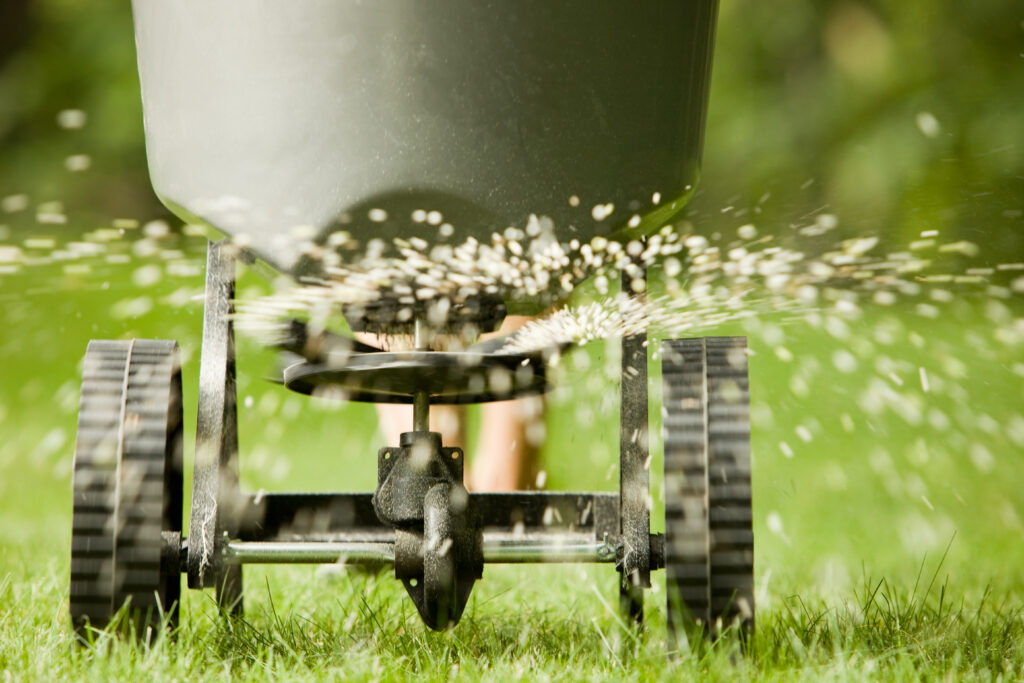
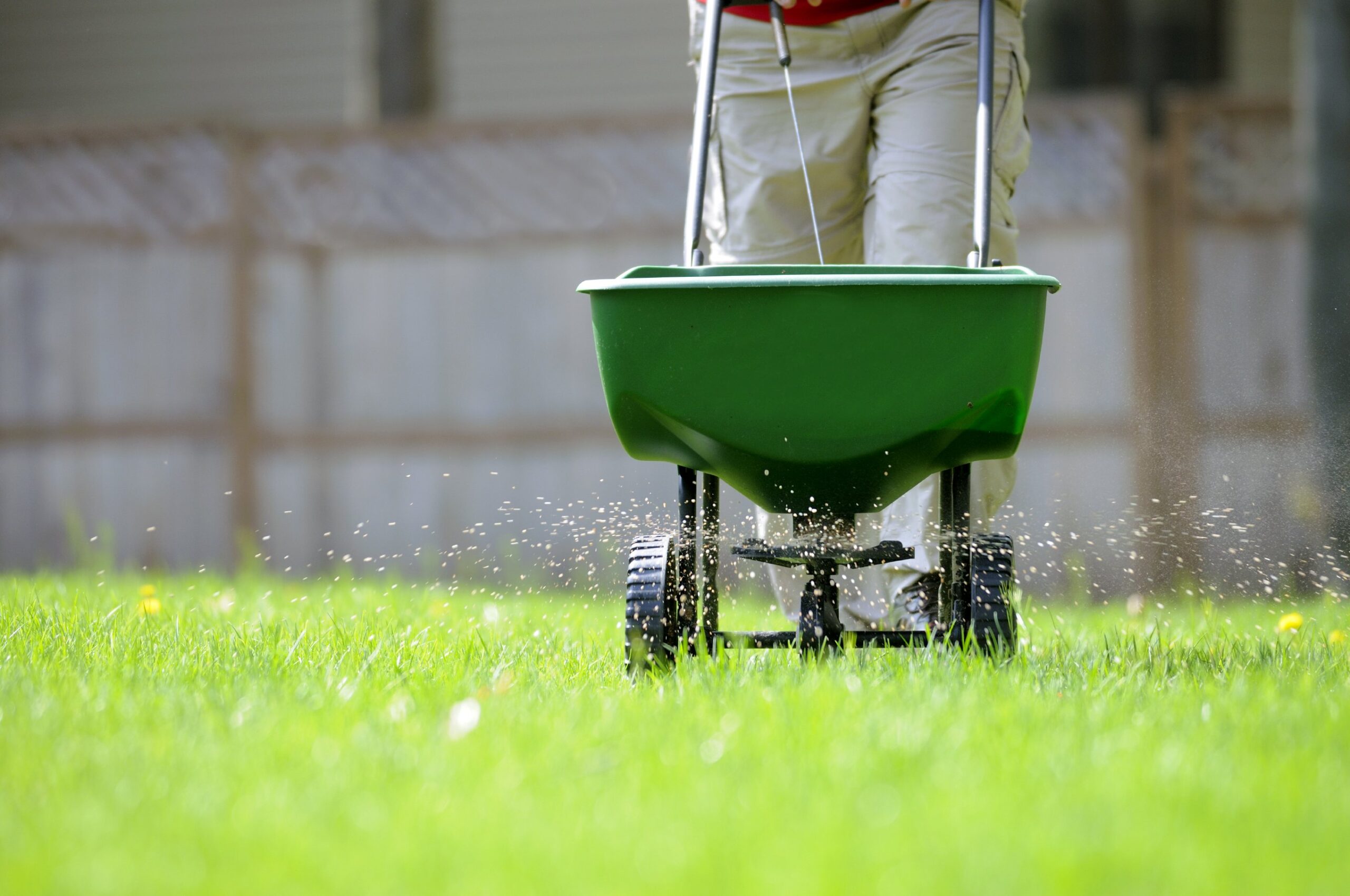
Fertilization is among the more approachable parts of lawn care to handle yourself. A quality bag covers roughly five thousand square feet and runs about $25 to $45. For an average lawn here that is one to two bags per application, so roughly $30 to $50 in product.
Add a broadcast spreader, a one time purchase of $60 for a basic model or $150 and up for one that holds calibration. Add lime, which is heavy, bulky, and awkward to haul in quantity, and which most homeowners underestimate the volume of. Add about forty five minutes per application plus a trip to buy product.
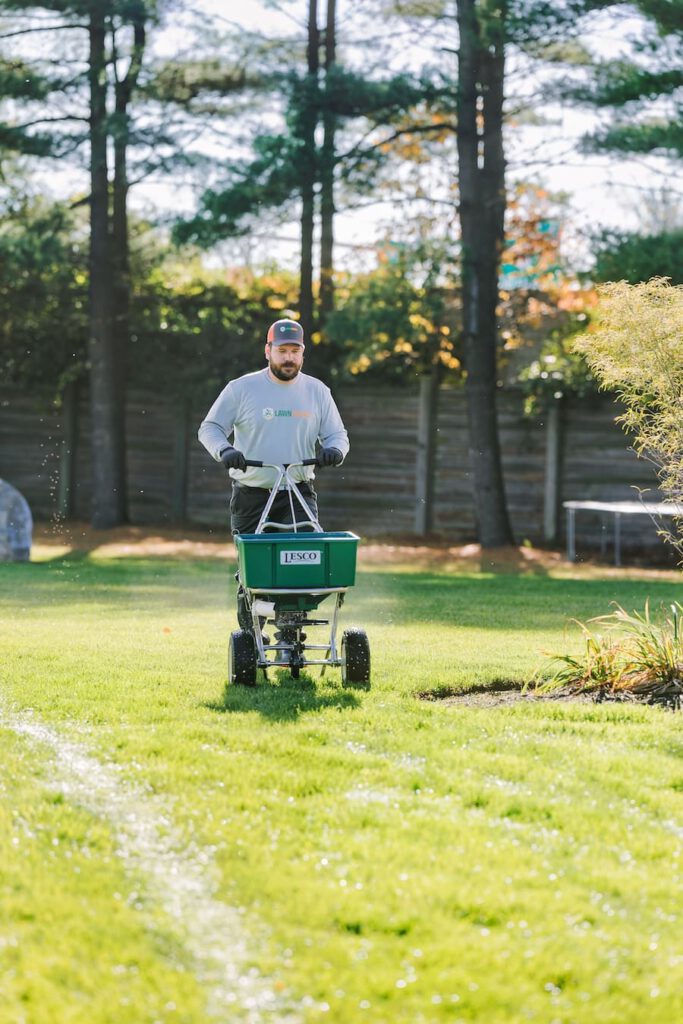
The dollar gap against professional service is real but narrower than most people assume. Where the DIY route slips is calibration, since every spreader setting number means something different on every bag. Applying twenty percent light produces a lawn that never quite responds and leaves you wondering why the product failed.
Where the Money Gets Wasted
The most expensive mistake in our market is applying a late fall nitrogen feeding to a warm season lawn because a national article recommended it. On Bermuda or zoysia heading toward frost, that produces cold damaged tissue and feeds disease. You paid for the product and then pay again in lost turf and spring repair.
The mirror image wastes money too. Skipping the late fall application on a fescue lawn, because you assumed feeding season was over, forfeits the highest value application of the entire year. That one is invisible, since you never see what you did not get, but it is real.
Third is fertilizing acidic clay without ever testing pH. Homeowners feed a lawn faithfully for years, get mediocre response, and conclude they need more fertilizer. A soil test costing a fraction of one application frequently redirects the entire plan toward lime.
What to Do Next
Identify your grass first, since it determines what program makes sense. Fescue grows in clumps with wide flat blades and stays green in winter. Bermuda and zoysia spread by runners and turn tan. What your lawn looked like last January is the most reliable clue.
Measure your turf before you call anyone. Pace the perimeter of each grass area, multiply, and subtract beds, paving, structures, and wooded areas. That figure makes every quote comparable.
Get a soil test before committing to a program. On our acidic red clay the pH number frequently changes the priority order, and it costs a fraction of one application.
If you would rather have someone identify the grass, test the soil, and build the schedule around both, we are here for that. Visit lawnsquad.com to find Lawn Squad of Chattanooga & North Georgia and request a free quote on your property. Our VitaminLawn program is built around the transition zone grasses and acidic clay soils we actually work with here.