
What Does Fall Lawn Fertilization Cost in West Houston?
Short Answer: A single fall fertilization visit for a typical West Houston lawn generally runs between $60 and $125, priced from measured turf square footage rather than lot size. Full season programs of six to eight visits usually land somewhere in the $400 to $800 range for the year, which works out lower per application than buying visits one at a time. Doing it yourself costs roughly $30 to $50 per application in product for an average lawn, so the gap is smaller than most people expect. The larger cost difference here comes from choosing the wrong product for fall, not from who applies it.
Pricing is the question most homeowners actually want answered first, and it is the one most lawn care websites bury behind a contact form. We would rather tell you the numbers up front. If they do not work for your budget, you have lost nothing but a few minutes, and if they do, you will arrive at a conversation already knowing whether we are in the right range.
So here is how fall fertilization is priced across West Houston, what makes one quote higher than another, and the specific places we see money get spent without producing a result.
Everything Starts With Measured Square Footage
Fertilization is priced per thousand square feet of actual turf, not by lot size and not by the hour. That distinction matters because a quarter acre lot in Cypress with a pool, a large patio, and heavy bed lines may have half the turf of a similar sized lot in Katy that is mostly open lawn.
This is the first place we would push back on a quote. If a company gives you a number without measuring, they are either guessing high to protect themselves or guessing low and planning to under apply. Most homeowners we do this exercise with are surprised by the result, and it is usually lower than they assumed because driveways, beds, and the house footprint add up quickly.
Get your real number and you can compare quotes on equal footing. Without it, you are comparing guesses.
The Ranges We See Around Here
For a typical West Houston lawn, a single fertilization application commonly falls between $60 and $125. Smaller in town lots near Memorial and the Energy Corridor tend toward the low end. Larger properties out toward Fulshear and Richmond, and homes on half acre or larger parcels, climb from there and are usually quoted per thousand square feet.
Full season programs in our market generally run six to eight visits, because our growing season is long and does not shut down the way a northern one does. Those packages commonly land somewhere in the $400 to $800 range annually for an average property. Per application that is meaningfully less than buying visits individually, which is how most companies structure it.
The honest caveat is that these are ranges rather than a price list, and what is bundled varies a great deal. Some programs include weed control, some include fungicide for large patch, some include insect control for chinch bugs. A $400 program and an $800 program are often not the same service at different prices.
Why One Off Visits Cost More
The per visit premium on a single application is not arbitrary. A truck routed to your address for one stop carries the same drive time and fuel as one making twelve stops in the neighborhood, and the price reflects that.
It is still a legitimate choice. If you handle most of your own lawn care and just want a properly timed fall application, paying the one off rate is reasonable and we are happy to do it. We would rather you get one right application than sign up for a program you do not want.
What we would steer you away from is a program bought for a single season and then dropped. Lawn improvement here compounds across years, and the properties we see make real progress are the ones treated consistently rather than intensively for one fall.
What You Are Paying For Beyond the Bag
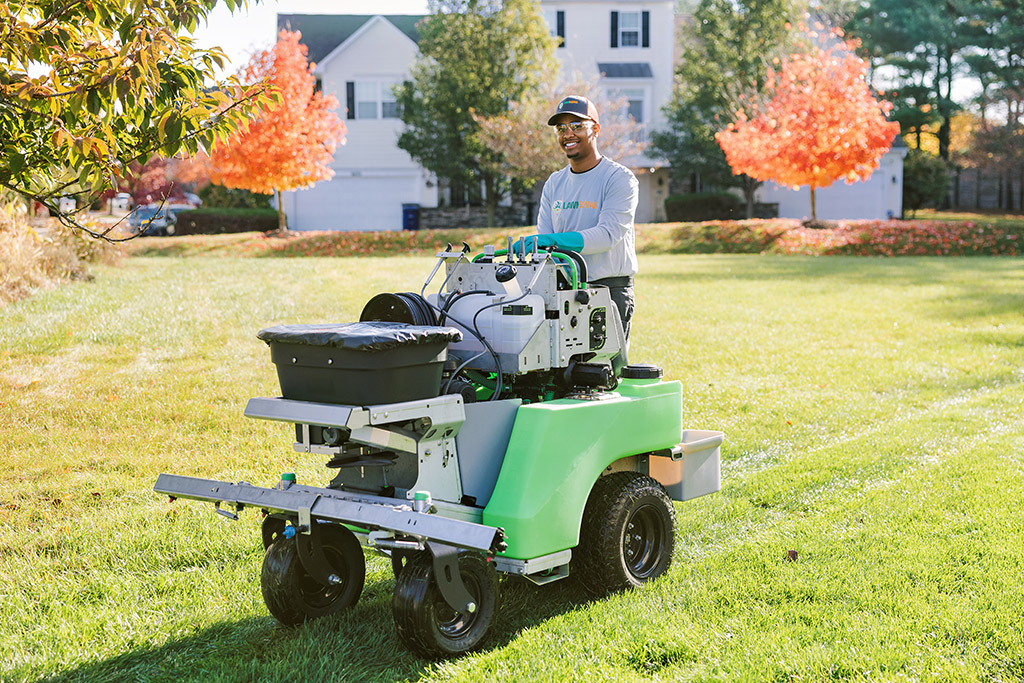
Product is a relatively small share of the cost, which surprises people. The rest is calibrated equipment, labor, routing, and knowing what to apply when. In our market that last part carries unusual weight, because fall is the season when the wrong product does active harm rather than simply doing nothing.
A good fall visit should also include eyes on the lawn. October and November are when large patch shows up on St. Augustine across West Houston, and catching an expanding patch early is worth more than the application itself. Take all root rot, chinch bug damage from the tail of summer, and the pale color that signals iron lockout on our alkaline soils all show up to someone walking the property.
Ask what happens if a problem is found. Some programs include a corrective treatment, some charge separately, and knowing which before you sign avoids an uncomfortable surprise in November.
The Do It Yourself Comparison
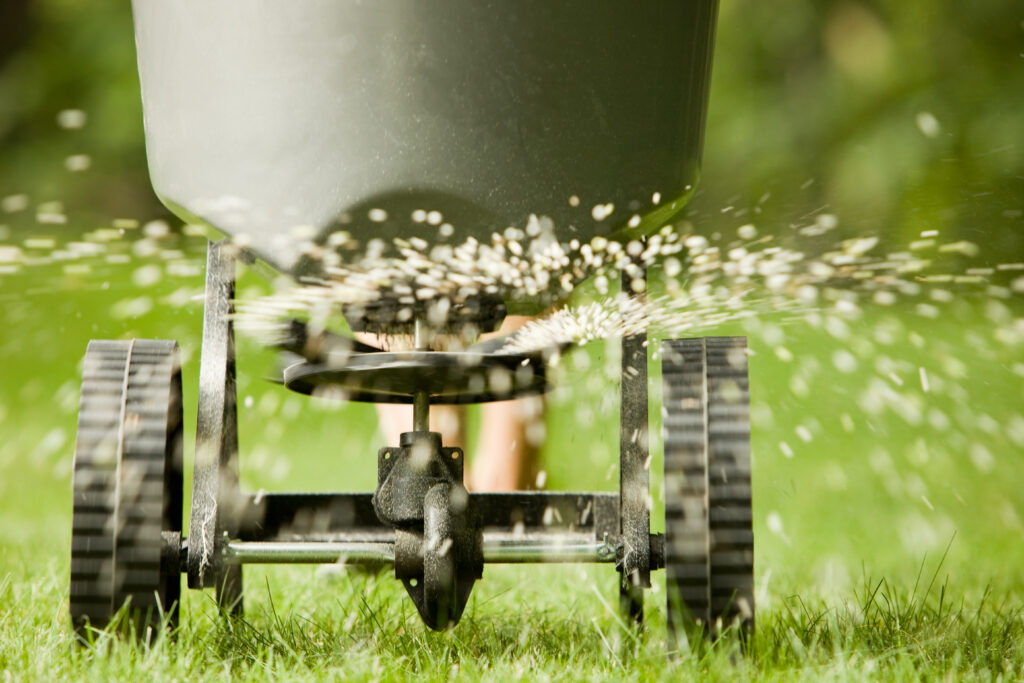
Fertilization is among the more approachable parts of lawn care to handle yourself, and the numbers are worth seeing. A quality bag covers roughly five thousand square feet and runs about $25 to $45. For an average West Houston lawn, that is one to two bags per application, so roughly $30 to $50 in product.
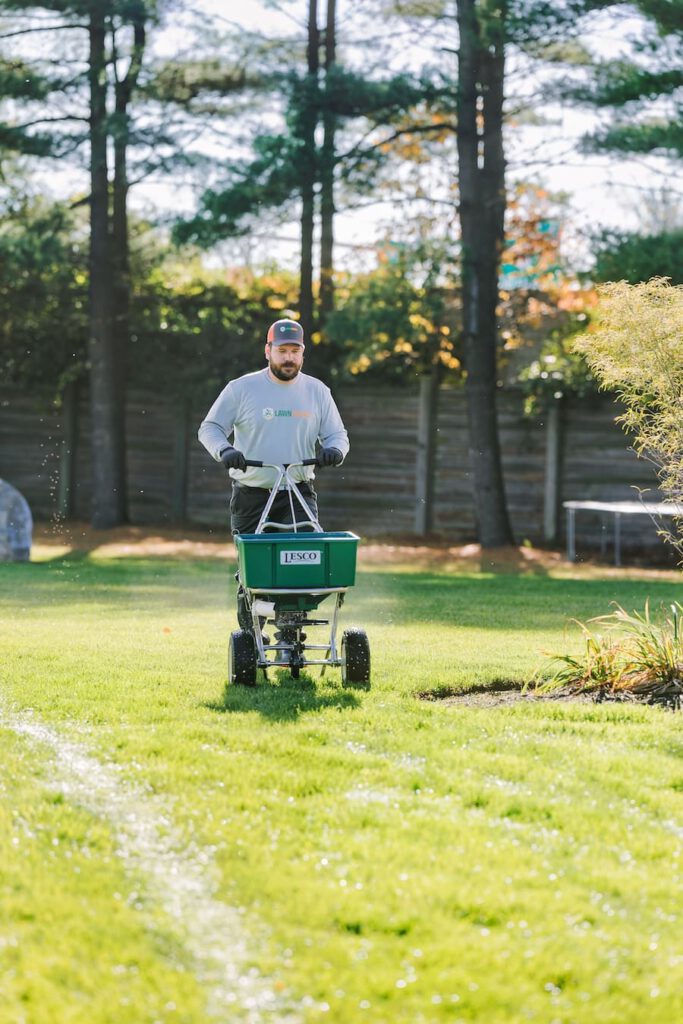
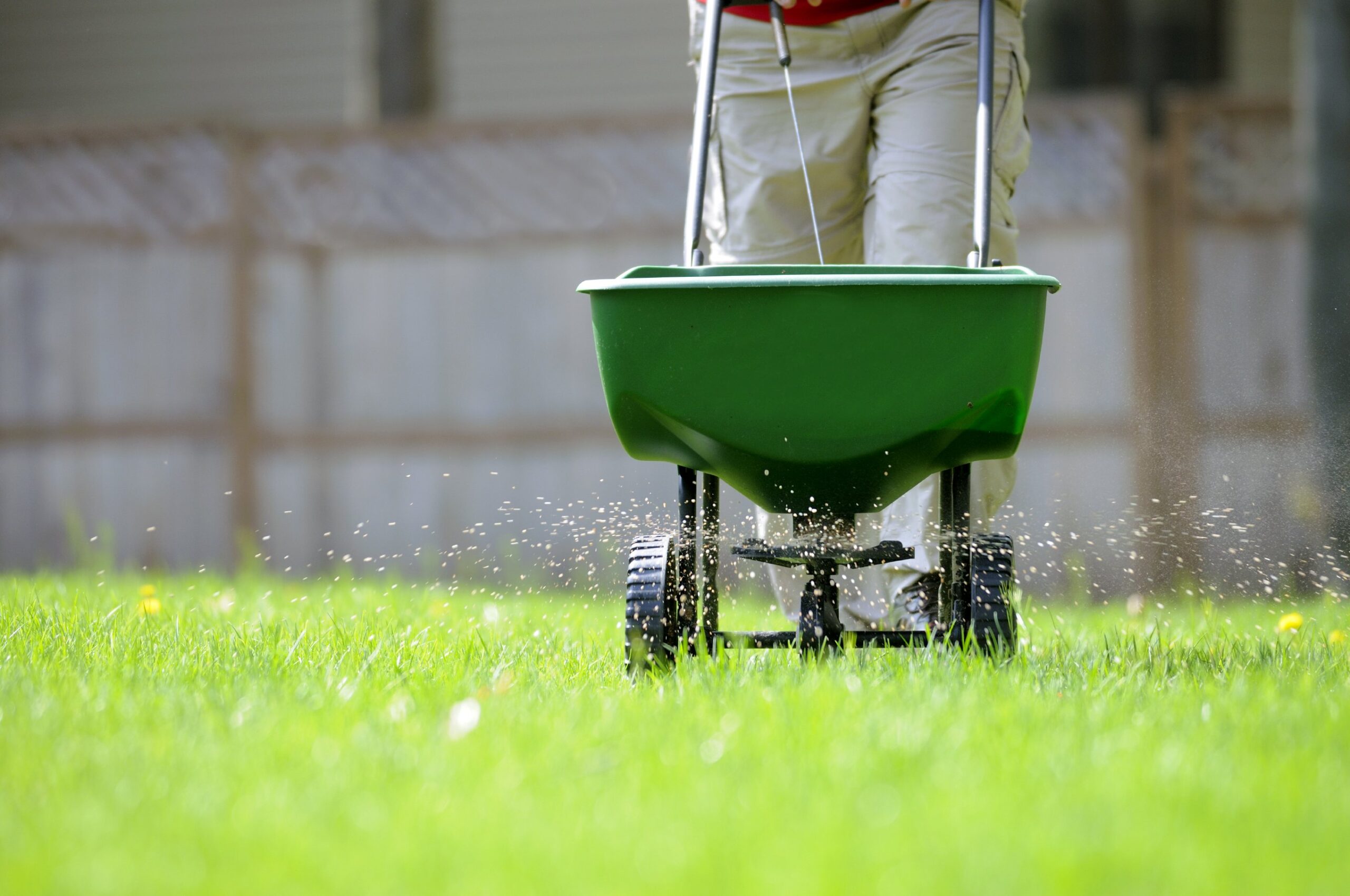
Add a broadcast spreader, a one time purchase of $60 for a basic model or $150 and up for one that holds calibration. Add about forty five minutes per application plus a trip to buy product. The dollar gap against a professional visit is real but modest, usually a few dozen dollars per application.
Where the DIY route slips is rarely the product and usually the spreader. Every setting number means something different on every bag, because granule size and density vary. Applying twenty percent heavy in October is how homeowners accidentally trigger the large patch problem they were trying to avoid. Calibrating once a season closes most of that gap.
Where the Money Actually Gets Wasted
The most expensive mistake in our market is not overpaying for an application. It is buying a high nitrogen winterizer product in November because that is what the shelf tag and most online advice recommend. On warm season grass that application can feed disease and produce frost damaged tissue, which means you paid for the product and then paid again in lost turf.
Second is fertilizing a lawn whose real problem is something else. Feeding a St. Augustine lawn thinning from deep shade under mature oaks will not fix it, because the limiting factor is light. Feeding a lawn with take all root rot can make it worse. In both cases the money would do more as a diagnosis than as nutrition.
Third is applying without knowing soil pH. Our soils commonly run alkaline, and high pH locks up iron regardless of how much fertilizer goes down. Homeowners feed a pale lawn repeatedly, see little change, and conclude the product is bad. A soil test costs a fraction of one application and often explains years of frustration.
What to Do Next
Measure your turf before you call anyone. Pace the perimeter of each grass area, multiply length by width, subtract beds and hardscape. That single number makes every quote you receive comparable and protects you from both over and under application.
When you request pricing, ask four things. Is the price based on measured square footage. What is the nitrogen rate on the fall application specifically. Is large patch prevention or treatment included or billed separately. Does the schedule follow soil temperature and conditions or fixed calendar dates. Those answers separate companies quickly, and any good one will answer them plainly.
Here is what to expect from the visit. It is quick, usually under thirty minutes on an average lot. Granular product should be watered in afterward unless rain is coming. You will not see a dramatic color change from a fall application the way you would from a spring one, and that is correct rather than disappointing. Fall feeding is about root reserves and winter survival.
If you would rather have someone else handle the timing decisions, product selection, and application for your West Houston lawn, we are here for that. Visit lawnsquad.com to find Lawn Squad of West Houston and request a free quote on your property. Our VitaminLawn program is built around the warm season grasses, heavy clay, and alkaline soils we work with here.