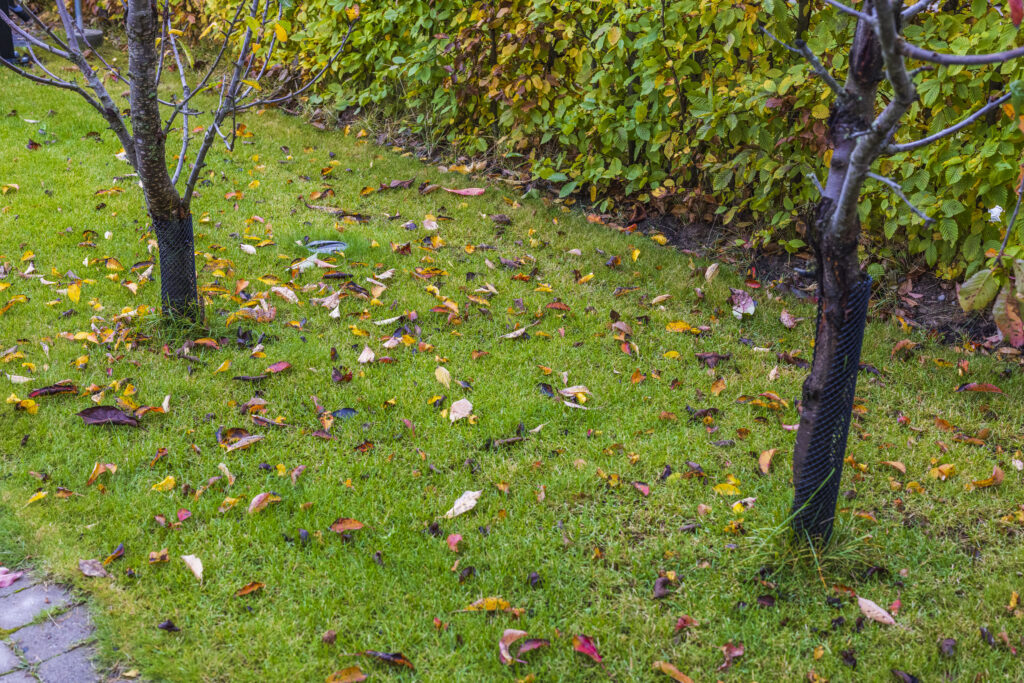
Short Answer: Do not pick a shutdown date. Taper instead. In Huntsville a warm season lawn needs roughly half the water in October that it needed in July, and once it is fully dormant after the first hard frost it needs almost none beyond an occasional deep soak during a long dry winter stretch. Tall fescue is the exception and keeps growing and drinking into November. The most common mistake we see here is running the July schedule straight through October, which wastes water and drives large patch disease in exactly the wrong season.
Why the Shutdown Date Is the Wrong Question
Homeowners want a date because a date is easy to put on a calendar. Irrigation does not work that way, and the lawns that look worst in the spring around Madison County are frequently the ones that ran on autopilot right up until someone flipped the controller off in November.
Water demand falls gradually through the fall as temperatures drop, days shorten, humidity rises, and the grass slows down. The correct response is a gradual reduction that tracks the season, not a cliff. A lawn that gets a July volume of water in mid October is being overwatered by a wide margin, and overwatering in the fall does specific damage that shows up months later.
What Your Lawn Is Actually Doing Right Now
If you have bermuda or zoysia, the plant is in transition. Top growth is slowing noticeably, and most of the plant’s activity has moved below ground, storing carbohydrates in crowns, rhizomes, and stolons for the winter. It is still using water, but far less of it, and it is losing much less to evaporation than it did in August.
Evapotranspiration, which is the combined loss of water from soil evaporation and plant transpiration, can fall by half or more between midsummer and mid October in north Alabama. Your irrigation schedule should fall by roughly the same proportion. If your controller has not changed since June, it is delivering twice what the lawn is using.
How Much It Actually Needs
The working numbers are straightforward.
- Midsummer, a warm season lawn here generally wants about one inch to one and a quarter inches of total water per week including rainfall.
- Through September, drop that toward three quarters of an inch per week.
- Through October, half an inch per week is usually plenty, and in a wet October you may not need to run at all.
- Once the lawn is fully dormant after the first hard frost, it needs roughly a half inch every three to four weeks, and only if there has been no meaningful rainfall.
Deliver whatever you deliver in fewer, deeper cycles rather than short daily ones. Deep infrequent watering pulls roots downward, and root depth going into winter is what determines how the lawn handles cold and how fast it recovers in spring. Short daily watering does the opposite and produces a shallow rooted lawn that is fragile in every season.
Tall Fescue Follows a Completely Different Schedule
Huntsville sits in the transition zone, so a large number of properties here have tall fescue, either throughout the yard or in the shaded areas while bermuda holds the sun.
Fescue is a cool season grass. Fall is its most productive growing period of the entire year, not its shutdown. A fescue lawn in October is actively producing roots and tillers and it needs consistent moisture to do it, generally around an inch a week including rain, right through November and into December.
If you seeded fescue in September, the requirement is stricter still. New seedlings need the surface layer kept consistently moist through germination and establishment, which usually means short light cycles several times a day for the first two to three weeks, then a deliberate transition to deeper and less frequent watering.
On a mixed property this is genuinely awkward, because the correct answer for the front yard and the correct answer for the shaded side are opposite. If your system has separate zones for those areas, this is the season where that pays off.
The Disease Problem With a Wet Fall Lawn
This is the part that most homeowners do not connect, and it is the strongest argument for cutting back on schedule.
Large patch, the fungal disease that produces expanding brown circles in zoysia and other warm season turf, becomes active as soil temperatures fall through the seventies and it requires extended leaf wetness to do damage. Roughly twelve or more hours of continuous moisture on the leaf surface is what it needs.
In October in the Tennessee Valley, nights are long and cool, dew forms early in the evening and does not burn off until well after sunrise. The lawn is already sitting wet for ten to twelve hours without any help. Add an irrigation cycle on top of that and you have created ideal conditions for the disease during the exact weeks it is most capable of causing damage.
Reducing fall irrigation is not only about conserving water. On a susceptible lawn it is disease control.
Change the Time of Day, Not Just the Volume
If you make one change to your controller this month, make it the start time.
Run so the cycle finishes right around sunrise. That way the water goes down when dew has already wet the canopy anyway, and the sun immediately begins drying it. Total leaf wetness hours barely increase.
Evening watering is the worst schedule you can run in the fall here. It puts moisture on the canopy at the start of a twelve hour dark, cool, humid period, and the leaf surface stays wet all night. Plenty of homeowners water in the evening because it is convenient and because the pressure is better. In October that convenience costs you.
Midday watering is inefficient because of evaporation but it is not a disease risk. If you must choose between midday and evening in the fall, choose midday.
Read the Lawn Instead of the Controller
The lawn will tell you whether it needs water if you check rather than assume.
- Push a long screwdriver into the soil. If it goes in six inches without much effort, there is adequate moisture. If it stops at two inches, the profile is dry.
- Walk across the lawn and look behind you. Footprints that stay visible instead of springing back indicate the grass has lost turgor and is beginning to stress.
- Look at color. A blue gray or dull cast rather than a bright cast is an early drought signal, and it appears before any browning.
- Put empty tuna cans out during a cycle to measure how much your system actually delivers. Most people are surprised, and coverage is rarely as even as the controller settings imply.
Fall Rainfall in the Tennessee Valley
North Alabama does not have a dependable fall. Some years October is genuinely dry and the lawn needs supplemental water right up to dormancy. Other years remnant tropical systems deliver several inches in a week and the ground stays saturated for a month.
That variability is exactly why a fixed shutdown date fails. A working rain sensor or a soil moisture sensor is inexpensive and eliminates the most visible irrigation mistake there is, which is a system running during a downpour. If yours has one, verify it still functions, because they fail quietly after a few seasons.
Watering a Dormant Lawn in Winter
A dormant lawn is not a dead lawn and it is not entirely without water needs. The crowns, rhizomes, and roots remain alive and they can dry out.
Winter desiccation happens when soil stays dry through an extended cold dry stretch, particularly on windy exposed sites, on slopes, and in sandy areas. The damage looks like winter kill in the spring and it is often blamed on cold when the real cause was dryness.
The practical guidance is simple. If Huntsville goes three or four weeks in winter with no meaningful precipitation and the ground is not frozen, run one deep cycle of about a half inch on a day when temperatures are above freezing and will stay there. That is usually one or two events across an entire winter, not a schedule.
Winterizing the System
North Alabama gets hard freezes, and Huntsville sits far enough north to see extended periods below freezing most winters. Irrigation components above ground and shallow lines can and do split.
Before the first hard freeze, shut off the water supply to the system, drain or have the lines blown out according to how your system was installed, and insulate the backflow preventer, which is the most commonly damaged component because it sits above grade. Turn the controller to the off or rain setting rather than unplugging it, so the programming survives.
The window for this in Huntsville is generally sometime in November, ahead of the first sustained hard freeze rather than after it. A split backflow assembly is a considerably more expensive problem than an afternoon of preparation.
The Controller Mistakes We See Most
- One schedule left running from May through October with no seasonal adjustment.
- Sun zones and shade zones set identically, which overwaters the shade badly.
- Watering every day for a short duration, which produces shallow roots in every season.
- A rain sensor that stopped working two years ago and was never checked.
- The system turned completely off in October and never run again, which risks desiccation in a dry winter.
Most controllers have a seasonal adjustment percentage that scales every zone at once. Setting that to roughly seventy percent in September and fifty percent in October takes about a minute and captures most of the benefit described above.
What to Do Next
Walk the lawn this week and write down the two or three things that actually bother you about it, then work backward from the window rather than forward from today. Almost every fall mistake we see in Huntsville comes from starting with the calendar instead of with the lawn.
If you would rather have someone look at it with you, Lawn Squad of Huntsville offers a free quote. Call 833-816-7508 or find us at lawnsquad.com. Every Lawn Squad location is independently owned and operated, and our VitaminLawn fertilization and weed control program is built around the grass, soil, and conditions here rather than a national average.
A first visit is a walk of the property, a look at the thin areas, a check of mowing height and irrigation, and a straight conversation about what is realistic in the weeks left this season. At 30 days you should see color and density improve. At 90 days the lawn should be visibly thicker, with the root growth that carries it through winter.