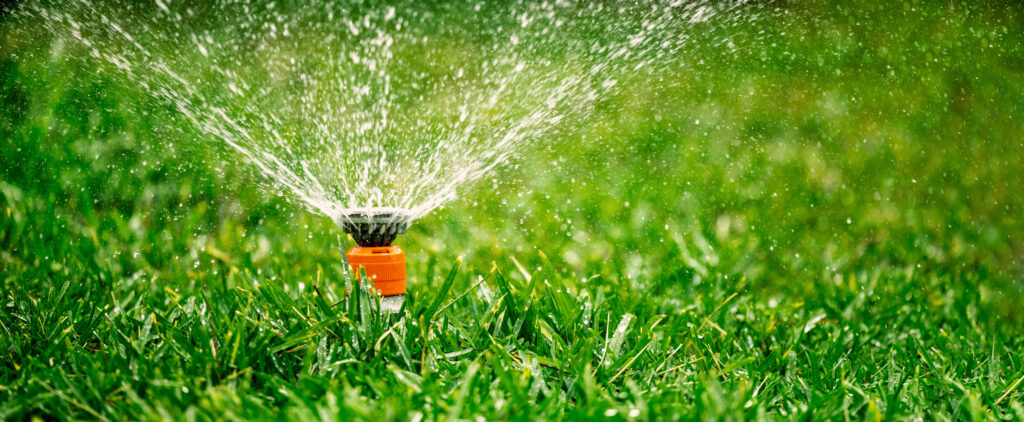
Short Answer: Do most of your important work before the shutoff, not after. Aerate, overseed, and fertilize while pressurized irrigation is still available, because those jobs all require water. In the final two weeks before shutoff, water deeply to charge the soil profile going into winter. After the system drains, the lawn is not finished needing water. Utah County winters are dry and the valley often goes weeks without snow cover, so a deep hose watering on a thawed day above 40 degrees prevents the winter desiccation that kills turf here.

Why the Shutoff Date Drives Your Whole Fall
Most Utah County homes water from a secondary or pressurized irrigation system rather than from culinary water, and every one of those systems drains for the season. The exact date varies by district and is announced each year, but sometime in October is typical across the county. That single date compresses the entire fall program. Every job that depends on water, meaning aeration, overseeding, fertilization, and soil moisture recharge, has to be finished before the valves close. Homeowners in wetter parts of the country can spread fall work over two months. Here you cannot, and planning backward from the announced date is the whole skill.
Confirm Your District’s Date Yourself
Utah County is served by a patchwork of irrigation companies and city systems, and neighbors two streets apart can be on different providers with different dates. Do not rely on what someone told you last year, and do not assume your city and your irrigation company are the same entity. Check the notice from your provider or their website in early September. Then work backward: overseeding needs three to four weeks of consistent moisture to establish, so seed that goes down a week before shutoff is money spent on nothing.
Build the Fall Calendar Backward
If your system shuts off in the middle of October, seed and aerate in late August or the first ten days of September. That leaves five or six weeks of available irrigation for germination and establishment, which is what new seedlings actually require. Fertilizer should go down early enough that it is watered in and taken up, generally by late September. The last deep soaking happens in the final week before shutoff. Reversing that order, which is what happens when people wait until the weather feels like fall, is the most common reason a Utah County fall seeding fails.
Charge the Soil Before the Valves Close
In the last week or two of the season, water more deeply than usual rather than less. The goal is to saturate the root zone down to a foot or more, because that stored moisture has to carry the lawn through a dry autumn and into winter. Soils here are frequently clay loam over gravel, and clay takes water slowly, so run shorter cycles with soak time between them rather than one long run that produces runoff down the gutter. Test with a screwdriver or a soil probe. If it stops at four inches, you are not there yet.
Winter Watering Is Real and Most People Skip It
This is the piece homeowners from wetter climates find hardest to believe. Utah County valley floors often go long stretches in December through February with no snow cover and single-digit humidity. Grass crowns and roots continue to lose moisture to dry air and wind while the soil holds none in reserve. The result shows up in April as patches that never green up, usually on south and west exposures and along driveways. The fix is a hose and a sprinkler on a day when air temperature is above 40 degrees and the soil is not frozen, roughly once a month through a dry winter. Water midday so it soaks in before nightfall rather than freezing on the surface.
Low Humidity Changes What You Worry About
Homeowners moving here from the Midwest or East often arrive expecting fungal disease to be the main threat. It generally is not. Utah County’s dry air means brown patch, dollar spot, and the other humidity-driven diseases are far less common than they are at the same latitude in Ohio or Massachusetts. What replaces them is water stress, salt accumulation, and nutrient availability problems tied to high soil pH. If a lawn here is struggling, the odds strongly favor a water or soil chemistry explanation over a disease one, and treating it with fungicide wastes money.
Evapotranspiration Is Higher Than You Think
Hot, dry, sunny days at this elevation pull water out of turf far faster than the same air temperature would at sea level in a humid climate. A July day here can move a quarter inch of water or more out of the soil. That is why watering practices that work fine elsewhere leave lawns brown here. It is also why the switch to fall matters so much: as days shorten and temperatures drop through September, demand falls sharply, and continuing to run the same schedule you used in July wastes a great deal of water in the last weeks before the system closes.
Adjust the Controller as the Season Turns
Most irrigation controllers in the county run all summer on one program and get touched twice a year. Grass in September needs roughly half what it needed in July. Cutting run times by 30 to 50 percent through September is appropriate on an established lawn, with the deliberate exception of any newly seeded area, which still needs frequent light cycles until it is up and mowed. If your controller has a seasonal adjust or percentage feature, this is what it exists for, and using it is the easiest water savings available to you.
Mow High, Especially Here
Kentucky bluegrass, which dominates Utah County lawns, should be cut at three to three and a half inches. Under intense high-elevation sun and dry air, mowing height is a direct water conservation tool. Taller grass shades the soil surface, lowers soil temperature, reduces evaporation, and supports deeper roots that reach moisture a short-cut lawn cannot. The last cut of the season can come down slightly, to around two and a half inches, but scalping a lawn that has to survive a dry winter with no irrigation is a mistake.
Aeration Matters More on Compacted Clay
Much of the county sits on heavy clay, and clay compacts under foot traffic, mowers, and construction. Compacted clay sheds water rather than absorbing it, which you can see any summer evening as runoff from lawns down the gutter toward the storm drain. Core aeration in early fall opens channels so the deep pre-shutoff watering actually penetrates instead of running off. It also improves the effectiveness of every gallon you apply the following season, which matters in a county where water allocations and restrictions are a recurring subject rather than an occasional one.
Watch for Restrictions and Plan for Them
Utah has had multiple years of drought-driven watering restrictions, and secondary providers have at times shortened the season or limited watering days. Assume the possibility rather than being surprised by it. A lawn built on deep roots, good soil structure from aeration, higher mowing, and realistic square footage handles a restricted year. A lawn kept alive by daily shallow watering does not. If your property has large areas that are difficult to irrigate evenly, such as narrow park strips and steep west-facing slopes, those are worth reconsidering rather than fighting every summer.
What Success Looks Like Next Spring
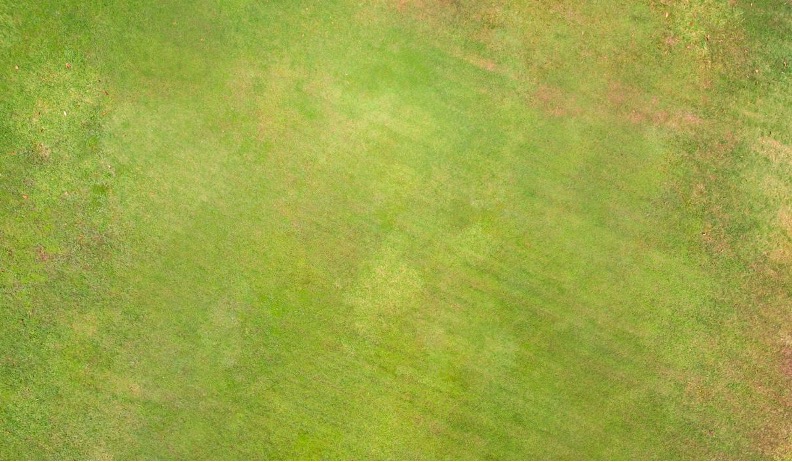
A lawn that was aerated, seeded, fed, and deeply watered before shutoff, then watered once or twice over a dry winter, greens up in Utah County in late March or early April with even color and no dead margins along the driveway. A lawn that missed those steps greens up patchy, with straw-colored areas on the sunny exposures that homeowners usually misdiagnose as grub damage or winter kill from cold. It was almost always drought. Cold rarely kills bluegrass here. Dry does.
What to Do Next
Walk the lawn this week and write down the two or three things that actually bother you about it, then work backward from the window rather than forward from today. Almost every fall mistake we see in Utah County comes from starting with the calendar instead of with the lawn.
If you would rather have someone look at it with you, Lawn Squad of Utah County offers a free quote. Call 833-816-7508 or find us at lawnsquad.com. Every Lawn Squad location is independently owned and operated, and our VitaminLawn fertilization and weed control program is built around the grass, soil, and conditions here rather than a national average.
A first visit is a walk of the property, a look at the thin areas, a check of mowing height and irrigation, and a straight conversation about what is realistic in the weeks left this season. At 30 days you should see color and density improve. At 90 days the lawn should be visibly thicker, with the root growth that carries it through winter.