
Short Answer: Many counties and municipalities across The Palm Beaches have fertilizer ordinances that restrict nitrogen and phosphorus applications during the summer rainy season, and the restricted dates, allowed formulations, and exemptions vary from one jurisdiction to the next. Your first step is finding the rule for your specific address rather than following a neighbor or a national bag label. Once you are outside any restricted window, fall is the most valuable feeding of the year here, because our grass keeps growing and roots respond well as the heat backs off.
Why These Restrictions Exist in the First Place
Our region sits on sandy soil with a high water table, surrounded by canals, the Intracoastal, the Lake Worth Lagoon, and the Everglades system. Nitrogen and phosphorus that move past the root zone do not simply disappear. They travel into surface water and groundwater, where they feed algae and degrade water quality.
The summer rainy season is when that risk peaks, because heavy afternoon storms can move nutrients off a lawn within hours of an application. That is the reasoning behind the ordinances you will find across much of South Florida. Understanding the logic also helps you make better choices year round, since the same physics that motivated the rule applies to every application you make.
Why the Rules Are Local Rather Than Uniform
This is the part that trips up most homeowners. There is no single statewide schedule you can memorize. Counties and individual municipalities set their own fertilizer ordinances, and across The Palm Beaches you can have meaningfully different requirements on either side of a city line.
The details that vary include the restricted date range, whether the limit applies to nitrogen only or to phosphorus as well, minimum slow release percentages, required setbacks from water bodies and storm drains, whether certified applicators have any exemption, and whether products containing no nitrogen or phosphorus are treated differently. Because of that, any specific set of dates you read online may simply be wrong for your street.
How to Find the Rule for Your Address
Start with your municipality, since city rules often layer on top of county rules and the stricter one governs. Search your city or town name together with the phrase fertilizer ordinance, or call the city’s code compliance or environmental resources office and ask directly. County extension offices are another good source and are used to this exact question.
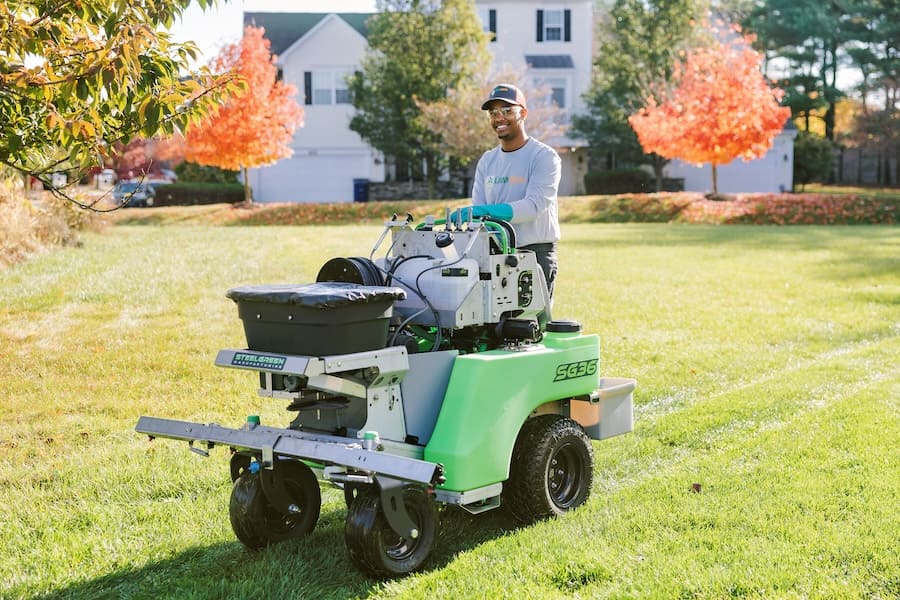
If you use a lawn care company, ask them which jurisdiction they have your property recorded under and what their compliance schedule is. A licensed company operating here should already be tracking this. Keep in mind that homeowner association landscape guidelines are separate from the ordinance and do not override it.
What You Can Usually Still Do During a Restricted Window
A restricted window is not a season off. Most ordinances target nitrogen and phosphorus specifically, which leaves a number of useful practices untouched. Check your local rule before assuming any particular product is permitted, but generally the work available to you includes mowing at the right height, correcting irrigation, treating insects and disease, spot treating weeds, improving drainage, and returning clippings to the lawn instead of bagging them.
Clippings alone recycle a meaningful amount of nitrogen back into the soil over a season, and they cost nothing. Many programs also use the restricted period for soil testing, since you want the results in hand before the first feeding of the fall rather than after it.
Why Fall Feeding Matters More Here Than Up North
In cool season regions, the fall fertilizer conversation is tied to a lawn that is about to go dormant. That is not our situation. St. Augustine and zoysia in The Palm Beaches keep growing well past September, slow gradually through the mildest part of winter, and rarely stop entirely. The grass is still actively building tissue and roots when northern lawns have quit.
Fall is also when heat stress eases. Grass that spent August surviving can put energy into density and rooting instead. A well timed fall feeding is what turns a lawn that merely survived the summer into one that thickens up and closes the gaps left by chinch bugs, disease, and traffic.
Sandy Soil Means Nitrogen Does Not Stay Put
Soils across much of this area are sandy, with low organic matter and very little capacity to hold nutrients. Water moves through quickly and takes soluble nitrogen with it. That has two practical consequences.
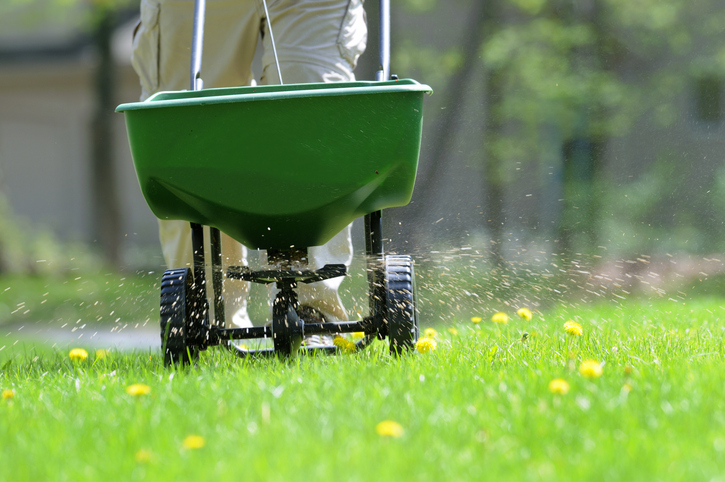
First, a heavy single application is largely wasted. Much of it leaches below the root zone before the grass can use it, which is both an expense and an environmental problem. Second, lighter and more frequent feeding outperforms fewer large applications on this soil type. The goal is to match what the grass can absorb rather than to load the soil, because our soil does not really hold a load.
Slow Release Is Not a Marketing Term
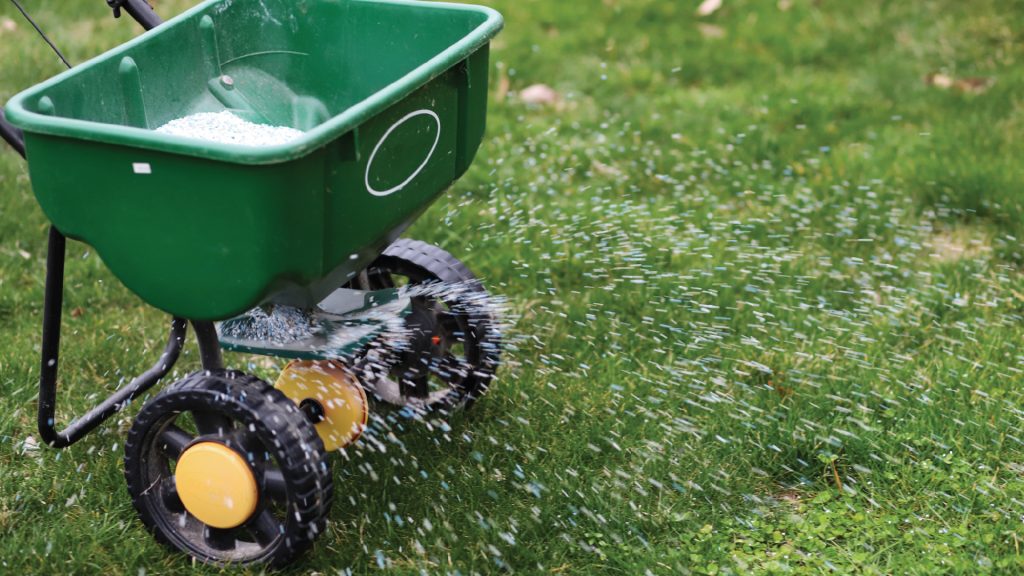
On sandy soil, the percentage of slow release or controlled release nitrogen in a product is one of the most important numbers on the bag. Slow release sources feed the lawn over weeks instead of days, which reduces leaching, evens out growth, and lowers the chance of burning the grass in warm weather.
Some local ordinances specify a minimum slow release percentage for exactly this reason. Read the guaranteed analysis rather than the front of the bag, and look for the breakdown showing how much of the total nitrogen is in a slow or controlled release form. A cheap bag of fully soluble nitrogen applied on sand is usually the most expensive way to fertilize once you account for how little of it the lawn actually gets.
Potassium and Root Growth Going Into Winter
Nitrogen gets the attention because it drives visible green growth, but potassium is the nutrient most associated with root development, cell wall strength, and stress tolerance. On leaching soils potassium moves readily as well, so lawns here are often short of it even when nitrogen has been applied regularly.
Heading into the cooler months, a product with meaningful potassium supports the root system that has to carry the lawn through the drier, cooler part of the year and through any cold snap we get. A soil test is the honest way to know your levels rather than guessing from the appearance of the grass.
Iron Gives Color Without Pushing Growth
If your goal is a darker lawn and not more mowing, iron is the tool. Iron improves color by supporting chlorophyll production without the surge of top growth that nitrogen creates. That is useful in a restricted window where nitrogen may not be permitted, and useful in general when a lawn looks pale but is not actually growing poorly.
Iron applications are also helpful because our soils tend toward alkaline pH, especially where limestone is close to the surface or where irrigation water is hard. At high pH iron in the soil becomes less available to the plant even when it is physically present, which produces a yellowing that no amount of nitrogen will fix.
Signs the Lawn Is Hungry Versus Something Else
Not every pale or thin lawn needs fertilizer, and feeding the wrong problem wastes the application. A genuinely underfed lawn is uniformly lighter across the whole yard, grows slowly, and thins out gradually everywhere rather than in defined shapes.
By contrast, distinct expanding patches in full sun point toward chinch bugs. Circular areas that appear as soil cools suggest a fungal disease that nitrogen will actively worsen. Yellowing between the veins while the veins stay green points to a micronutrient availability problem tied to pH. Yellowing in wet low spots is usually a root oxygen problem. Diagnose first, then feed.
What to Do Next
Walk the lawn this week and write down the two or three things that actually bother you about it, then work backward from the window rather than forward from today. Almost every fall mistake we see in The Palm Beaches comes from starting with the calendar instead of with the lawn.
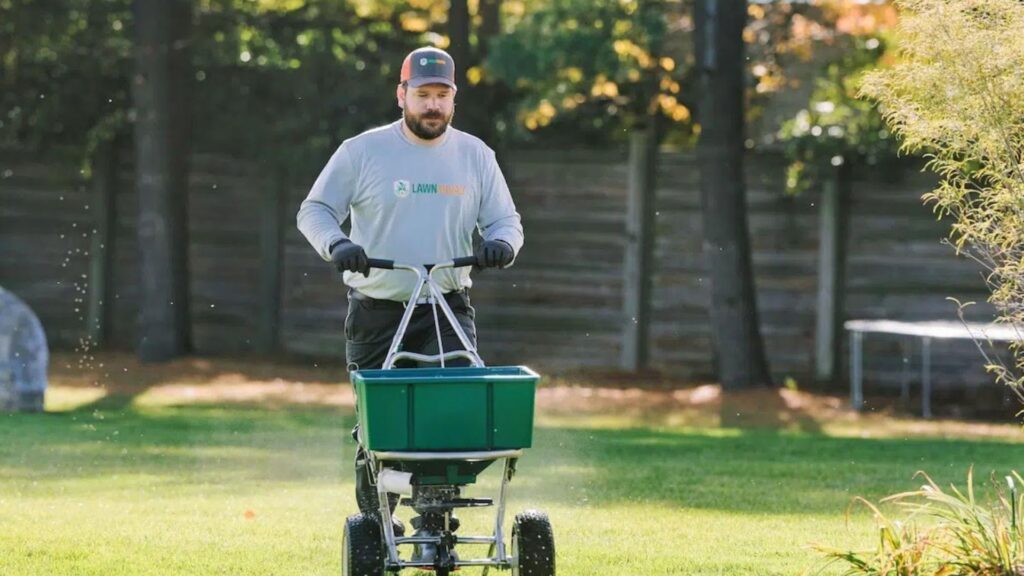
If you would rather have someone look at it with you, Lawn Squad of The Palm Beaches offers a free quote. Call 833-816-7508 or find us at lawnsquad.com. Every Lawn Squad location is independently owned and operated, and our VitaminLawn fertilization and weed control program is built around the grass, soil, and conditions here rather than a national average.
A first visit is a walk of the property, a look at the thin areas, a check of mowing height and irrigation, and a straight conversation about what is realistic in the weeks left this season. At 30 days you should see color and density improve. At 90 days the lawn should be visibly thicker, with the root growth that carries it through winter.