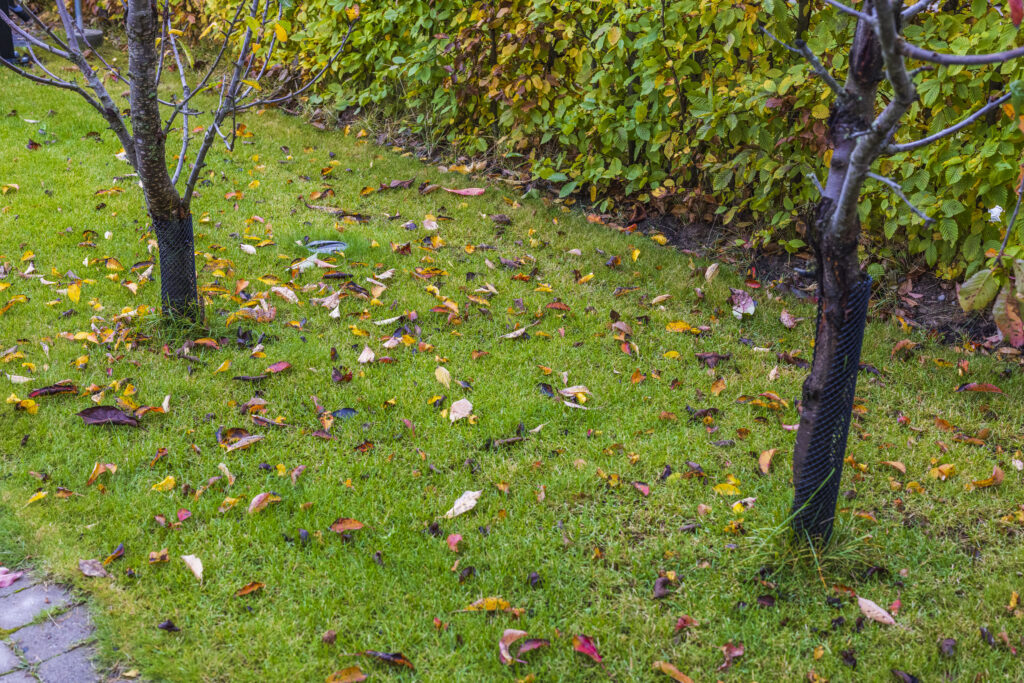
Short Answer: Snow mold is a cold weather fungal disease that develops under long lasting snow cover, and Big Sky’s five to six months of snow makes it close to inevitable if a lawn goes into winter unprepared. The prevention work happens in September and early October, not in spring. Drop your final mow to about two and a half inches, stop applying fast release nitrogen roughly four weeks before the lawn goes dormant, clear leaves and debris off the turf, and keep plowed or shoveled snow from piling in the same spot all winter.
What Snow Mold Actually Is
Snow mold is not a stain left behind by snow. It is a fungal disease that grows actively at temperatures just above freezing, in the dark, humid layer between the soil and the underside of a snowpack. While the rest of the property is frozen solid, that thin zone stays near 32 degrees and stays wet, and the fungus spends the entire winter feeding on matted grass blades.
You do not see any of it until the snow leaves. Then, usually in May here, patches of the lawn appear as flattened, crusted, straw colored circles anywhere from six inches to a couple of feet across, sometimes with visible webbing across the surface. By that point the damage is finished. Everything you can do about snow mold happens in the fall.
Gray and Pink Snow Mold Are Different Problems
Gray snow mold, caused by Typhula species, needs prolonged snow cover on unfrozen ground to develop, generally more than 60 days. Big Sky routinely runs three to four times that. It shows up as gray or dirty white matted patches, often with tiny hard specks the size of a pinhead embedded in the dead blades. Gray snow mold usually damages leaf tissue but leaves the crown alive, so most lawns recover on their own once raked open and warmed up.
Pink snow mold, caused by Microdochium nivale, is the more serious of the two. It does not require snow at all, only cold wet conditions between roughly 32 and 60 degrees, which describes a lot of October and a lot of May in this valley. It shows up with a salmon or rust colored tint at the edge of the patch, and it can kill crowns outright, leaving true dead spots that have to be reseeded.
Why Big Sky Gets Hit Harder Than Most of Montana
Two things stack against lawns here. The first is the length of snow cover. A lawn in a lower elevation Montana town may be under snow for eight to twelve weeks with several midwinter melts that dry the surface out. Big Sky lawns are frequently covered continuously from November into April or May, which is close to ideal conditions for Typhula.
The second is timing. Snow often arrives before the ground freezes hard, and that combination of unfrozen soil under an insulating snowpack is exactly what the disease needs. A lawn that goes under an early October storm still green, still tall, and still growing is the most vulnerable lawn on the street.
The Final Mow Is Your Most Important Winter Prep
Through the season, three inches is a good height in Big Sky. Going into winter, it is a liability. Tall grass folds over under the first heavy snow, mats down against the soil, and creates the humid layer the fungus lives in.
Step the height down gradually over your last two or three cuts and finish the season at about two and a half inches. Do not scalp it to an inch, because the crowns still need some insulation and some leaf tissue to hold reserves. The goal is grass that stands up rather than lying flat. Time that final cut for roughly the first week of October, or whenever growth has genuinely stopped, and bag the clippings on that pass.
Stop the Late Nitrogen
This is the one that surprises people. A heavy shot of fast release nitrogen late in the fall pushes soft, lush top growth right when the lawn should be hardening off and moving sugars into the crown. Soft tissue is the preferred food source for snow mold, and lawns that get a late push are consistently the worst hit at snowmelt.
The useful fall fertilizer application here goes down while the grass is still actively growing, which in Big Sky means late August into early September. After that, stop. Aim to have the last nitrogen applied at least three to four weeks before growth ends. A slow release product applied at the right time builds root reserves. The same product applied a month late builds disease.
Clear the Lawn Before the First Storm
Anything left sitting on the turf when snow arrives becomes a mold colony. Leaves from aspen and cottonwood, pine needles piled in windrows, patio furniture, garden hoses, kids’ toys, firewood stacked temporarily on the grass, and landscape fabric all trap moisture and block air movement.
Do a full clearing pass before the first storm that sticks, which in Big Sky can be late September some years. Rake or blow leaves and needles off the lawn rather than mulching heavy layers into it. A light mulching of a thin leaf layer is fine, but a matted inch of wet leaves under snow will produce a dead patch every time.
Where You Put the Snow Matters
The worst snow mold damage on most Big Sky properties is not spread evenly across the lawn. It sits in the exact places where snow gets piled: the strip beside the driveway, the landing zone off the deck stairs, the spot where the plow always turns around, the drift line downwind of a fence.
Those piles are denser, they last weeks longer than the rest of the snowpack, and they hold the grass under wet cold conditions well into spring. If you can, rotate where snow gets pushed rather than using the same corner every storm, and keep piles on gravel or pavement instead of turf where the layout allows it. If your plow contractor stages snow on the lawn, that is a conversation worth having before the season starts.
Blowing Out the Irrigation Before the Hard Freeze
This is not directly a disease issue, but it belongs on the same checklist because the deadline is the same. Big Sky can drop well below freezing in September, and an underground system with water still in the lines cracks pipe, splits valve bodies, and ruins backflow assemblies. Repair work in spring is far more expensive than the blowout was.
Schedule the blowout for late September in most years, and stop watering enough ahead of it that the lawn is not going into winter soaked. Saturated soil under an early snowpack is another factor that favors snow mold, so a lawn that is evenly moist rather than wet is what you want at freeze up.
Voles Travel Under the Same Snow
Snow mold is not the only thing living under the snowpack. Voles tunnel along the soil surface all winter, protected from hawks and weather, and they feed on grass crowns as they go. At snowmelt you find narrow winding trails of chewed turf an inch or two wide crossing the lawn, often heaviest near landscape beds, rock walls, and tall grass at the property edge.
The prevention overlaps almost exactly with snow mold prevention. Short grass at the final mow, no leaf or debris piles, and no tall unmowed strip where the lawn meets native grass or shrub beds. Pulling mulch back from the base of trees also stops voles from girdling bark under the snow, which kills young trees outright.
What to Do at Snowmelt in May
When the snow finally goes, do not panic at what you see and do not immediately reseed. Wait for the surface to dry enough to walk without sinking, then rake the matted patches lightly with a leaf rake to break the crust, separate the blades, and let air and sun reach the crowns.
Most gray snow mold damage greens up within two to three weeks once that is done. Give it that time before deciding anything is dead. Areas that stay bare after the rest of the lawn is growing are usually pink snow mold or vole damage, and those need seed. Because of the short season here, that repair seeding should go down as early as the ground allows in late May or early June rather than waiting for fall.
A Realistic Big Sky Fall Timeline
- Late August to early September: final fertilizer application of the year, while grass is still growing well.
- Early to mid September: last aeration and any seeding, understanding this is already the tail end of the window.
- Mid to late September: clear leaves, needles, hoses, and furniture off the turf. Begin stepping mowing height down.
- Late September: irrigation blowout, before the first hard freeze rather than after it.
- Late September to early October: final mow at about two and a half inches, clippings bagged.
- Before the first lasting storm: last debris check, and a plan for where snow will be piled all winter.
What to Do Next
Walk the lawn this week and write down the two or three things that actually bother you about it, then work backward from the window rather than forward from today. Almost every fall mistake we see in Big Sky comes from starting with the calendar instead of with the lawn.
If you would rather have someone look at it with you, Lawn Squad of Big Sky offers a free quote. Call 833-816-7508 or find us at lawnsquad.com. Every Lawn Squad location is independently owned and operated, and our VitaminLawn fertilization and weed control program is built around the grass, soil, and conditions here rather than a national average.
A first visit is a walk of the property, a look at the thin areas, a check of mowing height and irrigation, and a straight conversation about what is realistic in the weeks left this season. At 30 days you should see color and density improve. At 90 days the lawn should be visibly thicker, with the root growth that carries it through winter.