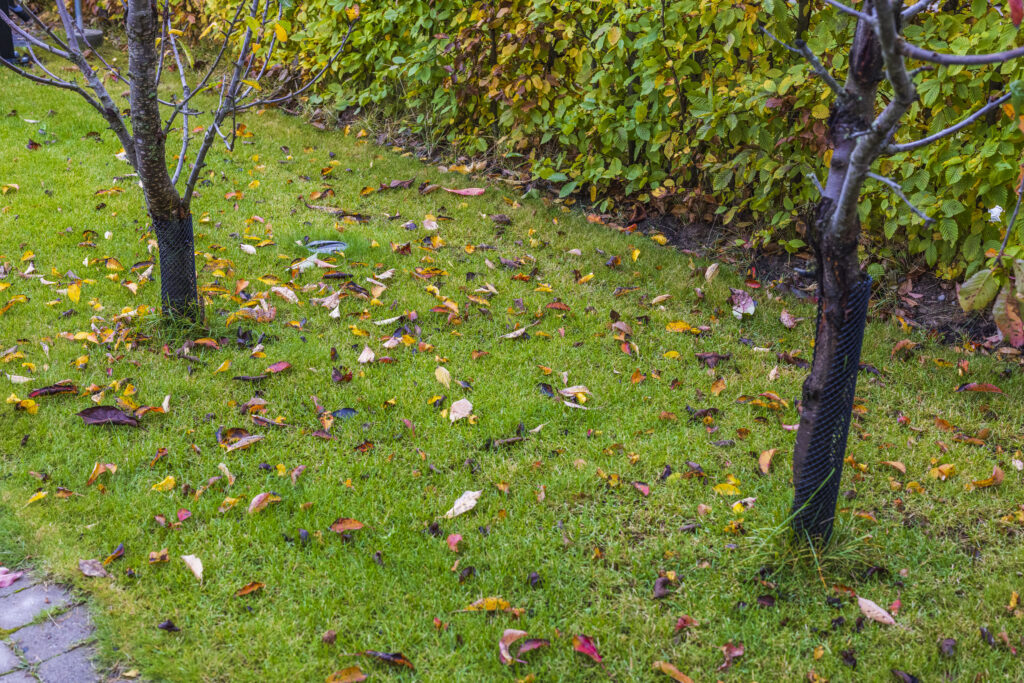
Short Answer: Three things are working against you at once, and fertilizer addresses none of them. Grass under mature canopy gets a fraction of the light it needs, competes with tree roots that are far better at capturing water and nutrients, and often sits in soil that stays damp and encourages disease. The fixes that actually work are increasing light through selective pruning, switching those areas to fine fescues which tolerate shade far better than bluegrass or ryegrass, and raising the mowing height there. Below roughly four hours of sun a day, no grass holds, and the honest answer is ground cover or a bed.
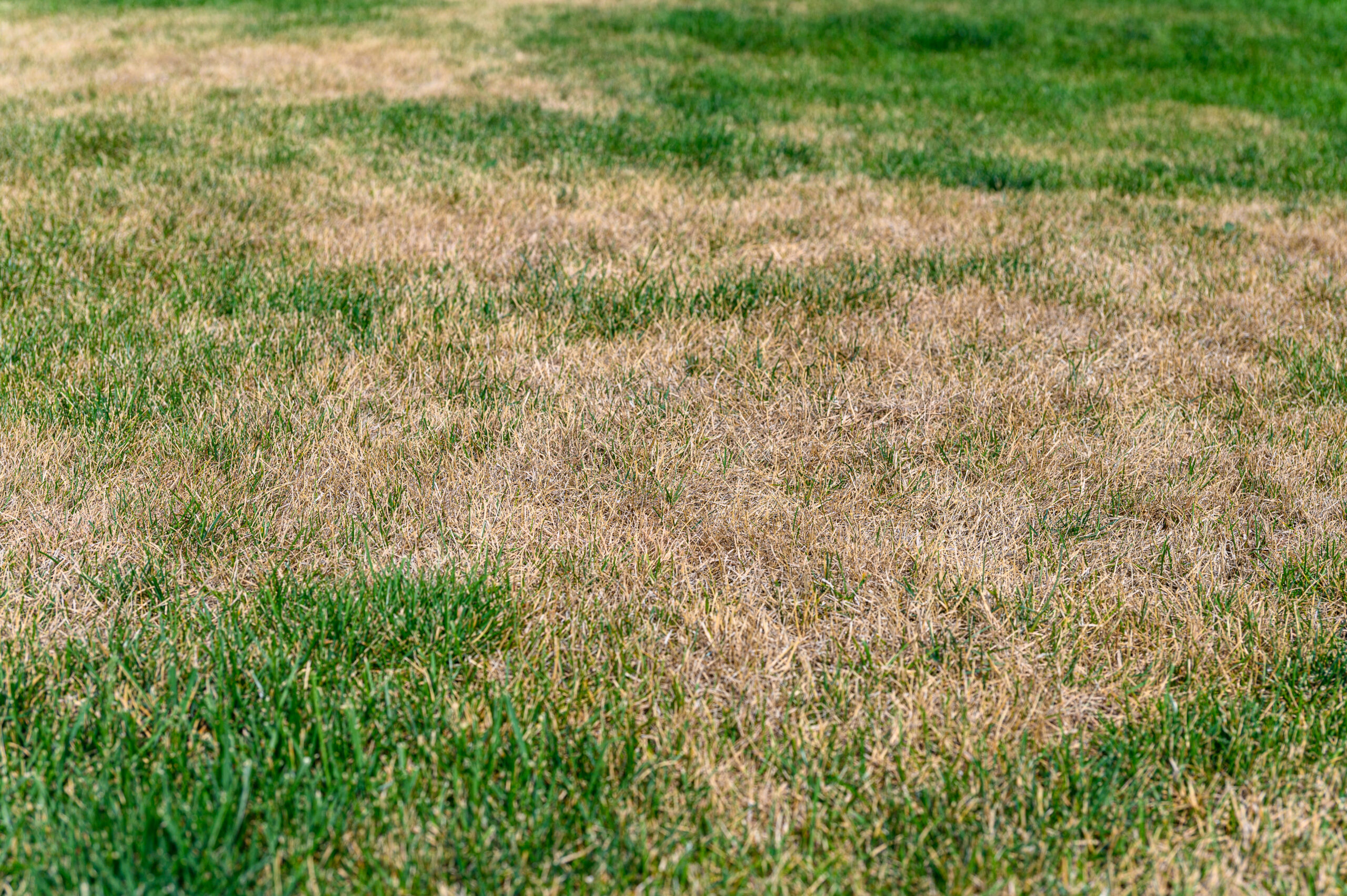
The North Shore has some of the finest mature tree canopy of any residential area in the country, and it is also the reason so many lawns here have the same complaint. The open areas look good. Under the oaks and maples, the grass is thin, patchy, and gets worse every year no matter what goes down.
Understanding why explains which fixes are worth paying for and which are money into the ground.
Light Is the Binding Constraint
Grass is a full sun plant. Even the most shade tolerant turfgrass species need a meaningful amount of direct or filtered light to produce enough energy to sustain themselves.
A mature oak canopy can cut light reaching the ground by the large majority of what falls on open lawn. The grass responds by stretching, producing thin, weak, elongated blades with almost no lateral growth and a shallow root system. It looks alive and it is barely functioning.
This is why fertilizer disappoints in shade. Fertilizer supplies nutrients, and the plant is not short on nutrients. It is short on light, and no product manufactures that.
There is a rough threshold worth knowing. Above roughly six hours of sun or good filtered light, most lawn grasses do reasonably. Between four and six hours, shade tolerant species can hold with the right management. Below about four hours, nothing holds, and repeated reseeding is a recurring expense with a predictable outcome.
Tree Roots Are Better Competitors Than Grass
The second problem is happening below ground and is invisible.
People picture tree roots as deep, and most feeder roots are actually in the top foot of soil, spreading well beyond the drip line. That puts them in direct competition with turf roots for exactly the same water and nutrients, and trees win comfortably. They have vastly more root mass and they were there first.
That is why grass under a large tree stays dry between rains even on a well irrigated property, and why the thin ring often extends past where the shade appears to reach.
It also means adding water and fertilizer to those areas largely feeds the tree, which is not a bad thing, but it does not do what you were hoping.
The Third Factor: Damp and Still
Shaded areas dry slowly. Morning dew sits longer, air movement is reduced, and the canopy holds humidity.
Extended leaf wetness is the primary driver of fungal disease. So the same areas already weakened by low light and root competition also carry the highest disease pressure on the property, which is why thin shaded patches often have a history of powdery mildew or leaf spot as well.
Grass in shade is thinner, weaker, and sicker, and each condition worsens the others.
Fix One: Get More Light In
This does more than anything else on the list and it is the option people consider last.
Selective pruning to raise the canopy, lifting the lower limbs, lets low angle morning and evening light reach the ground beneath. Thinning interior branches allows dappled light through the crown rather than a solid block of shade.
Both should be done by someone who knows trees. Over thinning damages the tree and topping is genuinely harmful, and on the North Shore the trees are usually worth more than the lawn under them.
Morning light matters more than afternoon light for turf, because it dries the canopy early and reduces the disease window. If you can only open one side, open the east.
Fix Two: Change the Grass
Species selection matters more in shade than anywhere else on the property.
Fine fescues, which include creeping red, chewings, and hard fescue, are meaningfully more shade tolerant than Kentucky bluegrass or perennial ryegrass. They also need less water and less fertility, which suits an area where a tree is taking most of both.
A seed blend labeled for shade will generally be fine fescue dominant. It is worth reading the label to confirm rather than trusting the front of the bag, since some shade mixes carry a large share of ryegrass, which is not particularly shade tolerant and simply germinates fast enough to look successful for one season.
Expect a different look. Fine fescues have narrower blades and a slightly different color and texture than the bluegrass in your sunny areas. A visible transition where sun meets shade is normal and preferable to bare ground.
Fix Three: Manage Those Areas Differently
Shaded turf needs its own management, and treating it like the rest of the lawn is a common mistake.
Mow higher there, ideally an inch above your sunny areas. More leaf area partly compensates for less light, and it is the cheapest adjustment available.
Fertilize less, not more. Shaded grass grows slowly by necessity, and pushing it with nitrogen produces weak growth that is more disease prone rather than a thicker stand.
Water less often but be attentive, because these areas both dry out from root competition and hold surface moisture longer. Deep and infrequent still applies; light daily watering here is a reliable way to grow disease.
And keep leaves off. Shaded turf is the least able to recover from being smothered, and it is usually directly under the tree dropping the leaves.
Fix Four: Stop Fighting It
Sometimes the correct answer is that the area does not want to be lawn.
Under a large mature tree with dense canopy, the honest options are a shade tolerant ground cover, a mulched bed extending to the drip line, or a shade planting. All three look intentional, none of them needs reseeding every year, and a mulched bed is considerably better for the tree than turf competing at its base.
Homeowners often resist this and then find they prefer the result, because a well defined bed under a specimen oak reads as landscaping while a thin ring of struggling grass reads as neglect.
It is worth calculating what you have spent reseeding the same twenty feet every autumn before deciding.
What Not to Do
- Do not add nitrogen to fix thin shaded grass. The limiting factor is light.
- Do not water more. It compounds disease pressure without addressing competition.
- Do not reseed the same failing area with the same sunny lawn blend every fall.
- Do not pile mulch against the trunk while making the bed. Keep it clear of the root flare, or you trade a lawn problem for a slow tree problem.
- Do not top or heavily thin a mature tree just to grow grass. The tree is the more valuable asset.
Timing the Work in Fall
Shaded areas are worth seeding on a slightly different schedule than the rest of the lawn.
Seed them early in the fall window rather than late. Shaded ground is cooler than open lawn, so germination runs slower there, and those seedlings need every available week before frost. On a property where you are staging the work, do the shade first.
Fall is also the one season when shaded turf gets meaningfully more light than usual, because once the canopy drops its leaves the ground beneath opens up. That is a real window for establishment, and it is another argument for seeding those areas rather than writing them off in September.
The catch is that the same leaf drop that lets light through will bury the seedlings if it is left in place. Shaded seeded areas need leaves cleared more often than anywhere else on the property, and blowing rather than raking is gentler on grass that has not rooted.
What to Do Next
Walk the lawn this week and write down the two or three things that actually bother you about it, then work backward from the window rather than forward from today. Almost every fall mistake we see in the North Shore comes from starting with the calendar instead of with the lawn.
If you would rather have someone look at it with you, Lawn Squad of the North Shore offers a free quote. Call 833-816-7508 or find us at lawnsquad.com. Every Lawn Squad location is independently owned and operated, and our VitaminLawn fertilization and weed control program is built around the grass, soil, and conditions here rather than a national average.
A first visit is a walk of the property, a look at the thin areas, a check of mowing height and irrigation, and a straight conversation about what is realistic in the weeks left this season. At 30 days you should see color and density improve. At 90 days the lawn should be visibly thicker, with the root growth that carries it through winter.