Short Answer: Four things do most of the work. Get the late fall feeding down while the grass is still green but growth has slowed, because that application builds the roots and stored energy the lawn lives on for five months. Bring the mowing height down gradually over the last several cuts to finish around two to two and a half inches, short enough not to mat under snow and long enough to protect the crown. Clear leaves before lasting snow arrives. And keep watering until growth genuinely stops, because a lawn going into a northern Illinois winter dry is far more vulnerable than one going in moist.
Northern Illinois asks more of a lawn in winter than most of the country does. Snow cover can sit for weeks, the ground freezes hard, and the stretch from December through March is long enough that whatever condition the lawn is in when it goes under is roughly what you get back in April.
That makes fall preparation less about how the lawn looks now and more about what you find at melt.
The Feeding That Matters Most
If you make one fertilizer application to an Aurora lawn all year, make it the late fall one.
Applied while the grass is still green but vertical growth has clearly slowed, this feeding is taken up and directed almost entirely into root development and carbohydrate storage rather than leaf growth. Those reserves are what a lawn draws on through a long dormancy, and they drive an early, even green up in spring without the excessive top growth heavy spring feeding produces.
It is the least visible application of the year. You put it down and nothing appears to happen, which is exactly why homeowners skip it and exactly why the lawns that get it look different in April.
Timing is the part to get right. Too early, while the lawn is growing vigorously, and you are feeding top growth. Too late, after growth has fully stopped and soil has cooled, and the plant cannot take it up at all, so it sits on the surface and eventually runs off into storm drains.
Mowing Height Going Into Snow
The final cutting height is a real decision, and both errors cause visible problems in spring.
Left too long, blades mat down under snow weight and hold moisture against each other for weeks. That is precisely what snow mold needs, and with our sustained cover it reliably produces matted gray or pink patches at melt.
Cut too short and the crown loses its insulating cover, exposed to freeze and thaw cycles and to winter desiccation. Short turf also carries less root mass into the coldest months.
Two to two and a half inches is the practical target. Get there gradually over the last several mowings rather than scalping once, because removing more than about a third of the blade in a single cut forces the plant to rebuild leaf tissue instead of storing energy.
Keep mowing until growth actually stops. In a mild fall that is later than people expect, and quitting in early October leaves the lawn taller than intended when snow arrives.
Leaves Have a Hard Deadline Here
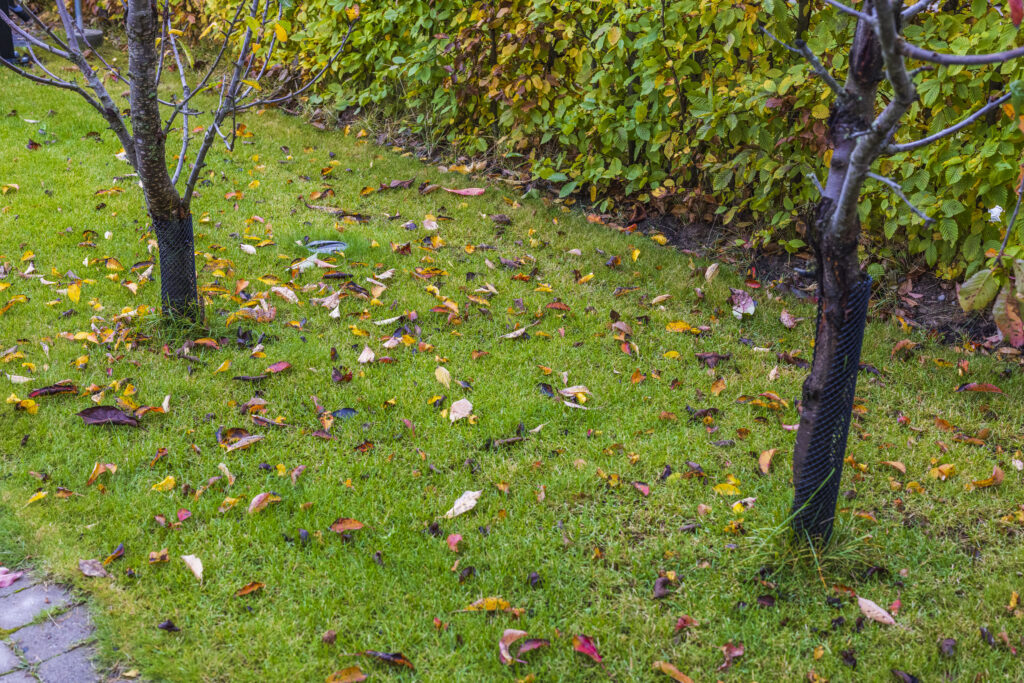

Between mature tree cover in older Aurora neighborhoods and how early lasting snow can arrive, leaf work cannot drift.
Mulching leaves back into the lawn with the mower is better for the turf than bagging in most situations. Shredded leaf material breaks down over winter, adds organic matter, and university trials have repeatedly found no harm plus measurable benefit, including reduced weed germination the following spring.
The limit is coverage. After mowing, look down. If you can see grass through the shredded material, you are fine. If the surface is blanketed, there is too much and it needs to come off.
On a heavily treed lot, mulch more often rather than once in November. A moderate layer handled weekly is easy. The same total volume left to accumulate is not.
What you cannot do is leave a mat of wet leaves under snow. Combined with turf left too long, that is the main driver of the snow mold damage people find in April.
Water Until Growth Stops
This surprises people, because irrigation feels like a summer concern.
A lawn entering a long winter with dry soil is meaningfully more vulnerable. Turf keeps losing moisture through winter, especially during dry windy stretches with no snow cover, and desiccation injury on a lawn that went in dry is common here.
Keep watering while the grass is actively growing and rain is not covering it. Then, before the first hard freeze, have the irrigation blown out properly. Shutting down too early leaves the lawn dry; leaving it too late risks water freezing in lines, the backflow device, or heads, which turns an oversight into a repair bill.
Salt Along Drives and Walks
Worth its own section in northern Illinois, because the damage appears in spring and gets blamed on everything except salt.
Salt injures turf two ways: direct contact burn, and accumulation in the soil that interferes with water uptake even when moisture is plentiful. The strip along a driveway or sidewalk that greens up late and stays thin every single spring is usually salt rather than disease or grubs.
You can reduce it. Most people apply several times more ice melt than needed, so start there. Consider calcium chloride or magnesium chloride products rather than straight rock salt on areas bordering turf. Shovel first and treat second, so you are melting less. And direct snow throw away from the same strip every time rather than building a salted pile in one place all winter.
Where damage has accumulated, heavy watering in spring helps move salts down through the profile, and those strips usually need overseeding.
Snow Mold, and What Actually Prevents It
Snow mold shows up at melt as matted circular patches, gray or with a pink cast, where grass is stuck together in a felted layer.
Prevention is almost entirely about fall decisions rather than a product. Mow to the right final height so blades do not mat. Clear leaves so there is no additional wet layer. Avoid heavy late nitrogen that produces lush growth going into cover. And on properties where you pile driveway snow, spread it around rather than making one deep long lasting pile, since the last snow to melt is where mold is worst.
Most snow mold damage is superficial and recovers with light raking in spring to separate the matted blades and let air in. Severe cases need overseeding.
Voles Under the Snow
Less common but genuinely puzzling when it happens.
Voles are active all winter under snow cover, where they are hidden from predators, and they eat grass at the crown. The evidence appears at melt as narrow winding surface trails an inch or two wide running across the lawn, often connecting to landscape beds or a woodpile.
They are drawn to cover, so tall grass going into winter, heavy leaf accumulation, and thick mulch against the lawn edge all raise the odds. The same fall practices that prevent snow mold reduce vole damage.
Damage is usually cosmetic and fills in through spring, though heavy trails need overseeding.
A Short October and November Checklist
- Late fall feeding while the grass is still green and growth has slowed.
- Mowing height stepped down gradually to finish near two to two and a half inches.
- Leaves mulched or removed, with nothing blanketing the turf before lasting snow.
- Watering continued until growth stops, then the irrigation blown out before hard freeze.
- Ice melt used sparingly and snow thrown away from the same strip of lawn.
- Mower serviced: fuel stabilized or run down, oil changed, deck cleaned, blade sharpened for spring.
What to Do Next
Walk the lawn this week and write down the two or three things that actually bother you about it, then work backward from the window rather than forward from today. Almost every fall mistake we see in Aurora comes from starting with the calendar instead of with the lawn.
If you would rather have someone look at it with you, Lawn Squad of Aurora offers a free quote. Call 833-816-7508 or find us at lawnsquad.com. Every Lawn Squad location is independently owned and operated, and our VitaminLawn fertilization and weed control program is built around the grass, soil, and conditions here rather than a national average.
A first visit is a walk of the property, a look at the thin areas, a check of mowing height and irrigation, and a straight conversation about what is realistic in the weeks left this season. At 30 days you should see color and density improve. At 90 days the lawn should be visibly thicker, with the root growth that carries it through winter.