How Do I Rebuild My North Raleigh Fescue Lawn That Thinned Out This Summer?
Short Answer: Start by diagnosing why it thinned, because brown patch, drought stress, grubs and deep shade all leave different signatures and call for different fixes. Then plan on core aeration and overseeding with turf type tall fescue, timed for the Piedmont window that runs roughly from the first week of September into the middle of October, with mid September usually best. Our red clay is the real obstacle, so opening it with plugs matters more than the brand of seed. After seeding, keep the top half inch of soil damp through the warm end of September, then water deeper and less often.
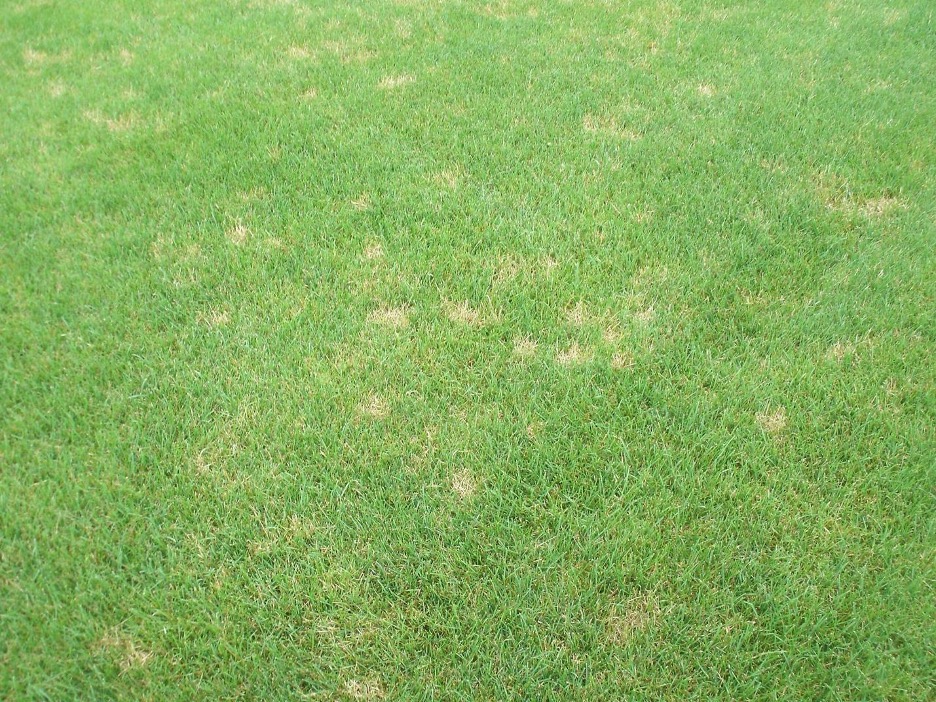
It happened fast. In late May the fescue in front of the house was thick enough that the mower left stripes. Then came the run of nights that never dropped below the mid seventies, the air so heavy at six in the morning that the whole yard was soaked without a drop of rain, and by the middle of July there were tan circles the size of a kiddie pool spreading through the front lawn. Now, at the end of August, the circles have joined up, the ground between the plants is orange, and the sprinkler runs across bare clay that sheds water like a countertop.
Nobody enjoys watching a lawn they paid attention to come apart in six weeks. The good news is that this is the normal arc for cool season grass in the Piedmont, not evidence that you did something wrong, and the repair window opens in a matter of days.
First, Figure Out What Actually Killed It
Different causes leave different fingerprints, and reseeding without reading them means repeating this next August. Brown patch, which is the usual culprit in North Raleigh and Wake Forest, shows up as roughly circular tan patches with a smoky gray edge that is most visible in early morning dew, and the individual blades have irregular tan lesions with a darker border. It thrives on humid nights and lush, over fertilized growth.
Drought and heat damage look different: it follows the sun and the soil, worst on south facing slopes, along sidewalks and driveways, and over the shallow fill and buried construction debris that new subdivisions leave behind. Grub damage feels different underfoot, spongy, and the turf lifts away in a sheet because the roots are chewed off. Shade thinning is gradual, concentrated under mature willow oaks and toward the north side of the house, and no amount of seed fixes it until the light problem is addressed. Walk the yard and match what you see before you buy a bag of anything.
Piedmont Red Clay Is the Real Obstacle
Our part of the territory sits on classic Piedmont red clay, and this is where the two halves of our service area part ways. Out east in Greenville and Tarboro the ground is coastal plain, sandier and more forgiving to a seedling root. Here in Raleigh, Rolesville and Youngsville, the soil is fine textured, tight, and often compacted before a homeowner ever moves in, because grading equipment ran over it and then a thin veneer of topsoil went down on top.
That clay does two things to a lawn. It sheds water when dry, so a summer thunderstorm runs into the street instead of soaking in, and it holds water when saturated, which suffocates roots in a wet spring. Roots that never get deep are roots that cannot find moisture in July. Any real rebuild has to address soil structure, not just add seed on top of it, which is why aeration and organic matter matter as much here as seed selection.
The Seeding Window in Wake and Franklin Counties
Fescue germinates on soil temperature. In the Piedmont, the practical window opens around the first week of September, hits its best stretch in the middle of that month, and closes near the middle of October. Earlier is not better here, and this is where transplants from farther north get burned: seed thrown down in mid August goes into hot soil, germinates into leftover summer heat, and gets hammered by disease before it has a root. Seed thrown down in November does not have time to establish before winter.
The newer neighborhoods around Rolesville, Wendell and Knightdale, with wide open sun and little canopy, cool a touch later than shaded older sections of North Raleigh, so those lawns often do best in the back half of September. Either way, the calendar in this business fills from early September forward, so the decision belongs to August even though the work belongs to September.
Aeration and Seed: The Part That Does the Work
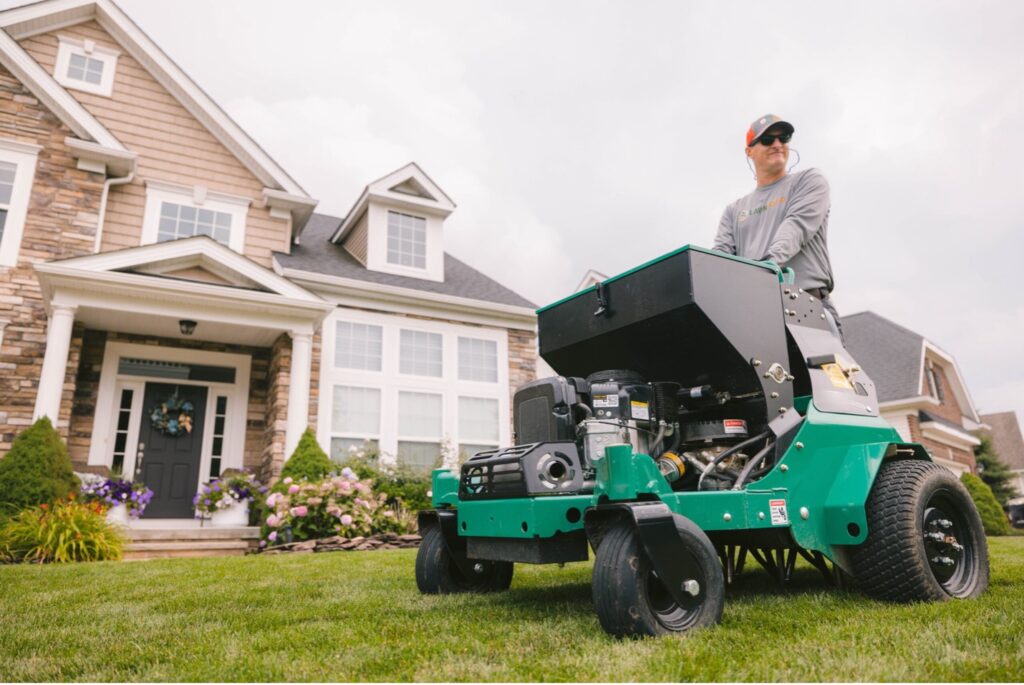
Core aeration is not optional on red clay. Pulling plugs breaks the compacted layer, creates thousands of moist seed pockets, and lets air and water reach the root zone. Spreading seed over hard clay without aerating wastes most of it, because seed that lands on a crusted surface never gets the soil contact it needs. On badly compacted ground we go over the lawn more than once, in different directions, and we leave the plugs to break down naturally.
A thin layer of quality compost worked into the surface after aeration is one of the few soil amendments that genuinely earns its cost on Piedmont clay. It falls into the open holes, feeds the biology that builds structure, and holds moisture right where the seed sits. This is a slow improvement rather than an overnight one, and doing it two or three autumns running is what turns a hard orange subsoil lot into ground that actually absorbs an afternoon storm.
Choose turf type tall fescue, and pay attention to the varieties on the tag rather than the picture on the bag. Brown patch tolerance is the single most valuable trait in this climate, and it varies enormously between varieties. Overseeding an existing thin lawn takes a lighter rate than establishing bare ground, and heavier is not better: seedlings crowded shoulder to shoulder compete with each other for water and thin themselves out. A starter fertilizer suited to your soil test goes down with the seed, and no pre emergent weed control can go down at all, which is a real tradeoff worth understanding before you start.
Watering the Seedbed Through September Heat
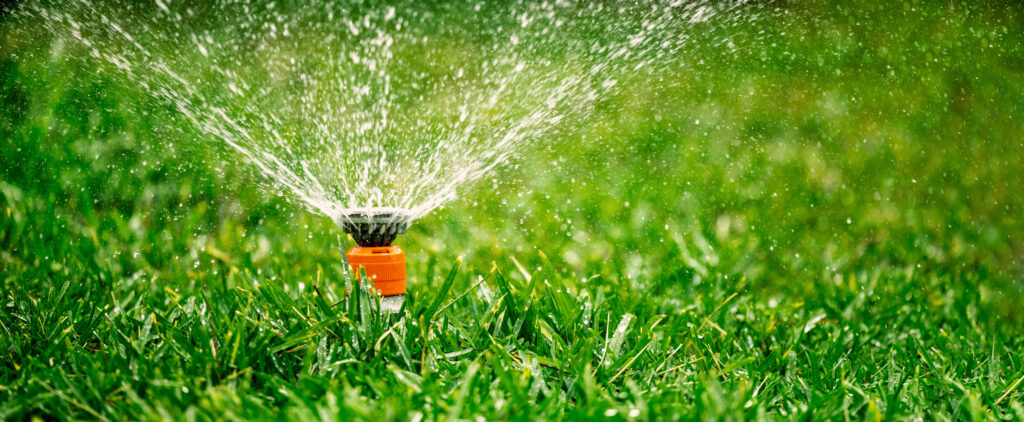
September in Raleigh can still deliver upper eighties, and a new seedling has no root system to fall back on. For the first two to three weeks, the goal is simply that the top half inch of soil never dries out. That usually means short cycles two or three times a day rather than one long soak, and on clay it means watching for runoff and splitting cycles so the water has time to soak in rather than sheet off toward the curb.
Once seedlings are up and you have mowed twice, shift to longer and less frequent watering to drive roots down before winter. Mow at the high end of the range with a sharp blade, cutting a young lawn a little taller shades the soil and reduces stress, and keep the trampoline, the dog runs and the pickup football games off the new grass for a few weeks. That last one is usually the hardest part.
What to Do Next
The move right now is a walkthrough while the damage is still readable, because by October the evidence has faded and the diagnosis gets harder. A first visit takes a half hour or so: we identify what caused the thinning, check compaction and drainage, look at the shade and slope, talk about whether the lawn needs overseeding or a full renovation, and give you a written plan and a free quote with no obligation. Occasionally we tell a homeowner their lawn will recover on its own with a fall feeding and does not need seed at all, and that is a fine outcome.
Here is what recovery looks like on the calendar. Seedlings typically show within one to three weeks depending on temperature. At 30 days the lawn reads as fuzzy and uneven, with fine new blades filling the aeration holes, which is exactly right and not a sign of failure. At 90 days, heading toward winter, the turf should look dense and deep green, and the bare clay should be gone. Full thickness arrives next spring. Our VitaminLawn program then keeps the new lawn fed on a Piedmont schedule and manages the disease pressure that started this problem in the first place, which is how the results hold through next summer.
Call Lawn Squad of North Raleigh and Greenville at 984-243-2925 or visit lawnsquad.com to reserve a spot on the fall schedule. We serve Raleigh, Wake Forest, Rolesville, Youngsville, Franklinton, Louisburg, Knightdale, Wendell, Zebulon, Bunn, Bailey, Wilson, Spring Hope, Nashville, Rocky Mount, Tarboro, Farmville, Winterville, Greenville, Williamston and Washington. Free quotes and a satisfaction guarantee come standard, and we are independently owned and operated.