
Why Do Fire Ant Mounds Surge After August Rain in North Atlanta, and How Do I Control Them?
Short Answer: The colonies were already there. Rain saturates the lower galleries and pushes the ants upward, so they rebuild visible mounds within a day or two of a storm. Treating one mound at a time fails because you only reach a fraction of the colonies and surviving queens simply relocate. The approach that works is two steps: broadcast a slow acting bait across the entire lawn so foragers carry it back and it reaches the queens, then follow up with individual mound treatment on the few mounds near patios, play areas, and walkways. Late summer into fall is prime baiting season here.
A line of storms rolls through on a Tuesday evening, the kind that turns the street into a shallow creek for twenty minutes and then leaves everything steaming. Wednesday morning you walk out with coffee and there are six new mounds in the back yard that were absolutely not there on Monday. Soft, loose, fresh turned soil the color of the clay under your beds, domed a few inches above the grass, and if you nudge one with your shoe the whole surface erupts. By the weekend there are eleven.
If you have small kids or a dog, that is more than an annoyance. Most parents we talk to in Alpharetta and Woodstock in August are not asking about lawn appearance at all. They are asking whether the back yard is usable.
The Mounds Are Not New, They Just Came Upstairs
An imported fire ant colony is mostly underground, and the visible mound is just the chimney on top of a structure that can run well below the surface. In dry stretches the ants work deep, where soil moisture and temperature are stable, and the surface mound flattens out until you barely notice it. Mow over it a few times and it disappears entirely from view.
Then several inches of rain saturate the ground. The lower galleries flood, the colony moves up into the warmer, drier soil near the surface, and the ants immediately push excavated soil into a fresh dome. Our red Piedmont clay makes this dramatic, because it holds water and drains slowly, so the ants get pushed up hard and the mound they build is dense and conspicuous against green turf. What looks like an invasion is really the same colonies you already had, suddenly announcing themselves.
Storms also scatter colonies. Runoff can float clusters of ants to new locations, and heavy rain often prompts a colony to relocate a short distance, which is why the mound you drenched last week reappears eight feet away looking untouched.
You Are Not Fighting Ants, You Are Fighting a Queen
The ants you see foraging are workers, and workers are expendable. The colony’s entire future sits with one or more egg laying queens deep in the nest, surrounded by brood and never coming to the surface. Kill every worker on the mound and the colony rebuilds from the inside within days.
This is the single most useful thing to understand about fire ant control, and it explains almost every failure people describe to us. Boiling water, gasoline (please do not), grits, shovels, and most over the counter contact dusts all attack the visible portion. Some of them kill impressively fast. Almost none of them reach the queen.
It also explains why a yard with a handful of visible mounds usually has considerably more colonies than mounds. Smaller and younger colonies do not build obvious domes. Treating mound by mound means you are working from an incomplete map of the problem, and the untreated colonies expand into the territory you just cleared.
Step One: Broadcast Bait Across the Whole Lawn
Bait solves the mapping problem for you. A fire ant bait is a coarse, corn based granule coated in soybean oil and carrying a small amount of active ingredient. Foragers find it, carry it home, and share it through the colony by feeding one another. The ants distribute the treatment to places you could never reach, including the queen.
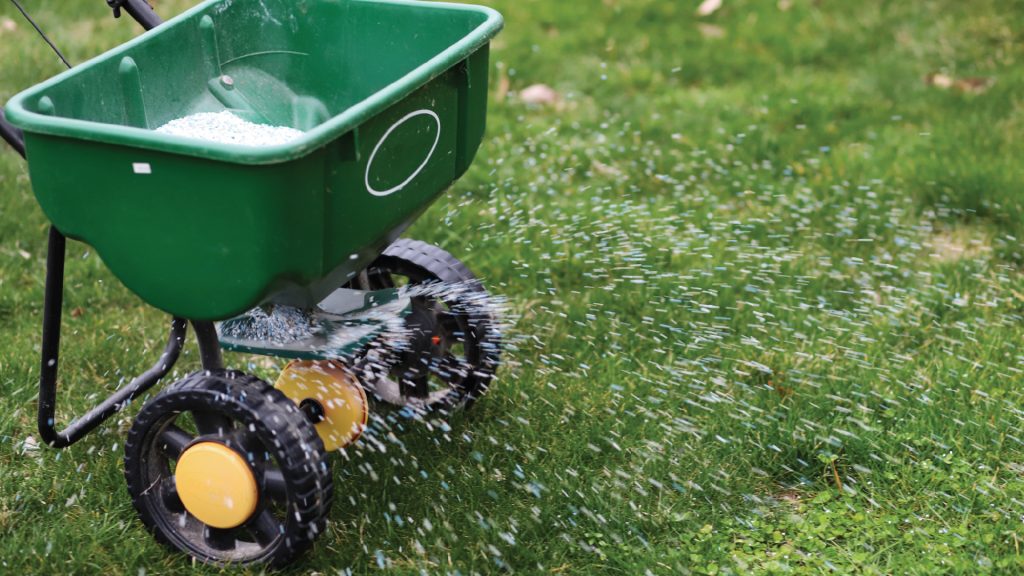
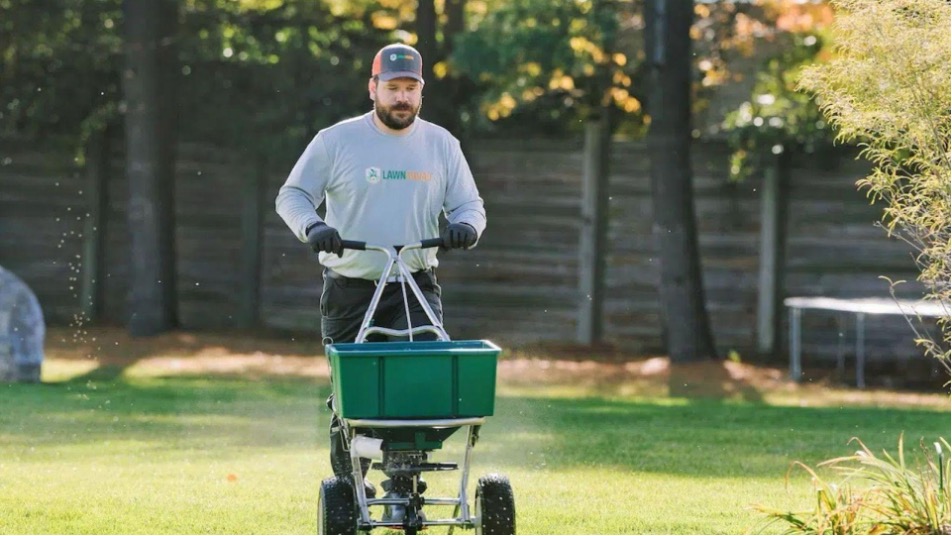
Broadcasting it over the entire lawn rather than on mounds is the point. Foragers range well beyond their own mound, so a light, even application across all the turf gets picked up by colonies you never spotted. A few details decide whether it works. The bait must be fresh, because that oil goes rancid and ants ignore stale product. The ground should be dry and rain should not be expected for a day or so, since wet bait is worthless. Ants need to be actively foraging, which in a hot Georgia August means treating in the evening rather than at midday. And do not water it in, which is the reflex people have with everything else in lawn care.
Bait is deliberately slow. Depending on the active ingredient, colony collapse can take several weeks, and some products work by sterilizing the queen rather than killing her, so the colony fades as workers age out. Homeowners who expect overnight results often conclude it failed and go back to drenching mounds. Patience is genuinely part of the treatment.
Step Two: Treat the Mounds That Actually Matter
Bait handles the population. Individual mound treatment handles the urgency. If a mound is beside the swing set, at the edge of the patio, along the path from the driveway to the front door, or anywhere someone is going to plant a bare foot, treat it directly so it is gone in days rather than weeks.
Mound treatments work when the product actually penetrates the full structure, which means enough volume of a liquid drench to soak the nest through, applied gently so you do not simply cave in the top and send the colony sideways. Do not disturb the mound first. A colony that senses an attack will move brood and queens laterally through tunnels faster than you can pour.
The order matters, and it is worth being clear about: bait first across the property, then spot treat the priority mounds. Doing it the other way, or doing only step two, is the pattern we see in nearly every yard where someone has been fighting fire ants for years without progress.
Why Late Summer and Fall Is the Best Baiting Season
Ant activity in North Atlanta lawns builds through the warm months and stays strong well into fall while soil is still warm and foraging is heavy. A fall bait application catches colonies as they are actively provisioning, and knocking populations down now means fewer, weaker colonies going into next spring instead of a yard full of established nests ready to expand the moment it warms.
Spring treatment still helps, but you are always playing catch up against colonies that overwintered intact. Two well timed applications a year, generally one in spring and one in the late summer to fall stretch, hold a property far better than reactive treatment after every storm.
An Honest Word About Expectations
Total elimination is not the goal, because it is not achievable on a suburban lot. Mated queens fly, and they fly from your neighbor’s yard, from the greenspace behind the subdivision, and from roadsides and pasture edges out past Woodstock. Any property in this part of Georgia is subject to continuous reintroduction.
What is achievable is a yard where mounds are rare, small, and dealt with quickly instead of a yard where they are a permanent feature. That is a maintenance outcome, not a one time cure, and anyone promising a permanent fix is overselling.
What to Do Next
If you would rather not manage the timing, the freshness, the spreader calibration, and the weather windows yourself, we handle fire ant and mole cricket treatment across Roswell, Alpharetta, and Woodstock. Call 678-250-6490 or request a free quote at lawnsquad.com.
A first visit starts with a walk of the property to count and map mounds, including the flattened ones you have been mowing over, and to note the high priority zones around patios, play sets, and walkways. We broadcast bait across the turf, treat the mounds that need immediate attention, and tell you what to expect and when. In the first week you will still see activity, and that is normal. By roughly thirty days the mound count should be visibly down and the remaining mounds smaller. By ninety days a property under a consistent program generally reads as a yard with occasional ants rather than a yard with a fire ant problem.
Fire ant work pairs naturally with our VitaminLawn program, since a dense, well fed stand of turf is harder for colonies to establish in than thin, stressed grass. Each Lawn Squad location is independently owned and operated, and free quotes and our satisfaction guarantee are standard. If you would rather do this yourself, use what is here. The two step method is not a secret, it is just easy to get slightly wrong.