
How Do I Overseed My Fairfield County Lawn So the Seed Actually Germinates?
Short Answer: Most overseeding fails because the seed never touched soil. Grass seed broadcast over thatch, matted turf or rocky ground sits in the air layer, dries out between waterings and never roots. Successful overseeding here depends on three things: core aeration or slicing to open the surface, a rate matched to the grass type rather than the number on the bag, and consistent light watering for two to three weeks. Expect a fraction of the seed you spread to become mature plants, which is normal and why rate and contact matter more than volume.
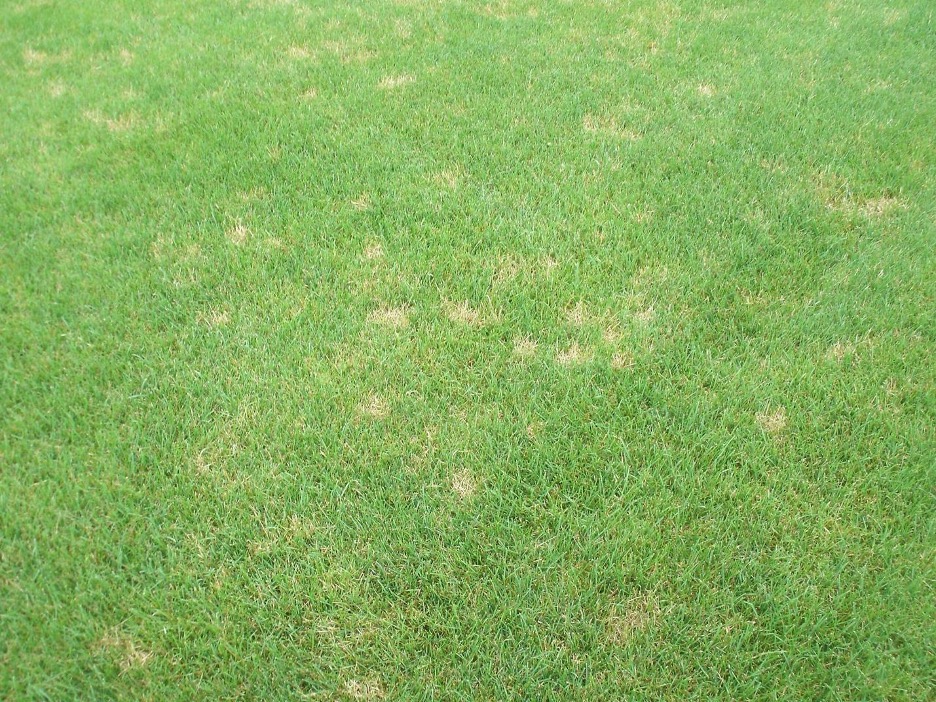
There is a particular late August scene that repeats itself on properties from Southport up through Wilton. A homeowner has spent a Sunday with a broadcast spreader and forty pounds of seed from the garden center, moving carefully back and forth across the thin areas under the maples and along the driveway apron. The lawn looks freshly dusted. It rains that Wednesday, which feels like luck. Three weeks later there is a faint green fuzz in maybe a quarter of the treated area, and by mid October those same bare spots are still bare.
The frustrating part is that nothing in that afternoon was careless. The effort was real, the seed was not cheap, and the timing was reasonable. The failure happened in a half inch of vertical space that nobody thinks about.
Seed to Soil Contact Is the Whole Job
A grass seed is a small package of stored energy with a very short runway. Once it takes on water it has to reach mineral soil and start drawing moisture and nutrients within days, or it exhausts its reserves and dies. There is no pause button.
Broadcast seed that lands on top of living turf, on a layer of thatch, or on the flat dry crust that forms over our compacted ground is suspended above the soil it needs. It gets damp when you water, then dries within hours because there is nothing beneath it holding moisture. That cycle of wetting and drying is what kills most of the seed people buy in Connecticut every fall, and it happens invisibly.
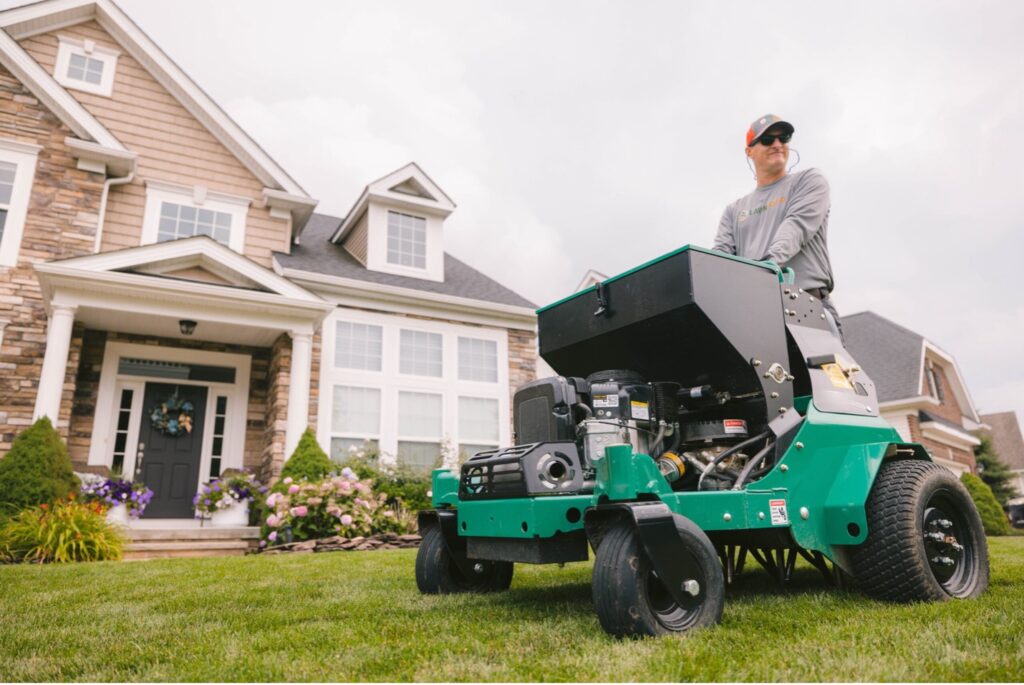
Core aeration solves it directly. Pulling plugs opens thousands of small openings across the lawn, each one a protected pocket of moist soil where a seed can settle below the surface. The soil cores left on top break down over a couple of weeks and help work seed downward. On badly matted lawns we may slice seed in instead, cutting shallow furrows and dropping seed directly into them, which is the most reliable method we have for a lawn that has gone hard and thin.
The Number on the Bag Is Not Your Number
Seeding rates are specific to species and to purpose, and the general figure printed on a retail bag is usually written for someone starting from bare ground somewhere else.
Roughly speaking, overseeding an existing lawn with turf type tall fescue or perennial ryegrass calls for something in the neighborhood of four to six pounds per thousand square feet. Establishing those same grasses on bare soil roughly doubles it. Kentucky bluegrass is a different animal entirely because the seed is tiny and the plant spreads on its own once established, so overseeding rates run far lower, closer to one or two pounds per thousand.
This is where heavy handed application backfires. Doubling the rate does not double your lawn. Seedlings crowded shoulder to shoulder compete with one another for the same water and light, and you end up with a dense flush of weak plants that thins out badly by the following July. On the properties we walk, over application is at least as common as under application, and it costs more.
What the Seed Tag Is Telling You
Turn the bag around and find the analysis tag. It lists each variety by name with its percentage of the mix, a germination percentage, and then three lines that matter enormously: inert matter, other crop seed, and weed seed.
Inert matter is filler, coating and chaff. A modest percentage is fine and coated seed has real advantages for moisture retention, but a bag with a very high inert number is selling you less grass than the weight suggests. Other crop seed is the line to watch closest, because that category can include grasses you spend the next three seasons trying to remove. Weed seed at anything above a trace is a reason to put the bag down.
Named varieties matter too. A tag that says a specific cultivar name has been through trials. A tag that just says annual ryegrass or a generic species with no variety name is a bargain bag, and annual ryegrass in particular will look wonderful in October and be entirely gone by June.
Our Ground: Glacial Till, Ledge, and Thin Topsoil
The soil across this market is a legacy of the ice sheet, and it is not gentle. Glacial till full of stone is the rule, with ledge sitting close to the surface on the ridges through Ridgefield, Redding and the hills north of Danbury. The old stone walls running through the woods behind half our properties were built out of what the fields produced.
What that means for seeding is uneven soil depth within a single lawn. One section has eight inches of decent loam and another has three inches over rock. The shallow areas dry first, stress first in summer, and need the most seed, and they are exactly the areas where a spreader pass alone accomplishes the least. Down along the Sound in Darien and Old Greenwich the profile shifts, with sandier and often more compacted fill on graded lots, plus salt influence on the most exposed properties.
Soil pH is worth testing before you invest in seed. New England soils trend acidic under our rainfall and forest history, and seedlings put into ground that is chemically out of range never perform to their potential no matter how good the seed was.
Watering That Contradicts Everything You Did in July
All summer the correct instruction has been deep and infrequent, encouraging roots to chase moisture downward. For the first two to three weeks after seeding, that advice is exactly wrong.
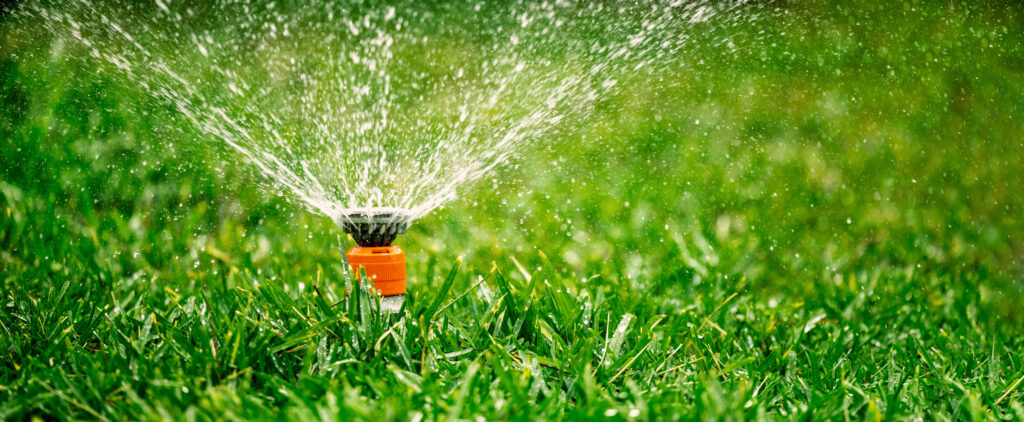
New seed has no roots. It lives entirely in the top half inch, so that half inch has to stay damp without becoming saturated. In practice this means several very short cycles a day, perhaps five to ten minutes each depending on your heads and your soil, rather than one long soak. Most irrigation systems in Fairfield and Trumbull are programmed for exactly the wrong pattern in September, and adjusting the controller is the single highest value thing a homeowner can do after we leave.
As seedlings emerge and reach mowing height, you stretch the intervals and lengthen the runs, transitioning back toward deep watering over roughly a month. Then keep mowing. Cutting new grass once it is tall enough encourages it to tiller and thicken rather than stretch.
What a Realistic Result Looks Like
Honest expectations prevent a lot of disappointment. Ryegrass in the mix will show in about a week. Fescue follows. Bluegrass takes two to three weeks and sometimes longer, and it fills in laterally over the following season rather than immediately.
At thirty days a well done overseeding looks patchy and slightly ragged, with fine bright green seedlings visible between the older darker blades. That is a success, not a failure. The lawn reads as uniform the following spring, once the new plants have matured through a winter and put on their first real growth flush. Anyone promising you a finished lawn in three weeks is describing sod.
What to Do Next
The practical first step is a soil test and an honest assessment of how much of the lawn actually needs seed versus how much needs food and water. Call us at 203-301-8247 or request a free quote at lawnsquad.com. We serve Greenwich, Old Greenwich, Riverside, Cos Cob, Darien, New Canaan, Norwalk, Westport, Southport, Fairfield, Weston, Wilton, Easton, Redding, Ridgefield, Danbury, Bethel, Brookfield, New Fairfield, Bridgewater, Newtown, Sandy Hook, Monroe, Trumbull, Shelton, Derby, Ansonia, Stamford, Milford, Orange, West Haven, New Haven, East Haven, North Haven, Hamden, Branford, Guilford and Madison.
A first visit is a walk of the property with you. We measure the areas that need work, check thatch and compaction, look at how much sun each zone really gets, and give you a written plan with a scheduled date. Aeration and overseeding is typically completed in one visit. At thirty days you should see germination across the treated areas and at ninety days a noticeably denser stand heading into winter, with the real payoff visible next May.
Seed alone is only half the investment. Our VitaminLawn program builds fertilization and weed control around the bluegrass, tall fescue and ryegrass blends that succeed on this coastline and in these hills, and around the specific soil chemistry your property reported, so the seedlings you paid for this fall become the mature turf you wanted. Free quotes and our satisfaction guarantee are standard, and this location is independently owned and operated right here in Connecticut.