How Do I Protect and Recover My Grand Strand Lawn Through Hurricane Season?
Short Answer: Before a storm, mow at your normal height rather than scalping, hold off on fertilizer, clear gutters and drainage swales, shut off the irrigation controller, and photograph the property. Afterward, salt and prolonged standing water are the two real threats. Salt makes it physically harder for roots to pull moisture, and water sitting for days starves those roots of oxygen. Recovery runs in order: restore drainage, flush salt-affected soil with fresh water, clear silt and debris gently, then wait. Centipede and St. Augustine along the Grand Strand usually declare themselves within two to three weeks. Feed only after new growth appears.
Picture a late August afternoon in Murrells Inlet. The air is thick enough to wear, the marsh smells like low tide, and the flags at the end of the dock are hanging straight down. Nothing is moving. That stillness is the part longtime residents recognize, because it usually means something is turning in the Atlantic and the next few days will be spent watching a map instead of the water. By the time the wind actually arrives, most of us have already moved the patio furniture twice and filled the bathtub.
The lawn is the last thing anyone thinks about beforehand and the first thing everyone looks at afterward. That is a frustrating order of operations, especially for owners who love a thick stand of centipede and have spent three seasons getting it there.
The Pre-Storm Steps That Genuinely Help
Most storm prep for turf comes down to removing what can be thrown and improving where water can go. Mow at your normal height a day or two ahead if the schedule allows. Scalping is a common instinct and a bad one, because a short canopy exposes soil to scouring and gives the plant less leaf area to restart with. Skip fertilizer entirely in the week before a system arrives. Nitrogen applied ahead of heavy rain washes into the Waccamaw and does nothing for your grass.
Walk the drainage instead. Clear the gutters, pull leaf mats off street inlets, and open up any swale between houses that has silted in since spring. Shut the irrigation controller off so it is not adding water to already saturated soil, and pick up hose reels, planters, and umbrella bases. Take a few phone photos of the lawn and beds while everything still looks normal. That baseline is worth a great deal later, both for insurance and for honest comparison once you are trying to remember whether that thin spot near the driveway was there before.
What Saltwater Actually Does to Coastal Turf
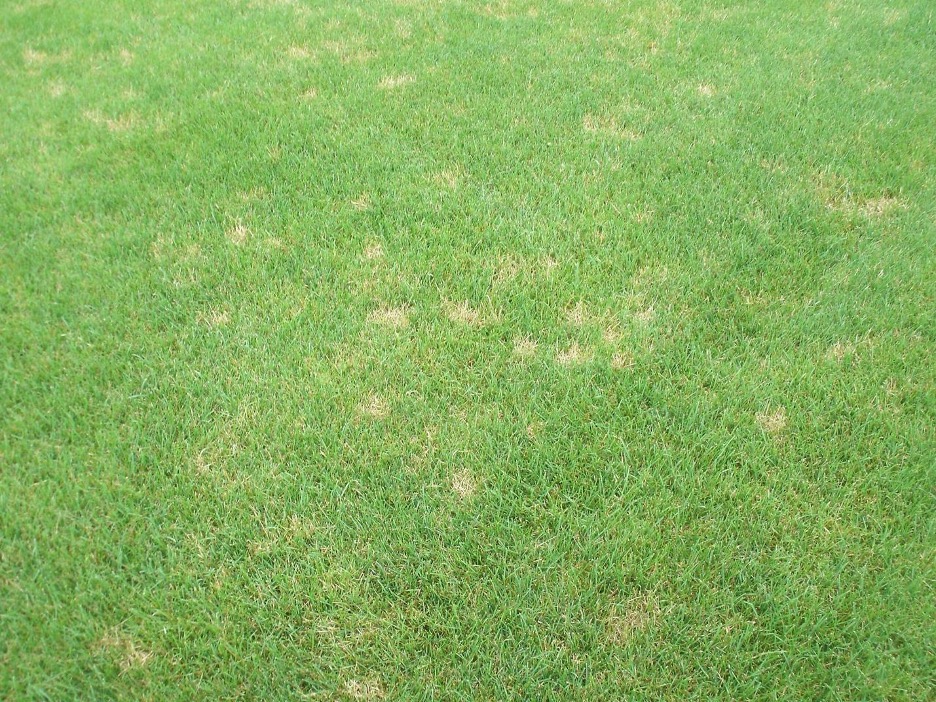
Salt damage is not chemical burn in the way people imagine. Sodium and chloride raise the salt concentration of the soil water, and once that concentration climbs high enough, the grass has to fight physics to pull moisture in through its roots. The result looks almost identical to drought: blade tips bleach to a pale straw color and feel dry and brittle, the damage spreads down from the tip, and the whole area takes on a scorched cast that shows up most clearly in flat afternoon light.
Grass type matters here. Bermuda and zoysia carry the most salt tolerance of the four we work with, St. Augustine sits in the middle, and centipede is the most sensitive by a comfortable margin. That is worth knowing if your lot in Pawleys Island or Murrells Inlet backs up to a creek or a tidal marsh. There is one genuine advantage to living here: the sandy coastal soil across most of Horry and Georgetown County drains and flushes far faster than the heavy clay inland, so salt moves down and out with rain instead of lingering in the root zone the way it would in a tighter soil.
Salt also reaches turf in three separate ways, and the response differs for each. Wind-driven spray coats the blades and is largely rinsed off by the next good rain. Surge or tidal flooding puts salt into the soil itself, which is the version that requires flushing. The third route is the one homeowners rarely consider: a shallow irrigation well that has taken on salt can quietly apply it every cycle long after the storm has passed. If a lawn keeps declining weeks later with no other explanation, testing the well water is a reasonable next step.
Standing Water Is the Quieter Problem
Roots breathe. When water sits over a lawn, the oxygen in the soil is used up within a day or so, and after that the roots and crowns are essentially holding their breath in warm, stagnant conditions. Warm-season grasses handle a day or two of submersion without much lasting harm. Push past three or four days in August water temperatures and the picture changes: crowns begin to rot, the soil turns sour and sulfur-smelling when you dig into it, and what comes back is patchy rather than uniform.
The second half of that problem is silt. Floodwater carries fine sediment, and when it recedes it leaves a smooth gray layer over the blades that seals off light and air. On the low-lying yards we see around Conway and along the Waccamaw floodplain, that crust does as much damage as the water itself. Getting it broken up and rinsed off in the first few days after the water is gone changes the recovery meaningfully.
The First Seventy-Two Hours
Safety governs everything at this stage. Assume any downed line is live, and stay out of standing floodwater. Once the yard is safe to enter, resist walking on saturated turf any more than necessary, because soft soil takes footprints and compacts easily, and those tracks can still be visible months later.
Work in this order. Get water moving first by clearing the debris dams that formed against fences and bed edges. If salt intrusion is likely, wait until the soil has drained enough to accept water, then irrigate heavily with fresh water and repeat it over several days. Rinse silt off the blades with a hose or a broom on a light touch. Do not mow saturated turf, and do not fertilize yet. Feeding a stressed, oxygen-starved lawn pushes top growth that the root system cannot support.
The Realistic Recovery Sequence
Give it time before drawing conclusions. For the first ten days to two weeks the lawn will look worse than it is. Pull a few plugs from different areas and look at the crown, the small white node where blade meets root. Firm and pale means alive. Mushy and brown means that spot is gone, and you can plan around it.
Where a soil test confirms elevated sodium, gypsum plus repeated deep watering is the reliable fix, since the calcium displaces sodium off the soil particles and the water carries it down out of the root zone. Core aeration a few weeks out helps re-oxygenate compacted soil and speeds that flush. Once you see genuine new runners on the St. Augustine or fresh green in the centipede, a light feeding is appropriate. Sod repairs in bare areas root best when laid early in the fall, while soil is still warm. Past mid-autumn, patching is usually money better held until late spring green-up.
If You Are Not Here When It Happens
A large share of Grand Strand property is second homes and rentals, and the owner is often in another state when the storm arrives. The prep list does not change, but the timing does. Have someone local able to shut off the controller and clear the drains, and put the pre-storm photo set in a shared folder rather than a phone camera roll. After the fact, ask for pictures taken at the same angles. A tenant reporting that the yard looks bad is not information you can act on. A photo of a silt-crusted back corner in Little River, next to the same corner from July, tells us exactly what the property needs and how quickly.
What to Do Next
If your lawn took water or salt this season, call us at 843-702-6210 or request a free quote at lawnsquad.com. On a first visit we walk the property with you, pull plugs in the worst areas to check crown survival, and note where drainage failed, because the same low corner tends to flood every time until something changes. You get a written sequence with dates rather than a vague promise, and we are direct about which areas are worth treating and which are better replaced.
At thirty days you should see recovery pushing in from the edges of damaged patches and color returning in the areas that were only stressed. At ninety days a lawn that was salt-affected but not drowned typically reads as normal from the street. Our VitaminLawn program builds fertilization and weed control around your actual grass type, your sandy coastal soil, and the pressure that comes with living this close to the water, which matters more after a storm than at any other point in the year. We serve Myrtle Beach, North Myrtle Beach, Conway, Murrells Inlet, Pawleys Island, Little River, Longs, Loris, Aynor, Georgetown, Andrews, and Hemingway. Every location is independently owned and operated, and a free quote is exactly that.