How Do I Reset My Dayton Lawn Week by Week From Now Into Labor Day?
Short Answer: Treat the next few weeks as a short, ordered project rather than a scramble. Week one, mid-August, is for assessing: tug-test the brown areas to separate dormant from dead, rule out grubs and disease, and get a soil test moving. Week two is prep: clear debris, drop the mowing height a notch for the areas you will seed, and hold off on any crabgrass preventer where seed is going. Week three, into the Labor Day stretch, is the main event, core aeration and overseeding together. Week four is establishment: light, frequent watering and a first mow. Done in this order, a tired Dayton lawn is set up to recover before winter.
By mid-August a Dayton lawn looks like it lost a fight, and in a sense it did. The heat and the dry stretches took the sunny spots down to straw, the clay shed the rain that did fall, and the thin areas got thinner. Standing over it, the urge is to do everything at once or to wait and see. Both are mistakes. There is a short, well-defined window between now and Labor Day to reset the lawn, and it rewards doing a few specific things in the right order.
Here is that plan laid out week by week, so you know what to do now, what to do next, and why the sequence matters.
Why the Reset Happens Now, Not in October
Dayton lawns are cool-season grasses, mainly Kentucky bluegrass and turf-type tall fescue, and they establish best from seed when soil is still warm enough for fast germination and the air has cooled enough to stop stressing seedlings. Around here those conditions line up from roughly the last week of August into September, a genuinely short window. Seed that goes down in that stretch gets warm soil and then two to three months of good growing weather to root before the ground freezes. Seed that waits until October is racing an Ohio winter it usually loses. That is why the whole reset is compressed into the next few weeks rather than spread lazily across fall.
It is also why a spring reset disappoints so reliably. Grass seeded in spring gets a few good weeks and then a summer it is not ready for, while grass seeded now roots through the entire cool season before it ever faces heat.
Week One (Mid-August): Assess and Diagnose
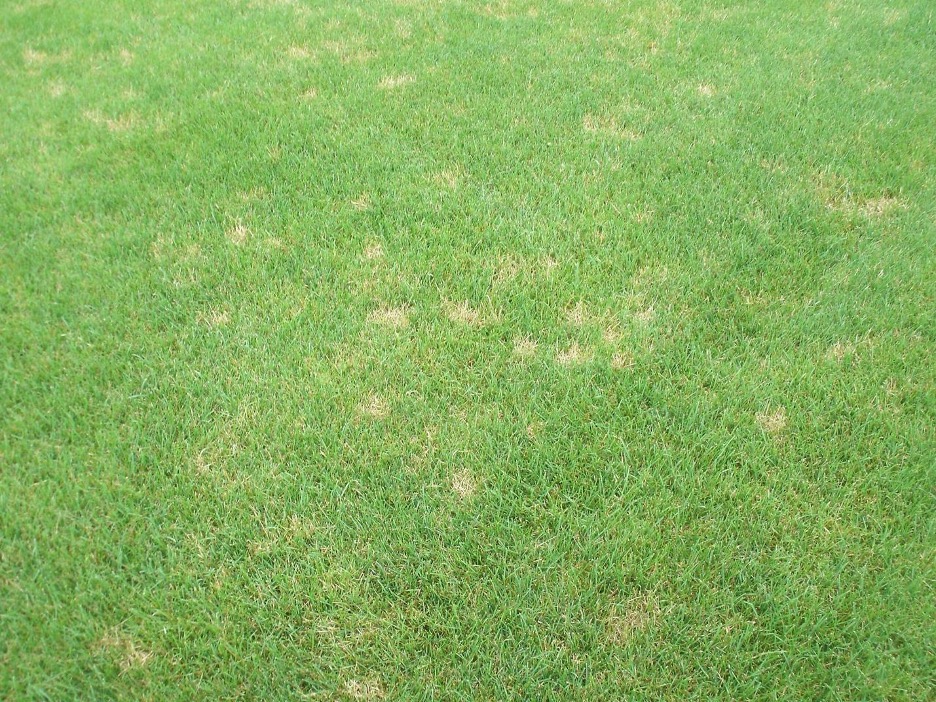
Start by finding out what you actually have, because the diagnosis determines everything after it. Walk the lawn and run the tug test on the brown areas: grab a handful and pull. If it resists and the crown at the base is firm and pale, that grass is dormant and will come back on its own with cooler, wetter weather. If it lifts away with brown, brittle crowns, it is dead and needs seed.
While you are down there, rule out the two things that masquerade as drought. Turf that rolls up like carpet with no roots means grubs, which have to be treated before you seed or they will eat the new roots too. Expanding circular patches, sometimes with a faint ring in the morning dew, mean disease rather than dryness. Finally, pull a soil test now, because results take a week or two and knowing your pH and nutrients this week lets you correct them before seeding rather than guessing at the store later.
Week Two (Late August): Prep the Ground
With the diagnosis in hand, prepare the areas you are going to seed. Clear leaves, sticks, and any dead debris off the thin spots so seed can reach soil. Drop your mowing height a notch on the areas to be overseeded, down toward two and a half inches, which gets more seed to the ground and more light to the young seedlings. Have your seed on hand, chosen by the tag rather than the front of the bag, matched to sun and shade, with no annual ryegrass in the blend.
This is also the week to avoid working against yourself. If you plan to seed, do not put down a late-summer crabgrass preventer on those areas, because the same barrier that stops crabgrass stops your grass seed. And if the soil test came back and called for lime or another correction, this is the time to apply it, ideally so it can be worked in during aeration rather than left sitting on the surface.
One more small thing this week saves real headaches: mark your irrigation heads and any shallow low-voltage lighting wire before aeration day, because aerator tines and a repair bill do not mix.
Week Three (Late August Into Labor Day): Aerate and Overseed
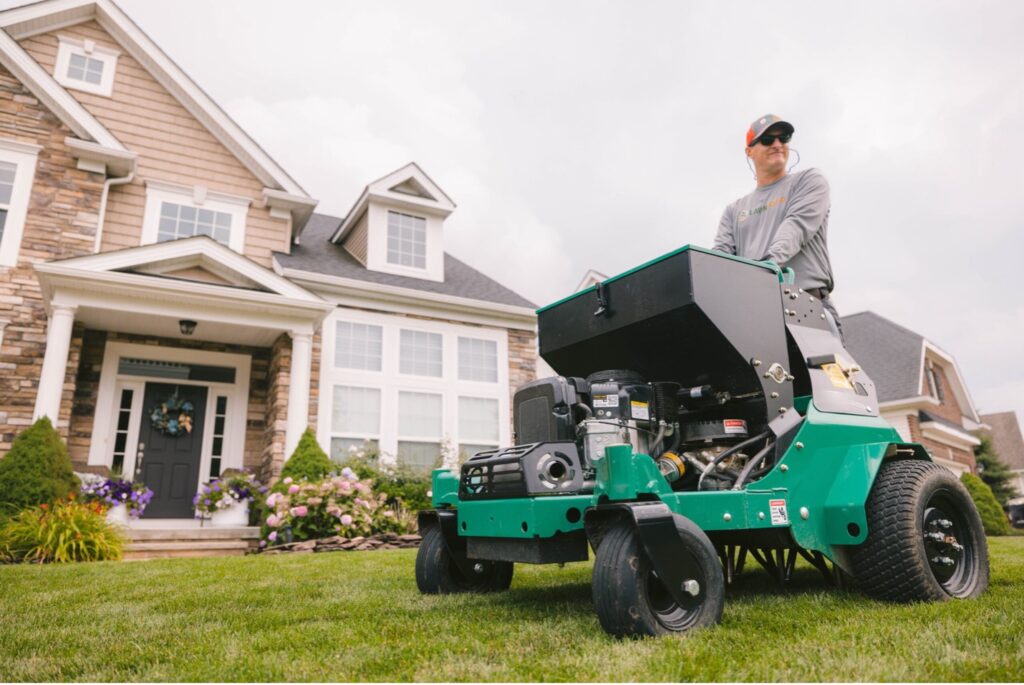
This is the main event, and on Dayton clay the two halves belong together. Core aeration pulls thousands of plugs out of the compacted clay, opening channels for water, air, and roots and relieving the compaction that made the lawn shed water all summer. Those open holes are also the best seedbed you can create, so overseeding immediately after aeration drops the seed into protected, moisture-holding pockets with direct soil contact.
Seeding onto unaerated clay is how people watch their seed wash into the street, which is why this step is aeration first, then seed, in the same visit. Concentrate the seed on the thin and dead areas the tug test flagged rather than spreading it evenly over turf that never needed it. Getting this done in the Labor Day stretch, rather than pushing it into late September, is what gives the new grass its full runway before winter.
Week Four (Into Early September): Establish
Once seed is down, the job shifts entirely to watering, and the rules invert from summer. Germinating seed wants the top half inch of soil constantly moist, which means short, light cycles two or three times a day for the first couple of weeks, not the deep, infrequent soaking established turf prefers. Letting the surface dry out at midday kills seedlings that had just started, and it is the single most common reason a good reset still fails.
Ryegrass in the blend shows in about a week, tall fescue and bluegrass follow. Once the new grass is up and has been mowed once, begin easing off the watering frequency and lengthening each session. A light starter feeding supports the young grass, but hold off on any heavy nitrogen push, which forces top growth at the expense of the roots the lawn actually needs to build now.
What Comes After Labor Day
The reset does not end at the long weekend, it hands off. Keep the new grass watered as it establishes, keep mowing at a normal height rather than scalping it low, and plan a proper fall feeding once the seedlings are established, since fall is when cool-season grass builds the roots that carry it through next summer. The work you do in August determines how much of that easy fall you get to enjoy.
And a light overseeding most falls, even in a year the lawn looks fine, keeps a cool-season Dayton lawn ahead of the thinning summer causes, since these grasses replace themselves only slowly.
What to Do Next
If it is mid-August as you are reading this, you are right on schedule to start week one. Walk the lawn, run the tug test, and get a soil test moving. If you would rather have it done on the right timeline without the guesswork, call us at 545-017-4729 or request a free quote at lawnsquad.com. We serve Dayton, SERVICE_AREA_PLACEHOLDER, and the surrounding communities.
A first visit is a walk of the property with you, working the same sequence: we diagnose dormant versus dead, check for grubs and disease, probe the clay for compaction, and lay out the timeline through Labor Day. Expect germination in one to two weeks after seeding, a patchy but clearly improving lawn at thirty days, and a dense stand heading into winter, with the real payoff visible next spring when the reset areas green up thick alongside everything else.
Longer term, the lawns that need the least resetting are the ones that went into summer with deep roots and balanced nutrition, which is the whole idea behind our VitaminLawn program. It builds fertilization and weed control around the grass types, the heavy western-Ohio clay, and our seasons rather than a national schedule. Every location is independently owned and operated, quotes are free, and the work is backed by a satisfaction guarantee. Start the reset this week, and you can have it aerated, seeded, and watered by the long weekend.