How Should I Repair My Cleveland Lawn’s Summer Damage Before Labor Day?
Short Answer: Work the problem in order, not all at once. First diagnose what actually happened, telling dormant grass from dead grass and ruling out grubs and disease, because the cause changes the cure. Second, relieve the compacted clay with core aeration. Third, overseed the thin and bare areas into those open holes with the right blend for your light. Fourth, water the seedbed lightly and often, which is the opposite of summer watering. Doing this in late August, before Labor Day, gives new grass the warm soil and cool nights it needs to establish before winter. The sequence matters as much as the steps.
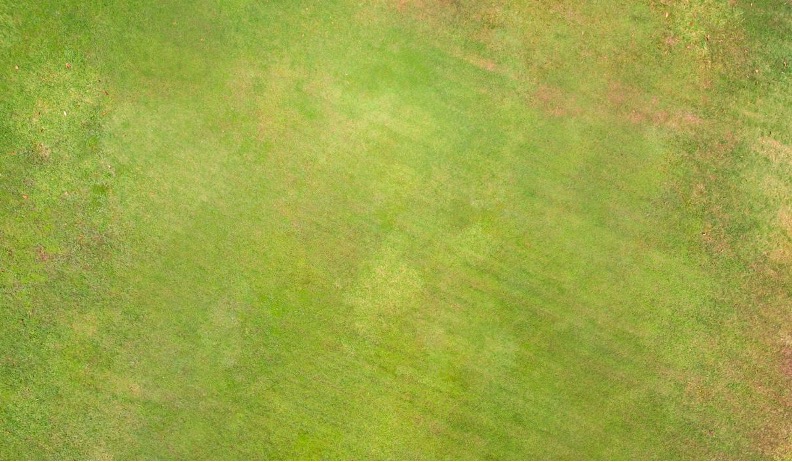
By late August a Cleveland lawn wears the whole summer on its face. The sunny strip along the driveway went straw-colored in the July heat. The back slope thinned where water ran off the clay instead of soaking in. A ragged patch by the fence looks suspiciously like something has been digging. Standing over it, the temptation is to attack everything at once, dump seed on the bare spots, throw down fertilizer, water heavily, and hope. That scattershot approach is exactly why so many rescue attempts fail.
Recovery is a sequence, and the order is not arbitrary. Each step sets up the one after it, and skipping ahead or doing them out of order wastes the effort. Here is the sequence we use, and why Labor Day is the deadline worth working toward.
Step One: Diagnose Before You Do Anything
The single most expensive mistake in lawn recovery is treating the wrong problem, so the first step is not a purchase, it is a diagnosis. Start with the tug test. Grab a handful of brown turf and pull. If it resists and the base of the plants is firm and pale at the crown, that grass is dormant and will return with cool nights and moisture, no seed required. If it lifts free like old carpet with brown, brittle crowns, those plants are dead and that area needs seed.
Then rule out the two culprits that mimic drought. If the turf rolls up in a sheet with no roots holding it, that is grub feeding, and seeding into an active grub population just feeds the next generation, so the grubs get treated first. If you see expanding circular patches, often with a discolored margin visible in morning dew, that is disease rather than dry weather. Diagnosing first tells you how much of the lawn genuinely needs rebuilding and what has to be handled before any seed goes down.
Step Two: Open the Soil With Aeration
Once you know what you are dealing with, the next step on a Cleveland lawn is almost always core aeration. Our defining soil condition is heavy, compacted clay, and it is the reason water ran off and the lawn browned in the first place. Aeration pulls thousands of small plugs out of that clay, opening channels for water, air, and roots, and relieving the compaction that stressed the lawn all summer.
Aeration is not a separate project from seeding. It is the step that makes seeding work, because the open holes it leaves are the best seedbed you can create. That is why aeration comes before seed in the sequence and, ideally, in the very same visit. Seeding a compacted clay lawn without aerating it first is how you end up watching your seed wash into the street.
On the worst compacted lots, working a thin layer of quality compost into the surface after aeration adds organic matter that helps the clay hold water and nutrients where roots can reach them, and it pays off a little more each season you do it.
Step Three: Overseed Into the Openings
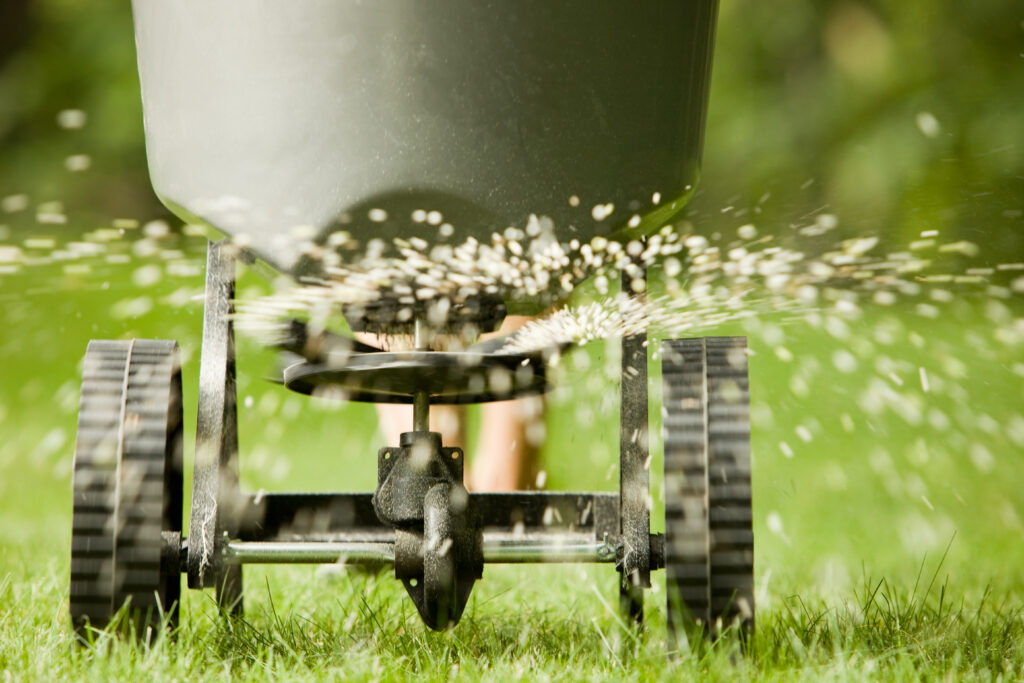
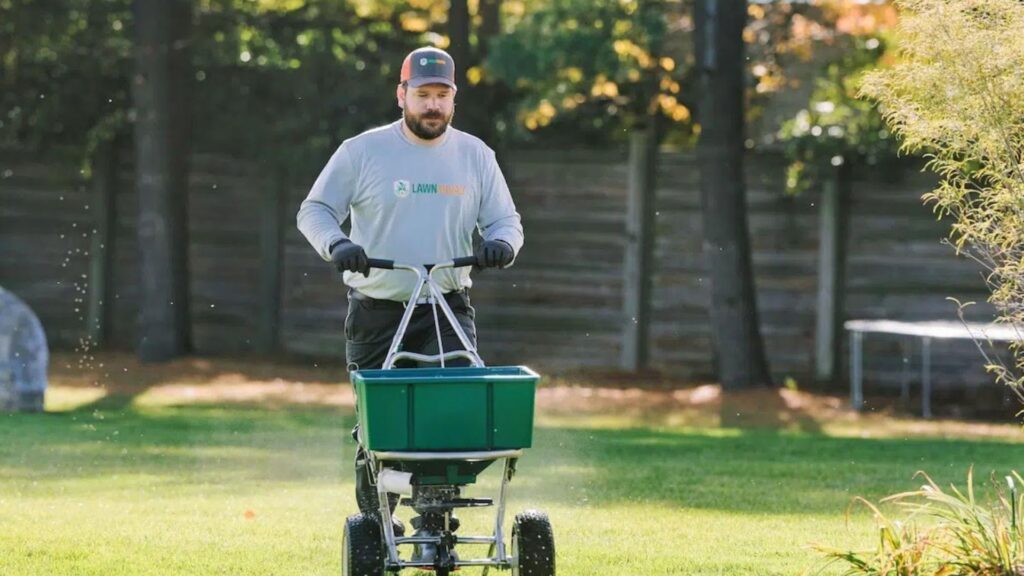
With the soil open, overseed the thin and bare areas. The seed drops into the aeration holes, makes direct contact with soil, and germinates in a protected pocket that holds moisture, dramatically better odds than seed broadcast onto an untouched surface. Match the blend to your light. A sunny lawn wants a mix built mostly on turf-type tall fescue with Kentucky bluegrass and a little perennial ryegrass. A shaded area wants fine fescues, which tolerate low light far better. Reseeding shade with a sun blend is a common and self-defeating mistake.
Buy by the tag, not the front of the bag: named varieties, a weed-seed figure near zero, and no annual ryegrass, which looks lovely this fall and is gone by next July. If grubs showed up in step one, they are handled before this step, not skipped.
Step Four: Water the Seedbed, Not the Lawn
The final step reverses everything you did all summer. Established turf wants deep, infrequent soaking. Germinating seed wants the top half inch of soil constantly moist, which means short, light cycles two or three times a day for the first couple of weeks. Let that surface dry out at midday and the seedlings that had just started die before you ever see them, which is the most common reason a good recovery plan still underperforms. Once the new grass is up and mowed once, you begin backing off frequency and lengthening each session until you are back to deep watering by mid-autumn.
Feeding the Recovery Without Overdoing It
There is a quieter step worth naming: feeding, done with restraint. New seedlings benefit from a starter fertilizer worked in with the seed, because young roots need phosphorus and it moves very little through soil. But this is not the moment for a heavy nitrogen push. Forcing lush top growth on a lawn that is trying to rebuild roots is counterproductive, and on our clay much of any excess simply runs off. A modest starter at seeding, followed by a proper feeding once the new grass is established, does far more than one big application ever will.
Why Labor Day Is the Deadline
All of this is tied to a clock. Cool-season grass establishes best when soil is still warm enough for fast germination and the air has cooled enough to stop stressing seedlings, and around Cleveland that window opens in the last week of August. Seed that goes down before Labor Day gets warm soil for quick germination and then two to three solid months of favorable growing weather to build roots before the ground freezes. Seed that waits until late September is racing a Cleveland winter with only a few good weeks left, and lawns established too late come back thin and shallow-rooted, the first to fail the following summer.
It is also why chasing the same repair in spring disappoints so reliably. Spring-seeded grass gets a few good weeks and then a summer it is not ready for, while a lawn repaired now heads into its first real heat a full year stronger.
That is why the whole sequence is worth compressing into late August rather than letting it drift into fall. Every step still works in mid-September, but the runway shortens with each passing week, and near the lake winter does not wait politely.
What to Do Next
Walk the property this week and run the tug test in several spots so you know your ratio of dormant to dead, and look for the signs of grubs or disease before you buy anything. Then, if you want it done right and done before the window closes, call us at 893-848-7850 or request a free quote at lawnsquad.com. We serve Cleveland, SERVICE_AREA_PLACEHOLDER, and the surrounding communities.
A first visit is a walk of the property with you, working the same sequence: we diagnose dormant versus dead, check for grubs and disease, probe the clay for compaction, and lay out a plan in the right order rather than a pile of services. Expect germination in one to two weeks after seeding, a patchy but clearly improving lawn at thirty days, and a dense stand heading into winter, with the real payoff visible next spring when the repaired areas green up thick alongside everything else.
Longer term, the lawns that need the least summer repair are the ones that went into summer with deep roots and balanced nutrition, which is the whole point of our VitaminLawn program. It builds fertilization and weed control around the grass types, the heavy northern-Ohio clay, and our seasons rather than a national schedule. Every location is independently owned and operated, quotes are free, and the work is backed by a satisfaction guarantee. Start the sequence now, and you can have it seeded and watered before the long weekend.