When Should I Apply a Pre-Emergent to Stop Winter Weeds on My Central Georgia Lawn?
Short Answer: The winter weeds that take over Central Georgia lawns in late winter, annual bluegrass, henbit, chickweed, and the dreaded lawn burweed, all germinate in the fall as the soil cools. A pre-emergent lays down a barrier that stops those seeds before they sprout, which is the only practical time to prevent them. The catch is timing: it has to go down before germination, which is triggered by soil temperature, not the calendar. Around Macon that window is usually mid-September, so late August is when you schedule and apply so the barrier is set in time. One warning: if you overseed your bermuda with ryegrass for winter color, a standard pre-emergent will stop that too.
Right now your Central Georgia lawn looks about as good as it is going to look, and that is exactly why winter weeds are the last thing on your mind. The bermuda is thick and green in the August heat, and the idea of weeds feels like a spring problem. But the weeds that will ruin the look of your lawn in February and March are getting ready to sprout in the next few weeks, and the only affordable way to stop them is to act before they do.
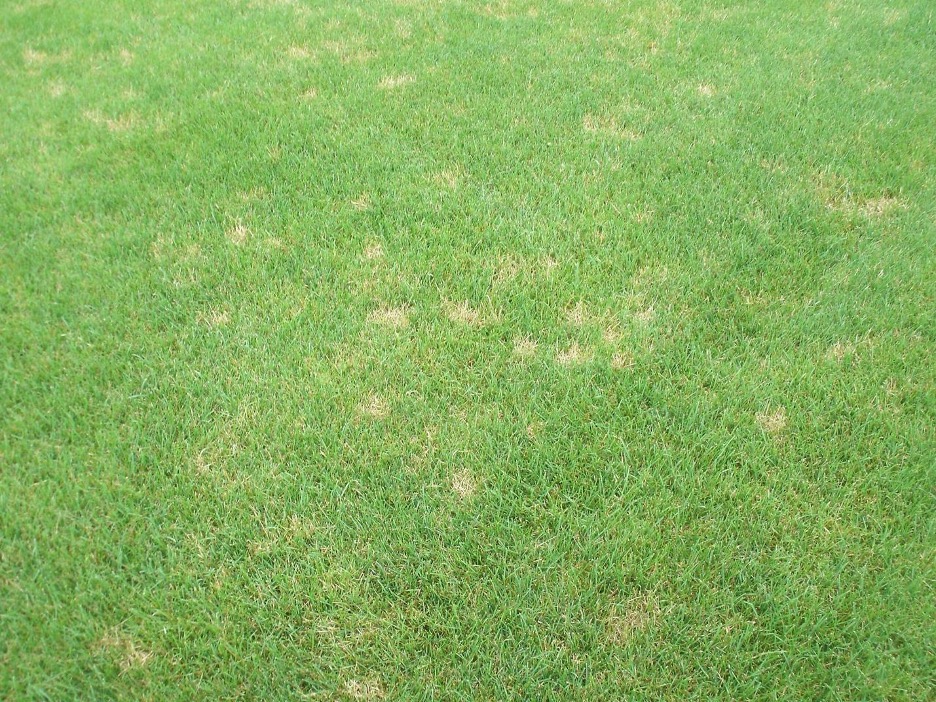
Almost nobody calls us about winter weeds in August. The calls come in late winter, when a neighbor’s dormant lawn is a clean, even tan and the caller’s is speckled with clumps of bright green weeds and, worse, a crop of painful stickers that make the yard unusable by spring. That gap between the fix and the damage is what makes fall pre-emergent the most overlooked high-value service of the year here.
What “Winter Weeds” Actually Means in Central Georgia
Winter weeds run on the opposite schedule from the summer weeds you already know. They germinate in the fall as the soil cools, survive the winter as small plants, and then explode in late winter and early spring, right as your warm-season lawn is still dormant and cannot compete. The usual offenders here are annual bluegrass, often called Poa annua, a light green clumpy grass that seeds prolifically, along with henbit and chickweed, the low sprawling weeds with small purple or white flowers.
The one that earns special mention in Central Georgia is lawn burweed, sometimes called spurweed. It germinates quietly in fall, grows low and unnoticed through winter, and then forms sharp spiny burs in spring that turn a barefoot walk across the yard into a hazard. By the time you feel the stickers, the plant has already set seed for next year and there is nothing to do but wait it out. Prevention in the fall is the entire game with burweed.
Why These Weeds Look So Bad on a Southern Lawn
Winter weeds are ugly on any lawn, but they are especially conspicuous here because of how warm-season grass spends the winter. Your bermuda or zoysia goes dormant and turns tan from the first hard frost until spring green-up. Against that even tan backdrop, a scatter of bright green Poa annua clumps stands out like spilled paint. So the same weed that half-hides in a green northern lawn is glaringly visible on a dormant Central Georgia one, which is a big part of why winter weed control matters so much in our climate.
Why the Timing Is Soil Temperature, Not a Date
The single trickiest part of a fall pre-emergent is that it is triggered by soil temperature rather than the calendar. Winter weeds begin germinating as soil temperatures fall through roughly 70 degrees. In our warm climate the soil holds its heat well into fall, so that threshold usually is not crossed around Macon until the middle of September, and it shifts a little each year with the weather.
The pre-emergent needs to be down and watered in before that window opens. Put it out too late and the first flush of weeds has already germinated and slipped under the barrier. That is why late August is the time to schedule and apply, so the product is in place and activated before the soil cools to the germination point. On lawns with a heavy winter-weed history, a second application later in fall is sometimes planned to extend the barrier through the tail of the germination window.
Why Act When the Lawn Looks Perfect
This is the part that feels backward. A pre-emergent is a preventive treatment, not a weed killer. It works by creating a barrier in the top layer of soil that stops weed seeds as they try to germinate. It does nothing to weeds that have already sprouted, and nothing to seeds that germinate before it is applied. That is the whole reason the timing is so unforgiving: it can only prevent what has not come up yet.
So the fact that your lawn looks clean and weed-free in late August tells you nothing about what is coming. The winter weeds simply have not germinated yet. Waiting until you can see them means waiting until spring, when prevention is off the table and you are left spot-treating established, often flowering weeds that are already dropping next year’s seed. The lawn looking perfect right now is precisely the cue that it is the right time to protect it.
The Warm-Season Twist: Winter Overseeding
Here is a wrinkle specific to warm-season lawns that trips people up. Some homeowners overseed their dormant bermuda with ryegrass in the fall to keep a green lawn through the winter. If that is you, understand that a standard pre-emergent does not know the difference between a weed seed and a ryegrass seed. It will stop your winter ryegrass from germinating right along with the Poa annua. You cannot broadcast a normal fall pre-emergent and overseed the same area at the same time and expect both to work.
That means it is a choice, and it is worth making it deliberately rather than by accident. Most Central Georgia lawns are not overseeded and are far better served by a clean pre-emergent that keeps the dormant turf weed-free through winter. If winter color genuinely matters to you, that is a different plan that has to be built around the conflict, and it is exactly the kind of thing worth sorting out before the products go down rather than after.
Getting It Down and Working
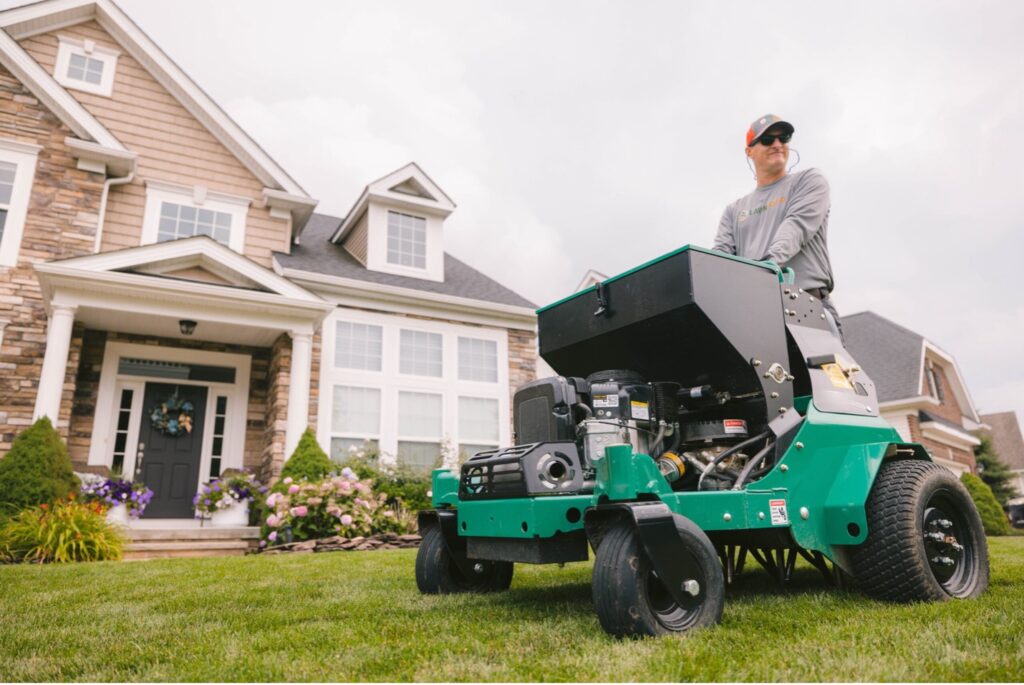
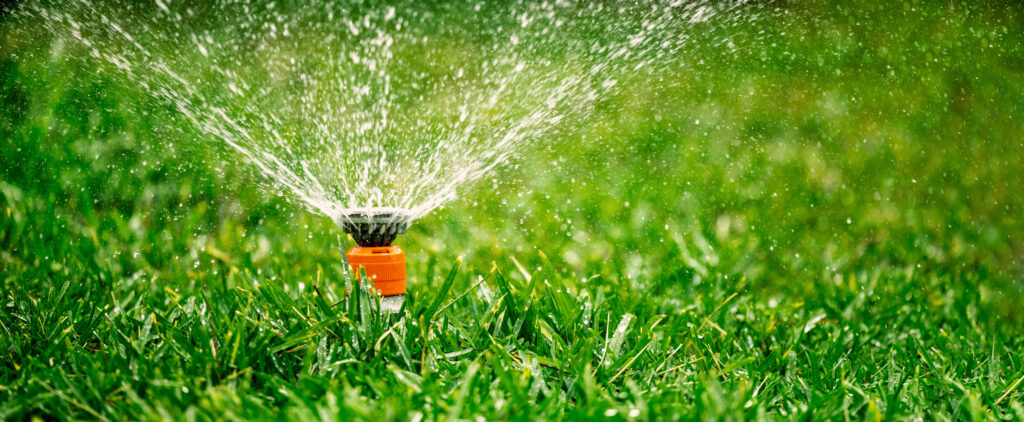
A pre-emergent only does its job if it is applied and handled correctly. It has to be watered in after application, by irrigation or a timely rain, which moves it into the top layer of soil where the seeds germinate. Applied and left dry on the surface, it never activates. Once the barrier is set, it should not be disturbed. Heavy raking or core aeration after application breaks the barrier and opens gaps for weeds to slip through, which is why any aeration belongs before the pre-emergent, not after. These are the details that separate a treatment that holds all winter from one that lets weeds through in patches.
It also matters that the product and the rate suit your grass. Centipede in particular is sensitive and can be injured by rates that bermuda shrugs off, so a fall pre-emergent is worth matching to the lawn you actually have rather than reaching for a one-size bag off the shelf.
What to Do Next
Winter weed prevention is a late-summer job, and the window is tied to the soil rather than the calendar, so it is easy to miss by a few weeks and lose the whole season. If you would rather not watch the thermometer, we will time it for you. Call us at PHONE_PLACEHOLDER or request a free quote at lawnsquad.com. We serve Macon, SERVICE_AREA_PLACEHOLDER, and the surrounding Central Georgia communities.
On a first visit we identify your grass, look at your winter-weed history and whether burweed has been a problem, ask whether you overseed for winter color, and build the pre-emergent timing around your specific lawn and this year’s weather. Do not expect a dramatic before-and-after in the fall, because the whole point is that you never see the weeds you prevented. The payoff shows up in late winter and early spring, when your dormant lawn stays a clean, even tan while the untreated lawns down the street are speckled with green clumps and, before long, stickers.
Longer term, this is exactly what our VitaminLawn program is built around. Fertilization, weed control, and pre-emergent timing matched to Central Georgia conditions means the barrier goes down in the right window every year rather than whenever someone remembers. We are independently owned and operated, every quote is free, and our work is backed by a satisfaction guarantee.