Q: When Should You Start Lawn Treatments in Southeastern Massachusetts?
A: Any Month. Including This One.
People ask us this all the time.
“Is it too late in the year to get started?” “Did I miss the spring window?” “Should I just wait until next year at this point?”
No. No. And absolutely not.
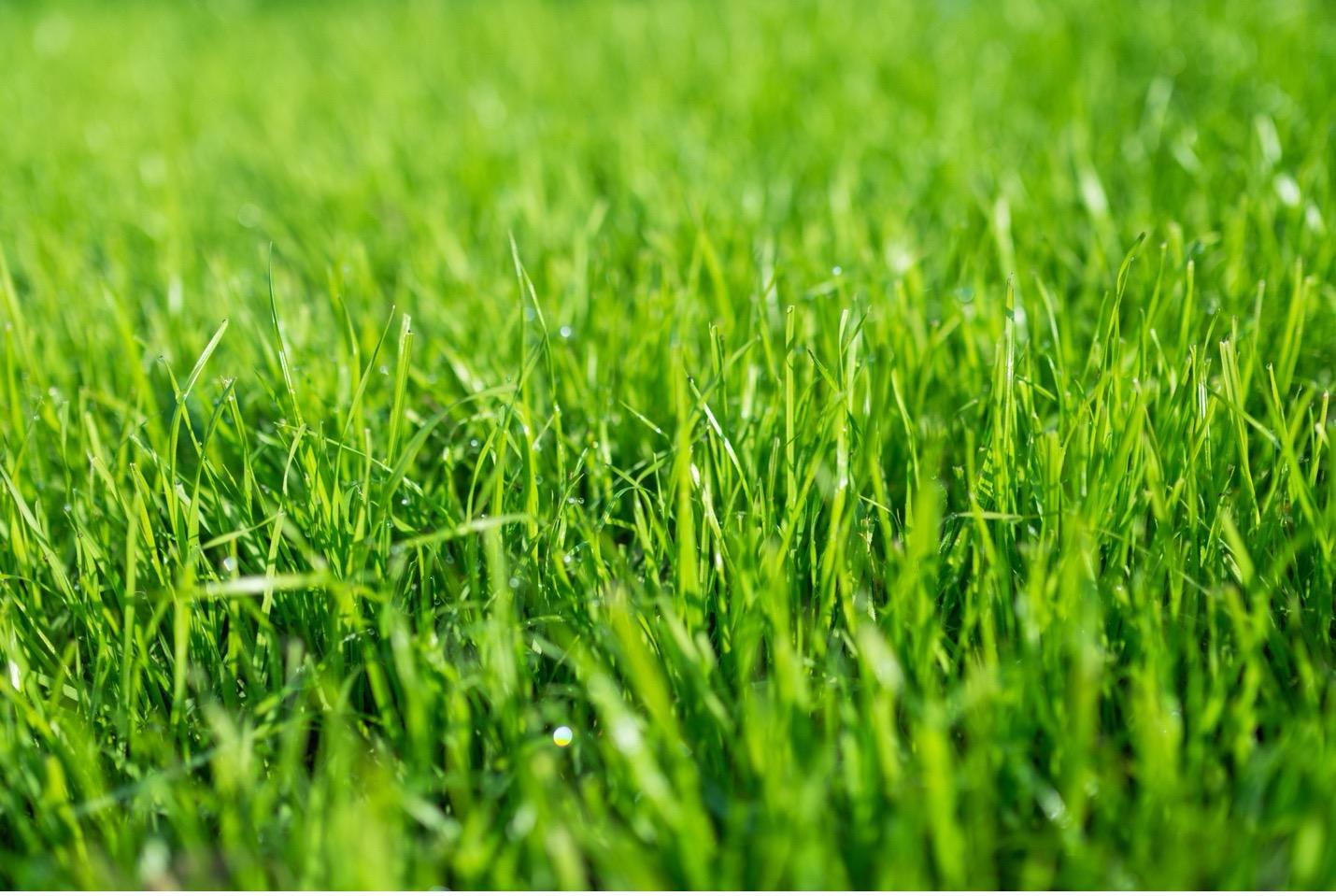
There is no magic month where lawn care suddenly becomes effective and before that month, nothing matters. That’s not how grass works. Your lawn is doing something every single month of the year, even in January when there’s six inches of snow on it. The question isn’t whether there’s something useful to do. There always is. The question is what your lawn specifically needs right now, in whatever month you happen to be reading this.
We’ve been treating lawns across the area long enough to know that the customers who get the best results aren’t the ones who started at the “perfect” time. They’re the ones who just started.
Here’s what lawn treatment looks like in Southeastern Massachusetts, month by month…
March: Your Lawn Is Still Half Asleep — But You Shouldn’t Be
March in Massachusetts is a transition month. The ground is cold, the grass is brown and dormant, and it’s tempting to assume nothing can happen yet. That’s mostly true for the lawn. It’s not true for you.

This is the time to get on a service schedule before the spring rush hits. Every year, homeowners wait until the grass starts greening up and then call us — all at once — wanting that first pre-emergent application. Our schedule fills fast in late March and early April. Customers who sign up in the winter or early spring get prioritized. That matters, because the pre-emergent window doesn’t wait for anyone.
March is good for: Signing up and getting scheduled, lawn assessment, early pre-emergent applications in warmer years.
April: The Window Everyone Talks About — And Why It Actually Matters
Here’s the thing about crabgrass: by the time you can see it, you’ve already lost. The seeds germinate underground when soil temps hit around 50°F, which in our area happens sometime in April – sometimes earlier, sometimes later depending on the year. Pre-emergent must go down before that happens. After germination? It doesn’t do much.
This is why April is the month we hear the most urgency from homeowners who’ve dealt with crabgrass before. Once you’ve had a summer of it taking over your lawn, you don’t forget. You also don’t skip the pre-emergent the following spring.

April is also when we start fertilizing in earnest. Not aggressively — early spring fertilizer is slow-release, designed to give roots a steady nudge as they wake up rather than forcing a ton of top growth before the root system is ready to support it. Dandelions and other broadleaf weeds that made it through winter start getting treated this month too.
April and May too, is a good time for adding spring soil conditioners. A spring limestone application can start as early as mid-March, and we also offer a liquid core aeration treatment starting mid-April. Both highly beneficial services are available in our Pro Package and give your lawn a quick spring “green up”.
April is good for: Pre-emergent crabgrass control (the big one), early fertilization, spring soil conditioners, broadleaf weed treatment. All of which are standard as part of our VitaminLawn program.
May: What Survived Winter Is Now Very Visible
Walk your lawn in May and you’ll see exactly where things stand. The bare spots from winter snow mold are obvious. The areas where grubs fed last fall show up as thin or dead patches. The weeds that weren’t controlled in April are flowering and spreading.
May is a busy month for weed control. This is for both the stuff that pre-emergent missed and the broadleaf weeds that are now actively growing and easy to treat. Post-emergent herbicides work best on weeds that are young and actively pushing new growth, which is exactly what May gives us.
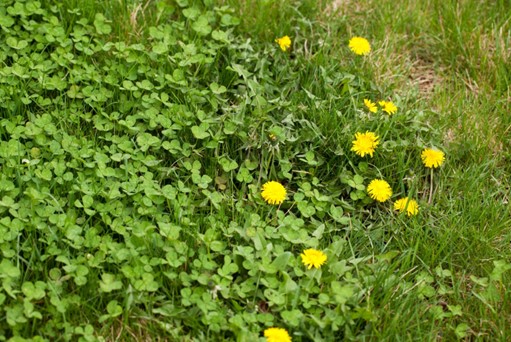
If your lawn has significant bare patches, this is also when we start talking about whether summer seeding makes sense or whether waiting for fall is smarter. Honestly, for most situations in Southeastern Massachusetts, fall is the better seeding window — but spot repairs in May can make sense in certain cases.
May is good for: Post-emergent weed control, fertilization, bare-patch assessment, and disease monitoring starts.
June: Grubs And Lawn Disease Are Coming. Get Ahead of Them Now
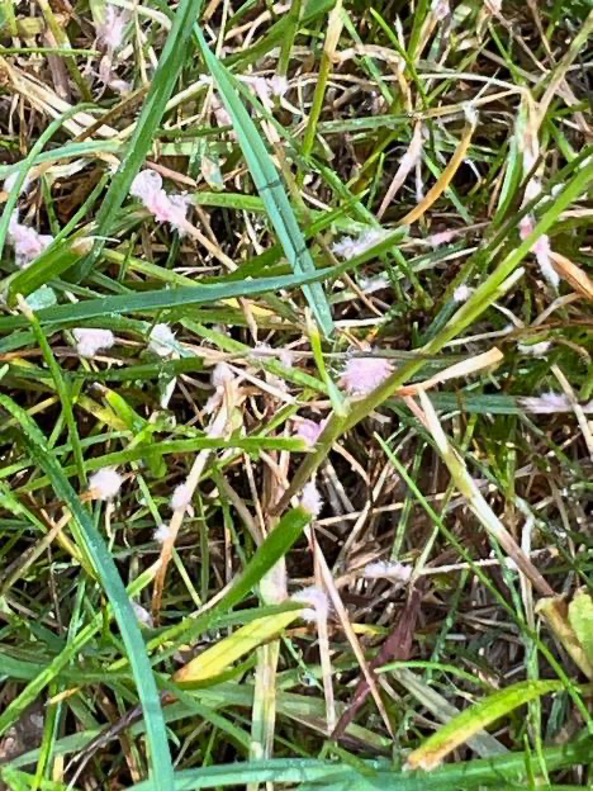
At the end of May and into early June is when we see lawn disease and fungus begin to appear. In Southeastern Massachusetts, Red Thread is the most prevalent. Signs of this fungus include red or pink stringy growth on the grass blades. If you notice a change in the color of your turf, it could be time to contact us for a curative fungicide treatment.
Japanese beetles and other grub-producing insects also lay their eggs in late June and July. Those eggs hatch into larvae that spend the summer feeding on grass roots — underground, invisible, doing damage you won’t see until August when brown patches start appearing and your lawn starts peeling up like a bad carpet.
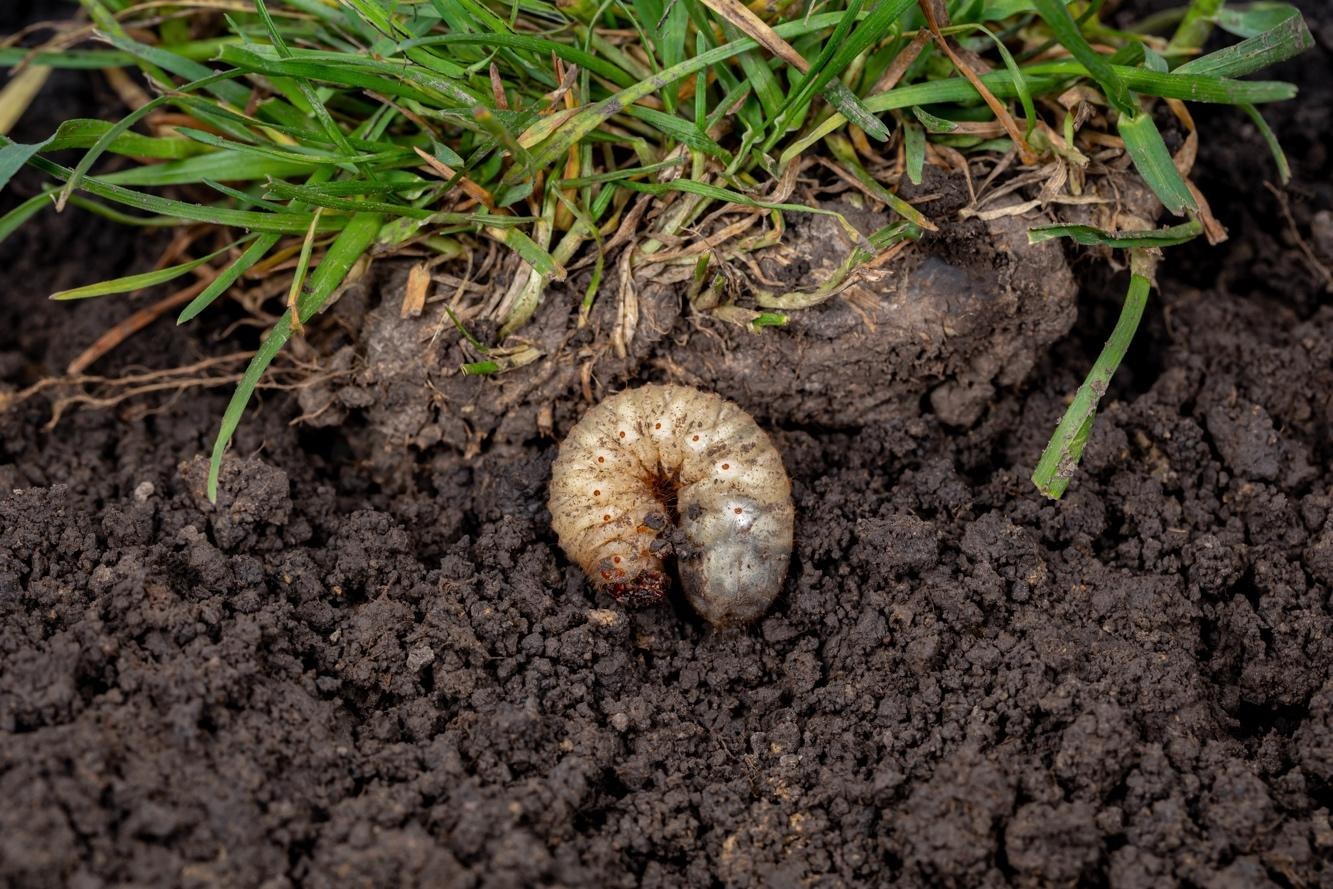
Grub preventers work on eggs and very young larvae. Apply them now and they’re highly effective. Wait until you see the damage in August and you’re dealing with a curative treatment on mature grubs, which is harder, slower, and less reliable. This is one of the clearest examples in lawn care when getting ahead of a problem is dramatically better than reacting to it.
June is also when chinch bugs and other surface insects start showing up in Southeastern Massachusetts, particularly in drier areas and lawns under heat stress. Our technicians watch for the early signs.
June is good for: Grub control services, disease control services, weed management, and fertilization.
July: Keep the Lawn Alive and Protected
July is not a month to push your lawn hard. Heavy fertilization during a heat stretch stresses grass rather than helping it, and lawns that are already under drought pressure don’t need more demands placed on them. What they need is protection.
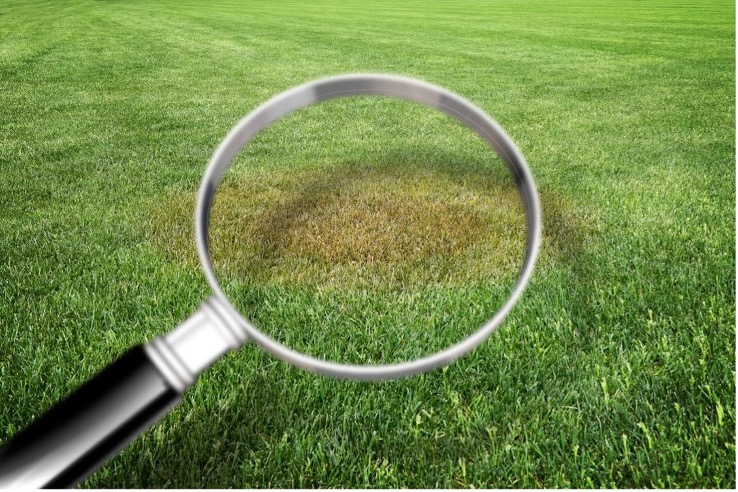
That means monitoring for fungal disease, which loves the hot and humid conditions we often get in July along the coast. It means continuing to watch for surface insects. It means spot-treating weeds that are still showing up. And it means giving customers honest advice about watering. This is because no treatment program makes up for a lawn that’s chronically under-watered during summer.
One thing our technicians get asked a lot in July: “Is this drought stress or is something else killing my lawn?” The answer actually matters a lot. Drought stress looks brown but recovers with water. Fungal disease or insect damage won’t. Treating the wrong thing is a waste of money and time.
July is good for: Fungal treatment, and turf surface insect monitoring, spot weed control, surface insect treatment as needed, and lawn health guidance.
August: Brown Patches, Grub Damage, and What To Do About It
August is when the phone rings with worried homeowners. The brown patches that seemed like drought stress in July aren’t recovering. Pull back the sod and it lifts easily with no roots holding it down. The culprit is likely grubs.

If this is your lawn right now, there’s still something we can do. Curative grub treatments applied in August can stop the damage from progressing. The grubs are bigger and tougher than they were in June, so results aren’t instant, but stopping them now prevents them from feeding all the way into fall. Then we plan for recovery.
August is also the planning season for fall. The most valuable services of the year. Core aeration and overseeding happen in September and early October, and our schedule fills up.
August is good for: Curative grub treatment, disease management, booking fall aeration and overseeding, and weed control.
September: Hands Down, the Best Month for Your Lawn
If you’ve been putting off doing something real about your lawn, September is the month to stop waiting.
Grass seed germination in our region happens best when soil temps are between 50 and 65°F, the air is cooling down, and rain is more reliable than it was in summer. September hits all of those. It’s also when weeds are slowing down, so new seedlings have less competition. And it’s when broadleaf weeds are storing nutrients in their roots for winter, which means they’re transporting whatever you spray on them very efficiently, making fall weed control exceptionally effective.
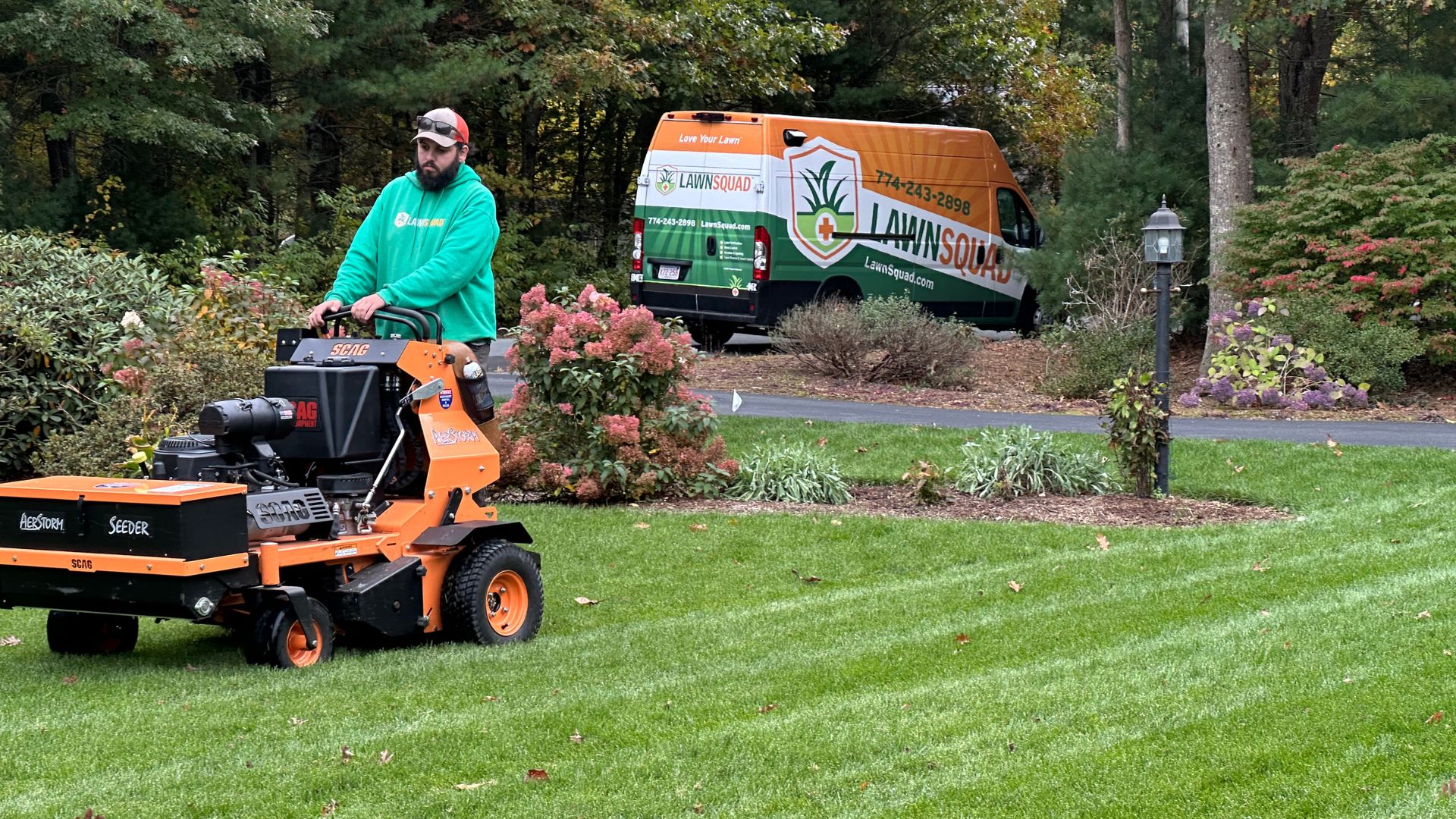
Core aeration makes all of this work better. It pulls small plugs of soil out of the ground, which relieves compaction, lets water and fertilizer reach the root zone, and creates little pockets where grass seed can establish solid contact with soil. Aerating and overseeding together in September is genuinely the highest-impact thing most homeowners in this area can do for a struggling lawn.
September is also a great time for another lime application. Here at Lawn Squad, we have never met a lawn in Southeastern MA that wouldn’t benefit from more lime?
September is good for: Core aeration, overseeding, limestone application, broadleaf weed control (works great this time of year), and starter fertilizer for new seed.
October: The Root System Is Still Working
Once grass stops growing visibly, people assume the lawn is done for the year. It’s not. Roots keep developing through October and into early November in Southeastern Massachusetts. They’re storing carbohydrates, building structure, getting ready for winter. Feed them now and your lawn comes out of dormancy next spring stronger than it went in.

A fall fertilizer application, sometimes also called winterizer, is timed specifically to feed roots rather than force blade growth. The results show up the following May and June, when lawns that got a fall feeding green up faster, fill in thicker, and look noticeably better than those that didn’t.
Early October is also your last realistic seeding window. Not ideal — September is better — but if the conditions are right and the seed goes down in the first couple weeks of October, there’s enough time to get some establishment before the ground freezes.
October is good for: Winterizer fertilization, early-October overseeding, final broadleaf weed treatment, and seasonal cleanup.
November: Almost Done — But Not Quite
Most of the active treatment work is finished by November. But the month still matters in a few ways.
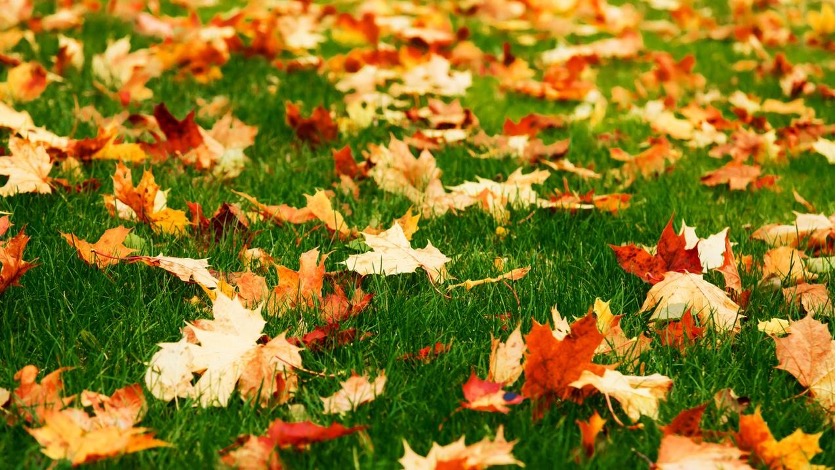
Leaves left on the lawn mat down and smother grass, especially if you get an early wet snow on top of them. That matting is a leading cause of snow mold and bare patches come spring. Keeping the lawn clear through November is more important than most people realize.
In mild years, weeds are still actively growing in early November. A final treatment hits them while they’re transporting nutrients to their roots with effective timing that reduces what comes back in spring. And this is the month we sit down with customers to talk through what the season looked like and what we’ll do differently next year.
November is good for: Leaf management, late weed control if conditions allow, and program review.
December – February: Sign Up And Thank Yourself in April
There’s not much happening above ground in winter. But there’s one thing worth doing: get on the schedule.
Every spring, the pre-emergent window opens and closes faster than people expect. Customers on a program already? They’re scheduled. Their application goes in at the right time. Customers who call in late March when they suddenly notice the ground thawing? Sometimes we can fit them in, sometimes we can’t — and sometimes that window is already closing.
Signing up for a lawn care program in winter means you start the year right, without scrambling. It also means you have time to talk through your lawn’s specific issues before the season starts, rather than trying to address everything reactively once the grass is already growing.
Winter is good for: Getting on the schedule, program planning, and priority spring positioning.
What Makes Southeastern Massachusetts Different From Everywhere Else
Southeastern Massachusetts isn’t generic New England. It has its own set of conditions that affect how lawn care works here.

The coastal influence along the South Shore and Cape Cod moderates’ temperatures. Keep in mind, we don’t get the wild swings that inland areas do — but it also means higher humidity, which increases fungal disease pressure in summer. Sandy soils near the Cape drain quickly and dry out fast. Heavier soils in Plymouth and Bristol counties compact more easily and respond especially well to aeration. The grass types that do well here are mainly tall and fine fescue. Both are cool-season grasses with specific seasonal rhythms that require treatment programs built around those rhythms, not a generic schedule.
A lawn care program designed for our specific region will always outperform a generic one-size-fits-all approach. That’s true whether you’re in Duxbury, Dartmouth, Mansfield, or anywhere in between.
Start Now
One full year of consistent treatment including the right fertilization, weed control, pest management, aeration, and overseeding at the right time can genuinely transform most lawns in this area. We’ve seen it happen over and over. The lawns that don’t improve are usually the ones where the homeowner started, stopped, skipped a season, and then wondered why nothing changed.
The timing isn’t the main variable. Consistency is.
Whatever month it is when you’re reading this, it’s not too late. It’s not too early. It’s the right time to get started.
Learn more @ What A Difference A Season Can Make – Managing Expectations Of Lawn Improvements
Lawn Squad of Southeastern Massachusetts
We serve Southeastern Massachusetts’s surrounding communities. Services include lawn fertilization, weed control, core aeration, overseeding, grub control, and fungal/turf disease management.
Get a free quote and find out what your lawn needs right now at (774) 415-0054. You can also fill out our simple online form, and a member of our team will contact you.