Short Answer: Cleveland sits on heavy clay across most of Cuyahoga County and the surrounding suburbs, and that clay compacts under foot traffic, mower wheels, and summer rain. The ideal core aeration window for our cool-season lawns is late August through late September, when soil is workable and grass is actively recovering. Schedules fill fast once August arrives, so the planning has to happen in July: assessing whether your lawn needs aeration alone or aeration plus overseeding, choosing seed varieties suited to clay and lake-effect weather, lining up the right calendar slot, and timing the supporting work (irrigation, fertilizer, weed control) so each step helps the next one. A lawn that gets aerated and overseeded in early September with a plan behind it looks remarkably different by mid-October from one where the same service was added at the last minute.
Aeration looks simple on the surface and rewards careful planning underneath. A core aerator pulls hollow plugs of soil and thatch out of the ground and leaves them on top to break down. The lawn looks a little roughed up for a few days, then thickens noticeably over the following weeks.
What you do not see is everything that has to line up before the aerator arrives. Soil moisture has to be right. Temperature has to be in the cool-season recovery zone. If you are overseeding, the seed has to match your conditions. The fertilizer, irrigation pattern, and any pre-emergent or post-emergent work have to be sequenced around the aeration so they support it rather than fight it.
That is why we start the planning in July. By the time the September window opens, most reputable providers in our service area are booked solid for weeks. The homeowners who get the best results decided what they wanted in midsummer and got on the schedule before the rush.
Why Cleveland Soil Demands Aeration
Cuyahoga County and the surrounding suburbs sit on a soil base that is predominantly clay, in many areas glacial till clay. The texture is fine, the particles pack tightly, and water moves through the profile slowly. New construction in Strongsville, Solon, and North Royalton often has lawns installed over compacted subsoil with only an inch or two of topsoil. Older neighborhoods in Lakewood and Shaker Heights have decades of foot traffic, mower passes, and freeze-thaw cycles compressing the upper soil layers.
What compaction does is invisible until you measure it. Roots cannot push through dense soil, so they stay shallow. Water runs off rather than infiltrating. Oxygen does not reach the root zone, which suffocates soil biology. Thatch builds up. The lawn becomes more vulnerable to heat, drought, and disease.
Core aeration is the one mechanical intervention that directly relieves compaction. The plugs create channels for air, water, and root growth, and they break down over a week or two and reintroduce soil microbiology to the surface. On a lawn that has not been aerated in two or three years, the difference is visible within a month.
Why September Is the Window
The case for fall aeration comes down to plant biology. Kentucky bluegrass, tall fescue, and perennial rye hit their second strongest growth period of the year in September and October. Days drop into the 60s and 70s, nights cool into the 50s, and the soil holds warmth long enough to support strong root activity. The plant is actively pushing root and tiller growth, which means it heals fast around aeration holes and fills in thin spots.
September is also the right window for overseeding. Soil temperatures across the Cleveland metro typically sit in the 60s, which is the sweet spot for bluegrass and tall fescue germination. There is enough remaining warmth to push germination, enough cool nights to slow disease, and enough season left for seedlings to establish before frost.
Spring aeration has its place, but it is not our first recommendation here. Aerating in spring creates open soil at exactly the moment crabgrass is germinating, and any seed you put down competes against weeds and stressed plants heading into summer. Fall flips that: weed pressure is low, seedlings have cool autumn to establish, and the new turf goes through winter as a stronger plant.
Aeration Alone or Aeration Plus Overseeding
This is the first big decision we work through with homeowners in July. The right answer depends on the current state of the lawn.
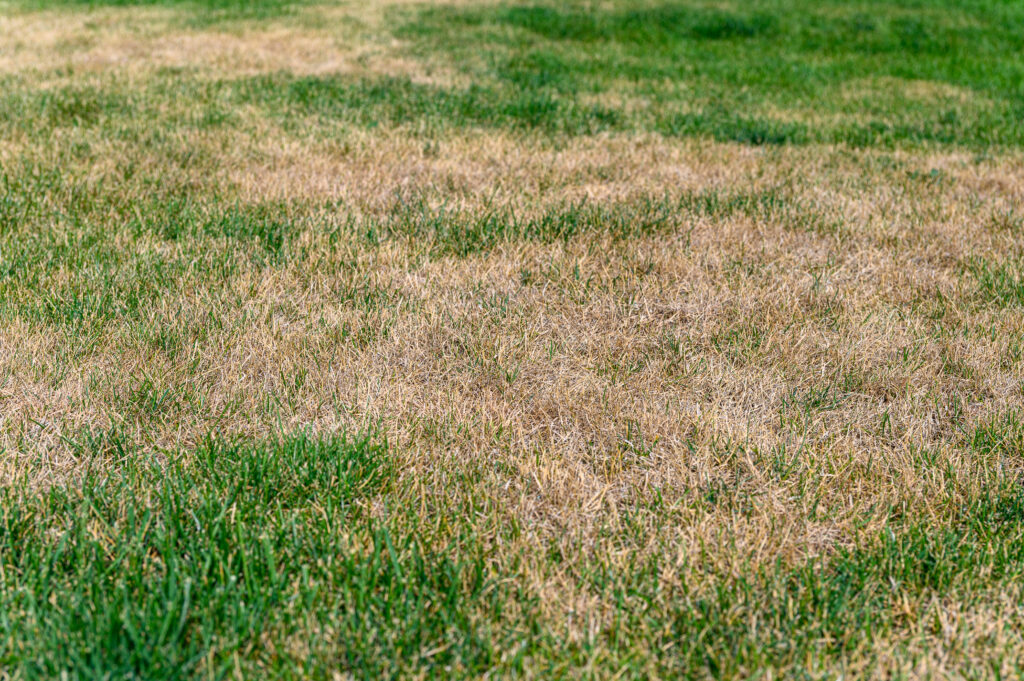
Aeration alone is the right call when the existing turf stand is reasonably thick and healthy but the soil is showing classic compaction symptoms: water pooling after rain, footprint patterns visible on the lawn, thinning in high-traffic areas, lawn that browns fast in mild dry stretches. The aeration relieves the pressure on what is already there and the existing grass thickens to fill the recovered soil.
Aeration plus overseeding is the right call when:
- The lawn has visible thin spots, bare areas, or stretches where soil is showing through the canopy.
- You had grub damage, disease damage, or drought damage in the past 12 months and the affected areas have not fully filled back in.
- The lawn is dominated by older Kentucky bluegrass varieties that are more disease-susceptible than modern cultivars, and you want to introduce improved genetics.
- You have never overseeded and the lawn looks like it is on a long, slow thinning trend.
Combining aeration with overseeding is one of the highest-value moves available to a Cleveland homeowner. The aerator creates seed-to-soil contact in the open holes, which is the single biggest factor in germination success. Surface broadcast seed without aeration on heavy clay almost never establishes well. The same seed dropped into freshly opened soil germinates at four to five times the rate.
Picking the Right Seed for Cleveland Conditions
If you are overseeding, the blend matters. For most lawns here we recommend a mix weighted toward turf-type tall fescue, with a meaningful percentage of improved Kentucky bluegrass varieties and a smaller percentage of perennial ryegrass for quick establishment. Tall fescue handles clay better than bluegrass alone, holds color longer through summer heat, and has a deeper root system. Bluegrass spreads through rhizomes and fills in over time, giving a denser, more uniform look. Rye germinates in five to seven days and gives early green cover while the slower species establish.
Shadier lawns in older Cleveland and Shaker Heights neighborhoods, where mature trees keep the lawn under filtered light, benefit from a higher percentage of fine fescues. Lakefront lawns from Bay Village through Avon Lake do best with the tall fescue and bluegrass blend that handles humidity and disease pressure.
The Supporting Schedule
Aeration and overseeding do not sit alone on the calendar. The work that surrounds them either helps the new lawn establish or undercuts it. A good plan handles each of these decisions before the aeration day arrives.
Pre-emergent herbicide: a fall pre-emergent targeting winter annual weeds will also suppress overseeded grass seed. If you are overseeding, we either skip the fall pre-emergent or use a seed-compatible product. This has to be decided in July.
Fertilizer: a starter fertilizer goes down at aeration to feed germinating seedlings, with a follow-up nitrogen feeding three to four weeks later.
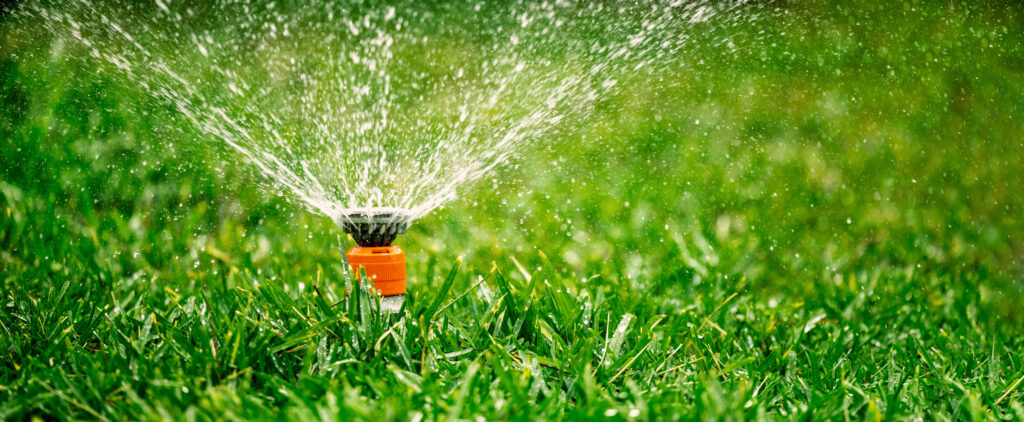
Irrigation: newly seeded areas need light, frequent watering for the first two to three weeks. Homeowners with in-ground systems should be on the right program before aeration day.
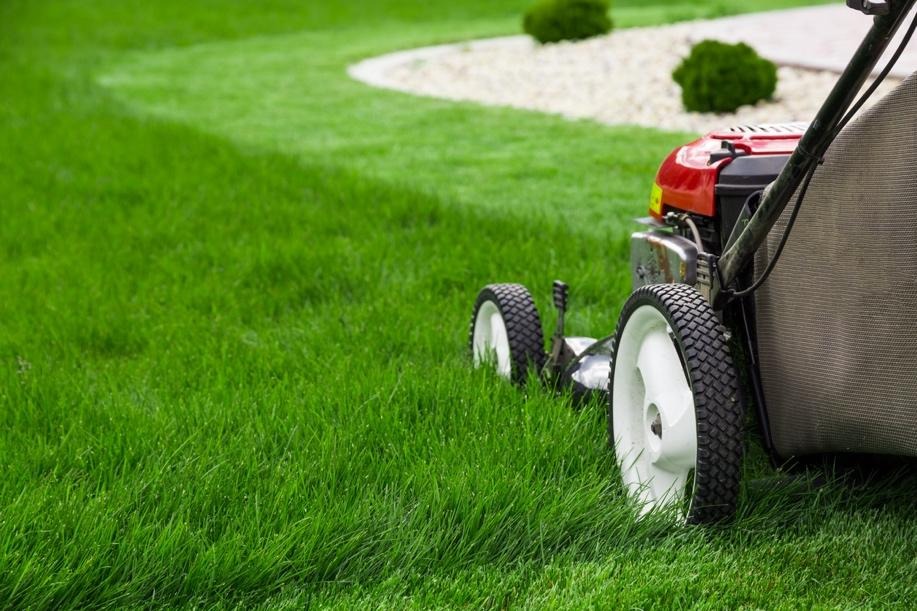
Mowing: cut the existing lawn at about 3 inches the week before aeration so seed can reach soil rather than sitting on long blades. After germination, raise back to 3.5 inches once the new grass is tall enough to cut without uprooting.
Scheduling Reality in Cleveland
Aeration capacity is finite. Each crew handles a set number of lawns per day, and the September window in Cleveland is narrow. The right combination of soil moisture, soil temperature, and active turf growth runs from the last week of August through the third week of October, and the best two weeks are usually the first two of September.
Every year we see homeowners call in mid-September asking for aeration that week. By that point, most local providers are scheduled out three to four weeks, which pushes the work toward the back of the window where germination rates drop and establishment slows.
Homeowners who decide in July, get on a schedule, and lock in the supporting services consistently see better results in October. That is the entire argument for spending an hour on this decision in midsummer.
FAQ for Cleveland Homeowners
How often should my Cleveland lawn be aerated? Once a year is right for most clay-soil residential lawns in our service area. High-traffic yards (kids, dogs, frequent gatherings) or lawns over construction-compacted soil sometimes benefit from twice yearly aeration in spring and fall. Once we walk a property, we can tell quickly which category it falls into.
What about liquid aeration? Liquid aeration products are marketed as a chemical alternative to mechanical aeration. They have a role as a supplement, but on heavy clay they do not replace the physical effect of pulling cores. For Cleveland soils, mechanical core aeration is the foundation and liquid products can layer on top.
Do I need to mark my sprinkler heads? Yes. Before any aeration appointment, we ask homeowners to mark sprinkler heads, invisible fence wires, and any shallow utility lines. A core aerator drives tines two to three inches into the soil, and an unmarked head can be damaged.
What does it cost? Core aeration on a typical Cleveland-area quarter-acre lot runs in the range of $150 to $300 depending on access, slopes, and obstacles. Adding overseeding with a quality blend adds another $150 to $350 depending on the seed rate and the area covered. Bundling these services with a full-season VitaminLawn program is the most cost-effective path for most homeowners.
What to Do Next
If you want fall aeration and overseeding done right this year, July is the month to call. We walk the property, look at compaction signs, evaluate the existing turf stand, and put together a plan with seed selection, scheduling, and the supporting services all sequenced together.
Lawn Squad of Cleveland serves Amherst, Avon, Avon Lake, Bay Village, Beachwood, Berea, Brecksville, Brook Park, Broadview Heights, Brunswick, Cleveland, Columbia Station, Eastlake, Elyria, Euclid, Gates Mills, Grafton, Hinckley, Independence, Lakewood, Lorain, Maple Heights, Medina, Mentor, North Olmsted, North Ridgeville, North Royalton, Oberlin, Olmsted Falls, Painesville, Perry, Richfield, Rocky River, Sheffield Lake, Strongsville, Valley City, Vermilion, Westlake, Wickliffe, and Willoughby.
Call us at 440-271-3113 or request a free quote at lawnsquad.com. Our VitaminLawn program is built around the cool-season grasses, clay soils, and lake-effect weather patterns that define Cleveland lawns. A July plan for September aeration is one of the most reliable investments you can make in next year’s lawn.