Short Answer: Fall aeration windows in Chattanooga and North Georgia are short, and they fill up fast. Fescue lawns need aeration and overseeding between roughly September 1 and October 10 for best results. Bermuda and zoysia need aeration in late August through early September while they are still actively growing. If you wait until Labor Day to book, the calendar is usually full, and on red clay soils a missed window can mean another year of compaction. Plan in July, walk the lawn now to identify the worst compaction zones, choose your seed and soil amendments, and book the aeration date while the schedule is open.
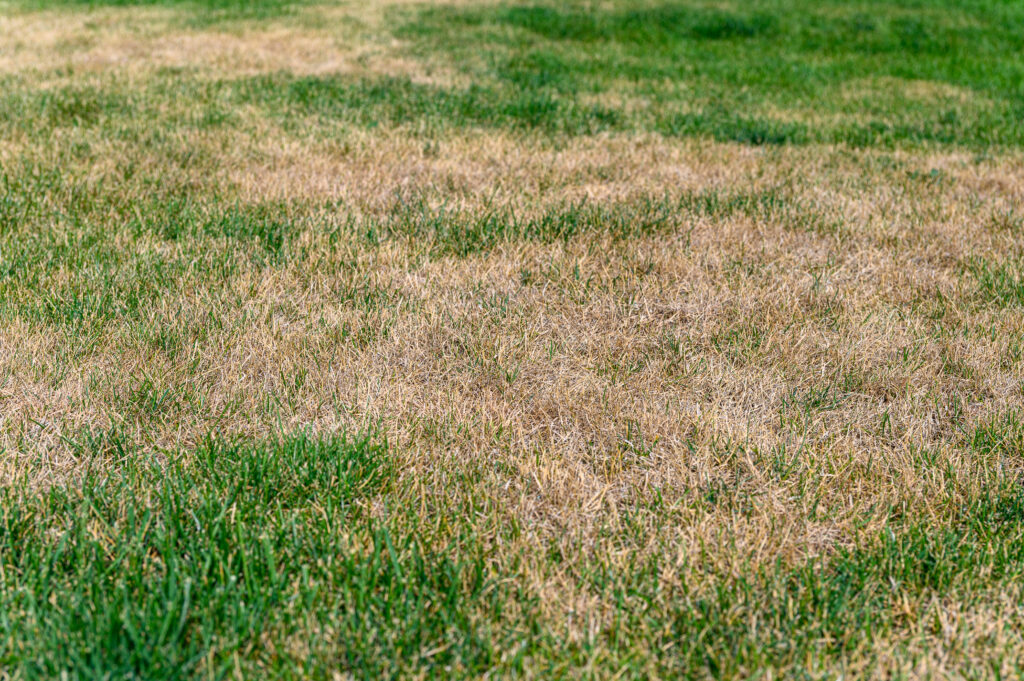
It is mid-July in Signal Mountain. Your fescue is hanging in there. The thin spots from last fall are starting to look thinner, the high-traffic line from the back door to the firepit is more dirt than grass, and the lawn felt spongy underfoot when you walked it last weekend. You think, I will deal with it in the fall. We are going to make the case that the fall plan starts right now.
Aeration is one of those services where the work itself takes a single afternoon but the planning makes the difference between a lawn that looks fantastic by Thanksgiving and a lawn that limps through fall and starts next spring already behind. Here is what we walk through with Chattanooga and North Georgia customers in July, and why the calendar matters so much in our specific region.
Why Aeration Matters More on Red Clay
Most of the soil across our service area is some version of red clay, ranging from the rocky residual clay on Lookout Mountain elevations down through the heavier valley clays of Hamilton County and into the piedmont-influenced soils of Whitfield County around Dalton GA. Red clay is a fertile soil profile when it works well, but it has one defining trait: it compacts.
Clay particles are flat and small. They pack together under foot traffic, mower weight, kids playing, dogs running, and the weight of water itself sitting on the surface. Once compacted, clay restricts root growth, blocks air movement, sheds rainfall as runoff instead of absorbing it, and makes every other input (fertilizer, water, seed) less effective. Compacted clay is the single most common underlying problem we see on Chattanooga lawns, and aeration is the only practical way for a homeowner to fix it.
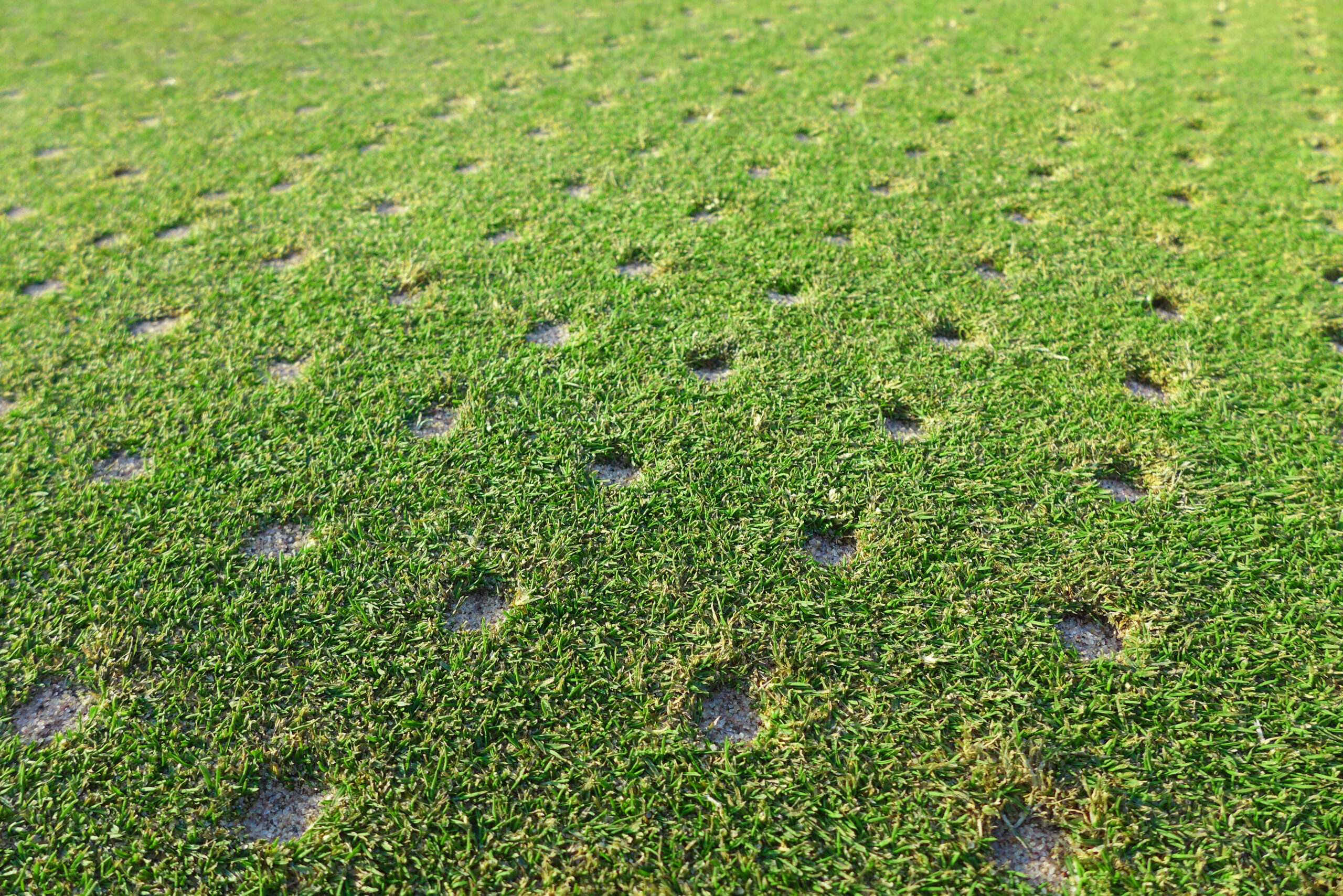
Core aeration pulls plugs of soil out of the lawn, opens vertical channels for air and water, lets roots grow downward instead of running sideways, and gives seed an opening to make soil contact in the overseeding step. Done annually for a few years on a compacted lawn, aeration can fundamentally change how the soil behaves. Skipped, even for one year, a clay lawn moves backward.
The Two Aeration Calendars in the Transition Zone
This is where the transition zone makes everything more complicated than it would be in a single-grass region.
Fescue lawns (most properties on Signal Mountain, Lookout Mountain, the shaded lots in Red Bank, Soddy-Daisy, and the wooded north-facing slopes throughout the area) want aeration and overseeding in the fall, when the grass is coming out of summer dormancy and into its primary growing window. The target window for fescue aeration in our area is roughly September 1 through October 10. Earlier than that and soil temperatures are still too high for fescue seed germination. Later than that and the seedlings do not get enough growing time before the first frost.
Bermuda and zoysia lawns (most full-sun properties in East Brainerd, Ooltewah, Cleveland TN, Dalton GA, Ringgold, and the open valley lots) want aeration in late summer while the grass is still actively growing and can heal the holes quickly. Target window for warm-season aeration in our area is roughly August 15 through September 15. After that, the grass starts slowing for winter dormancy and recovery from aeration injuries slows along with it.
Notice that those two windows overlap in early September. Properties that run both grass types (a fescue front yard with a bermuda back, for example) can sometimes be aerated in a single visit. Properties that need two separate aeration passes have to be scheduled twice, with different seed and different prep, which is exactly why we want this conversation in July rather than late August.
Walking the Lawn in July to Plan September
The best time to identify which parts of your lawn need the most aeration attention is right now, while the stress is visible. Things that are easy to miss in cool, lush spring grass are obvious in late July. Take a walk around the property with a notebook and look for the following.
Hard spots where the screwdriver test (push a long screwdriver into the soil and see how far it goes) stops at less than 2 inches. That is severe compaction and needs aggressive aeration, possibly two passes.
Areas where water pools or runs off after rain instead of soaking in. Compacted clay sheds water. The places where puddles form for hours after a storm are the priority aeration zones.
Foot-traffic lines from the back door to the deck, the side gate to the trash cans, the front walk to the mailbox. These are guaranteed compaction zones. Aerate them and they recover. Skip them and they get worse every year.
Thin spots in fescue lawns. Anywhere fescue is thinning out is a candidate for overseeding in September, which means it needs to be on the aeration list to give the seed good soil contact.
Bare or weak spots in bermuda and zoysia lawns. Warm-season grasses spread laterally, so they can fill in over time, but only if the soil they are spreading into is open enough to root in. Aeration in those weak spots in August accelerates the fill rate dramatically.
Seed Selection for Fescue Overseeding
If you are going to aerate and overseed fescue this fall, July is when to settle the seed question. Good turf-type tall fescue blends for our region include cultivars selected for heat tolerance, brown patch resistance, and shade tolerance. Reading the bag matters: a generic “tall fescue” bag can be mostly forage-type fescue, which is coarse and weak for lawns. A turf-type bag with named cultivars is what you want.
For most Chattanooga properties we recommend a three-way or four-way blend of named turf-type tall fescues. Some sun, some shade, mixed exposure: the blend hedges across all three conditions and the lawn ends up more resilient than any single cultivar. Kentucky bluegrass can be added to a fescue blend in small percentages on Signal Mountain or Lookout Mountain higher-elevation properties where it has a chance to survive summer. In the valley, skip the bluegrass and stick with fescue.
Seed rate for overseeding (not new establishment) is roughly 4 to 6 pounds per 1000 square feet. Going heavier wastes seed because the seedlings compete with each other. Going lighter leaves gaps for weeds. The right rate combined with a good aeration pass and proper watering is the recipe for a thick fescue lawn next spring.
Soil Testing in July Is the Smartest Move
Here is the thing almost no one does, and it is the single biggest leverage point in fall lawn results: pull a soil sample in July, send it to the University of Tennessee or University of Georgia extension lab, and have the results back in three weeks. That timing means you know exactly what amendments your soil needs (lime, sulfur, phosphorus, potassium) before you aerate. Aeration with the right amendments worked in through the holes is dramatically more effective than aeration alone.
Red clay in our region is often acidic, sometimes severely so. A pH of 5.2 is not uncommon, and that pH locks up nutrients the grass cannot access regardless of how much fertilizer you apply. Lime to correct pH, applied at aeration so it can move down through the open channels, is one of the few lawn inputs that pays for itself many times over. We pull soil samples for customers as part of the planning process when we know fall aeration is coming.
What Aeration Does Not Fix
Aeration is powerful, but it is not a cure-all. It does not fix the following problems on its own.
Severe shade. If a fescue lawn fails every year under the same maple tree, aeration is not the answer. Tree pruning, shade-tolerant ground cover, or accepting that area as mulch instead of lawn is the honest path.
Bad grade and drainage. If water runs from a downspout across the lawn, aeration helps but does not solve. Grading, swales, or French drains may be needed.
Active disease or insect damage. Aerating a lawn that is fighting brown patch or armyworms can make things worse by stressing already weakened grass. Get the active problem under control first, then aerate.
Bermuda spreading where you do not want it. Aerating a fescue lawn that has bermuda invading it can spread the bermuda further. We work through that conversation with customers on a property-by-property basis.
The July Schedule Conversation
Aeration calendar reality across our service area: most reputable lawn care companies in Chattanooga and North Georgia book fall aeration in batches, and the prime September and early October dates fill up by mid-August. Customers who call in mid-September often get pushed into late October, which is past the optimal window for fescue establishment. Customers who plan in July and book in early August get the dates they want.
For warm-season aeration the timing is even tighter. The late August to mid-September window is narrow and competes with end-of-summer service demands. Calling in July to put your bermuda or zoysia property on the schedule is the difference between a clean August aeration and a stressful Labor Day phone call.
Frequently Asked Questions
Can I aerate my lawn in July? No. July soil temperatures stress the grass, fescue seed will not germinate, and bermuda recovery is fine but seed contact is not the issue in July. Wait for the proper window: late August through early September for warm-season, September through early October for fescue.
How often should I aerate? On red clay soils in our area, annually for fescue lawns is the standard. Bermuda and zoysia can often go to every other year once compaction has been corrected over a few annual cycles. New construction lawns benefit from annual aeration for the first three years no matter what grass is present.
Do I need to dethatch and aerate? Usually not both in the same season. On most fescue lawns aeration handles thatch well enough. On zoysia lawns with heavy thatch buildup, a separate spring verticutting is more appropriate than fall dethatching. We assess thatch depth as part of the planning visit.
What does aeration cost in Chattanooga? It varies with lawn size, access, and whether overseeding and soil amendments are included. Call us for a quote on your specific property. Pricing the aeration alone is rarely the right conversation, because the value comes from the whole fall package working together.
What to Do Next
If your lawn is showing the symptoms we have walked through (hard ground, thinning fescue, water pooling, foot-traffic damage, weak fill on bermuda or zoysia) the time to plan fall aeration is now, not Labor Day. Get on the calendar in July, settle the seed and amendment questions in August, and have a clear date on the books so the work happens in the right window.
Lawn Squad of Chattanooga and North Georgia serves Apison, Chattanooga, Chickamauga, Cleveland TN, Cohutta, Collegedale, East Brainerd, Flintstone, Fort Oglethorpe, Graysville, Harrison, Hixson, Lakesite, Lookout Mountain, Lupton City, McDonald, Ooltewah, Red Bank, Ringgold, Rossville, Signal Mountain, Soddy-Daisy, Tunnel Hill, and Wildwood. We also work properties across Dalton GA and the surrounding Whitfield County area.
Call us at 423-287-4871 or request a free quote at lawnsquad.com. Our VitaminLawn program builds in the fall aeration conversation as part of the annual plan, so the September window is on the calendar before August arrives. We will walk your lawn, pull a soil sample, recommend a seed blend if you have fescue, and have a date locked before the rush.