Short Answer: Fall armyworms are the most destructive caterpillar pest of Bermuda and Zoysia lawns across Birmingham, and they can take a yard from green to gone in under 72 hours when populations spike. They typically arrive in central Alabama from mid-July through early October, riding storm fronts up from the Gulf. Scout weekly by looking for clipped leaf tips, brown areas at the lawn margins, and small green-then-brown bird flocks feeding on the turf. Confirm with a soap flush (two tablespoons of dish soap in a gallon of water poured over a square yard) and treat with bifenthrin or chlorantraniliprole at the first sign of caterpillars over a quarter inch long.
Of all the lawn pests we deal with in Birmingham each summer, fall armyworms are the one that scares us the most. Chinch bugs are slow. Brown patch is slow. Sod webworm damage builds over weeks. Fall armyworms can chew a fairway-perfect Hoover Bermuda lawn down to brown stubble in a single weekend, and we have seen it happen more times than we can count.
The good news: armyworms are not subtle once they show up. They leave a damage signature that is easy to recognize if you know what to look for, and they are easy to kill if you catch them while the caterpillars are still small. The trouble is that the window between “first signs of damage” and “the whole yard is brown” is short. Anywhere from two days to a week, depending on caterpillar size and population.
Here is how we teach Birmingham homeowners to scout for armyworms through July, August, and September, and what to do the moment you suspect them.
Why Central Alabama Sees Such Severe Outbreaks
Fall armyworms (Spodoptera frugiperda, the official name) overwinter in south Texas, southern Florida, and the Gulf Coast. They do not survive Birmingham winters. Each year the moth generation rides spring and summer storm fronts north, laying eggs across the South. By the time those moths reach Jefferson and Shelby counties, usually in July, the population can be enormous if conditions have been favorable down in Mississippi and southern Alabama.
2021 was the worst outbreak Birmingham has seen in decades. We had Vestavia Hills, Mountain Brook, and Homewood lawns going from solid green on a Friday to clipped stubble on a Sunday morning. Years since then have been more normal but no year is risk-free. Big storms running up the Mobile-to-Birmingham corridor are the leading indicator. If you see a series of strong rain systems coming north out of the Gulf in late July or August, your lawn is at higher risk that week.
The lawns hit hardest in our service area tend to be the cleanest, most fertilized Bermuda and Zoysia. Armyworms prefer the lush green growth of a well-managed lawn over a weedy, undernourished one. Our Trussville and Helena clients with the prettiest yards are the ones we put on the most aggressive scouting routine.
What Armyworm Damage Looks Like
The early signs are easy to miss because they look like a poorly performed mowing. Across the lawn, the leaf tips appear ragged and shredded rather than cleanly cut. Walk the lawn at low sun angle (early morning or late afternoon) and you will see a translucent, papery look to the upper canopy where the caterpillars have grazed the tissue but left the lower stem intact.
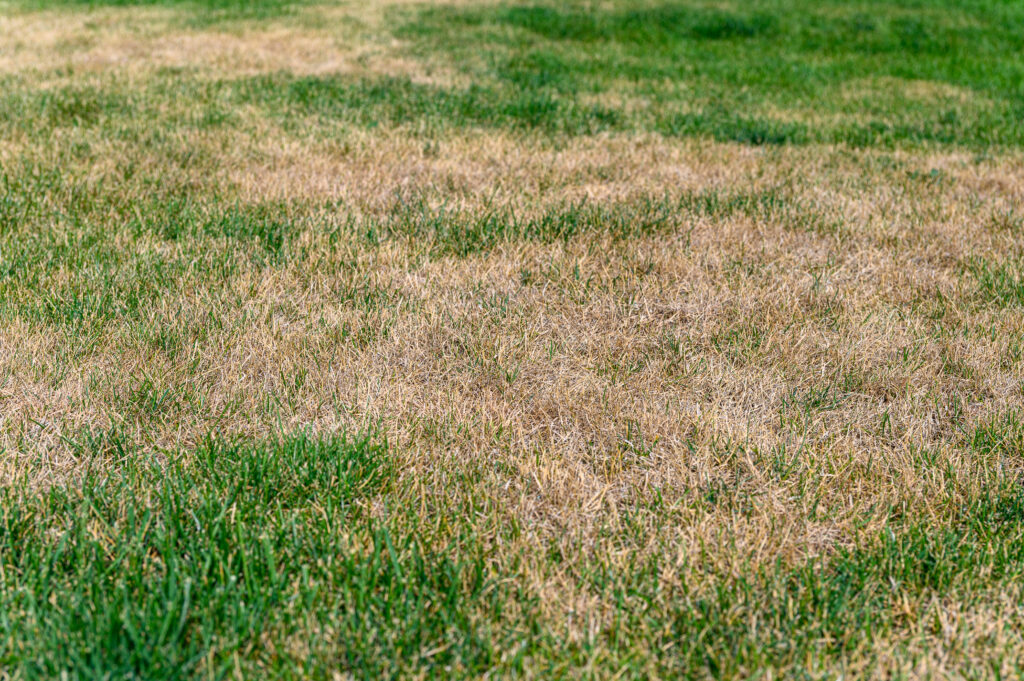
From there it accelerates. Within a couple days, brown patches appear, often starting at the edge of the lawn nearest a wooded area, a hayfield, or any taller grass where the moths laid eggs. The patches expand quickly. Once caterpillars reach about an inch in length, they eat several times their body weight per day. A heavy infestation in a hot Birmingham July can defoliate a thousand square feet a day.
The other tell is birds. Mockingbirds, brown thrashers, robins, and grackles love armyworms. If you see a flock of birds feeding intently on one patch of lawn in late July or August, walk over there and look closely. The birds know before you do.
The Weekly Scouting Habit That Catches Them Early
From July 1 through the first frost, we recommend a one-minute scouting walk every Saturday or Sunday morning. Walk the perimeter of the lawn first, particularly the edges nearest taller grass or natural areas. Look for:
- Leaf tips that look ragged or translucent instead of clean.
- A small brown patch at the edge of the lawn that was not there last week.
- Bird activity concentrated on one area.
- Small frass (caterpillar droppings) on the leaf blades, especially visible after a dewy night.
If anything looks off, do a soap flush. Mix two tablespoons of liquid dish soap into one gallon of water and pour it slowly across a one-square-yard area of suspect turf. Wait three to five minutes. Armyworms, sod webworms, and other surface-feeding caterpillars are irritated by the soap and crawl to the surface. If you see green-to-brown striped caterpillars with a distinctive inverted Y on the head, you have your answer.
The Inverted Y and Other ID Features
Fall armyworm caterpillars are easy to identify once you know the signature. The mature caterpillar is about an inch and a half long with three thin yellow lines running the length of the body. The head is dark with a pale, inverted Y-shape mark between the eyes. The body colors vary from light green to almost black depending on age and food source, but the inverted Y on the head is consistent.
Other caterpillars we sometimes find on Birmingham lawns include sod webworms (smaller, gray-green, build silken tubes in thatch) and cutworms (fatter, curl into a C when disturbed, mostly nocturnal). The treatment is similar for all three, but armyworms have the worst reputation because they can move through a yard so fast.
Treatment Timing and Product Selection
Once you confirm armyworms, treat immediately. There is no value in waiting another day to see if it gets worse. It will.
The products we use most often in Birmingham are bifenthrin (in Talstar, Bifen, and similar branded products) and chlorantraniliprole (in Acelepryn for professional use, with consumer equivalents available). Bifenthrin gives fast knockdown for an active infestation. Chlorantraniliprole has a longer residual and works well as a preventive when armyworm pressure has been reported nearby. Spinosad is another option that has lower impact on beneficial insects.
Application matters. Use a higher water volume than a routine spray to push the product down into the canopy where the caterpillars are feeding. Apply in the early morning or evening when the caterpillars are more active and on the surface. Avoid mowing for at least 24 hours after treatment so the product stays on the leaf blades the caterpillars are eating.
One application is usually enough for an active infestation if applied early. If damage was already severe when you treated, plan a follow-up assessment three to five days later in case a second generation is hatching from eggs already laid.
Recovery: What to Expect After Treatment
Bermuda and Zoysia are remarkable recovery grasses. Even a lawn chewed down to brown stubble will green back up in two to three weeks during the active growing season, as long as the crowns and stolons are intact. Armyworms typically eat only the leaf tissue and not the root system, which is why a defoliated Birmingham Bermuda lawn rebounds so quickly compared to, say, a fescue lawn in the same situation.
Support the recovery with a light nitrogen feeding (a quarter to a half pound per thousand square feet) about a week after treatment, deep watering of one inch per week, and patience. Skip aggressive mowing until the canopy is back to a uniform green. By early September, a July armyworm hit will usually look like it never happened.
What to Do Next
If you spot ragged leaf tips, an expanding brown patch at the edge of the lawn, or a flock of birds feeding on one area, do the soap flush today. If it confirms armyworms, treat today. The cost of a quick response is a single insecticide application. The cost of waiting is sometimes a full sod replacement.
Lawn Squad of Birmingham serves Alabaster, Bessemer, Birmingham, Calera, Chelsea, Helena, Homewood, Hoover, Indian Springs, Inverness, Maylene, Montevallo, Mountain Brook, Pelham, Pinson, Trussville, and Vestavia Hills.
Call us at 205-573-1921 or request a free quote at lawnsquad.com. Our VitaminLawn program includes scheduled surface insect monitoring and treatment options that catch armyworms, chinch bugs, and sod webworms before they get out ahead of you, with response timing built into the program rather than added as an emergency call later.