Short Answer: Once rainy season hits South Miami in early June, the biggest watering mistake is leaving the irrigation schedule the same as April. With 8 to 12 inches of rain per month falling in daily afternoon thunderstorms, your lawn is getting more than enough water from the sky. The combination of supplemental irrigation plus daily rain creates the constant leaf wetness that gray leaf spot, large patch, and dollar spot fungi need to take over a St. Augustine lawn. The fix is to install a rain sensor or a smart controller, water only in the pre-dawn hours when supplemental irrigation is actually needed (typically 0 to 2 zone runs per week, not 3 to 5), and adjust based on the previous 48 hours of rainfall rather than the calendar. The 48-hour rolling rule and a $30 rain sensor save more South Miami lawns than any fungicide.
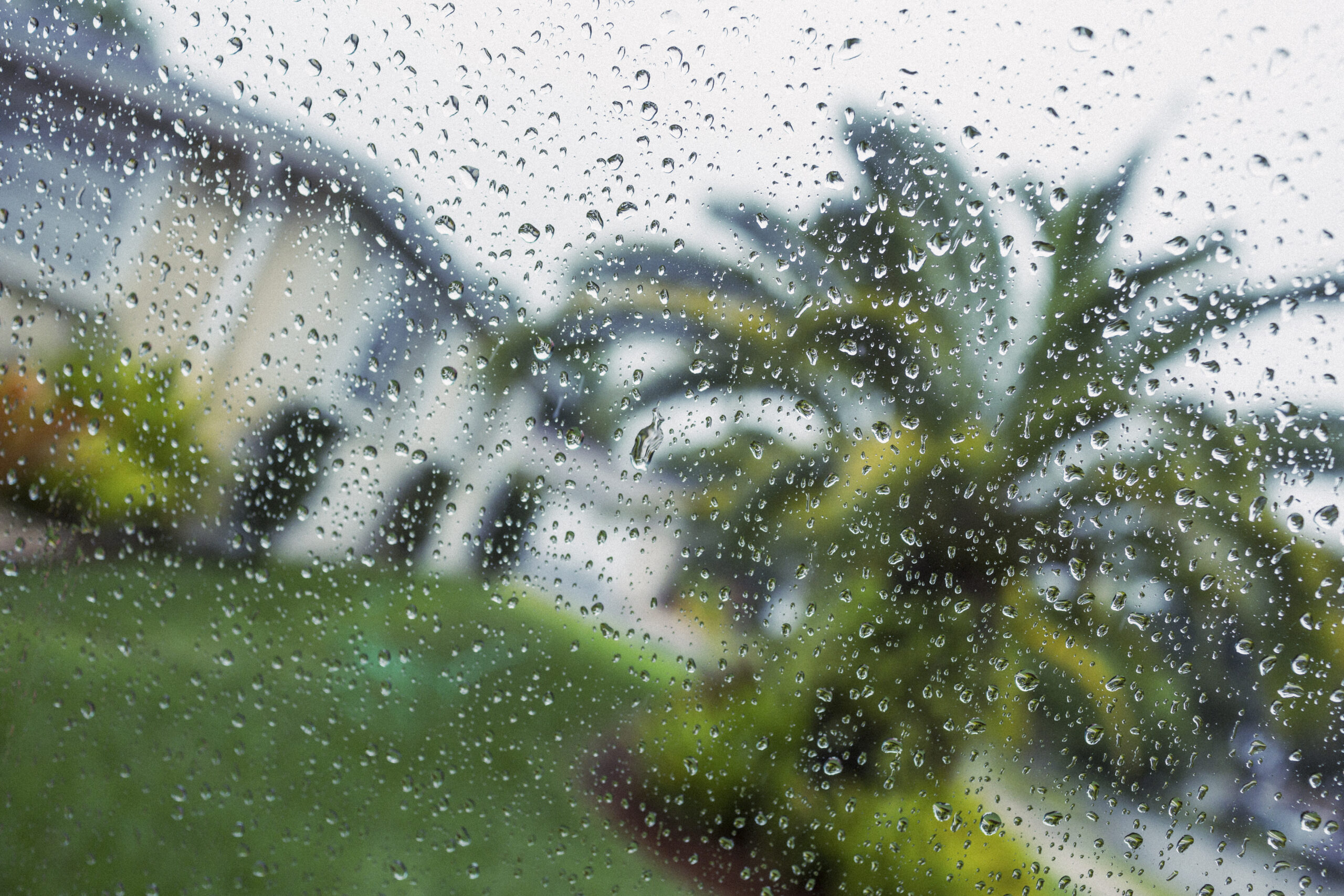
If you stood in the driveway at 3:45 last Thursday in Pinecrest, Palmetto Bay, or Coral Gables, you watched the sky turn purple, the wind kick up off the bay, and an inch and a half of rain hit the lawn in 25 minutes. Then the sun came back out. Then your irrigation system fired automatically at 5 a.m. the next morning. That sequence, repeated three to five times a week from June through September, is the single biggest cause of fungal lawn disease in South Miami.
Most South Miami homeowners set the irrigation in March, run the same schedule all year, and never think about it again. That works in the dry season. It is actively harmful in the wet season. The lawns we see come through summer healthiest in our service area are the ones whose owners flip their irrigation thinking once rainy season starts, water less rather than more, and stop confusing rainfall with a watering problem.
How Much Water Your South Miami Lawn Actually Gets in June
South Miami averages around 9.5 inches of rain in June, 7 to 9 inches in July, 8 to 10 inches in August, and 9 to 10 inches in September. Most of that falls in the daily afternoon thunderstorm pattern that sets up by the second week of June, fueled by the easterly trade winds, the heated land surface, and the Gulf Stream moisture that pours in off the Atlantic.
Your St. Augustine lawn needs roughly 1 inch of water per week to stay healthy. In June, Mother Nature is delivering 2.5 inches. That is two and a half times what the lawn needs. Add 4 zone runs of irrigation a week at a quarter inch each and the lawn is sitting in 3.5 inches of weekly water. The root zone stays saturated. The thatch never dries out. The blade canopy stays wet for 14 to 18 hours per day. Every fungal pathogen in the soil throws a party.
The math is simple. The execution is where most homeowners get stuck.
The Fungus Cycle Most Homeowners Trigger
Three fungal diseases account for most rainy-season St. Augustine damage in South Miami. All three are driven by sustained leaf wetness paired with warm nights.
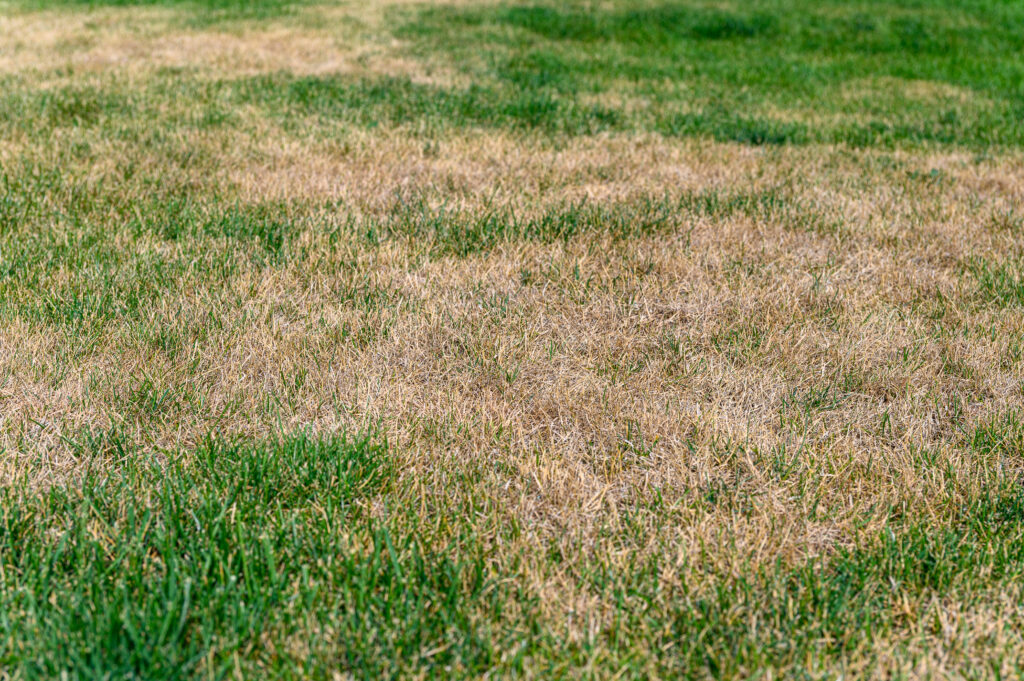
Gray leaf spot (Pyricularia grisea) shows up as small oval lesions on individual leaf blades, gray centers with dark brown borders, often with a yellow halo. The lesions can coalesce into large bleached patches. Severe cases shred St. Augustine lawns inside 10 days during rainy season.
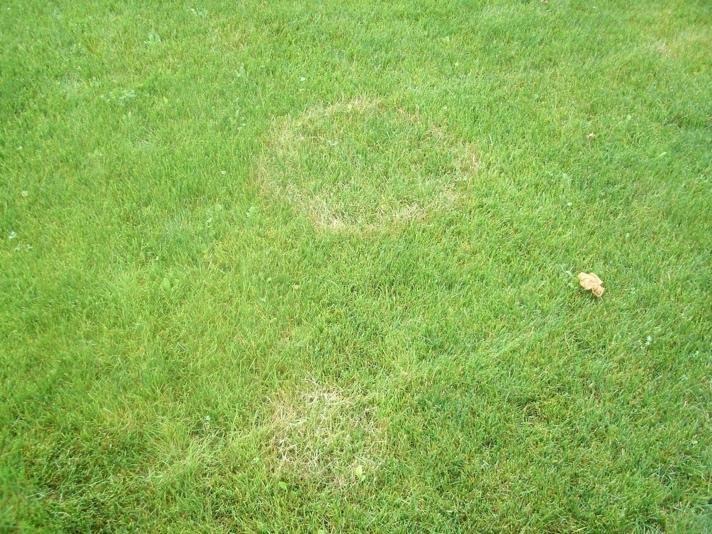
Large patch / brown patch (Rhizoctonia solani) shows up as roughly circular tan patches 2 to 10 feet in diameter, often with the grass at the edge orange or brown and the center starting to refill with new green growth. Common after warm humid nights with leaf wetness over 10 hours.
Dollar spot (Clarireedia jacksonii) shows up as silver-dollar-sized bleached circles, often grouped together. Less catastrophic than gray leaf spot or large patch but a steady drain on lawn quality through wet stretches.
All three follow the same trigger pattern. Long leaf wetness. Warm temperatures. Excessive nitrogen pushing soft new growth. The lawn that is watered three or four times a week through rainy season checks all three boxes on a daily basis. The lawn that lets the canopy dry between rain events does not.
The 48-Hour Rolling Rule
The single best change you can make to your irrigation thinking during rainy season is to swap calendar-based watering for rainfall-based watering. The rule we teach customers is simple. Before any irrigation zone runs, ask: did the lawn get at least three quarters of an inch of rain in the previous 48 hours? If yes, skip the cycle. If no, run normally.
In practical terms, this usually means your irrigation runs 0 to 2 days a week in June, July, August, and September instead of 3 to 5. There are dry stretches in rainy season (we get 5- and 6-day gaps even in August), and the irrigation needs to be there for those. But during the typical week, the rain handles the watering.
Get a rain gauge from any hardware store. Put it in the yard. Empty it every morning. Decisions become easy.
Rain Sensors and Smart Controllers
The hardware piece that automates the rule is the rain sensor or the smart controller. South Florida Water Management District actually requires a functioning rain sensor on every automatic irrigation system installed since 1991. Many older systems have a sensor that has stopped working and the homeowner has not realized.
A basic Hunter Mini-Clik or Rain Bird CRR rain sensor runs around $30 and shuts off the irrigation for 24 to 72 hours after measurable rainfall. Installation is one hour. Effectiveness is immediate.
A smart controller (Rachio, Rain Bird ST8, Hunter Hydrawise) goes a step further. It pulls local weather data, predicts rainfall, adjusts run times based on evapotranspiration models, and gives you per-zone control from your phone. Installed cost runs $200 to $400 plus the controller. We tell customers that for a property with chronic fungal disease pressure, the smart controller pays for itself in saved water bills and avoided fungicide in one summer.
When to Water and When Not To
The when is as important as the how much during rainy season. Three rules:
Pre-dawn only. Run irrigation between 4 and 7 a.m. Never in the evening or overnight. The pre-dawn window lets the lawn dry within an hour of sunrise as humidity drops and the sun warms the blades. Evening watering means the canopy stays wet for 14 to 18 hours, which is exactly the conditions gray leaf spot and large patch need.
Skip after heavy rain. If the lawn got an inch of rain yesterday afternoon, skip the morning irrigation entirely. The root zone is already at field capacity. Adding more water just runs off or saturates the soil to the point that oxygen cannot reach the roots.
Water for depth, not duration. When you do water in rainy season, run a deep cycle (three quarters of an inch in one soak) rather than three light cycles spread across the week. Deep watering moves water past the top inch of saturated thatch and into the soil. Light frequent watering just keeps the canopy wet without adding to the root zone reserve.
Drainage and the Hidden Problem
South Miami sits on a mix of sandy soils, limestone bedrock outcrops, and clay-influenced fill in older neighborhoods. Drainage varies wildly from one block to the next. Properties with poor drainage hold standing water for hours after every thunderstorm. That standing water is the actual disease trigger on those lawns, not the irrigation schedule.
Walk your lawn an hour after a heavy thunderstorm. If you see standing water that has not infiltrated, you have a drainage problem that watering changes alone will not solve. The fixes (regrading, French drains, dry wells, channel drains, swales) are usually worth doing because a lawn that sits in water during rainy season will lose patches every year no matter how well you manage everything else.
Fertility During Rainy Season
One more piece tied to the watering question. Heavy nitrogen fertilizer during rainy season is a fast track to disease. Quick-release nitrogen on a wet warm lawn produces lush soft growth that gray leaf spot tears through. Most South Miami St. Augustine lawns benefit from light slow-release applications spaced 8 to 10 weeks apart in summer, not the heavier feedings that work in the dry season. Skip the urea-based products from June through September. Lean into slow-release sources and a touch of micronutrient support (iron, especially) to maintain color without pushing growth.
What to Do This Week
- Test your rain sensor. Press the test button. If irrigation does not shut off, the sensor is dead. Replace it for $30.
- Reset your irrigation controller to a rainy-season schedule. Most lawns need 0 to 2 zone runs a week through September. Pre-dawn only.
- Add a rain gauge in the yard. Empty it daily. Decide each morning whether the irrigation needs to run.
- Walk the lawn after the next big storm. Note any standing water spots. Those are the drainage projects for fall.
- Hold off on heavy nitrogen until October. Use slow-release products and iron through summer.
What to Do Next
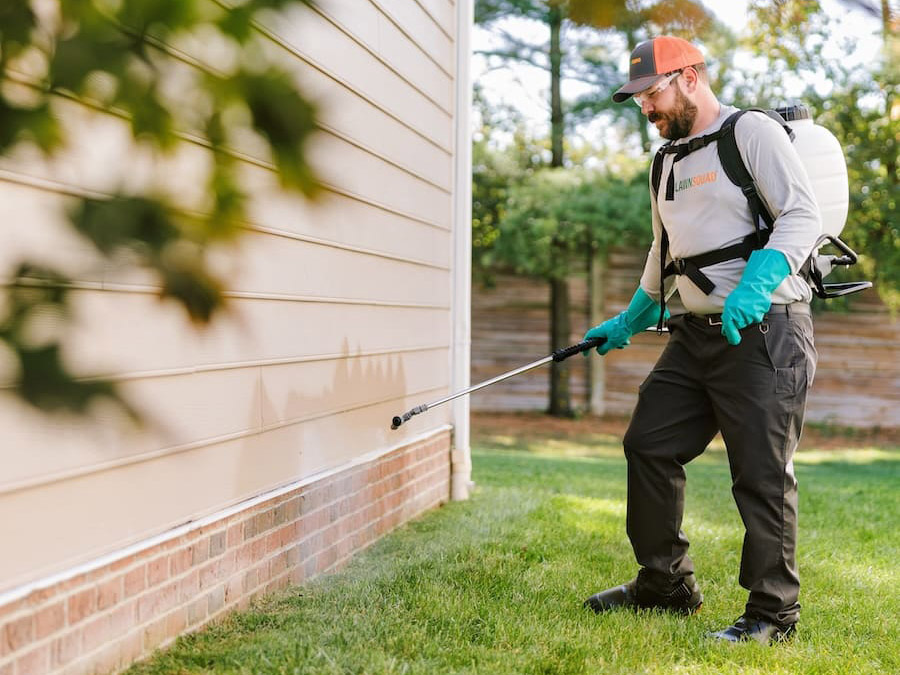
If you would rather have the irrigation calibrated, the disease pressure monitored, and the fertility adjusted to rainy season for you, we are here for that. We tune the controller, install rain sensors when needed, walk the property for drainage issues, and run a fertility program that does not feed disease.
Lawn Squad of South Miami serves homeowners across the South Miami area, including the Pinecrest, Palmetto Bay, Coral Gables, Cutler Bay, Kendall, and surrounding neighborhoods.
Call us at 786-310-1011 or request a free quote at lawnsquad.com. Our VitaminLawn program is built specifically for South Miami’s St. Augustine, Bermuda, and Zoysia lawns growing in our sandy and limestone-influenced soils, with rainy-season fertility, watering, and disease protocols tuned to the daily afternoon storm pattern that defines our summer.