
Short Answer: Both pests do their worst damage in June and July across Grand Strand lawns, and both are usually mistaken for drought damage until it is too late. Mole crickets tunnel through the root zone, leaving raised lumpy soil and dying grass over their tunnels; the soap-flush test (two ounces of dish soap in two gallons of water poured on a suspect area) brings them to the surface in five minutes. Sod webworms graze grass blades at night, leaving grass cut short and brown in irregular patches; the morning-walk test shows tiny green pellets (frass) at the base of stricken blades. June treatment for either is fast and effective if caught early; ignored, both can take half a lawn in three weeks.
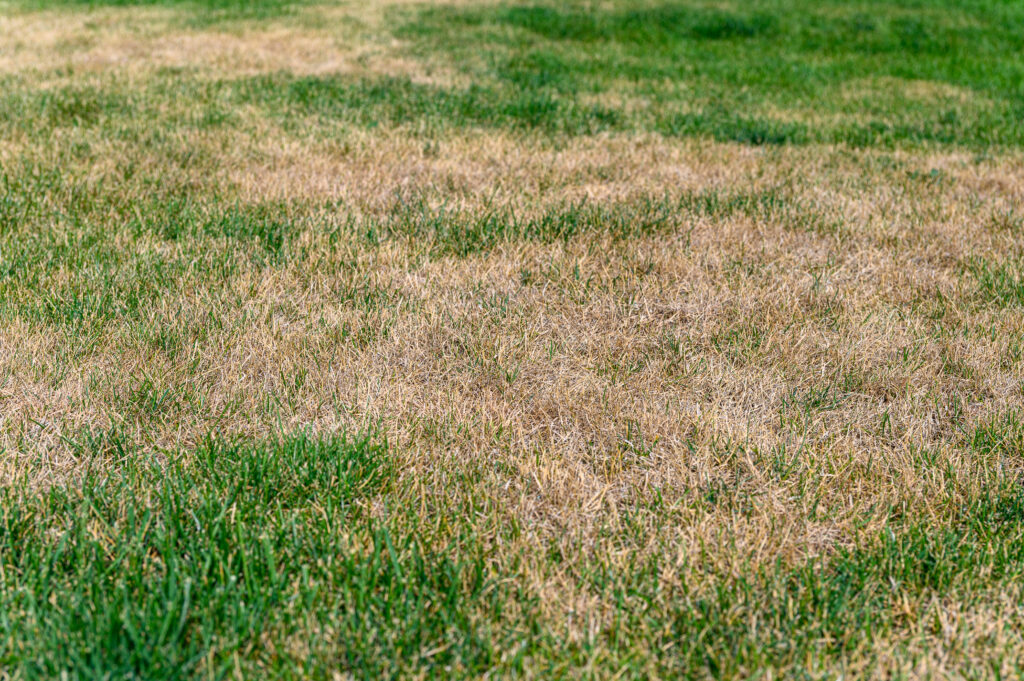
If you have walked your North Myrtle, Carolina Forest, or Pawleys Island lawn this past week and noticed irregular brown patches that did not improve when you ran the sprinklers an extra cycle, you may not be looking at drought. Two of the most common Grand Strand lawn pests do their visible damage now, and both look enough like drought that the average homeowner waters more, watches the damage spread, and only calls for help once the lawn is significantly compromised.
The two pests are mole crickets and sod webworms. They are different animals, with different damage patterns, and very different treatments. Getting the identification right is everything. Here is how we tell them apart on coastal South Carolina lawns, what each one does, and what realistic treatment looks like.
Mole Crickets: What You Are Looking For
Mole crickets are large, soil-burrowing insects with shovel-shaped front legs designed for digging. They tunnel through the upper few inches of soil, eating grass roots as they go, and they push up small mounds of loose soil along their tunnel paths. On warm summer evenings you can sometimes hear them chirping; on hot dry afternoons they retreat deeper into the soil and disappear from view.
The damage pattern is distinctive once you know what to look for:
- Lumpy, raised soil along tunnel paths, often visible as faint ridges across the lawn
- Small openings at intervals along the ridge where the insect surfaces
- Dying or thinning grass directly over the tunnel zones, while neighboring grass looks fine
- Soil that pulls away easily when you push a hand into the affected area
- Most damage in Bermuda, Bahia, and Centipede lawns; St. Augustine is somewhat more resistant
The Grand Strand has all three economically important mole cricket species: the tawny mole cricket (most damaging to turf), the southern mole cricket, and the short-winged mole cricket. The treatment is the same for all three.
The Soap-Flush Test
The reliable identification tool for mole crickets is the soap-flush. The procedure: mix two ounces of liquid dish soap in two gallons of warm water. Pour the mixture evenly across a four-foot-square section of lawn where you suspect mole crickets. Wait five to ten minutes. The soap irritates the insects and drives them to the surface.
If you see two or more mole crickets per square yard in the flush area, you have a treatment-threshold population. If you see one or none, you may have other pests or simply localized drought damage.
The flush test also brings up other ground-dwelling insects (earthworms, grubs, ground beetles), which is fine. You are specifically looking for the elongated, shovel-legged adults or the smaller similar-shaped juveniles.
Mole Cricket Treatment Timing
June is the right month to treat mole crickets in coastal South Carolina, and the reason matters. Mole crickets overwinter as adults in deep soil burrows. In April and May, the adults emerge, mate, and lay eggs. In June and early July, the eggs hatch and the tiny nymphs begin feeding near the soil surface. The nymphs are the most vulnerable life stage to treatment.
A baited bait or granular contact insecticide labeled for mole cricket nymphs (typically containing bifenthrin, fipronil, or imidacloprid), applied in mid to late June and watered in lightly, intercepts the nymphs as they hatch and prevents the population from establishing for the rest of the season.
Wait too long (August or later) and the nymphs are larger, deeper in the soil, and significantly harder to control. The same product applied in September gives 30 to 50 percent of the control you would get in June.
Sod Webworms: A Different Animal Entirely
Sod webworms are the larval stage of small lawn moths. The adult moths are pale tan, about half an inch long, and you may see them flying erratically over the lawn at dusk. The larvae are the damaging stage: small green caterpillars that live in silken tubes in the thatch and emerge at night to graze grass blades at ground level.
The damage pattern is very different from mole crickets:
- Patches of grass cut short, almost as if a mower had gone over a small area too low
- Brown, irregular patches that expand over a few days
- Green pellet-shaped frass (caterpillar droppings) visible at the base of grass blades in the morning
- Most damage in St. Augustine and Bermuda lawns; Centipede is moderately susceptible
- Birds working the affected area, picking caterpillars out of the thatch
Unlike mole crickets, sod webworms work above ground at night. If you suspect them, walk the lawn at dusk with a flashlight and look for the small caterpillars on the surface, or pull back a section of grass at the edge of a brown patch and look for the silk-lined tunnels in the thatch.
Sod Webworm Treatment
Sod webworm populations rise and fall sharply through the summer in coastal South Carolina. The first generation typically peaks in late June, followed by a second peak in late July or August. Treating the first generation prevents the second from being significant.
Effective treatment uses a product labeled for surface-feeding caterpillars: bifenthrin, lambda-cyhalothrin, or for organic options, Bt (Bacillus thuringiensis) products. Spinosad also works well and is relatively pollinator-friendly when applied at dusk after bee activity stops.
Application timing matters. Apply in the late afternoon or evening, do not water in, and let the product sit on the surface where the caterpillars feed at night. Watering in immediately after application washes the product off the foliage where it needs to be.
Most properties need one application to stop active damage. A second application 10 to 14 days later catches any caterpillars that hatched after the first treatment. For severe infestations, a third application after another 10 to 14 days completes the cycle.
How to Tell the Two Apart Quickly
The fastest field test:
- Lumpy, raised soil and tunnel ridges = mole crickets. Run the soap-flush test to confirm.
- Grass cut short at the surface, green frass pellets, birds picking the lawn = sod webworms. Walk at dusk with a flashlight to confirm.
- Pet urine damage = small isolated patches with dark green rings of overgrowth around dead centers.
- Drought damage = uniform thinning in the sunniest, sandiest, or most south-facing parts of the lawn, often improving when you adjust watering.
- Brown patch disease = circular tan patches with darker outer rings in the morning dew.
When in doubt, run the soap-flush test. It costs you five minutes and a quarter cup of dish soap, and it answers the mole cricket question definitively. If the flush comes up empty, you are dealing with something else, and the dusk caterpillar check is the next step.
What Does Not Work
A few approaches we see Grand Strand homeowners try that do not solve either problem.
Watering more does not help either pest. It may mask the damage briefly because the grass grows faster, but the underlying feeding continues. With sod webworms, more watering can actually create the wet thatch environment they thrive in.
Fertilizing heavily does not help either. Faster grass growth temporarily covers the damage but does not address the cause. For mole crickets, lush growth gives them more food. For sod webworms, fast growth gives them more to graze.
General-purpose “lawn insect spray” from the big-box store can work, but the label matters. Make sure the product specifically lists mole crickets (for crickets) or sod webworms or surface-feeding caterpillars (for webworms). Generic broadcast insecticides may not have the right active ingredient or rate.
What to Do Next
If you have already done the soap-flush test or the dusk caterpillar walk and confirmed one or both pests, June is the right month to treat. The longer the population feeds, the more damage you accumulate, and the harder the lawn recovers.
Lawn Squad of Myrtle Beach serves homeowners across the Grand Strand.
Call us at 843-702-6210 or request a free quote at lawnsquad.com. We will walk the lawn, run the diagnostic tests, identify what is actually going on, and recommend the right treatment. Our pest program pairs with our VitaminLawn lawn care service, both built for Grand Strand warm-season lawns, sandy coastal soils, and the realistic insect pressure that comes with living near the ocean.