Short Answer: Patchy areas on a Connecticut lawn in June usually trace to one of five causes: red thread disease (pink web-like patches on under-fertilized fescue), dollar spot (silver-dollar-sized bleached circles), early grub feeding from last year’s eggs, drought stress on shallow-rooted lawns, or thin soil over the bedrock and ledge that defines so many Fairfield and New Haven County properties. The diagnosis lives in three details: the shape of the patch, the color at the edge, and whether the turf pulls up freely or stays rooted. Cool-season Kentucky bluegrass, perennial ryegrass, and tall fescue all show stress differently. A correct diagnosis in June leads to a targeted fix and full recovery before fall. The wrong diagnosis usually means treating the wrong thing for three weeks while the actual problem keeps moving.
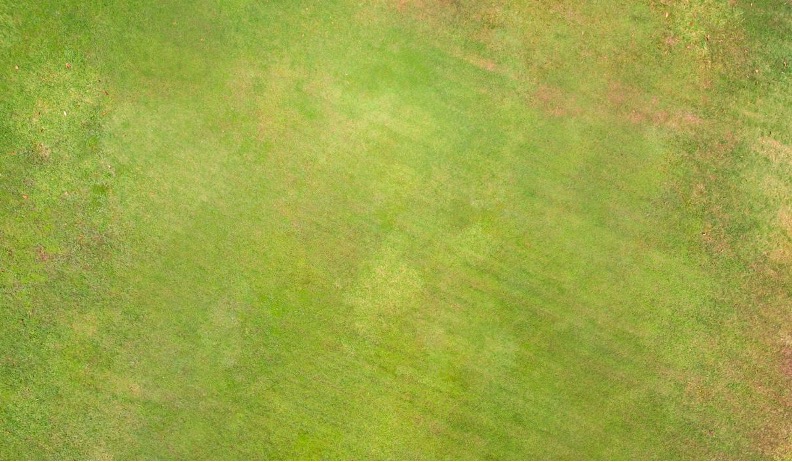
You walked out the back door in late May for the long weekend, and the lawn looked the way it always does in spring. Green from one fence line to the other. Two weeks later, mid-June, you walked out for morning coffee and the picture had changed. A circle of pink-tinged turf near the rhododendrons. A pale patch by the mailbox that was not there the last time you mowed. A section near the kids’ swing set that feels crunchy underfoot. Welcome to the Connecticut June transition.
We see this pattern across Greenwich, Stamford, Norwalk, Westport, Fairfield, Branford, Milford, and the rest of our service area every year. The same homeowner who had a beautiful Memorial Day lawn is now wondering what changed. Usually one of five things changed, and they look enough alike that homeowners treat the wrong cause for weeks while the patches keep spreading. Here is the diagnostic walkthrough we use on first visits.
Cause One: Red Thread Disease
Red thread is the most common June disease on Connecticut cool-season lawns, especially on properties that lean toward perennial ryegrass and fine fescue. It shows up as irregular pink to reddish patches, usually 4 to 8 inches across, with a faint web of pink threads visible on the grass blades when you look closely in the morning dew. The disease loves the conditions we get in June along the Connecticut coast: 60 to 75 degree nights, high humidity, and lawns that are short on nitrogen.
The diagnosis test: get on your knees and pull a few grass blades from the edge of the patch. If you see thin pink filaments extending past the tip of the blade, you have red thread. If the blade is uniformly tan with no pink structures, look elsewhere.
The fix is almost always nutritional rather than fungicidal. Red thread is a low-nitrogen disease. A modest application of a balanced fertilizer (around half a pound of nitrogen per thousand square feet, slow release) typically resolves the patches within ten to fourteen days. Fungicide is rarely necessary on residential lawns. The disease is cosmetic, not turf-killing, and the recovery is usually complete.
Cause Two: Dollar Spot
Dollar spot looks different. Small bleached circles, about the size of a silver dollar (which is where the name comes from), often clustered. On a lower-cut lawn the patches can merge into larger irregular dead areas. Look at the individual blades inside the patch under good light. Dollar spot leaves a distinctive lesion: a bleached band across the middle of the blade with reddish-brown borders. Red thread does not do that.
Dollar spot in Fairfield County tends to hit harder on perennial ryegrass and creeping bentgrass. It also signals nitrogen deficiency, so the cultural fix overlaps with red thread: bump nitrogen modestly, raise mowing height, water in the early morning rather than evening, and air out lawns that get heavy nighttime dew.
On a property where dollar spot becomes recurring (which happens on irrigated lawns with poor air movement), a preventive fungicide program timed to the first appearance is reasonable. For most New Haven County homeowners, cultural changes plus modest fertility resolve it without chemistry.
Cause Three: Early Grub Activity
Most grub damage in Connecticut shows up in August and September, but homeowners with significant grub populations from last year can see thinning patches as early as mid-June. The clue is the pull test. Grab a handful of turf at the edge of a thin patch and tug straight up. If it lifts away from the soil like a loose toupee, with no roots holding it down, grubs are eating the root system from below.
Skunk and raccoon digging is the other tell. If you wake up to small conical holes punched into the lawn overnight, especially along the woodland edge, animals are after the grubs underneath. That is a free diagnosis from your neighborhood wildlife.
The treatment decision in June depends on what we find. A pure preventive grub application (typically chlorantraniliprole or imidacloprid) put down between mid-June and mid-July stops the next generation, which is the bigger threat in August and September. For an active population that is already feeding, a curative product like trichlorfon works faster but has a much shorter residual. Most Fairfield County lawns benefit more from the preventive timing than from a rescue treatment.
Cause Four: Drought Stress on Shallow-Rooted Turf
Connecticut had a relatively dry late May into early June, and shallow-rooted lawns often dropped into stress before homeowners realized it. The signature: patches in full sun, especially on south-facing slopes, that go from green to gray-blue to straw color over about a week. The shape follows sun exposure, not a circle.
The footprint test catches this one. Walk across a stressed patch in the morning. If your footprints stay visible for thirty seconds or longer, the grass is wilting and not springing back, which is moisture stress. A healthy hydrated lawn recovers footprints within seconds.
The fix is mostly about future setup, not present rescue. Shift from frequent shallow watering (which is what causes shallow roots) to deep infrequent cycles, one inch per week delivered in one or two soakings, early morning. Cool-season Kentucky bluegrass and tall fescue can root six to eight inches deep under the right watering pattern. Daily ten-minute cycles produce roots two inches deep that cannot survive July heat.
Cause Five: Thin Soil Over Bedrock and Ledge
This is the cause unique to our part of New England and one most homeowners do not recognize until we point it out. Fairfield and New Haven Counties sit on glacial till and bedrock, and many properties have areas where the topsoil layer is only two to four inches deep before you hit ledge, rocky subsoil, or a clay layer that roots cannot penetrate.
On those spots, the lawn looks fine for most of the spring while moisture is plentiful, then collapses in late June as the shallow root zone dries out. The patches stay roughly in the same places year after year, often in straight or geometric shapes following old fill lines or where a tree was removed. A long screwdriver test reveals the issue: where you can push a screwdriver eight inches into the soil with light effort, you have rooting depth. Where it stops at two or three inches, you have ledge or a hardpan.
The honest answer here is that no fertilizer or fungicide fixes thin soil. The cosmetic fix is to overseed those spots with a turf-type tall fescue blend in early September (the only cool-season grass that handles shallow soil reasonably well) and to water more often in those specific zones during summer. The structural fix is to bring in topsoil and rebuild the area, which is a larger project most homeowners save for a full renovation.
How We Walk a Property in June
When we visit a customer in Madison or New Canaan or Bridgeport for a first-time evaluation, the diagnostic flow is consistent. We walk the perimeter first, since that is where ticks, weed pressure, and shade issues concentrate. We pull a few grass blades from any visible patches and check for red thread filaments or dollar spot banding. We do the pull test on any thin areas. We probe with a soil knife to check rooting depth and soil structure. We note sun exposure for each problem area and compare it to the homeowner’s irrigation pattern.
By the end of a thirty-minute walk we usually have one main cause and one or two contributing factors, with a specific recommendation that is different from what a homeowner Googling general advice would do. That is the value of having someone who looks at hundreds of Connecticut lawns every June: the patterns repeat, and the patterns are local.
What to Do Next
If you have patches you cannot diagnose with confidence, we can come out and walk the lawn with you. Twenty minutes on site usually answers the question and saves a homeowner from buying the wrong product to treat the wrong problem.
Lawn Squad of New Haven and Fairfield Counties serves homeowners across New Haven and Fairfield Counties.
Call us at 203-301-8247 or request a free quote at lawnsquad.com. Our VitaminLawn program is calibrated for the Kentucky bluegrass, perennial ryegrass, and tall fescue blends that dominate Connecticut lawns, with the rocky coastal soils and humid summer pattern that shape what your turf actually needs. The homeowners who get the strongest results in our region tend to be the ones who get the diagnosis right early in June.