
Short Answer: Fire ants in Huntsville lawns are best controlled with a two-step approach: a broadcast bait applied across the whole lawn in mid to late June (slow but kills the colony queen for 6 to 12 months of control), followed by mound drenches on any active mound that appears between bait applications (fast knockdown when a kid or a dog disturbed a colony yesterday). Skip the gasoline. Skip the boiling water. Both kill the grass and only push the colony three feet sideways. Bait plus drench is the only approach that lasts past the season.
If you walked your Huntsville yard after the last heavy rain and saw three or four fresh mounds in places that were clean a week ago, you are looking at the predictable June pattern. Fire ants in the Tennessee Valley are most visible right after rain events because the colony rebuilds the visible mound when the ground is wet enough to work. The colony itself was there the whole time. June is when most homeowners notice them, and June is also the right month to start a real treatment program.
Fire ants have been in north Alabama since the late 1970s, and by now they are simply part of the lawn care equation for every Huntsville-area property. The question is not whether you have them. The question is whether you treat them effectively or whether you knock down individual mounds and watch new ones appear. The cheaper, more lasting answer is broadcast bait plus targeted drench. Here is how it works and how to do it well.
Why Mound-Only Treatments Disappoint
The first instinct for almost every homeowner with a new fire ant mound is to attack that mound. Pour something on it. Drown it. Burn it out. The mound itself looks like the problem, so killing the mound feels like solving the problem.
Here is what actually happens. A fire ant colony has a queen, dozens of secondary workers, and tens of thousands of individual ants. The visible mound is the surface expression of underground galleries that often extend three to four feet deep and several feet sideways. When you pour a contact product on the mound, you kill the surface workers. The queen, deep underground, survives. Within a week or two, the colony rebuilds the surface mound (or moves it three feet sideways) and you are back where you started.
This is also why gasoline and boiling water do not work. Both kill some surface workers, both kill the grass, and neither reaches the queen. The colony reorganizes around the dead patch.
Effective fire ant control requires getting active ingredient to the queen. There are two reliable ways to do that: a bait the workers carry back to her, or a drench heavy enough to flood the deep gallery system. Both have their place.
Broadcast Bait: The Season-Long Foundation
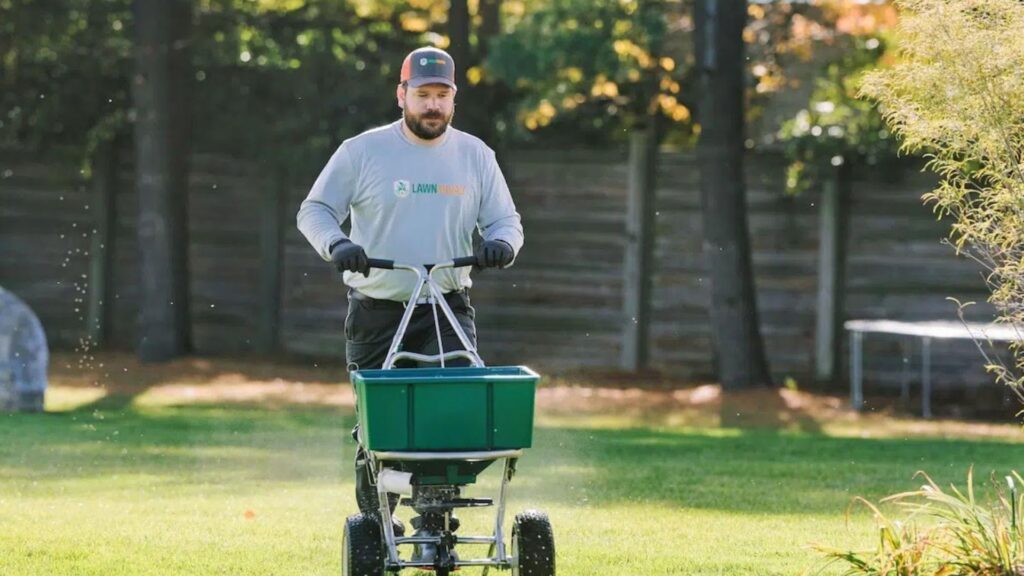
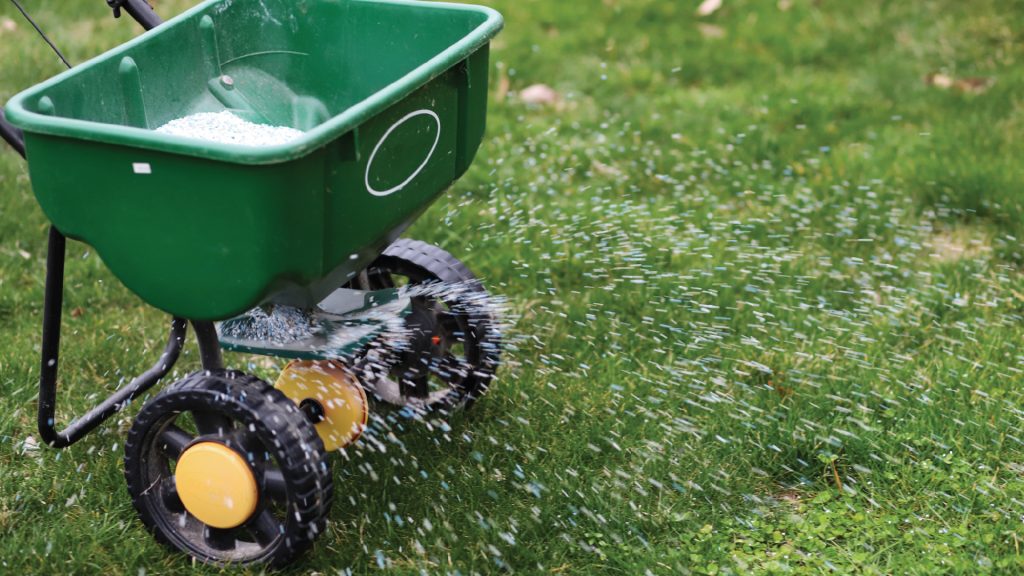
Broadcast bait is the foundation of any serious fire ant program. The product is a corn grit or soybean oil base treated with a slow-acting insecticide (usually s-methoprene, indoxacarb, abamectin, or hydramethylnon). The workers find the bait, carry it back to the colony, feed it to the larvae, and ultimately deliver the active ingredient to the queen. The queen dies. The colony collapses over the following four to eight weeks.
The right timing for the first broadcast bait of the season in Huntsville is mid to late June. Soil temperatures are warm enough that workers are actively foraging, the bait gets carried back to the colony quickly, and the active ingredient reaches the queen before the population peaks in July. A single broadcast bait application at the right rate (typically 1 to 1.5 pounds per acre, follow the label) controls 80 to 95 percent of colonies for six to twelve months. We typically do a second application in October to handle any colonies that survived or moved in.
Two cautions on bait. First, the bait must be fresh and dry. Bait that has been sitting in the garage for two years no longer has the oily attractant the ants need to find and carry it. Buy fresh, store sealed. Second, do not water in the bait. Ants want to find it dry and intact on the surface. Apply when no rain is expected for 24 hours and the lawn is not actively being watered.
Mound Drenches: The Fast Knockdown Tool
Drench products are the answer when speed matters. A child got stung Saturday morning and you want the mound dead by Sunday. The dog walked through a mound during yard play. A new mound appeared two days before the family barbeque. In all these cases, the bait is the wrong tool because it takes weeks to work. The drench is the right tool because it works in hours.
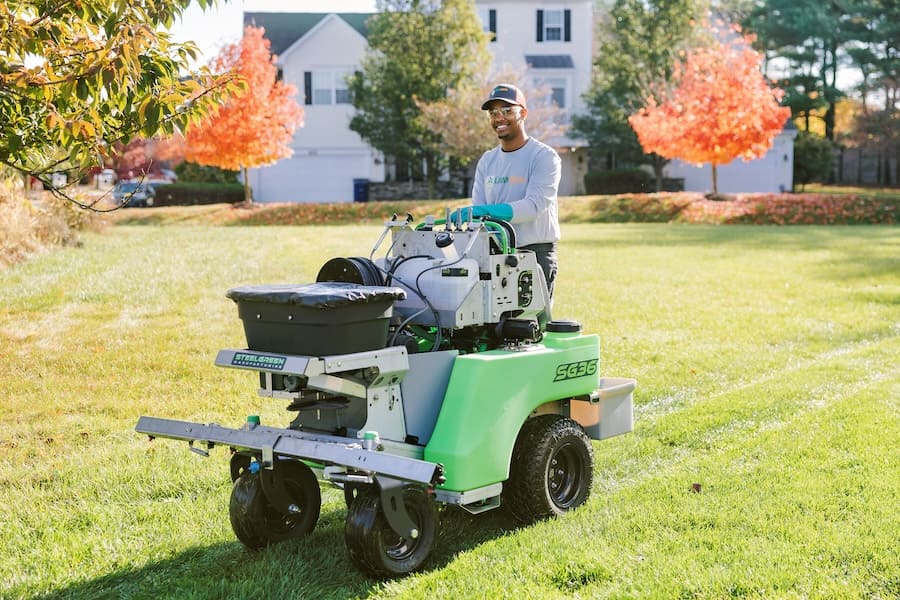
A mound drench is a high volume of insecticide solution (typically a gallon or two of mixed product) poured directly into the mound center. The volume floods the gallery system and reaches the queen. Standard active ingredients for drenches are bifenthrin, lambda-cyhalothrin, or acephate.
Apply on a cool morning when ants are deeper in the colony. Disturb the mound first with a shovel to expose the galleries, then pour the solution directly into the center. A properly applied drench kills 95 percent of the colony, including the queen, within 24 to 48 hours.
Drench limitations: it only treats the mound you can see. The colony three feet away that has not built a surface mound yet is not affected. That is why drench-only treatment is incomplete. Drench handles the visible problem today; bait prevents tomorrow’s problem.
The Two-Step Program for a Huntsville Yard
The combination we recommend across Huntsville, Madison, Owens Cross Roads, and Hampton Cove looks like this:
- Mid to late June: Broadcast bait across the whole lawn at label rate. Apply on a dry, calm morning, no rain expected for 24 hours.
- As needed: Mound drenches on any active mound that appears between broadcast applications. The bait kills 80 to 95 percent of colonies; the drench handles the rest.
- Mid October: Second broadcast bait application to handle survivors and reinvaders going into winter.
- Following March: Optional third bait application in early spring to handle any colonies that survived winter.
For a typical Huntsville quarter to half acre lawn, this program runs about $150 to $250 per year in DIY product cost, or $250 to $450 per year as a professional service. The math is well in favor of professional treatment if you value time, want guaranteed timing, and would rather not store insecticide in the garage.
The Multiple-Queen Question
One complication worth knowing. The fire ant population in Alabama is a mix of single-queen colonies (the classic mound, defended by one queen and her workers) and multiple-queen colonies (newer behavior, where two or more queens share the colony space). Multiple-queen colonies are smaller per mound, but they make many more mounds, and the colonies are harder to wipe out with a single drench because killing one queen does not collapse the colony.
If your yard has many small mounds close together rather than a few large ones, you probably have multiple-queen colonies. The treatment is the same (broadcast bait first, drench as needed), but you need to be patient. Multiple-queen populations take a full season of consistent bait application to bring down.
What Not to Do
- Do not use gasoline. It kills the grass for years, contaminates soil, is a fire hazard, and barely affects the queen.
- Do not use boiling water as your primary tool. It works on small surface colonies in flower beds where you can pour several gallons accurately, but it kills the grass and rarely reaches the queen on a large yard mound.
- Do not mix products. Bait works because the ants find it intact and attractive. If you broadcast bait and then spray contact insecticide over the lawn, the contact product kills the workers before they can carry the bait back. You spend twice as much for half the control.
- Do not skip the fall application. A spring-only program leaves you exposed to colonies that move in over the summer. October bait protects through winter and into next spring.
Safety and Pets
Fire ant baits and drenches at label rates are low-toxicity for pets after the application has dried or been raked in. The bigger pet concern is the fire ants themselves: a dog that lies down on a mound or sniffs an active colony gets stung repeatedly, and large breed dogs can have allergic reactions to multiple stings. Treatment is more pet-protective than no treatment.
For applications, keep pets and children off the treated lawn for the duration the product label specifies (usually until the bait is no longer visible, or for drenches, until the surface has dried, typically two to four hours). Reputable products carry instructions on the label; follow them, and you have no real safety concerns.
What to Do Next
If you would rather have someone else handle the bait application timing, the drench work on any new mounds, and the fall follow-up, that is exactly what we do. A fire ant program from June through October takes the problem off your list and keeps the lawn and family safer than spot-treatment ever does.
Lawn Squad of Huntsville serves homeowners across the Huntsville metro and the surrounding Tennessee Valley.
Call us at 983-233-6002 or request a free quote at lawnsquad.com. Our fire ant program pairs with our VitaminLawn lawn care service, both built for Tennessee Valley conditions, the warm-season Bermuda and Zoysia lawns that dominate our service area, and the realistic year-after-year fire ant pressure we all live with here.