Short Answer: Chinch bugs are tiny black-and-white insects that feed on the sap of warm-season grass. In Birmingham they hit Bermuda and St. Augustine lawns hardest from late June through August, often in the hottest, driest, sunniest part of the yard. The early signs look exactly like drought damage: yellow patches that turn brown and expand outward. The 5-minute float test (a coffee can with both ends cut out, pushed into the edge of a fading patch, filled with water) will bring chinch bugs floating to the surface within minutes if they are present. Catching them early means a targeted insecticide treatment. Wait too long and you are looking at sod replacement.
If you walked your Birmingham Bermuda or St. Augustine lawn this morning and noticed a yellow patch by the mailbox that was not there last week, your first thought was probably the same one we hear from every Hoover, Mountain Brook, and Vestavia Hills homeowner who calls us in late June. “I think it needs more water.”
Sometimes that is right. Often, especially when the patch is in full sun, expanding daily, and shaped like an irregular blob rather than a sprinkler dry spot, it is not. It is chinch bugs. And the longer you water without addressing them, the better you make their lives. They love hot, dry, sun-baked turf, and the water is going right past them while they keep feeding.
Chinch bug damage in central Alabama is one of the most misdiagnosed lawn problems we see all summer. Here is what we have learned from walking Birmingham lawns for years, and how you can catch the damage early.
What a Chinch Bug Actually Looks Like
An adult chinch bug is small. About one-fifth of an inch long, slender, black body with white wings folded flat across the back. The white wings often have a small black triangle in the middle. The legs and antennae are reddish-orange.
The young (nymphs) look very different. They are tiny, bright red or orange with a white band across the back. As they mature they darken until they look like miniature versions of the adults. You can have all life stages on the lawn at once during a Birmingham summer because chinch bugs typically produce two generations a year here, and overlapping broods are common.
If you part the grass with your fingers at the edge of a yellowing patch and you see anything resembling these descriptions scurrying across the soil or up the stems, you have your answer. They move fast and they hide deep in the thatch, which is why most homeowners do not see them until they are looking on purpose.
Why Birmingham Lawns Are Especially Vulnerable
Chinch bugs love three things that describe a typical Birmingham summer: heat, dry surface conditions, and dense warm-season turf. Our July and August soil temperatures stay in the perfect range for rapid chinch bug reproduction. Lawns with heavy thatch (which is common on Bermuda that has not been verticut or aerated in a few years) provide ideal shelter for the nymphs.
The lawns we see hit hardest in our service area share a few traits. They tend to be in full-sun front yards in Hoover, Helena, Pelham, and the open subdivisions of Trussville and Alabaster. They tend to be Bermuda or St. Augustine that has built up two or more inches of thatch. They tend to be slightly stressed from heat or compaction going into late June. Chinch bugs find that stress and exploit it.
Shaded backyards in Mountain Brook or Vestavia Hills with Zoysia or fescue mixes are less vulnerable. Chinch bugs prefer the sun-baked open lawn.
The Damage Pattern: How to Read It
Chinch bug damage almost always starts in the hottest, driest part of the lawn. Along driveway edges. Next to brick walls. In south-facing strips between the sidewalk and the curb. The patches start as small yellow areas, typically a foot or two across at first.
Over a couple of weeks the yellow shifts to straw-tan, and then to a dry brown that does not green back up with watering. The patches expand outward from the center as the chinch bugs work their way through the turf. By the time the patches are eight to ten feet across, you have a serious infestation that has been going for a month or more.
One key tell: chinch bug damage does not respond to watering. If you give a drought-stressed area an inch of water and three days, you see at least partial recovery. If you give a chinch-bug-damaged area the same treatment and nothing changes, the cause is not water.
The 5-Minute Float Test
Here is the test we teach Birmingham homeowners to do themselves. It costs nothing, takes five minutes, and gives you a definitive answer.
You need an empty metal coffee can or any tall metal cylinder with both ends cut or punched out. A length of metal tube works too. Push the open cylinder firmly into the soil at the edge of a fading patch, ideally where green grass meets yellowing grass. Push it about two inches into the soil so it makes a seal. Fill the cylinder with water from the hose. Wait three to five minutes.
If chinch bugs are present, they will float up and out of the thatch and you will see them swimming on the water surface. Adults are easy to spot. Nymphs are smaller and brighter colored. Five or more bugs per float is treatment-worthy in our experience. Twenty or more is an active outbreak.
Do the test at the edge of the damage, not in the middle of the dead area. The dead area no longer has live grass to feed on, so the chinch bugs have moved out to the next ring. The edge is where they are working right now.
Treatment Options That Actually Work
The most reliable products we use on Birmingham chinch bug infestations are bifenthrin and lambda-cyhalothrin. Both are pyrethroid insecticides labeled for chinch bug control on Bermuda and St. Augustine. They knock down the active population fast.
The key to a successful treatment is application technique. Chinch bugs live deep in the thatch, not on the leaf surface. Spray applications need enough water volume to carry the active ingredient down past the canopy and into the thatch layer. We use higher water rates than typical broadcast applications for this exact reason. After application, a light irrigation (a quarter inch or so) moves the product the rest of the way down.
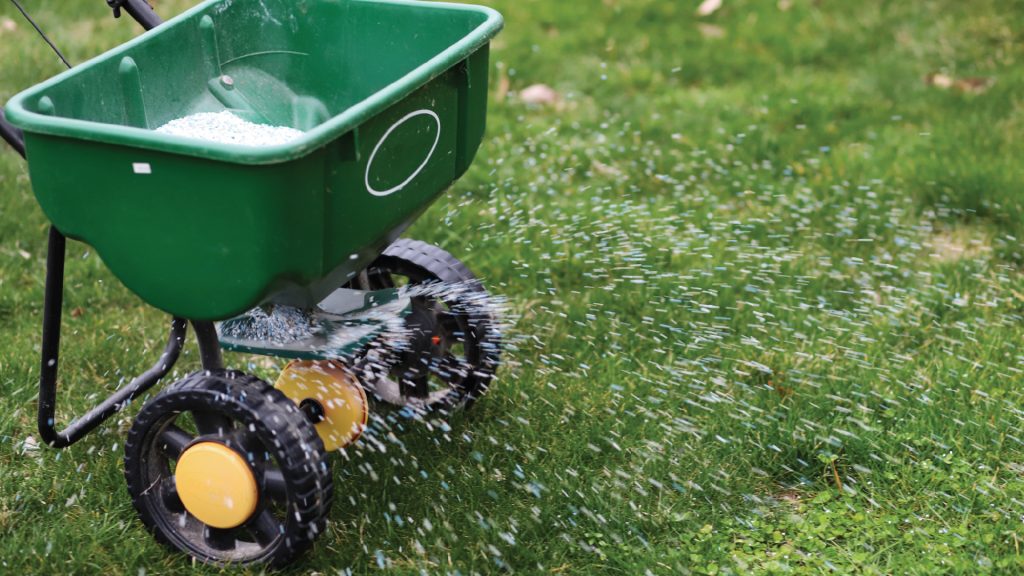
Granular products work too, but they need to be watered in within hours of application or the active ingredient binds to the granule and never reaches the bugs.
A second application 14 to 21 days after the first is usually needed to catch the next nymph hatch. One-and-done treatment rarely solves a Birmingham chinch bug outbreak in late June.
What About St. Augustine Specifically?
St. Augustine lawns in shaded yards across Mountain Brook and Homewood face an additional risk: chinch bug damage can look identical to take-all root rot or gray leaf spot in early stages. The diagnostic difference is in the root. Take-all root rot causes the roots to turn dark and brittle, and the grass pulls up with no resistance because the roots are rotting. Chinch bug damage leaves the roots intact and the crowns alive until the infestation is severe.
Do the float test before you spend money on fungicide. If the float test comes up empty, look at the roots and consider that a disease conversation. If the float test brings up chinch bugs, treat with insecticide and move on.
How to Reduce Chinch Bug Pressure Long-Term
Spraying chinch bugs every July works but it is not a strategy. The long-term answer is changing the conditions that favor them.
- Manage thatch. Bermuda and St. Augustine over two inches of thatch is a chinch bug hotel. Verticutting in spring and core aeration in fall reduce thatch and disrupt the chinch bug habitat.
- Water deeply, not often. Frequent shallow watering keeps the thatch dry while keeping the surface barely alive, which is exactly what chinch bugs want. Deep cycles every three to four days build deeper roots and make the lawn less hospitable.
- Avoid excessive nitrogen on Bermuda in midsummer. Too much nitrogen pushes thatch growth and tender succulent leaves, which chinch bugs prefer.
- Encourage natural predators. Big-eyed bugs, lacewings, and certain ground beetles eat chinch bug nymphs. Reducing unnecessary broad-spectrum insecticide applications keeps those predators in your yard.
When to Stop Diagnosing and Call Us
If you have a yellowing patch that is expanding daily, has not responded to a week of extra watering, and the float test brought up bugs, get on the phone. The window between early chinch bug damage and sod-replacement-level damage in Birmingham July heat is sometimes only two weeks. We see it every summer.
What to Do Next
If you would rather have a trained eye look at the patch and confirm what you are dealing with, we can come out and walk it with you.
Lawn Squad of Birmingham serves Alabaster, Bessemer, Birmingham, Calera, Chelsea, Helena, Homewood, Hoover, Indian Springs, Inverness, Maylene, Montevallo, Mountain Brook, Pelham, Pinson, Trussville, and Vestavia Hills.
Call us at 205-573-1921 or request a free quote at lawnsquad.com. Our VitaminLawn program addresses the thatch, watering, and nutrition factors that make Birmingham Bermuda and St. Augustine lawns vulnerable to chinch bugs in the first place, so the bugs find your neighbor’s lawn more attractive than yours.